One of the most common concerns expressed by farmers who are not yet using cover crops is that they feel they just don’t have time in the fall to get cover crops planted. That’s understandable, as most grain farms are busy places in the fall. The good news is that there are numerous ways to start growing cover crops and greening your land without having to sacrifice much or any of your time for harvest and other fall operations. This chapter will look at the pros and cons of the following labor-saving approaches:
- Hiring someone else to do cover crop seeding
- Broadcasting cover crop seed while you are already in the field for other work
- Equipment options that spread seed on a lot of acres in a hurry
- Fitting in some temporary part-time help, maybe from a family member
- Doing cover crop seeding at an earlier time when you are less busy
If you are wondering whether cover crops are too much of a hassle to fit into your busy operation, consider for a moment how you evaluate whether to put lime on a field, or whether to treat soybeans with a fungicide or make an extra herbicide pass. I’m guessing you find ways to get those operations done because you believe they will help your bottom line and, in the case of ag lime, improve the productivity of the field in the long run. In many cases, you are hiring someone to do those operations for you or, if you have a sprayer, are finding time to fit in an extra field pass. The following section will help you figure out how to use cover crops efficiently; but just remember, as discussed in the last chapter on profit, cover crops are an investment that can pay dividends for your operation, just like putting on lime or other soil amendments.
Hiring someone else to seed your cover crops
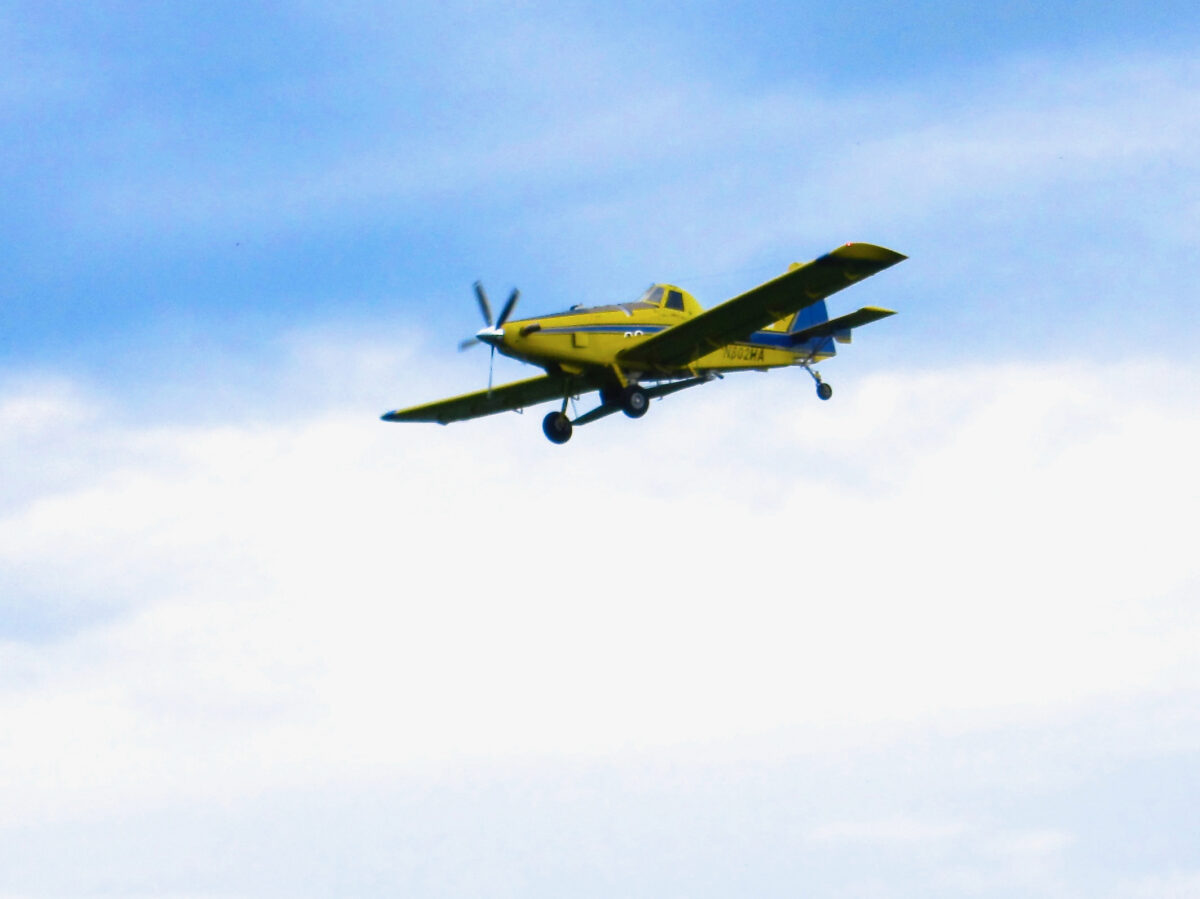
In the 2015-16 National Cover Crop Survey, over 30% of farmers using cover crops reported hiring someone else to do the majority of their seeding. Of those that hired someone to seed covers, about half hired an aerial applicator, about a quarter hired an ag retailer, and another quarter hired a neighbor. All of these are viable options. We’ll take a look at each in the following sections.
Aerial seeding
A few years ago at a conference, I was having an extended conversation with an aerial applicator who had gotten into cover crop seeding. I asked him how he felt about flying on cover crops. He responded, “I love it! People living in the country are happy to have me flying seeds on to protect the soil, whereas they don’t like it as well when I’m spraying pesticides near their houses!” Since cover crop seeding normally is done in the August-to-October time period when aerial applicators are done with summer pesticide applications, many are happy to have the extra work of cover crop seeding.
If you don’t know who the aerial applicators in your area are, you can go the National Agriculture Aviation Association website and use their “find an aerial applicator” link (www.agaviation.org). Many, but not all, aerial applicators will offer cover crop seeding services. However, it does help to hire people who are experienced with cover crop seeding, as the optimum approaches such as flight height often differ from spraying pesticide products. Also, various cover crop seeds spread differently from each other when flown on due to seed density, size, and shape.
Cost of aerial seeding varies depending on how far from your field the applicator has to base their plane to load seed, how much acreage you are spreading (generally more acres and bigger, longer fields cost less per acre), and the amount of seed per acre. Seed that can be broadcast in a wider pattern will also cost less. For example, radish seeds go on at a few pounds per acre, whereas rye may be 50 pounds or more per acre, requiring more trips to load the plane and thus a little more expense. I’ve typically heard aerial application costs in the range of $12-$15 per acre (plus seed cost), but it varies, and costs may be rising as they are with other services. Chapter 9 on equipment has more information on the success of aerial seeding versus other methods. Aerial application can allow the cover crop to be seeded prior to grain harvest, allowing the cover crops more time to become established. Just be aware that any form of broadcast seeding is more reliant on rain for establishment than using a planter to put the seed into the soil.
Having your ag retailer/fertilizer dealer spread cover crop seed
Another common way to hire out broadcast seeding of cover crops is to work with a local ag retailer. Most often, they will use a fertilizer truck or buggy that can throw the seed in a wide pattern and over many acres in a day. As with airplanes, the cost per acre will depend on distance to your field, size of field, amount of seed to be broadcast, etc. Rates are typically in the same ballpark as aerial application, and sometimes in the lower end of that range, such as $10-$12 per acre, if your field is not too far from the fertilizer dealer. Keep in mind that planes can fly seed on when fields are muddy, but fertilizer rigs can operate when it’s too windy to do aerial application. One other limitation of fertilizer rigs for spreading cover crop seed after corn or soybeans is that you have to wait until after harvest in order to avoid tire damage to the crop.
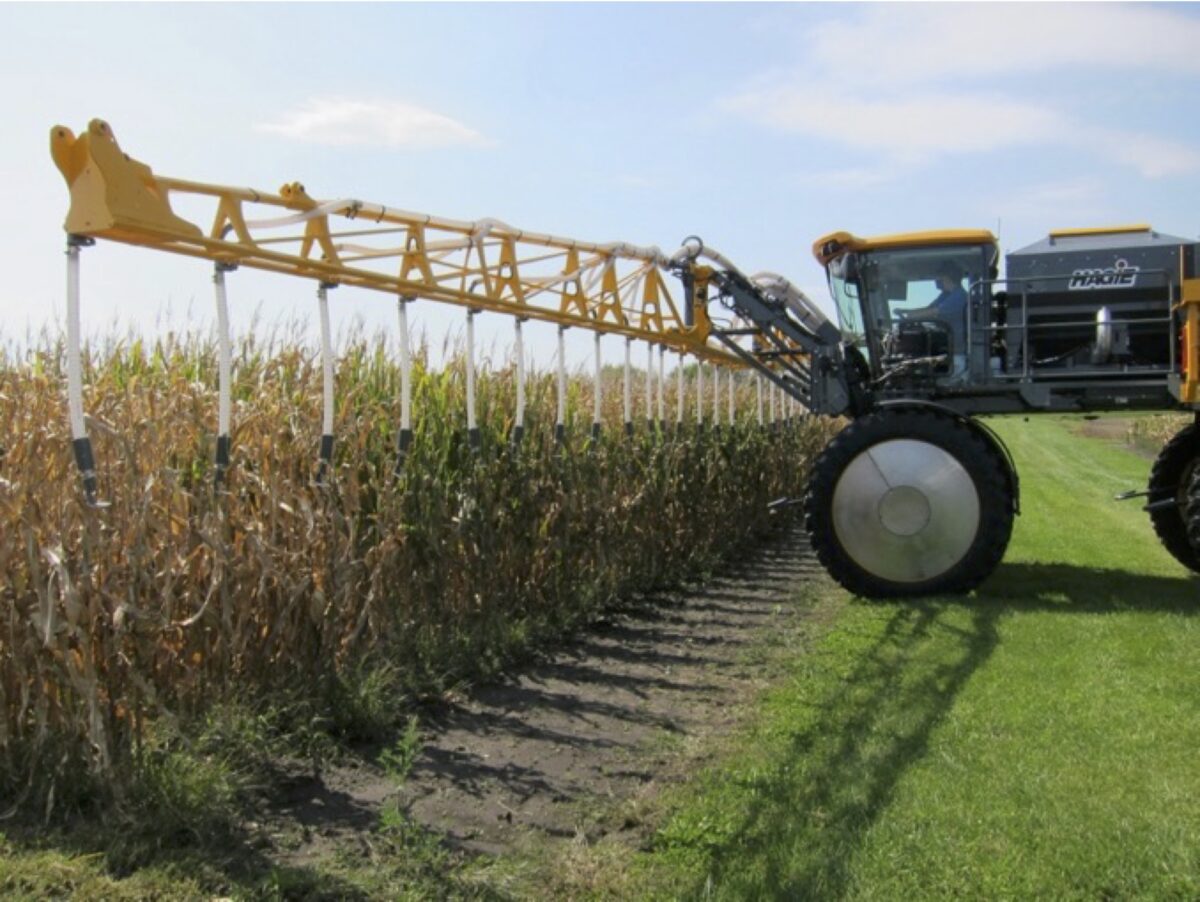
Some ag retailers have started offering the option of using high-clearance rigs to do cover crop seeding into standing corn or soybeans. Using the same rigs that spray herbicides, insecticides, or fungicides, they adapt that equipment with an air seeder and drop tubes to seed the cover crop. These rigs can do several hundred acres of seeding per day and because they can go into a field and drive between rows, they allow pre-harvest establishment of cover crops to give seed more time to grow. Costs for seeding are typically in the range of $10-$15 per acre. See Chapter 8 for more details on using fertilizer rigs or high-clearance seeders for spreading cover crop seed.
Hiring a neighbor to do your cover crop seeding
It might surprise you to know that thousands of farmers have hired a neighbor to do some or all of their cover crop seeding. The advantage of working with a neighbor is often two-fold. First, they will most often use a planter instead of broadcast seeding, which ensures better establishment. Second, they typically have some experience with cover crops and so can give you advice on how to make them work for you. Josh Payne, a young Missouri farmer, has regularly planted cover crops for his neighbors, primarily because he wants to help them get started with covers, but also because it’s a way to put some of his equipment and time to use in the fall since he farms fewer acres than some of his neighbors. In the future, I hope more young farmers and some semi-retired farmers will tap into the business opportunity of doing cover crop seeding for other people in their area.
Do the seeding at the same time as another operation
Let’s say that, for some reason, you don’t want to hire the cover crop seeding done and want to maintain more control over it yourself: what are your options to fit it in without taking a lot of time? Fortunately, there are some viable options, which include doing the seeding at the same time as another operation or using highly efficient seeding techniques (see next section).
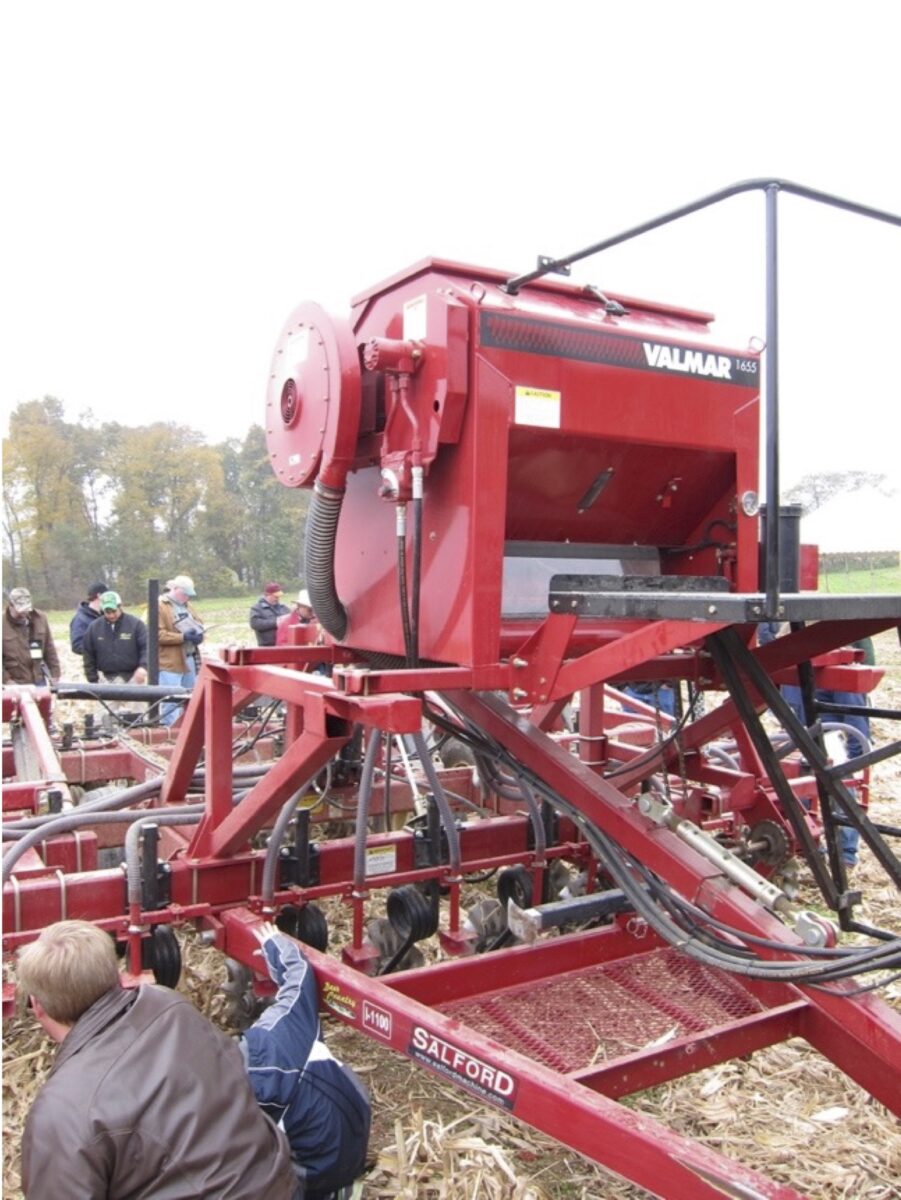
The most popular way of seeding cover crops while already in the field for another operation is to broadcast cover crop seed at the same time as doing a vertical tillage pass on a field. This normally involves an air seeder that blows the seed through drop tubes in front of the vertical tillage tool. In other cases, people use a hitch-mounted broadcast spreader for the seed while pulling the vertical tillage tool behind it. This approach works well for cover crop seed that can handle being planted up to an inch deep, like cereal rye, oats, or other small grains. For more shallow-seeded cover crops like radishes, rapeseed, or clover, it may work better to broadcast the seed after the vertical tillage tool.
Other tillage equipment can be similarly modified if the tillage is shallow enough, but be careful not to use a seeder in front of a device that will bury the seed too deep. If a deeper tillage pass is being made, a broadcast pull seeder that is hooked to the back of the tillage instrument can work. (Valmar is one of the companies that offers such pull-type broadcast seeders as well as hitch-mounted ones.)
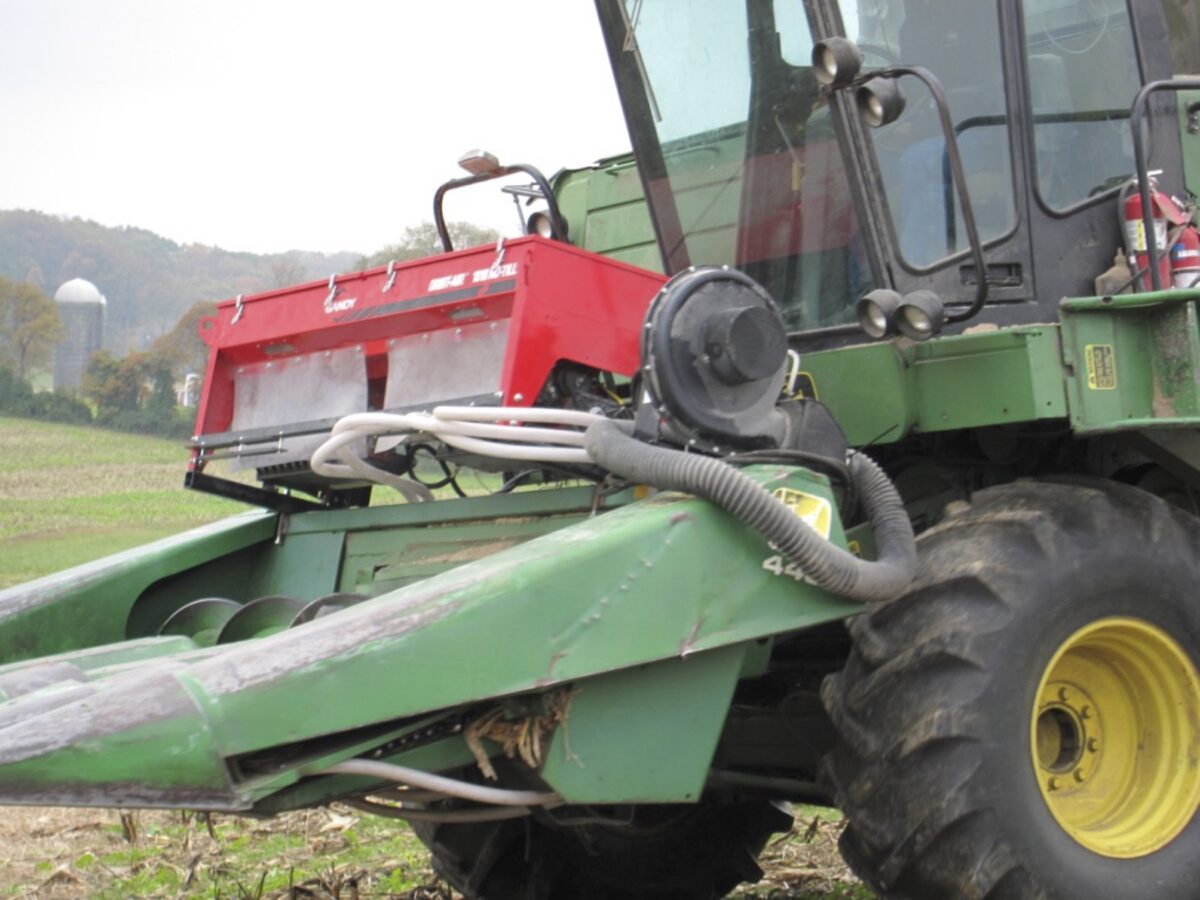
If you are no-tilling, another option for simple seeding may be to spread cover crop seed while combining. Gandy is one company selling an air seeder that can attach to the combine and blow the cover crop seed down underneath the combine header. That way, the seed can make contact with the soil before all the leaves, stalks, and chaff are blown out the back of the combine. I’ve had farmers tell me they’ve had success with combine-mounted seeders, but their popularity has been limited so far.
Yet another approach is to mix cover crop seed in with fertilizer or manure that is being spread in the fall. As described in Chapter 9, cover crop seed can be blended with granular fertilizer, but if so, the seeding should ideally be done right after mixing the two so that the salt action of the fertilizer doesn’t start desiccating (drying out) the cover crop seed. The seed may also not be thrown as far as the fertilizer, which can be an issue. Some farmers have added cover crop seed to liquid manure slurries before spreading. Again, the seed should not be mixed in until right before the seeding is to be done. Some adjustments to equipment may be needed, but the nice thing about slurry seeding is that the cover crop seed receives some moisture and fertility to help it become established faster.
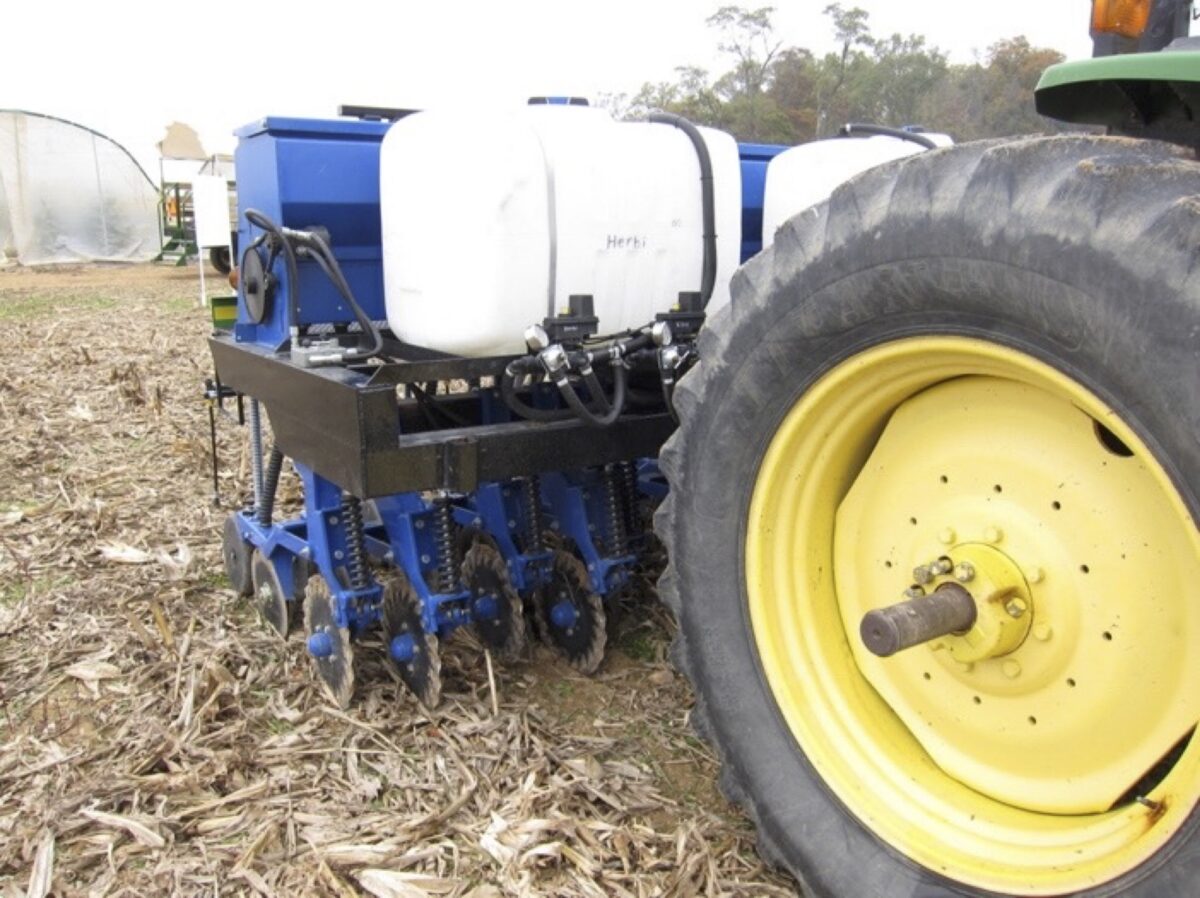
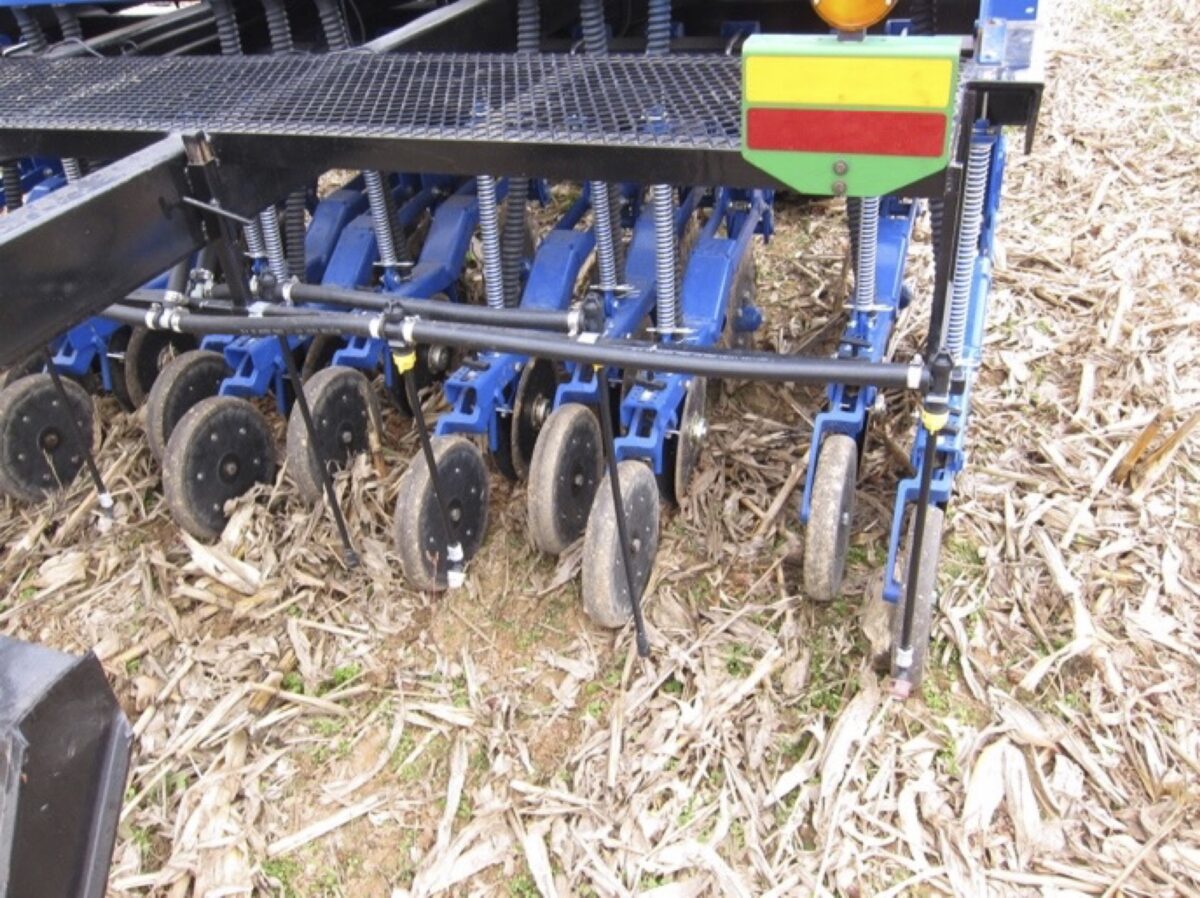
Various equipment strategies are covered in greater depth in Chapter 9, particularly regarding what pluses and minuses you might expect with each. All of these approaches can work for certain cover crop species but be prepared for some trial and error to get your settings right.
Seeding large quantities of cover crop acres per day
Let’s say you prefer to do your cover crop seeding yourself but want to get it done efficiently given your limited number of days for harvest and other field work in the fall. There are ways to cover hundreds of acres per day. One is by using broadcast equipment that can throw the seed far while moving quickly. Ray Gaesser, one of the farmers profiled in this book, uses a fertilizer spreader rig that can do about 500 acres of seeding per day. His goal is to run it immediately after combining a field while the residue is still fluffed up, so the seed has more chance to work its way down to the soil. This works best with a second operator to seed covers following behind the combine operator.
If you already have a high-clearance sprayer, you may find that it can be modified with a kit to add cover crop seeding ability. This will require some time in late summer before harvest to switch the rig over to seeding, but typically the kits can be installed in four to eight hours by those familiar with the process.
Some farmers have found that it’s worth adapting their row crop planter to plant covers, if they have a big planter that can do a lot of acres. Others have picked up a wide grain drill, perhaps finding an affordable used one. The upfront cost of a bigger drill is a potential hurdle, but it may quickly pay for itself in labor savings if you are seeding a lot of acres.
Other strategies to keep cover crop seeding from conflicting with fall field work
Chances are that you’ve already got someone helping you during harvest to drive a grain truck or cart while you run the combine. If that person is just a temporary helper, such as a retiree, can they stay on an extra week or two after harvest to drill cover crops for you? It’s not a complicated task. Or maybe there’s a family member who would be willing to run a grain drill or spreader with seed right behind the combine. You’ll be in the field anyway and so can provide some oversight, and again, it’s not necessarily a complicated task to pull a drill or spreader around the field.
Here’s a whole other option: seed the cover crops before harvest. In the National Cover Crop Survey, about a third of the farmers reported doing at least some of their primary cover crop seeding before they harvested the cash crop. Most often this looks like spreading seed into crops like standing corn, soybeans, cotton, or sorghum once the crop has started to turn color, such as in late August or early September. Planting the seed on the field early allows the cover crops to get a head start before harvest, while also allowing you to get that project out of the way before you start harvest. Of course, the broadcast seeding is rain dependent, and that’s why some farmers prefer to drill the seed for greater certainty of establishment. See Chapter 6 for more details on the timing of cover crop seeding.
One of the newest trends with cover crops is to seed them even earlier–in June instead of late summer. This works better with corn than soybeans, and I don’t think it’s been tried much yet with other crops, other than the old practice of over-seeding a legume into wheat. Some people have used broadcast spreaders, maybe broadcasting fertilizer and cover crop seed into corn at the same time during June. Others have used high-clearance grain drills made specifically for interseeding that have higher success rates in planting. Notably, the “InterSeeder” drill made by InterSeeder Technologies can spray a post-emergence herbicide and/or a liquid fertilizer at the same time as drilling a cover crop in between corn rows. Thus, three field operations can be combined into one.
My own feeling is that June interseeding into corn probably works better in the northern half of the Corn Belt than the southern half, and better where there is more rain, because hot and dry conditions make it tough for a June-planted cover crop to compete with corn all the way to harvest. However, I’ve seen a number of fields where it has worked reasonably well. As people continue to experiment with which species, varieties, and techniques work best for cover crop interseeding, I expect additional solutions will be found which will broaden the approach to more geographic areas.