The soil ecosystem, teeming with life
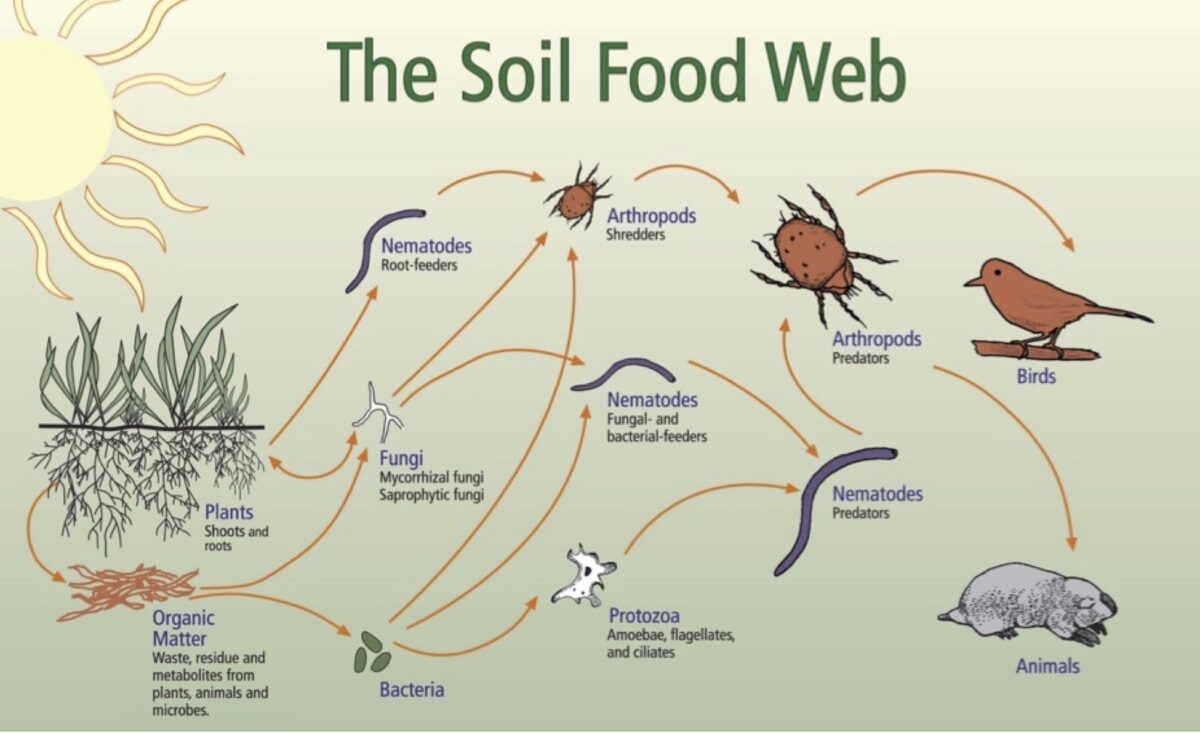
Healthy soil literally teems with life–much of it microscopic, but all of it interconnected. A single teaspoon of healthy soil can contain more organisms than there are people on our entire planet: billions of bacteria, millions of fungi, hundreds of thousands of protozoa, and thousands of other tiny creatures. Like in the ocean, where we know plankton are eaten by shrimp which are eaten by small fish, then small fish are in turn eaten by progressively larger fish and marine mammals, there’s a whole complex food web in a healthy soil. This food web, depicted below, is converting plant residues into soil organic matter, exchanging nutrients with plant roots, building soil structure, and contributing to soil resiliency.
A healthy soil is highly dependent on living roots being present year-round, not unlike a forest or prairie. Soil organisms have evolved in the presence of diverse, year-round plant roots, so when there is only a single species of plant in the ground for just part of the year followed by months of bare soil, the system quickly gets out-of-whack, and soil diversity and health quickly decline.
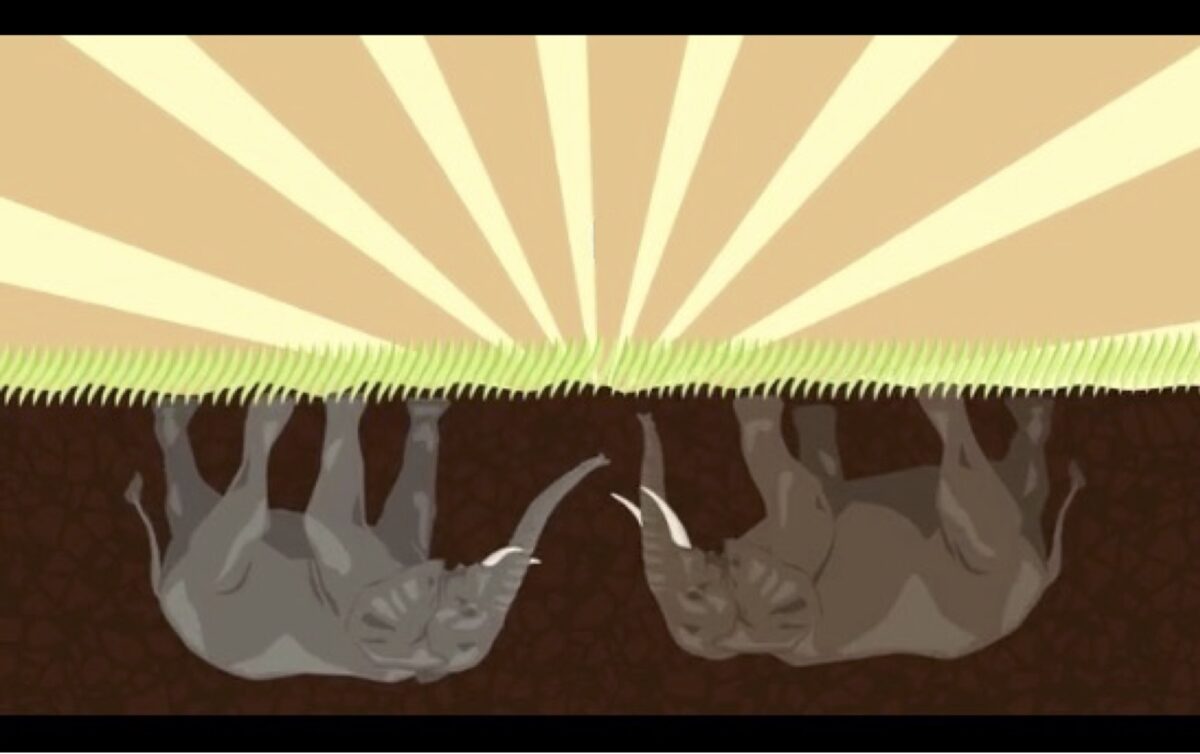
To help represent the amount of food needed to sustain the billions of microbes, insects, and earthworms in a healthy soil, Jerry Hatfield (a now-retired USDA Agricultural Research Service scientist and administrator) has often shared with audiences that on every acre of land, we’re basically trying to keep two African elephants alive, in terms of the weight equivalence of all the soil organisms. That takes a lot of plant food, and a lot of roots!
You hear a lot about earthworms in connection with soil health. An increase in number of earthworms is one of the first changes many farmers notice within a year or two of beginning to use cover crops.
Beyond being a visible indicator of soil health, earthworms play a valuable role in making soils healthier. They improve rainfall infiltration, help break down plant residue, recycle nutrients, support improved crop root growth, and stimulate soil biology.
There are over one hundred species of earthworms native to the U.S. (some scientists say there are up to 300 species). Earthworms in crop fields can be of several species, both native and non-native, and are generally grouped into three types. The type of earthworm found in the top several inches of soil is called endogeic worms and are characterized by tunneling more horizontally than vertically. Right at the surface, if there’s enough leaf litter, there may also be epigeic worms. These are the type of small red worm normally used in compost bins, but they are often absent from crop fields. The most well-known type of earthworms found in crop fields are deep-tunneling nightcrawlers, a type of anecic worm, which tend to tunnel vertically and can create tunnels several feet long. Unlike other earthworms, they will actually pull leaves and other decomposing plant material down into the soil from the surface, speeding up the decomposition process of crop residue. While nightcrawlers came from Europe and are not native to the U.S., they have become ubiquitous in most U.S. crop fields. If a field is sandy or particularly dry it may be difficult to find earthworms near the surface, but mustard powder added to water can be used to temporarily bring worms to the surface and identify what is in that section of soil (check out online videos that show how to do this).
One of the most dramatic impacts of earthworms in undisturbed soils is that they increase rainfall infiltration. Their tunnels can allow rainwater to quickly move into the soil, and the overall network of earthworm channels spreads and stores the water throughout the rootzone. This network of tunnels also facilitates better root growth by crops. The tunnels are lined with nutrient-dense castings that act as fertilizer for the crop roots, promoting growth. Earthworm activity also plays a big role in overall soil biology, as earthworm castings become food for many microbes, and the earthworms themselves feed on fungi as well as decomposing plant and animal matter. If a field or pasture is grazed, earthworms can help break down and recycle nutrients from manure into the soil. The castings from earthworms also play a role in helping build better soil structure, which is a key aspect of soil health.
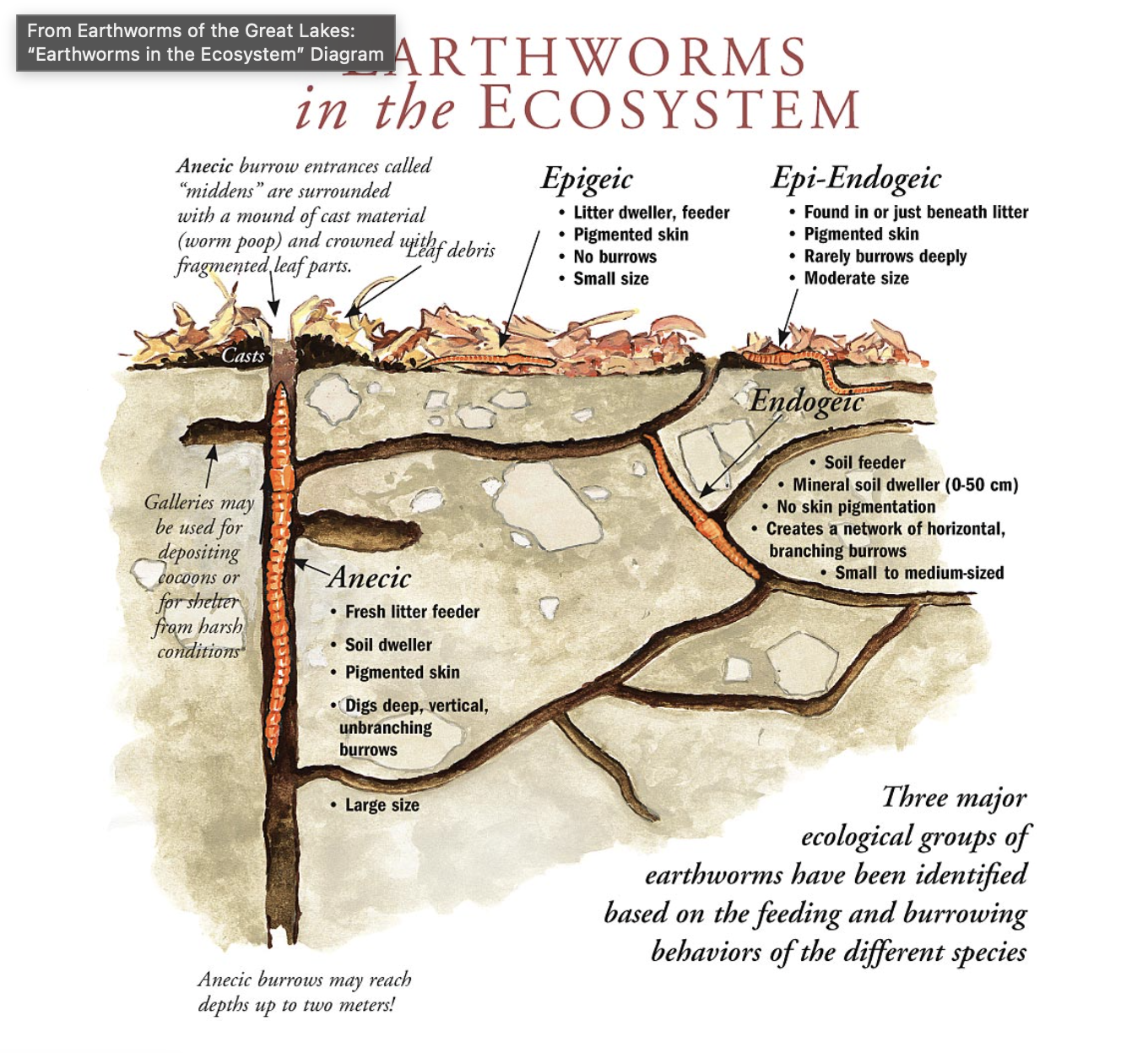
Nightcrawlers can live in the soil for a few years and their deep tunnels can be long-lasting. In fact, they can do a better job of breaking up compacted soil than expensive subsoiling equipment dragged through a field. Nightcrawlers can also get big, sometimes a foot or more in length, though that’s nothing compared to the Oregon Giant Earthworm that is native to the Willamette Valley of western Oregon, which can grow up to three feet long!
Worms breathe through their skin, a diffusion process that requires them to live in moist soil. If the soil is too dry, they will burrow deeper. If the soil is too wet, such as after a heavy rain, they need to come to the surface to breathe, which is why you see so many earthworms on sidewalks or driveways after a big rainfall.
Farmers who are monitoring their soil health often like to take a shovel with them, digging in a few spots to sample soil structure and earthworm activity. Increased numbers of earthworms can appear quickly after cover crop use starts, even after the first year of cover crop use. Decomposing cover crop roots and residue provide a food source for earthworms that sustains them and helps their population increase. According to USDA-NRCS, earthworms can decompose up to two tons of dry plant material a year, improving soil organic matter in the process.
Soil fungi
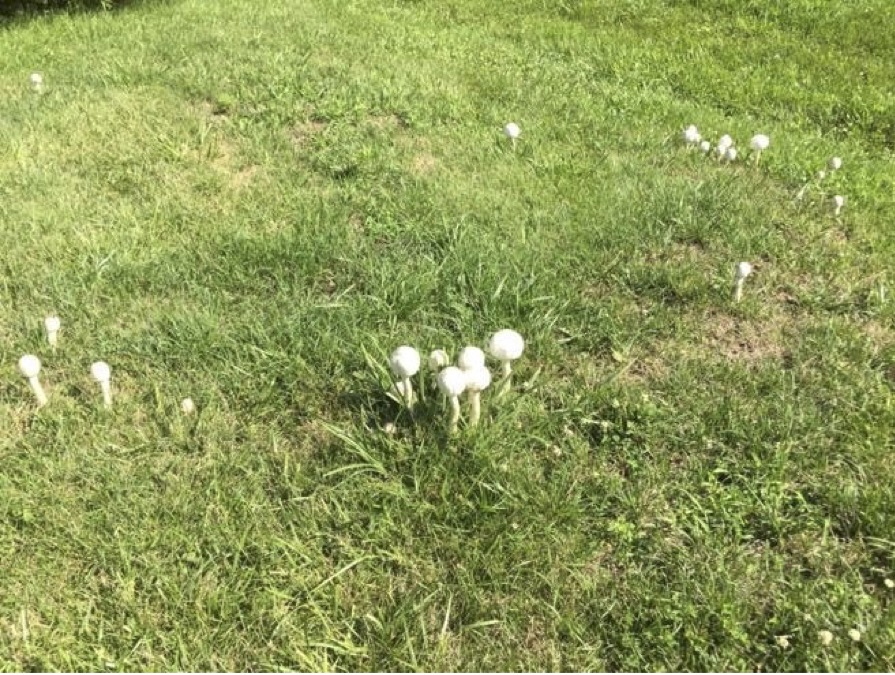
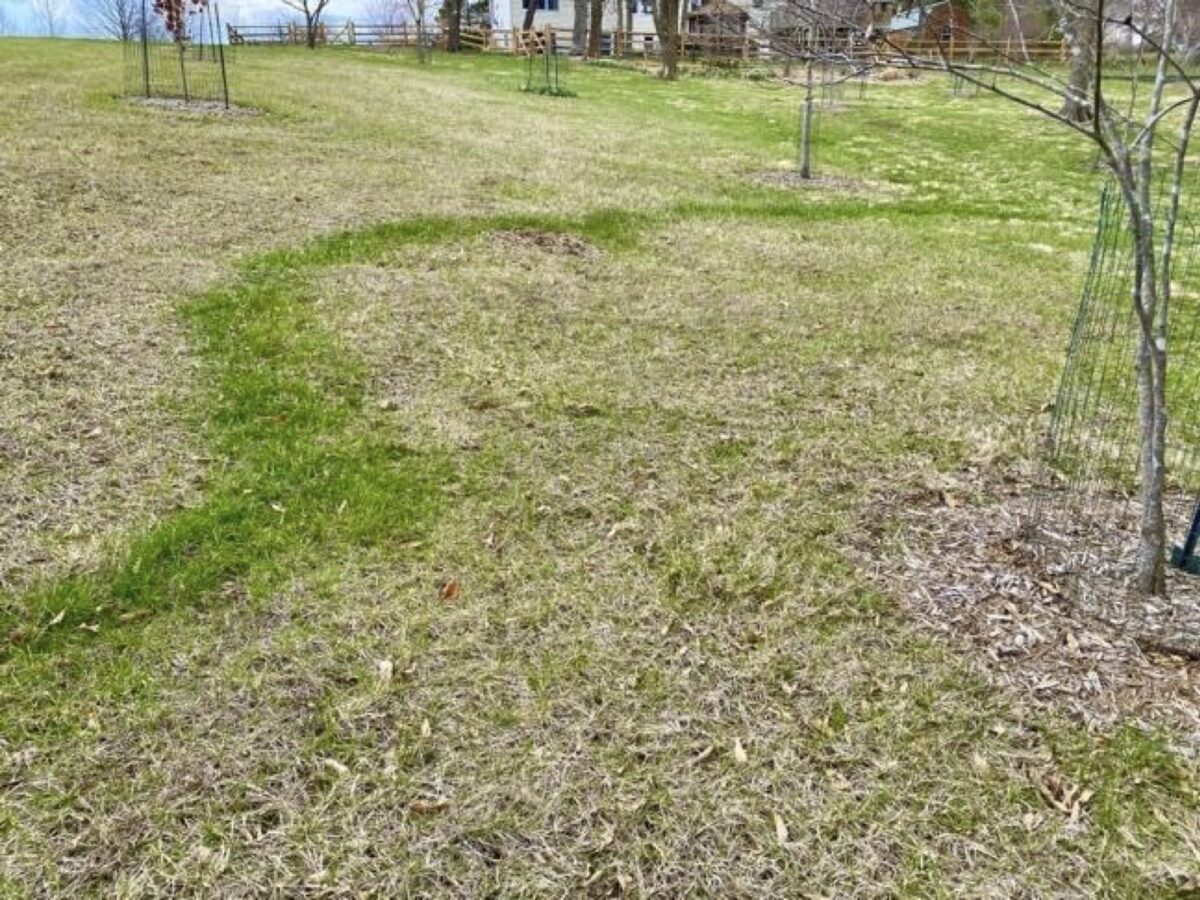
There are many types of soil fungi, and in undisturbed soils some fungi can cover extensive areas. One of the more common examples of this is fairy toadstool rings, which can pop up from the perimeter of certain types of soil fungi. In my own yard, I’ve seen these cover an area 20-30 feet across. Another indication of their presence can be the darker green from nitrogen release around the perimeter of the fungal mass.
Among the many types of soil fungi, the most beneficial to crop plants and many other types of plants are mycorrhizal fungi. There are a number of different kinds of mycorrhizal fungi. Some are mainly associated with trees, but arbuscular mycorrhizal fungi (AMF) are found associated with 80%-90% of all plants, including herbaceous and woody species.
Arbuscular mycorrhizal fungi are rather amazing organisms that are hard to fully visualize. A simple description is that the fungal hyphae form a network of filaments throughout the rootzone, with connection points to plant roots. Part of the mycorrhizae will grow into the cells of plant roots, where metabolic exchanges of nutrients can take place. The structures inside the cells are called arbuscules. The tiny filaments of the fungi can extensively infiltrate the soil volume. To get an idea of how many filaments there can be in a small area, imagine over one mile’s worth of fungal hyphae (mycelium) in a small pot of healthy soil. The network can be quite intricate and interwoven, but a simple visualization is provided below, illustrating how AMF can help roots access a greater volume of the soil for nutrients and water.
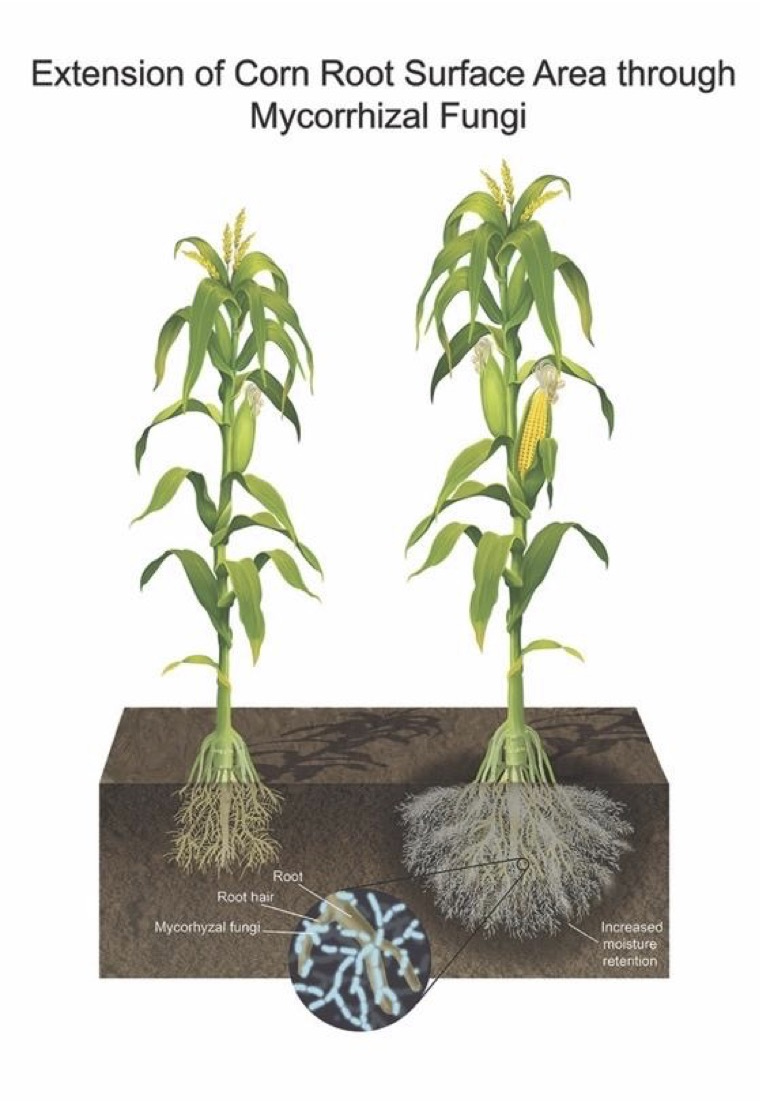
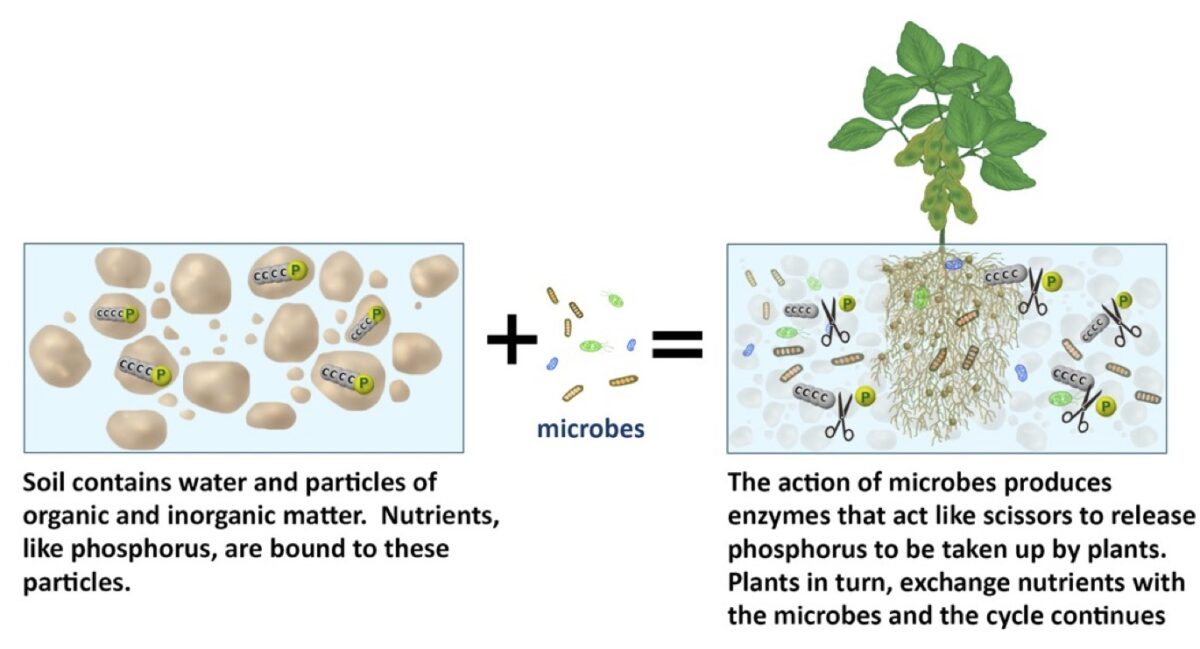
AMF, which will simply be referred to as mycorrhizae for the rest of this discussion, provide many significant benefits to crop plants and soil health, including making more nutrients available to the plant. Mycorrhizae are able to release chemicals into the soil that help solubilize a variety of nutrients that are otherwise bound tightly to the mineral fraction of the soil. For example, inorganic phosphorus can be in an insoluble form unavailable for uptake by plant roots, but the mycorrhizae are able to convert the phosphorus into a form that they provide to plant roots in exchange for sugars and other carbohydrates. As mentioned in Chapter 1, this exchange of carbon compounds for plant nutrients has been coined “carbonomics” by Keith Berns, a Nebraska farmer and president of Green Cover, a leading cover crop seed company.
Mycorrhizae have also been shown to provide water to plant roots in moisture-limited soils, which can be a big advantage for crops grown in healthy soils during times of drought. The exact reasons for this are not fully understood, and the amount of mycorrhizae-supplied water will not be enough to overcome a severe drought, but this phenomenon can help reduce stress on crops during a dry period.
Another factor that really helps during droughts is the role that mycorrhizae play in building better soil structure. One of the compounds exuded into the soil by mycorrhizae is glomalin, often called the glue of the soil. Glomalin helps bind together parts of the soil, allowing soil aggregates (building blocks) to form. When soils have more structure, they hold more moisture and usually have faster rainfall infiltration. Air exchange is improved from within soil pores to the surface and the soil becomes more resilient to compaction. All of these factors aid crop root growth, and with better root growth, the crop can reach more water and nutrients in the soil, a key way that healthy soils provide a more resilient growing environment for crops in tough weather.
Besides moisture stress, another stress on crop plants is disease. Mycorrhizae appear to help reduce certain crop diseases, in some cases forming a physical barrier to root diseases, and promoting crop health in other ways that lessen disease occurrence and impact.
While there is much more we can learn about the role of mycorrhizae, we already know enough to realize that soil management practices that include cover crops increase mycorrhizae in the soil. Eliminating or reducing soil disturbance is also important to protecting mycorrhizal fungi, as tillage destroys the hyphae and reduces fungi populations. Mycorrhizae need access to living roots year-round to thrive, so growing cover crops can help significantly in this regard (the only type of cover crop known not to promote mycorrhizae are the Brassica cover crops, which can be a reason to use Brassicas in mixes rather than as the sole cover crop).
Soil bacteria
Of the billions of microbes living in each teaspoon of healthy soil, most are bacteria, of which there are many, many types in the soil. To fully convey the complexity of soil bacteria is beyond the scope of this book, but a key point is that healthy soils have a diversity of bacteria and most play positive roles in the soil in respect to plant health and soil health. Bacteria have significant interactions with plant roots and fungi, contribute to converting and recycling nutrients, are eaten by many other soil organisms such as protozoa and nematodes, and fill other unique niches.
The soil bacteria most well-known to farmers are probably Rhizobium bacteria and other nitrogen-fixing bacteria that form symbiotic relationships with legume crops (and legume cover crops), generating nitrogen in a way that plants can’t do on their own. However, they are far from the only bacteria that impact nitrogen levels. There are free-living nitrogen-fixing bacteria, other bacteria (nitrifiers) that convert ammonium into nitrate in the soil, and yet other bacteria that act as denitrifiers, converting soil nitrates into nitrogen gas that goes off into the atmosphere.
Bacteria don’t work solely on nitrogen. Some of them are busy breaking down sources of carbon, alongside saprophytic fungi and other organisms. Many are active in the rhizosphere, the zone within a millimeter or so of the root surface, where nutrients are actively exchanged and carbon is cycling.
In the soil, like with all living systems, many bacteria act in concert with other organisms, living in the gut of earthworms, nematodes, or soil arthropods, and converting carbon and nutrients into different forms that help build soil health.
Other soil microbes
Nematodes and protozoa are other important classes of soil microbes that play a role in soil health. While farmers are well aware of problem nematodes like soybean cyst nematodes or root knot nematodes, most nematodes have no negative impact on plants and in fact play a beneficial role in the soil. Nematodes and protozoa both live in water-filled pores in the soil, and most subsist by eating bacteria. As they eat bacteria, they generally release some ammonium into the soil, some of which will be taken up by plant roots and the rest by bacteria and other soil microbes.
Ciliates are the largest of the soil protozoa classifications, and each can eat up to 10,000 bacteria in a day. Nematodes are even larger, feeding not only on bacteria but also other soil microbes, and even other nematodes. Nematodes can eat fungi, but conversely, there’s a type of soil fungi that can trap and eat nematodes!
In comparison to the billions of bacteria that can live in a teaspoon of healthy soil, there may be up to a million protozoa but only a hundred or so nematodes living in that same teaspoon of soil.
Soil insects and other arthropods
If you asked most people to name a type of insect living in the soil, they’d probably come up with ants, which are certainly a common soil resident. Ants can have a big impact within soil ecosystems, eating other insects and even weed seeds. However, there are literally thousands of other soil-dwelling insects, some large like beetles, but many almost too tiny to see. If you were standing on a healthy soil, the area covered just by your shoes would typically contain hundreds to thousands of diverse insects and other arthropods.
While some of these insects can be pests to crops, most are simply part of the soil ecosystem, either helping break down plant residue or contributing to the overall food chain in the soil by eating smaller organisms and in turn serving as food for larger organisms, even birds and small mammals. Insects are part of the biological family known as arthropods, which also includes soil crustaceans like roly-polys (pill bugs), millipedes, centipedes, and mites, and help break down plant residue.
The big-picture view of soil biology
We are still gaining new insights into soil biology and will be for years to come. However, we already know much more about the important role of the soil biological community for crop health and soil health. Managing the soil in a way that supports a healthy microbial community makes sense if we want to optimize crop profitability and resiliency. Without doubt, cover crops are an effective management tool to feed the microbes in the soil and achieve better soil health.