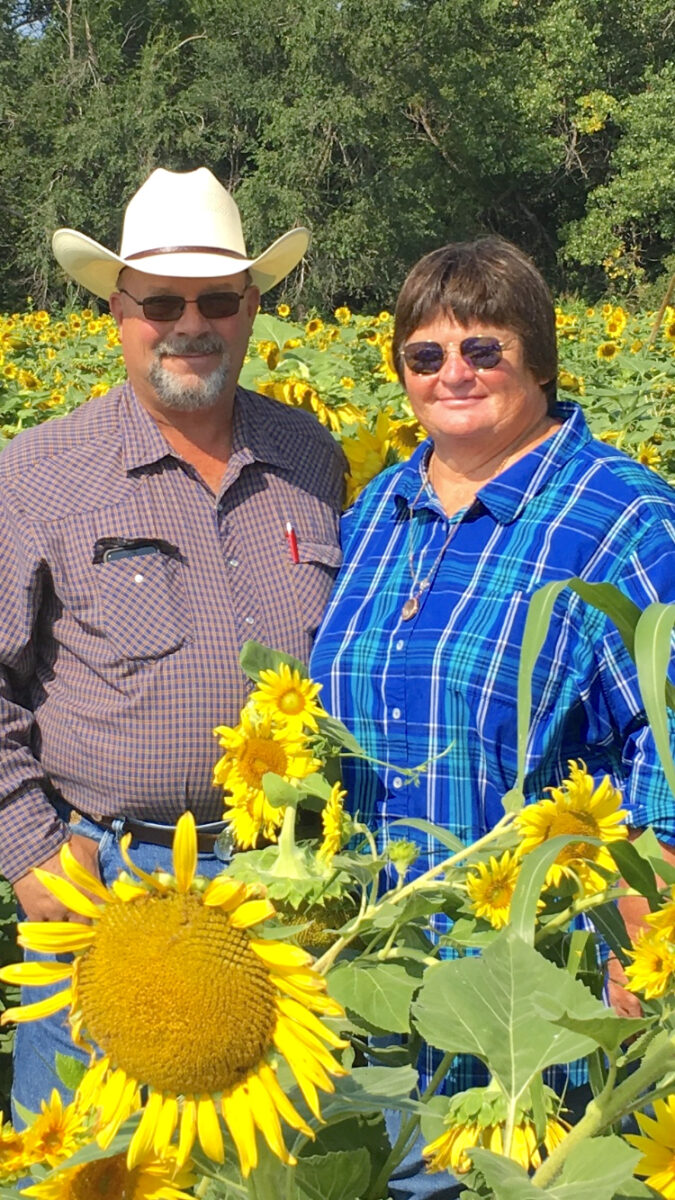
After hearing Ohio farmer Dave Brandt talk about cover crops in 2010, Jimmy Emmons’s interest in them was sparked. He heard Dave talk about how his cash crops had responded well to cover crops, nutrient management was improved, and the cover crops built soil health. Jimmy came away convinced they needed to try them on their farm, even though he was in a very different region of the country. Jimmy and his wife Ginger farm in western Oklahoma, an area with about half the annual rainfall of where Dave Brandt farms.
Jimmy became interested in conservation early on in his farming career, trying his first no-till fields in 1995 at a time when his parents were still doing conventional tillage. It took a while to figure out how best to manage no-till in his area, but by 2010 every field they owned was no-till. The next step was trying cover crops.
At first, they planted a warm season mix of about six species, including sorghum, millet, and cowpeas. This was planted after winter wheat harvest in mid-summer. Over time, they experimented with various options, and now try to plant every field to cover crops, either after winter cereal harvest in mid-summer or after cash crops like sorghum are harvested in fall.
The Emmonses currently row crop about 1,400 acres and also utilize about 5,500 acres of native range, moving cattle between rangeland and cover crop fields for grazing based on season and forage availability. They typically have about 200-250 head of cattle at any one time. They’ve become increasingly diversified with row crops, trying to have at least a four-year rotation on each field. Common cash crops are sorghum (milo), soybeans or cowpeas (or occasionally mung beans), sesame or sunflowers, and a winter cereal. While winter wheat remains their primary winter cereal, they have grown some triticale, winter barley and cereal rye for seed harvest. Jimmy noted that they’ve had to stop growing corn because of problems with feral hogs in their area.
After the winter cereals are harvested in mid-summer, they always drill in a warm season mix of about 15 cover crop species. A typical summer mix primarily includes warm season species, such as a couple of types of sorghum or sorghum-sudan, three species of millet (proso, foxtail, pearl millet), sunn hemp, and cowpeas. They also include a few cool season species in the summer mix, such as collards, sweet clover, and red clover. They stagger the summer cover crop plantings a bit depending on rainfall to try to provide a variety of grazing options going into fall.
After harvest of summer cash crops in the fall, they also plant a diverse cover crop mix, but use only cool season species at that time of the year. Typical cool season covers they drill in the fall include triticale, winter barley, winter wheat, forage radish, forage turnip, hairy vetch, collards, and red clover. If they are seeding the cover crops late in the fall, they simplify the mix to include only winter cereals, since the cereals are more tolerant of late planting.
Jimmy said they’ve found that it really pays to use a grain drill for cover crop seeding in their area, as they can’t count on having rainfall to sprout broadcasted cover crop seed.
Grazing cover crops
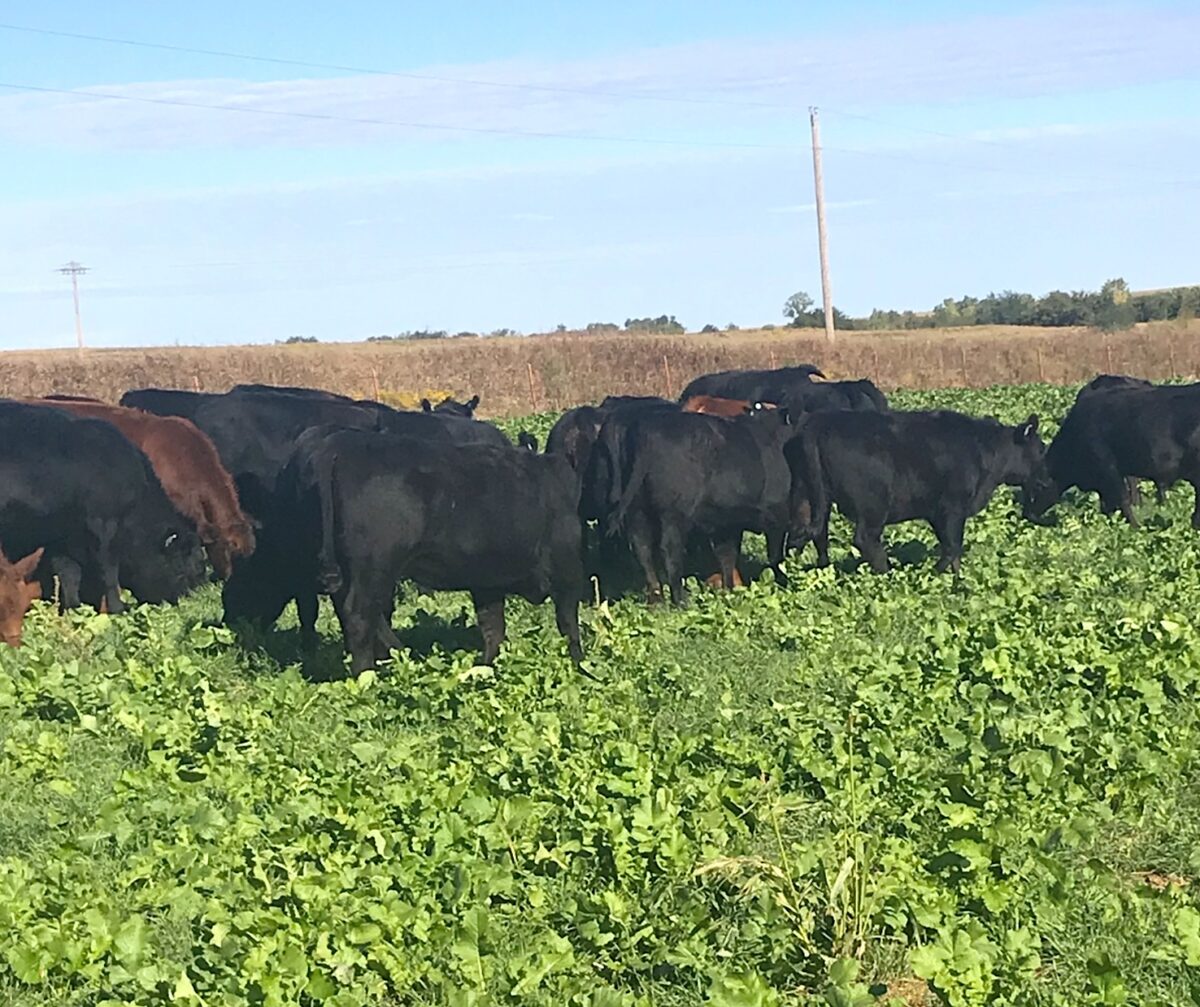
For the Emmonses, one of the most valuable aspects of cover crops is their ability to provide extra forage. Jimmy commented that he has calculated they are making an average extra net profit of $170-$180 per acre from grazing the cover crops. For grazing the summer cover crop mix, they typically put out cow-calf pairs into the cover crop fields in August. After letting them graze for 10-14 days, they wean the calves by moving their mothers onto other forage, usually native range, and leaving the calves in the cover crop fields where they have high quality forage to continue putting on weight. The calves continue grazing on cover crop forage during September and October, and are then moved onto cool season cover crop fields in late fall. After a couple of months of grazing cool season cover crops, the weanlings are at their target weight of 800-900 pounds, and will go to market in December or January.
While grazing cover crops in fall, the Emmonses typically move the cattle between grazing paddocks every two to three days to optimize forage use. After weanlings are sold in December and January and they have only the older cows left to graze, they reduce the frequency of moves to once a week, giving them a little more flexibility to travel to winter farmer meetings and do other activities at that time of year.
With the cool season covers planted in fall, they do a final round of grazing in early spring once the winter annual cover crops have grown a sufficient amount.
Cover crop termination
While the warm season cover crops they plant in summer will all be killed by winter weather, they do have a variety of over-wintering cool season cover crops they normally terminate with spring herbicides. Jimmy said he’s been interested in using a roller crimper as a termination tool; an incentive program they are doing with General Mills has encouraged him to explore that option.
They base their termination approach on soil moisture, terminating early in the spring if conditions are dry. If they have a spring with enough soil moisture, they keep the cover crop growing longer and plant green into the still-living cover crop. He prefers that approach if they have enough rainfall to do it.
Fertility changes
Jimmy shared that they have been able to cut back quite a bit on crop fertilizers and have learned to focus more on maximum profit than maximum yield. The legume cover crops and cash crops in their system have contributed nitrogen. The overall combination of cover crops, no-till, and diversified rotation has boosted soil health and soil organic matter, reducing their fertilizer needs. Grazing of livestock on their crop fields has also contributed to fertility and stimulated soil biology. To further enhance the soil biology, they’ve experimented with some compost tea applications, such as applying the liquid compost tea as an in-furrow seeding time application.
By emphasizing soil health management over several years, Jimmy said they’ve been able to cut back their fertilizer program by over half on all their crop fields. For cash crops like sorghum, sunflowers, or sesame, they can often get by with a modest 20 pounds of nitrogen fertilizer per acre due to their other fertility enhancement management methods.
Soil and economic impacts
When asked about soil improvements from cover crops and no-till, the first thing that came to mind for Jimmy was the big positive impact cover crops had on rainfall infiltration, which is critical in his low-rainfall area of western Oklahoma. In fields that had been farmed conventionally, Jimmy said rainfall infiltration was only about a half-inch per hour, so heavy rains resulted in a lot of the rain running off the fields. Now, after several years of no-till and cover cropping, they see up to 8-10 inches of rainfall infiltration per hour, allowing every drop of rain to soak into the soil. The improved soil organic matter and soil aggregate structure has also increased the soil’s inherent water holding capacity, creating more of a moisture reservoir for dry periods.
Jimmy observed that cover crops have helped significantly both in excessively wet periods and prolonged dry periods, which has really helped them stay in business. He commented that cover crops have made their operation resilient to extreme whiplash weather. During periods of drought, they have more soil moisture than conventional fields do, and when they do experience a rainstorm downburst, their fields capture every drop of rain.
He credits the use of cover crops and no-till, including grazing cover crops, with allowing them to improve their farm finances significantly and get to the point where they haven’t needed an annual operating loan from a bank. The extra forage available from cover crop grazing has also taken pressure off their native rangeland for grazing, especially in the summer-to-winter period.
Asked about what message he would give to farmers who haven’t yet tried covers, Jimmy said, “Never say never. There are so many places to go learn about covers–conferences, books, farmer networks, and social media.” He suggested farmers take time to learn more about the soil and water cycle. For him, that learning process made him realize that the traditional system of using periodic fallow to conserve moisture was not working and they needed a different approach.
Ultimately, Jimmy is really happy they converted to cover crops and no-till, and feels these management techniques have allowed them to stay in business and be profitable. He ended by stressing their desire to leave the land better than they found it, something he believes they are doing successfully with their focus on soil health.