When considering cover crops, it’s natural to wonder what their financial payoff will be. In this chapter, I hope to convey the various ways that cover crops contribute to profitability. I’ve heard time and time again from highly successful farmers that they feel their financial bottom line is benefitting from cover crops.
When penciling out the potential costs and returns of cover crops, there are a few general points to keep in mind. First, the costs of cover crop seeding may be fairly consistent from year to year, whereas the returns from covers will not only increase over time, but are also typically greater in years when drought or other weather stress may reduce crop yields. Second, the economic effect of cover crops is defined not just by their yield impacts, but also by how they reduce costs in other parts of your operation. Third, use of cover crops usually involves other management changes that lead to improved net profitability (something addressed not only throughout this chapter, but also in Chapter 10 on combining cover crops with other soil health practices). Evaluating the full economic impact of cover crops, in other words, involves taking a holistic or systems-based perspective of the various ways that cover crops affect profit, and consideration of how your whole cropping system fits together and could be improved. It also involves thinking more than one year ahead, just as if you were evaluating whether to invest in a new piece of field equipment or whether it’s worth liming or tiling a field.
To break the complex topic of cover crop economics into more digestible chunks, let’s look at eight ways that cover crops can impact your profitability, plus the payoffs after one year, three years, and five years of using cover crops.1 The rest of this chapter will address:
- Arming yourself for battle against herbicide-resistant weeds
- Enhancing fertility and nutrient management
- Lightening the compaction load
- Dollars and sense of grazing
- Tips for cost-effective seeding and management of cover crops
- Cashing in on incentives
- Insurance for droughts and floods: winning the weather war
- What to expect in terms of yield impacts
- One-year, three-year, and five-year payoffs
Arming yourself for battle against herbicide-resistant weeds
One of the greatest emerging threats on row crop farms is the rise of herbicide-resistant weeds. If you are like most commodity farmers, you probably have herbicide-resistant weeds on at least some of your fields, and the problem is growing worse each year. Marestail, waterhemp, and Palmer amaranth are the three worst weeds to have developed herbicide resistance so far, but more weeds are gaining resistance to one or more major herbicide chemistries, particularly glyphosate. The most common approach to dealing with this problem is to apply even more herbicides, which unfortunately comes at greater cost to the farmer. While it’s true that adopting an appropriate combination of residual and post-emerge sprays can help manage the problem, these common steps are sometimes ineffective at keeping all herbicide-resistant weeds in check.
Fortunately, cover crops can be used strategically as a cost-effective tool to manage herbicide-resistant weeds. Research at the University of Nebraska (Basche, 2019) found that cover crops reduced both the number and biomass of herbicide-resistant weeds by 90%. Almost any densely growing cover crop species or mix can suppress marestail, which often starts growing in the fall or early spring if no plant competition is present to prevent its establishment. Summer-emerging weeds like Palmer amaranth or waterhemp can also be deterred by the presence of a thick layer of cover crop residue.
Cereal rye in particular has been found to be successful in combination with herbicides against these weeds. It can produce a thick layer of biomass that prevents or reduces weed emergence if allowed to grow long enough. Cereal rye also produces allelochemicals that are particularly effective against small-seeded broadleaf weeds like waterhemp and Palmer amaranth, reducing percent germination and/or vigor of these weeds and making it easier to knock them out with herbicides.
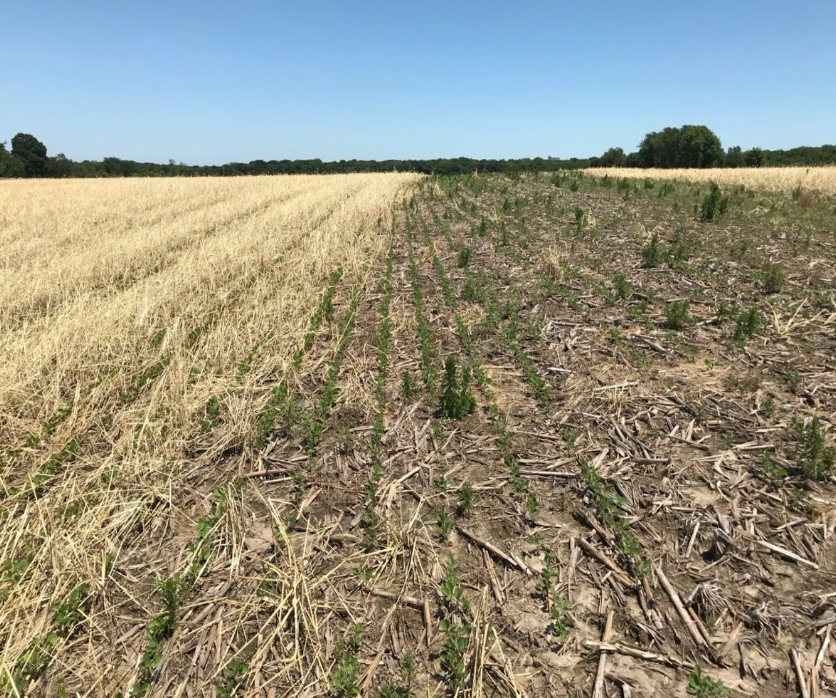
The best way to use cereal rye as part of a weed control strategy is with a later-planted crop like soybeans, cotton, sorghum, or sunflowers. Allowing the cereal rye to grow 3-5 feet tall enables it to gain sufficient biomass (preferably at least three tons per acre of dry biomass) to be effective in creating a weed-suppressing mat. Of course, it’s also best to plant the commodity crop no-till into the cereal rye so the residue can form a thick mat on the soil surface. In recent years, many farmers have found that planting a broadleaf commodity crop like soybeans or cotton into still-living green cereal rye, then spraying or rolling the cereal rye after planting, is the best way to use this cover crop. This “planting green” approach (see more details in Chapter 8) not only allows the cereal rye more time to grow, but also keeps furrow openers from pushing aside previously rolled or downed residue; if the planter exposes weed seeds along the furrow to light, some of those weeds will start growing. A roller or roller crimper works well either attached to the planter or in a separate pass, but many planters also do a decent job of knocking down cereal rye that is tall and in the flowering stage (at or after pollination).
Enhancing fertility and nutrient management
Before the rise of modern chemical fertilizers, cover crops were often used as “green manure” that could enrich the soil. Legumes in particular were popular for this purpose. As mentioned in the preface, on our farm in central Illinois, my father used yellow sweet clover for this purpose. The positive difference it made in the quality of our corn crop was clearly visible, and the lesson of how the clover improved the soil stuck with me.
Nitrogen fixation
In my own career as an agronomist, I’ve experimented with many different legume cover crops and, as with other agronomists and farmers, have found crimson clover, hairy vetch, and Austrian winter peas to be good at improving soil fertility through their nitrogen fixation. With these winter annual legumes, most of the nitrogen fixation happens during the spring, particularly from late April to June. Thus, early termination of these legumes, such as in the first half of April before corn planting, significantly limits the amount of nitrogen fixation that occurs. It can make the difference between getting less than 50 pounds of fixed nitrogen to benefitting from well over 100 pounds of fixed nitrogen from legumes that are allowed to grow until they start flowering or beyond. The best recorded nitrogen contributions from hairy vetch and Austrian winter peas have been around 150 pounds of nitrogen, but somewhat lower contributions would be more typical. Still, I’ve found it possible to grow crops planted around the first of June in Missouri, such as sorghum or sunflowers, without any supplemental nitrogen other than the nitrogen provided by a legume cover crop.
While it’s well understood that soybeans as a summer legume contribute only a modest amount of nitrogen fixation, there are other summer legumes that are much more effective at fixing nitrogen during the warmer months of the year. Cowpeas and sunn hemp are the two most often used for summer nitrogen fixation, grown either as single species or as part of a cover crop mix, and are typically planted after winter wheat harvest or after early-season vegetables. A rotation of corn, with cereal rye in the fall then soybeans the next summer, followed by winter wheat and then a summer legume such as cowpeas or sunn hemp (with or without other cover crops in a mix) can provide more nitrogen to the following corn crop than simply using a winter annual legume that is terminated very early in April, like crimson clover or hairy vetch. Such a diverse rotation is also great for pest management and building up soil organic matter over time.
Perennial and biennial legumes can also be very beneficial from a nitrogen fixation standpoint, if allowed to grow for a year or longer. Red clover and alfalfa are the most popular legumes for rotations where the legume will be allowed an extended period of growth. They may be hayed or grazed to make income before the field is planted back to corn at some point.
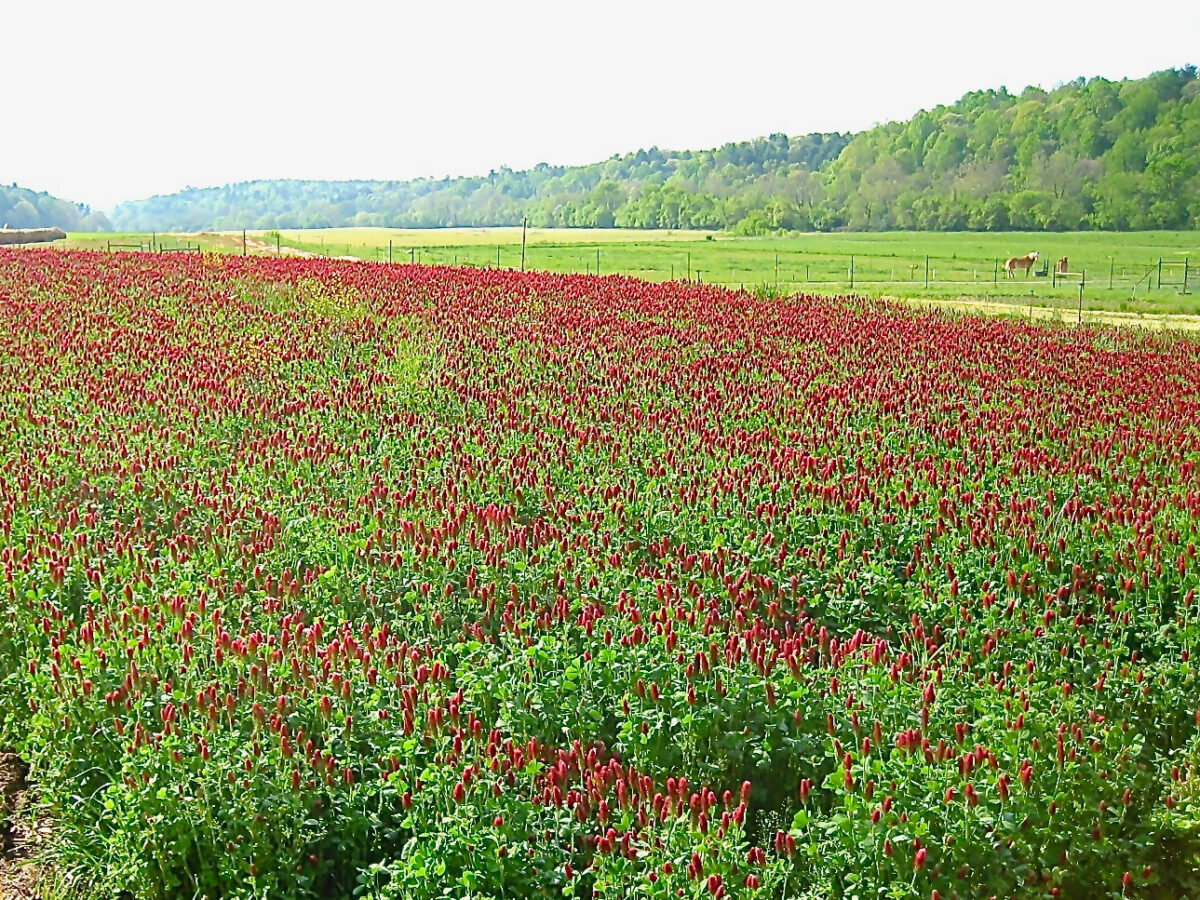
I expect we’ll see additional species of legumes receive more attention going forward, as well as improved cultivars of the common legume cover crops. This will enhance not only the overall performance of cover crops in the rotation, but also potentially the amount of nitrogen they are contributing. Examples of legume species with new cultivars being used in some regions for nitrogen-fixation and overall cover crop benefits are balansa, berseem, and Persian clover. Faba beans and lentils are legume pulse crops normally harvested for seed that have begun to be used in some cover crop mixes. Some farmers are even trying perennial clovers like white clover or kura clover as low-growing covers that can grow between corn plants or other summer annual cash crops.
Predicting the amount of nitrogen that will be contributed from a cover crop to a cash crop like corn can be challenging. So much depends on the amount of growth the legume achieves. As testing for in-season nitrogen needs of corn continues to improve, I expect it will be the best way to evaluate how much nitrogen fertilizer application can be reduced following a cover crop. In general, a well-grown legume cover crop that reaches full size and flowering before planting a summer cash crop can reliably contribute at least 50-100 pounds of nitrogen per acre, providing potential cost savings on nitrogen fertilizer of $20-$40 per acre (based on Midwest fertilizer prices in 2022). Just remember that with typical early termination of legume cover crops before corn planting, nitrogen contribution will be much reduced due to lack of legume growth, and fertilizer savings will be modest at best.
Nutrient sequestration
While nitrogen-fixation from legume covers is important on some fields and farms, the bigger nutrient impact from cover crops on watersheds comes from the nutrient sequestration all cover crop species can provide. Both plants and soil organisms play a role in keeping nutrients in a field rather than exiting through tile lines or surface runoff. While summer cash crops are growing, nutrient loss is minimized. The problems with nutrient loss normally start after the cash crop is harvested and nothing is growing in the field, often until the next spring. There are no plant roots in the fall-to-spring months to take up and hold on to soil nutrients, and many soil microbes die or go dormant because they don’t have living roots to support them. With no plant roots and a less healthy soil ecology, the system becomes leaky and valuable nutrients are lost, not only causing problems off-site but also causing a need for more expensive fertilizer to be purchased the next season. Soil that erodes when no cover crops are present will also carry off nutrients–a loss so consequential that it’s almost as if dollar bills are blowing or washing out of the field.
Fortunately, we now know that a wide variety of cover crops can keep soil nutrients in the field and in the root zone where we want them for the next cash crop. We’re still learning which cover crops are best for capturing nutrients and when those nutrients are released, but in general, the more vigorous and deeper-rooted cover crops are the ones most helpful for scavenging or sequestering nutrients. Fast-growing covers in fall–like radishes or oats–can be valuable, as can most of the winter annual cereal grasses and Brassicas.
Going forward, we need research to help us better understand which mixes of cover crops work best for releasing nutrients at the right time for the cash crop, and how best to supplement with nitrogen, particularly after winter annuals such as cereal rye. One thing we have learned is that a high-carbon cover crop like rye or triticale can be made to release its nutrients somewhat faster (and achieve faster biomass breakdown) if combined with a high-nitrogen cover crop like a legume or Brassica. The challenge is getting enough growth of a legume or non-cereal in a stand of vigorously growing rye to accelerate the release of rye nutrients the following summer; it helps to cut back substantially on the rye seeding rate when using it in mixes. Keep in mind the goal of achieving more rapid breakdown of rye residue may be counter to keeping the residue in place for weed control or moisture retention reasons.
In sum, cover crops that can sequester nutrients, particularly nitrogen, can provide cost savings in the amount of fertilizer required for a following crop. This amount will be modest, perhaps $10-$15 per acre, but when added to other economic benefits of the cover crop, it can provide a significant positive return.
Extra soil nutrients from increased soil organic matter
The economic savings from soil fertility changes discussed above can occur quickly, within the first year of cover crop use. In the longer-term, the gradual increase in soil organic matter from consistently using cover crops can pay big dividends as well. A soil that is boosted by 1% in organic matter, such as from 2%-3% organic matter, will contain roughly an extra 40 pounds of nitrogen and 20 pounds of phosphorus and potassium per acre. This is because the stabile fraction of organic matter is always releasing some nutrients to plant roots through the action of soil microbes. The economic contribution from an extra 1% of organic matter can be estimated at approximately $35-$40 per acre (based on 2022 fertilizer prices), and that’s not including the significant value of the extra organic matter for improving soil moisture–see more on this topic later in this chapter.
Lightening the compaction load
If you use large combines, trucks, or tractors, you have probably experienced compaction problems in at least some of your fields. Presumably, you’ve had to spend time and money doing deep tillage operations in an attempt to remedy those yield-robbing compaction issues. However, as you may have heard, ripping or other deep tillage operations are often ineffective at providing a long-term solution to compaction, as clay subsoils tend to swell ripped furrows closed in the months following the action of the ripper.
Farmers are increasingly finding that the best long-term solution to compaction is to use biological solutions that help build soil structure and improve aeration. Research at Ohio State University by Alan Sundermeier and Randall Reeder showed that cover crops were more effective at relieving compaction problems than using deep tillage. In the short term, cover crops created more macropores in the soil both from their roots and by stimulating earthworm activity. The increased number of macropores, especially under minimum-till situations, provided improved drainage and aeration of compacted soils. In the longer term, cover crops and the microbes they support build improved soil structure by increasing soil aggregation. This improved structure serves not only to provide strength to soils but also to add pore space for better aeration.
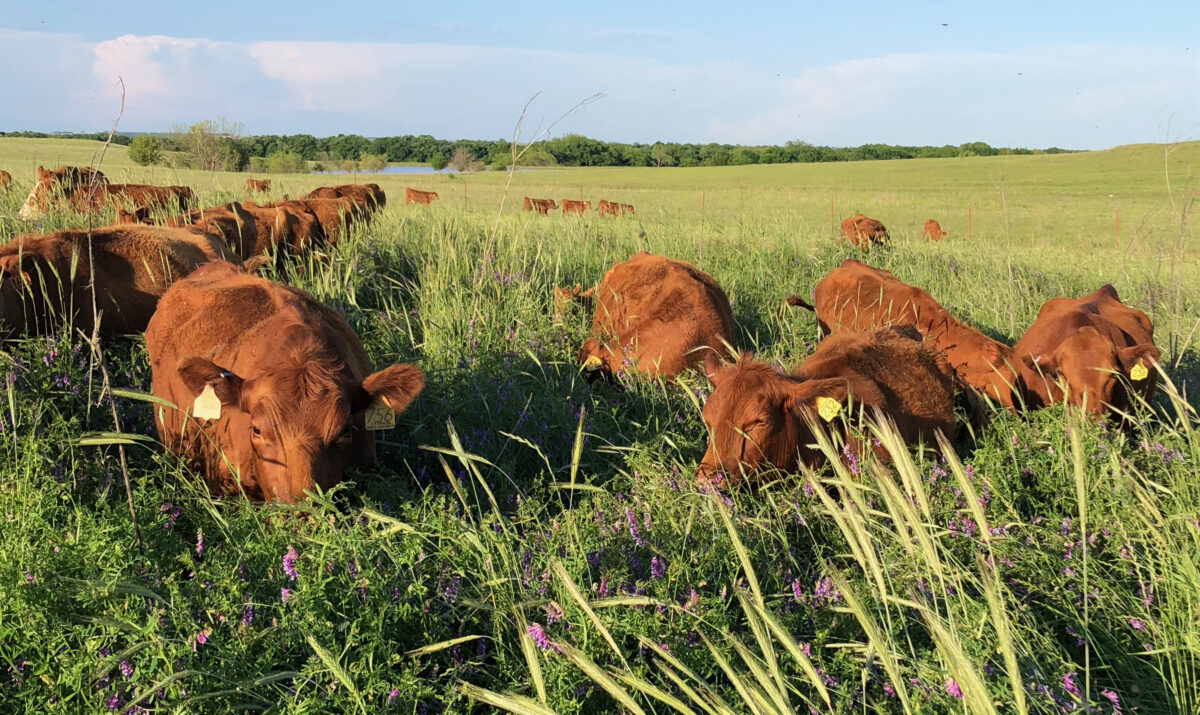
In fact, cover crops can help offset the potential short-term compaction issues that might otherwise come from moving to no-till or adding grazing to a field. The no-till advantage is discussed at greater length in Chapter 9, but suffice to say that combining no-till and cover crops creates a synergy in soil management that improves soil structure even more than using either practice alone. Likewise, cover crops in a field make it more feasible to have cattle in the field, not unlike the advantages of walking on sod versus muddy bare soil after a rain. The roots provide an anchoring effect and improve the soil structure, preventing excessive compaction from grazing animals.
Bottom-line savings from reducing compaction through cover crop use can vary depending on whether it is a wet or dry year, the type of soil, and how much of the field has been compacted. An Iowa State University study cited 10%-20% potential yield loss in unfavorable years from compaction. Of course, compacted soils can be a problem in both dry and wet conditions, the latter both because crop roots may suffer in wet soils and field operations become difficult in poorly drained areas. The Iowa Soybean Association reported average yield losses of 4-6 bushels per acre for corn and 2-3 bushels per acre for soybeans. At 2022 prices, that would be an average yield loss in corn and soybeans costing about $30 per acre. While cover crops are not likely to completely restore compacted soils in the first year of use, ongoing improvements will be seen over a few years of cover cropping, particularly when combined with no-till. Soils can be gradually restored to normal bulk density levels, bringing potential savings on otherwise compacted fields.
Dollars and sense of grazing
Before discussing dollar return from grazing covers, let’s get into why grazing of cover crops is a smart strategy. First, consider how all our soils, both prairie- and forest-derived, have evolved with the grazing action of herbivores (buffalo, deer, elk, etc.). Thus, the soil microbial communities present in our soils developed in a time when animal manure, urine, and saliva were frequently deposited. Modern-day studies have shown that the manure, urine, and saliva from cattle stimulate the activity of many soil organisms and seem to contribute to more rapid buildup of soil organic matter.
Aside from soil improvements, I’ve heard a number of farmers say that adding cattle grazing of cover crops on a row crop farm has provided another income stream to support an additional family member, particularly when combined with converting some less productive ground to pasture so that year-round forage is available. Given how difficult it can be to secure more row crop ground for an additional family member to farm and the high cost of modern farm equipment, grazing cattle or other livestock can be a lower-cost point of entry for family members seeking to start farming.
In terms of dollars, the good news is that grazing cover crops is one of the best ways to boost net income on row crop fields. This is true whether the cattle (or other livestock) are your own or you rent the cover crop ground to a neighbor to graze their animals. Costs of fencing and supplying water will cut into first-year profit if that infrastructure is not already in place, but after those costs are covered, net returns of $50 per acre or more are feasible (based on an analysis in SARE’s 2019 report, Cover Crop Economics). Using low-cost electric fencing can keep fencing costs down considerably, and the electric fencing can work well with a managed grazing situation where the cattle are moved regularly to get maximum value from the cover crop forage while minimizing trampling. Portable water tanks are often used with electric fencing to reduce watering costs.
At a farmer panel session on cover crop grazing during the 2019 Iowa Soil Health conference, all three farmers who were grazing cover crops commented on how they had improved net profits by adding grazing. They did note that in a wet spring, the cover crop field could have a muddy appearance from the cattle hooves but, to their surprise, such areas were not compacted and were easy to plant. They were also easier to pull a liquid manure injector or anhydrous ammonia applicator through compared to non-grazed, non-cover-cropped ground.
Tips for cost-effective seeding and management of cover crops
A key aspect of using cover crops in a way that contributes to profitability is, of course, managing them in a cost-effective way. This is particularly true with how the cost of seed and seeding is handled. However, finding the cheapest source of a cover crop seed and broadcasting it thinly with no particular plan can be a penny-wise, pound-foolish approach to saving money.
Experienced cover crop farmers have found that it pays to experiment with different equipment choices and seeding approaches, and indeed most of the bigger users of cover crops will employ more than one approach in any given year to fit the field and time of season. It’s not unusual for some farmers to fly cover crop seed onto a few fields, use a grain drill to plant covers on other fields, and then spread some seed with a vertical tillage machine.
Ray Gaesser, a large corn and soybean producer in southwestern Iowa, keeps his cover crop costs down by using a broadcast fertilizer rig he owns and running it right after the combine, before the crop residue gets packed down by rain. The fertilizer rig can broadcast cover crop seed on 100 acres per hour, bringing seeding cost down to about $5 per acre including labor, machinery, and fuel. He also grows most of his own cereal rye, which he valued at $9 per bushel (2021), making the total cost of rye cover crop seeding $14 per acre (broadcasting one bushel of rye per acre). Ray also told me that in some years the harvested cereal rye has been his most profitable cash crop, though the rye yields do vary. Ray’s total cost of $14 per acre for seed and seeding is considerably below the national averages of $25 for seed and $12 for seeding, and illustrates the benefit of having a strategy that fits your farm and cropping goals (see more on Ray’s cover crop approach in the farmer profiles section).
To summarize, some key steps to keeping cover crop management cost-effective are:
- Seeding method. Use a method of seeding that can either cover a lot of acres per hour, or is part of an equipment pass you will be doing anyway, such as vertical tillage or fertilizer application (see Chapter 9 on equipment strategies for more ideas on seeding approach).
- Type and amount of seed. Be strategic in selecting the type and amount of cover crop seed. It’s important to buy good-quality seed that is weed-free and germination-tested rather than the cheapest seed, but use a modest seeding rate that is sufficient and not excessive for what you need. If you have flat fields and just need to get some living roots from covers in them, you may be able to get by with drilling 30-40 pounds of rye per acre. On sloping fields prone to erosion, a rate of at least 50 pounds per acre is probably needed. If doing grazing of a cover crop, a higher rate such as 80 or more pounds of rye per acre is probably justified to maximize net returns, depending on date of planting. Note that recommended broadcast seeding rates are higher than when using a planter due to lower establishment success rates when broadcasting; depending on the type of seed, a seeding rate 20%-25% higher for broadcasting cover crops compared to using a planter is recommended.
- Use of mixes. A strong case can be made for using cover crop mixes of two or more plant species in many situations (see Chapter 6 on cover crop seeding). However, it’s also possible to get carried away and add too many expensive seeds into a mix. Again, if grazing where maximum forage value is justified, more costly mixes can pay for themselves. Note that multi-species mixes can be done affordably and can be very beneficial for soil health, pollinators, and/or wildlife. Just be sure to pay attention to seed costs of the individual species in relation to their portion of the mix.
- Cover crop termination. Most experienced cover crop farmers consider the cost of terminating a cover crop with herbicides to be something they would have done anyway as part of a spring “burn down” of winter annual weeds. However, the cost of a spray application can potentially be avoided by using a planter with rollers on the back to terminate the cover crop (most cover crop species need to be at the reproductive stage to terminate with rolling). Some novice cover crop users choose a cover crop that winter kills, such as oats or radishes, to avoid having to deal with termination from a cost or labor standpoint; however, this approach sacrifices the benefits of having living roots and soil protection through springtime that comes from winter annual covers. Still, it’s a reasonable approach for someone just starting out with cover crops.
When buying cover crop seed, be sure to insist on good-quality seed, which should come with a seed tag that shows germination percentage, weed seed and foreign material content, and is guaranteed not to have noxious weeds. More than one farmer has suffered by buying a truckload of the rock-bottom cheapest cover crop seed they could find, only to find it had very poor germination or excessive weed seed contamination.
Fortunately, there are now many reputable sellers of cover crop seeds with representatives around the country, so do your homework and establish a relationship with a good seed company. If you are interested in growing your own seed, be certain that it’s a species that will produce well in your area, that you have access to good cleaning equipment, and most importantly, that the seed is not protected as intellectual property (IP). Most older varieties do not have IP protection, but ask the dealer you obtain the original seed from or check with your state foundation seed office for more information.
Cashing in on incentives
Besides grazing, the other quick way to get a positive net return on cover crops is to take advantage of incentive payments for covers. Many states are now offering cover crop incentive payments, but even if your state doesn’t have them, you can certainly request incentive payments through your local USDA Natural Resources Conservation Service (NRCS) office. Incentive payment rates, both federal and state, vary from state to state, but are almost always $30 per acre or more, and are often in the $40-$60 per acre range. If you are a beginning farmer, have organic fields, or fall into certain other categories, you may be able to get even higher rates. And you can also get assistance for setting up grazing systems, such as for fencing or possibly watering systems.
NRCS offers cover crop payment through two main programs: the Environmental Quality Incentives Program (EQIP) and the Conservation Stewardship Program (CSP). These two programs differ in several ways, but both will provide payments for cover crops. Under EQIP, you can apply to do one or more conservation practices such as cover crops, and typically agree to do that practice for two to three years, receiving annual payments. Under CSP, the payments are typically for five years, but you will usually be asked to develop a conservation plan that includes at least a few conservation approaches. In both programs, you are not guaranteed to be selected for a contract as they select from many applications within the county and state, but generally the majority of applications for cover crops get approved, provided you meet program requirements.
You may also be able to get funding for cover crop planting as part of other special programs, including through projects funded by NRCS, such as cover crop-oriented Regional Conservation Partnership Projects. However, a field or area can only be signed up for one federal cover crop support program at a time. In other words, you can’t get both cover crop payments from two government programs for the same field, unless they are for different aspects of cover crop operations, such as support for planting the cover crop versus support for doing late-termination of the cover crop. Some programs may also require that the field to be enrolled has not previously been planted to cover crops.
Another thing to know about state and federal incentive payment programs is that you may need to choose up-front what type of cover crop approach you will use, such as using only winter cereals for covers or using a cover crop mix. You may also be asked to use a particular seeding rate or complete seeding by a certain date. In general, these guidelines are created to help you succeed, and should be reasonable to work with.
Sometimes, offerings of soil carbon payments or regenerative agriculture payments from private sector companies are another way to obtain cover crop support. If the payment is specifically for soil carbon credits, it may be possible to combine that carbon payment with a government incentive payment. Typically, these soil carbon payments are much smaller per acre than government incentive payments, but they are certainly worth considering.
A few states also have discounts on crop insurance for farmers using cover crops. At the time of writing (2022), the states with crop insurance discounts for planting cover crops in the upcoming field season were Iowa, Illinois, and Colorado. The USDA also offered a crop insurance premium payment for past cover crop use as a special initiative in 2021 and 2022 (called the Pandemic Cover Crop Program, which was a temporary, short-term offer).
Insurance for droughts and floods: Winning the weather war
Farming would be easy if the rain came on a predictable schedule and in moderate amounts. How often does that happen? I’ve heard many farmers say that they feel the weather is getting more unpredictable, with more intense rainstorms, longer dry periods, and bigger temperature fluctuations. Depending on the region they live in, some farmers may find they are facing wetter springs or drier summers, or both. While weather affects all aspects of a farming operation, there’s no question that the ability of the soil to soak up rain and withstand drought is critical to the success of most farms.
Improved soil health is increasingly being recognized as a form of crop insurance that can help a farm be resilient in the face of weather extremes. With high rates of rainfall infiltration, a healthy soil will soak up valuable rainfall instead of letting it run off, carrying nutrients and topsoil with it. If that soil also has high organic matter, it can hold that moisture for longer, like a sponge. Residue on the surface can reduce evaporation and keep the soil cooler. All of this helps a crop or pasture get through longer drought periods or deal with higher temperatures.
One of the more remarkable things we’ve learned about soil health is that cover crops can increase the amount of mycorrhizal fungi in the soil. This type of fungi plays a critical role in providing nutrients and even water to crop roots in return for carbohydrates that are exuded by roots. If the soil is tilled and then dormant with no living roots for seven to eight months a year, then many of the fungi die and the cash crop will suffer, especially during dry periods when roots grow less and access to water and nutrients provided by the fungi is critical.
We’re still learning about all the ways that cover crops can help in a drought, but they include:
- The soil stays cooler with cover crop residue on the surface, leading to less crop stress.
- The soil is moister due to less evaporation.
- Rainfall soaks into the soil (infiltrates) better due to cover crop roots and earthworms, leading to less runoff and more water being accumulated in the soil root zone.
- Higher soil organic matter (building gradually over time) acts as a sponge to hold in the moisture; also, the organic matter and microbes build soil structure, increasing soil pore space and thus providing more space for rainfall to be stored in the soil.
- Some cover crops such as rye and radishes can grow deeper than cash crop roots, helping create deep root channels that allow the next year’s cash crop to root more deeply, accessing more water; the crop roots will also follow nightcrawler tunnels, rooting deeper into the soil.
- Increased mycorrhizal fungi from cover crops help expand the area that crop roots can access for water and nutrients.
- Cover crops make it easier to do no-till, which is important because soils that aren’t being tilled have better macropores and better soil structure, leading to more rain infiltrating and being stored in the soil.
The opposite of drought is, of course, excess moisture. Many farmers using cover crops, especially with no-till, report being able to begin spring field operations, including planting, days ahead of their neighbors in wet springs. A major study on plant crop insurance claims in the extremely wet spring of 2019 found that use of both cover crops and no-till significantly reduced crop insurance claims that year in the six states studied (Illinois, Iowa, Indiana, Missouri, Minnesota, and South Dakota). The study was led by Bruce Sherrick at the University of Illinois. (I was involved as a co-author on that report).
Fears about cover crop soils being colder are often overblown. While it’s true that a no-till field with heavy residue will usually stay cooler than a tilled field in spring, with actively growing cover crop roots and a stimulated soil biology, there can be enough respiration from the microbes and cover crop crop roots to warm the soil into the same temperature range as a tilled soil. The soil temperature will vary depending on moisture, soil type, and time of day, but the key is to keep the cover crop alive rather than terminating it too early and creating a wet mat of dead cover residue, which would delay soil warm up.
Fall harvest operations in wet conditions are also reported to be easier in cover-cropped, no-till fields due to better soil structure and drainage. Given the size of modern commodity operations and the need for time-sensitive access to fields, any extra time gained by having cover crops and better soil structure pays significant economic dividends.
What to expect in terms of yield impacts
If you ask farmers who have three or more years of experience using cover crops what kind of yield impacts they are seeing, most will say they are either seeing modest yield increases or, at worst, no difference in yield between fields with covers and fields without. However, there are certainly cases where yield losses have occurred, most often when people are just getting started with cover crops (this is true of both farmers and researchers). Some systems, like cereal rye before soybeans or radishes in the fall before corn the next year, are pretty straightforward and unlikely to create a yield loss. The most common combination that can lead to a minor yield loss is planting corn after cereal rye, especially where the system has not been tried before and the fertility program or termination timing is not properly adjusted.
Six years of National Cover Crop Surveys included yield data from about 500 corn and soybean farmers each year (although the first survey year had yield data from about 200 farmers). This was a survey that I facilitated, and the team I worked on the survey with identified the following conclusions:
- In the first year of cover crop use, yield impacts were normally negligible, though some fields had small increases or losses.
- By the second year of cover crop use, yields started to rise following cover crops, and the degree of positive impact increased with each passing year of cover crop use up through six years or more (which was the longest period asked about).
- For soybeans, use of cover crops increased yields by 3.5% after three years and 5% after five years (data from detailed analysis of 2015 and 2016 crop years, which were relatively normal rainfall years across much of the corn and soybean region). In the drought year of 2012, yield increases following cover crops were over 11%.
- For corn, use of cover crops increased yields by about 1.8%after three years and 3% after five years. In the drought year of 2012, average yield increases following cover crops were just under 10%.
- Even two years of cover crop use provided sizable yield increases of 8%-9% in the drought year of 2012.
Field research studies have in some cases found yield results compatible with the survey information above, and in some cases found no yield impact or minor yield losses. When looking at data from small plot university research, I have noted that often the cover crop growth was reported to be minimal due to very late planting, poor seeding, and/or very early termination. In other cases, researchers handled cover crop termination poorly and crop stands were affected, sometimes leading to a yield hit. Often the planter used in a university trial is not set up specifically for planting into cover crop residue. Also, cereal rye before corn has sometimes caused yield losses, particularly when nitrogen management is not optimized.
One-year, three-year, and five-year payoffs
Evaluating how many years it takes for cover crops to pay off is a little complicated, as identified above. Investing in cover crops needs to be viewed as a multi-year payoff, not unlike liming a field to raise soil pH or installing drain tile, or even buying new field equipment. When applying lime, it may take two to three years before the economic breakeven occurs, and yet it is an accepted practice. The cost of tiling, though one-time, typically takes several years to pay, as does buying new equipment. Considering this, I think that evaluating cover crops solely based on a one-year response is a bit shortsighted. The following list explores what returns may look like after one, three, and five years of cover crop use.
Year One
After one year of cover crop use:
- Yields. Yield impact will likely be negligible, except possibly under dry conditions, when a positive response may be seen; a yield loss may occur if rye is used before corn without having a well-designed approach for termination and nitrogen management.
- Weeds. If rye is used before soybeans where herbicide-resistant weeds are an issue, herbicide savings of $10-$20 per acre may occur (or weeds impact yield), helping offset the cost of cover crop seed.
- Nutrients. Fertilizer savings of $40 per acre or more may be possible if an effective nitrogen-fixing legume is used before a late-planted crop like sorghum, but otherwise nutrient gains will typically be no more than $10-$15 per acre in the first year, and that assumes fertilizer amounts are slightly adjusted; many farmers stick with the same program in year one of cover crop use, leading to no fertilizer savings initially until soil health starts to improve.
- Compaction. Alleviating compaction issues with cover crops may provide some modest returns in yield impacts of a few percent. Whether those yield responses will be seen in year one depends on the amount of cover crop growth, the amount of compaction present, and the weather conditions that occur that year.
- Systems change. If cover crops are combined with a move to no-till, the fewer tillage passes and resulting savings in labor, equipment, and fuel can be substantial. Normally, a dip in yield is common in the first year of no-till use, but when combined with cover crop use, that yield dip may be minimized or may not occur. Machinery operations savings from no-till of not having a fall tillage pass such as a fall chisel plow, disking, or vertical tillage tool combined with not needing a field cultivator pass in the spring would save approximately $27 per acre (University of Minnesota machinery cost table, 2022).
- Grazing. If the cover crops are grazed where fencing and water are already present, a sizable return of $50 an acre or more may be obtained, assuming adequate growth of the cover crop occurs. If fencing and water need to be installed, that may offset any gains from the value of the cover crop forage.
- Incentive payments. If financial incentive payments are obtained, they will typically cover the full cost of cover crop seed and seeding, and often are high enough to also cover termination costs or even provide a positive net return, depending on the amount invested in cover crop seed and the exact rate of payment. Keep in mind that most incentive payments are multi-year contracts, so as the yields start to rise with each year of cover crop use, the profit picture keeps growing following the incentive payments.
- Timeliness of field operations. This is hard to evaluate in dollars per acre, but there can be value in cover crops potentially enabling you to start planting cash crops earlier in the spring and have a wider window to harvest in the fall. These field operation benefits are ones that increase with the number of years cover crops are used, as soil structure improves.
Year Three
After three years of cover crop use:
- Yields. Yield impact will generally be positive but the increase will normally be only by a few percent, such as 3%-4% for soybeans or 2%-3% for corn. Yield losses in corn following cereal rye can still occur, but are considerably less likely due to improving soil health and more experience by the grower at this stage. If drought occurs, yield increases following covers are likely to be sizable, probably 10% or more based on 2012 data.
- Weeds. Same as after one year.
- Nutrients. Fertilizer savings might be up to $40-$80 if a legume is used for nitrogen before a late-planted crop like sorghum or sunflowers; more commonly, fertilizer savings of $10-$20 per acre are likely based on soil health improvements.
- Compaction. Alleviating compaction issues with cover crops may provide some modest returns in yield impacts of a few percent, or possibly more in particularly compacted areas of the field.
- Systems change. Same as after one year.
- Grazing. If the cover crops are grazed where fencing and water are already present, a sizable return of $50 an acre or more may be obtained, assuming adequate growth of the cover crop occurs. If electric fencing and water supply need to be installed, it would offset any gains from the value of the cover crop forage in the first year or two, but by year three, such infrastructure costs are often paid for unless more expensive permanent fencing is installed.
- Incentive payments. If financial incentive payments are obtained, they will typically cover the full cost of cover crop seed and seeding, and often are high enough to also cover termination costs or even provide a positive net return, depending on the amount invested in cover crop seed and the exact rate of payment. EQIP contracts for cover crops typically run for three years and CSP contracts for five years.
- Timeliness of field operations. Same as after one year.
Year Five
After five years of cover crop use:
- Yields. Yield impact will generally be positive and financially significant, such as 5%-6% for soybeans or about 4% for corn. Yield losses following cover crops could still occur in isolated situations if unexpected weather impacts termination and cash crop establishment. If drought occurs, yield increases following covers are likely to be sizable, probably 10% or more based on data from the drought year of 2012.
- Weeds. Same as after one year.
- Nutrients. Fertilizer savings might be up to $40-$80 if a legume is used for nitrogen before a late-planted crop like sorghum; more commonly, fertilizer savings of $15-$30 per acre are likely based on soil health improvements.
- Compaction. Alleviating compaction issues with cover crops may provide some modest returns in yield impacts of a few percent, or possibly more in particularly compacted areas of the field.
- Systems change. Same as after one year.
- Grazing. If the cover crops are grazed where fencing and water are already present, a sizable return of $50 an acre or more may be obtained, assuming adequate growth of the cover crop occurs. By year five, any upfront costs for fencing and water supply should have been paid for, allowing for sizable net profit returns over variable costs.
- Incentive payments. By year five, EQIP contracts will have expired, as will have some other government payments, with the exception of CSP payments, which normally run for five years for cover crops. However, it may be possible to renew a government contract for cover crops by making enhancements to the practice, such as switching from a winter-kill cover crop like oats to an overwintering one like cereal rye, or switching to a mix instead of single species (check with your relevant program office on program rules).
- Timeliness of field operations. After five years of cover cropping, soil health improvements should be noticeable, particularly if the cover crops are combined with no-till, strip-till or other minimal-disturbance management. By this point, better rainfall infiltration and better soil moisture management should be quite apparent, leading to easier spring planting and more days available for fall field operations. The improved timeliness of field access will have a positive net return that could be sizable depending on weather conditions in any given year. By this point, better rainfall infiltration and better soil moisture management should be quite apparent, leading to easier spring planting and more days available for fall field operations. The improved timeliness of field access will have a positive net return that could be sizable depending on weather conditions in any given year.
This outline is a lot of information to digest, but hopefully it helps you identify the impacts that would be most meaningful on your farm. If I were to boil it all down, I’d say that in the first year of cover crop use, you will only have a net profit over the cost of seed and seeding if you obtain incentive payments (which I’d encourage you to take advantage of), if you graze the cover crops, or if you have a particular challenge with herbicide-resistant weeds.
By year three, even without grazing or weed benefits or incentive payments, cover crops should be paying their way in terms of yields, nutrient improvements, and other benefits (at least breaking even or maybe providing a small positive return if seed costs are modest). In a dry year, they can really pay. Or if you do factor in incentive payments, grazing, or weeds, you can get a tidy profit from using covers by year three. It’s been my experience in talking with hundreds of farmers about cover crops that if they stick with them for at least three years, they are almost always sold on using them long-term because the benefits have become so evident.
By year five, in the vast majority of situations, cover crops should be providing a regular net profit return that will continue indefinitely into the future. The size of the profit return will vary for all the reasons stated above, but at a minimum you should be netting at least $20-$30 per acre, and with incentive payments, better weed management, or grazing, that profit return could be $50-$100 per acre. On a 1,000-acre row crop farm, that extra $50,000-$100,000 in net income could make quite the difference in the success of your operation!
If you want to review additional data on profitability, I recommend the detailed economic case studies of 100 farmers using soil health practices published in 2021 by the Soil Health Institute (do an internet search for “Soil Health Institute economics”). Of the farms studied, no-till was used on 85% of acres and cover crops on 53% of acres, with the average farm size being 1,940 acres. They found that 85% of corn producers using soil health practices and 88% of soybean producers using soil health practices saw net profit increases. The farmers averaged net profit increases of $52 per acre for corn and $45 per acre for soybeans. Notably, 97% of the farmers reported improved crop resilience to extreme weather.
- A portion of the concepts addressed in this chapter are adapted from material I drafted in early 2019 for an in-depth SARE bulletin on cover crop economics, available as one of the publications listed at www.sare.org/covercrops. ↩︎