There are many good reasons to consider grazing crops. It’s one of the fastest ways to not only build soil health but also to make cover crop use profitable. Increasingly, many farmers are finding benefits from grazing cover crops, with the financial benefits being at the forefront. Grazing cover crops can reduce the need for expensive hay and improve the rate of livestock weight gain at times of the year when perennial pastures are less productive. Cool season cover crops can be helpful for grazing in late fall and spring, while warm season cover crops provide summer and early fall grazing options. Many cover crops can provide excellent-quality forage for a multi-week period, and using a variety of cover crops can extend the period of time when grazing is available. The high-quality forage can be particularly helpful for lactating cows, which need higher levels of nutrition. Integrating livestock into crop fields through cover crop grazing makes sense when considering that soil microbial communities evolved with grazing animals, such as buffalo on the prairie. The soil microfauna responds positively to the manure, urine, and saliva from grazing animals, leading to better soil health over time. When the grazing is done with management-intensive rotations, it helps spread the animal impact across the crop field more evenly, and maximizes both soil benefits and efficiency of forage utilization.
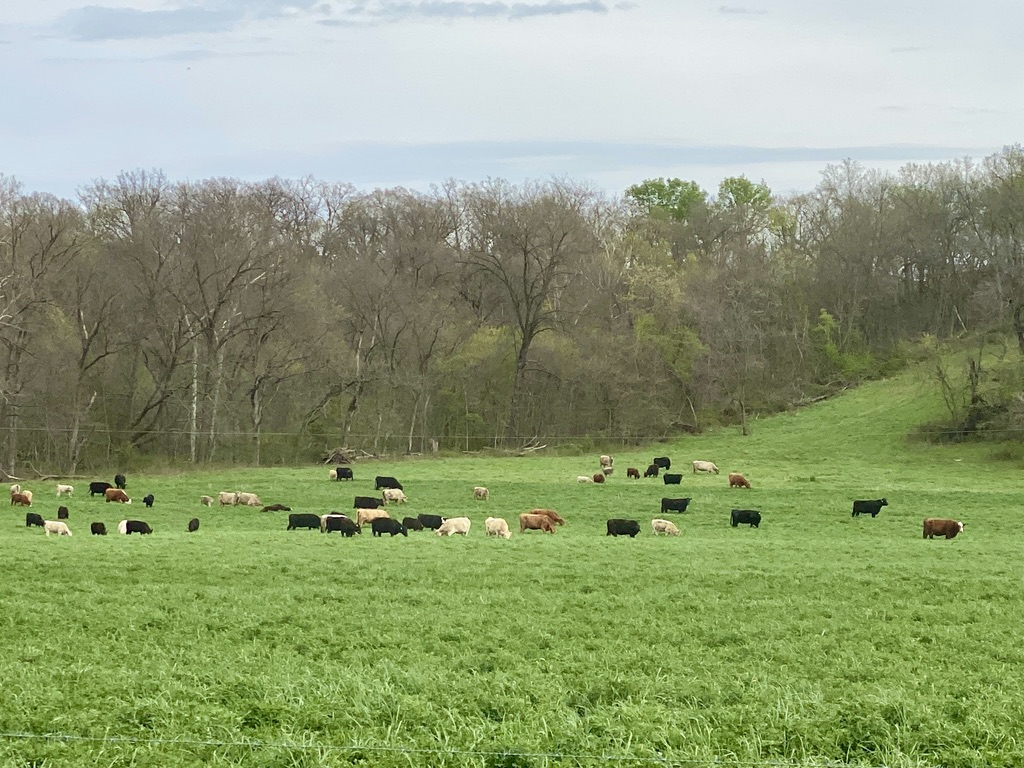
Grazing of cover crops works well with single species and many grazers also use cover crops mixes, adding to the biodiversity of the overall cropping system. Such plant diversity has been shown to boost diversity of soil microbes, adding to soil health. Depending on the species being grazed and the timing of grazing, habitat and food for beneficial insects and wildlife may also be improved. Another positive is that slug and vole issues may be reduced by the removal of some of the biomass that would otherwise provide favorable conditions for those pests.
Some cattle producers have noted that grazing cover crops seems to add to animal health, especially by providing an extended period of grazing when otherwise animals would be in a bare lot feeding on hay. Calves born out in a cover cropped field have been found to stay healthier and need fewer visits from vets, in part from less exposure to wet muddy conditions that might occur in a confined lot.
Cover crop grazing economics
Potential profit from cover crop grazing will vary but in most cases is net positive if water and fencing are already available. However, starting from scratch by purchasing new fencing and creating a water supply can delay a positive net return for a year or two, depending on upfront costs. Virtual fencing, described more below, is one way to lower your initial fencing costs, but standard electric fencing can also be used with a modest investment. Water costs can be highly variable, but on the low end you can use a towable water trailer or pump from a nearby surface water source through a temporary line as cost effective starting points.
Total returns from cover crop grazing will depend on the number of days the forage can be grazed, the quality of the forage, and the efficiency with which the forage is being utilized. Using management-intensive grazing techniques will reduce trampling of the cover crop and allow livestock to use the available plants more efficiently for weight gain. When hay costs are high and pasture grass is insufficient, cover crop forage becomes even more valuable, making it part of a good overall strategy for livestock grazing.
Hurdles with cover crop grazing
Despite the obvious benefits of cover crop grazing, there are hurdles to get over when adding this practice. These include matching animals to the cover crop opportunity from a location and timing standpoint, implementing a fencing strategy, and determining a watering method. These are addressed in more detail below. Some crop farmers also have concerns about potential compaction from cattle specifically, more so than with smaller stock like sheep and goats. While cattle can cause localized compaction if allowed to stay for too long in a given area, this issue can be reduced by management intensive grazing. Moving the water supply and keeping cattle off overly saturated soils can also help reduce the potential for compaction. When using appropriate rotational grazing strategies, most cover crop grazers find they are able to avoid any significant compaction issues, and in fact many find that their overall soil tilth improves from the grazing process.
Matching grazing animals to available cover crop forage
For producers who either lack their own livestock or only have seasonal stockers, some planning is required to have animals available at a time that matches up with cover crop availability. Some producers who manage stockers have found that instead of just adding weight to young animals and shipping them off elsewhere for finishing, they can use the high forage quality of the cover crops to finish the animals before going to market. Of course, that opportunity will depend on access to slaughtering facilities, the type of livestock, and overall management goals.
For those producers who don’t own grazing livestock, they may be able to work with a neighbor who does have animals they can graze. Leasing a cover crop field can be an extra way to gain income on the cover crop and offset the cost of seed. Using a fair and well-structured grazing lease is important. The lease should include the number of days animals will be allowed to graze and identify the dates when field access will start and end, likely with a per-day financial penalty for keeping animals on a field past the target removal date. Grazing payments are occasionally based on the amount of weight gain, but weighing livestock in and out can create extra work. A more common approach is a lease payment based on the number of grazing days and/or based on stocking density. Leases should also address how fencing and water will be provided, and who is responsible for maintenance and any repair costs. Leasing rates for cover crop grazing often exceed those for pasture grazing, due to the higher quality of the cover crop forage at key times of the year, but that can be very location specific and may vary seasonally.
Fencing strategies, including virtual fencing
If a cover cropped field already has perimeter fencing, that’s a real plus, but the reality is few crop fields have permanent fencing around them. Most cover crop grazers rely on temporary electric fencing for field boundaries, perhaps putting two to three strands of hot-wire around the perimeter of a field and then subdividing the field using single-strand electric fencing with step-in posts to create grazing paddocks. Solar chargers can power the electric fence and are readily available at many farm supply stores. Online videos can be found showing how producers have figured out efficient methods of quickly setting up and taking down electric fencing, in some cases using ATVs or UTVs to quickly manage the fencing.
While electric fencing can be cost-effective for cover crop grazing, there’s no question that virtual fencing now offers some labor savings for managing grazing animals when moving them frequently. Virtual fencing not only saves labor, but allows more real-time monitoring of animals, providing alerts if grazing animals have stopped moving or have escaped designated grazing areas. Several companies now have virtual fencing products on the market.
All virtual fencing systems use a collar around the neck of the grazing animal. Attached to the collar will be a case of some type with a battery and typically a small solar panel or panels; some systems have a case hanging from the neck like a cow bell and others have the case with battery and solar panels on top of the neck. Batteries are designed to hold a charge even during long periods of cloudy days. The battery in each collar will power a sound cue (like a beeping sound) that the grazing animal hears when they approach the grazing boundary that you have established virtually. If they go too close to the boundary they will get an electric shock, but nearly all animals quickly learn to just turn around when they hear the sound, and thus avoid getting shocked.
Virtual fencing collars have a GPS receiver for picking up satellite signals to detect where the animal is located and help keep it within the designated grazing area. The collars will also have either a way to communicate directly over a local cell phone network or with an on-farm tower that relays the signal to a cell network. Grazing paddocks can be quickly outlined on a phone, tablet or computer, which also serves to provide monitoring information on the animals. The designated grazing boundaries can be irregular, to better follow stream or woodland borders and keep animals out of sensitive areas while allowing you to design appropriately sized grazing wedges, strips, or other paddock shapes.
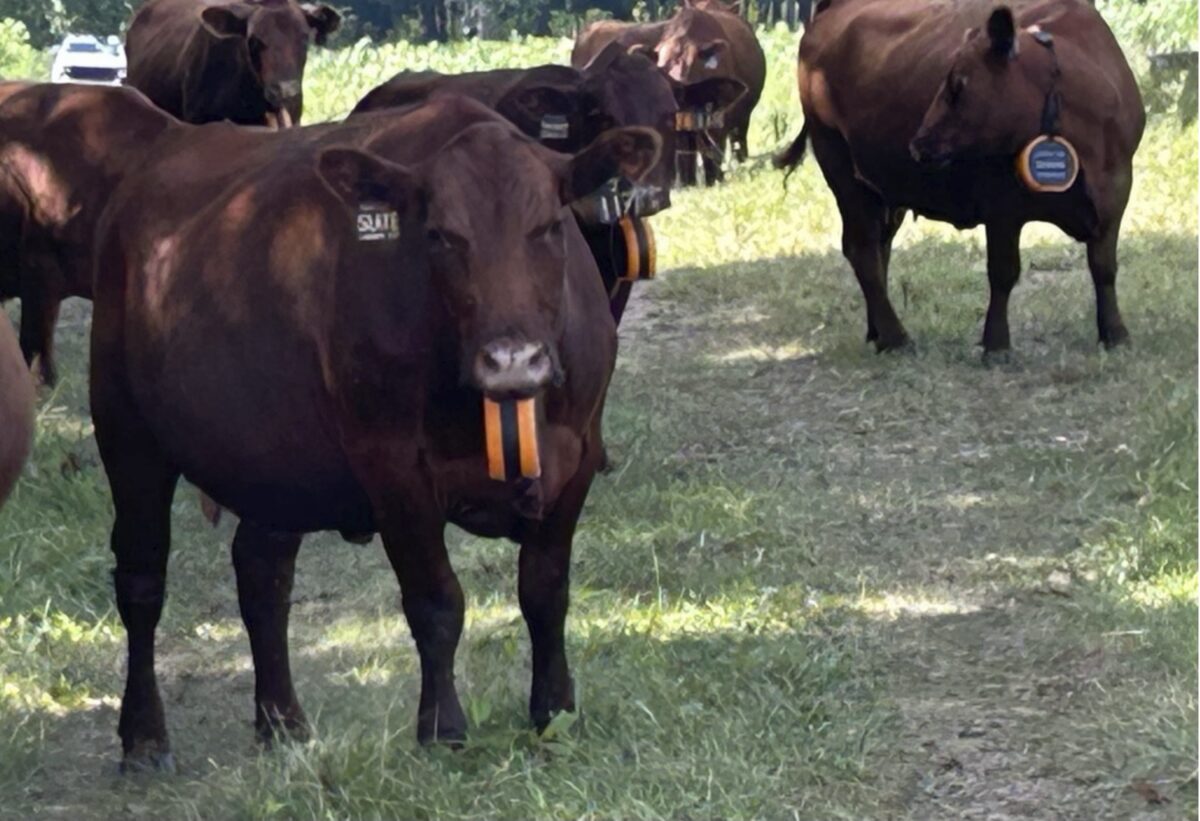
Costs for virtual fencing systems are still evolving, so check with a few of the virtual fencing companies to get current pricing. Some provide collars at no charge but make their money from monthly subscription fees per collar, whereas other companies have a fee for the collar and a separate subscription fee. Fortunately, in many states the USDA Natural Resources Conservation Service (NRCS) is starting to offer incentive payments for farmers to adopt virtual fencing, making it more affordable to try integrating this new technology that can make cover crop grazing easier.
A key caution for virtual fencing systems is that a physical fence is still strongly recommended around the perimeter of any field adjacent to roadways. This provides additional safety for both the livestock and passing motorists. That physical fence can be either a permanent fence or a less expensive, temporary electric fence.
Water
A limitation of many crop fields for cover crop grazing is a lack of onsite water. Some fields may be next to a pond or stream. Although grazing animals are often allowed direct access to such surface-water sources, it is helpful for water quality reasons to keep livestock out of streams or at least limit their access. An alternative is to use an efficient gas-powered water pump to move water to a nearby moveable tank that the animals can access.
Unlike with a permanent pasture, digging a well in a crop field or running buried water lines is not likely to be cost efficient unless the water is needed for other purposes, such as irrigation. If no wells or surface water sources are near a field, towing water tank trailers to the field and filling a livestock watering tank may be the most practical solution, especially for smaller herds of grazing animals.
Anyone considering cover crop grazing should plan ahead for a watering strategy, including how to move watering devices periodically so that grazing animals don’t overly compact a particular watering site. Financial assistance for certain types of watering systems may be available from NRCS.
Timing of grazing and maximizing cover crop forage
The SARE/CTIC National Crop Survey has included questions about cover crop grazing. For the producers responding to the survey, about a third each grazed only in fall, only in spring, or in both fall and spring. As producers get experience with cover crop grazing, some add summer cover crops after a small grain harvest, allowing additional opportunities to benefit from grazing.
For fall grazing, it’s important to allow the cover crop to get established as early as possible, allowing adequate plant growth before starting grazing. This is particularly key for overwintering cover crops so that the plants get established well enough to survive both the grazing period and winter conditions. Many producers planning to fall graze will either switch to earlier maturing corn and soybean varieties, which allows for earlier post-harvest cover crop planting, or will overseed the cover crop into the corn, beans, or other summer crop prior to harvest. For many years, aerial application with planes and helicopters has been used with cover crops to allow interseeding. More recently, drones have started to be used for flying on seed. Alternatively, some farmers and companies have used high-boy spray applicators adapted to interseed cover crops. Broadcasting cover crops into a standing commodity crop can allow for earlier cover crop establishment if timely rain occurs, but is a riskier strategy than drilling the cover crop after planting.
Fall grazing for most covers should wait until the cover has several inches of growth, but the exact height will vary depending on cover crop species and growing conditions. Also, if the cover crop is expected to regrow in spring, carefully managing the fall grazing so that the cover crop is not overly stressed (grazed too hard) will matter for its winter survival. A rough rule of thumb is to leave at least half the aboveground biomass of fall-planted covers, but again this varies. On the other hand, if the cover crop is one that will winter kill in your region, such as oats or turnips, the biomass utilization can be more extensive since recovery of the cover crop is not expected.
For spring grazing, waiting until the cover crop actively starts growing is necessary. Clear signs of green up and spring growth should be seen. On the other hand, it’s also important not to wait too late to graze. For example, once cereal rye starts heading out, cattle will start to lose interest in grazing it. Length of spring grazing varies by plant species, so if extended spring grazing is desired, choose a late maturing variety of an appropriate species, such as wheat.
Additional opportunities for cover crop grazing can be created by making space for summer cover crops in the overall crop rotation. Summer cover crop mixes that include species such as sorghum-sudan, millets, sunn hemp and cowpeas, can provide excellent forage with a large amount of biomass. Such summer cover crop mixes do well when planted with a drill soon after small grain harvest. These mixes can be grazed in late summer or early fall, and possibly again in late fall if not overgrazed on the first pass. Adding some cool season cover crops to the summer mix can increase the ability to do a late fall grazing and may make it possible to get yet another grazing pass in spring.
For farmers in the Corn Belt who want to maximize cropping system diversity and build in plenty of grazing opportunities, one approach is a three-year corn-soybean-wheat rotation that includes six possible windows for grazing in the following eight-step sequence:
- Plant winter wheat for grain, and do a light grazing that fall; however, don’t spring graze to avoid impacting wheat grain yield unless forage is of prime importance.
- After harvesting the winter wheat, drill a diverse mix of warm season annuals, including two to three species each of grasses, legumes, and other broadleaves, plus a few cool-season cover crops like oats, radishes, clovers, etc.
- Graze that summer cover crop mix in late summer or early fall.
- After regrowth of the cover crops, graze again in late fall (after a frost, wait at least five days before grazing to avoid temporary spikes in cover crop nitrates and also prussic acid in sorghum-related species).
- If possible, graze the cover crops again in spring before planting corn (corn seems to do particularly well after such diverse summer cover crop mixes).
- Right after corn harvest, drill in cereal rye at a relatively high seeding rate to boost the biomass, then fall graze if adequate rye growth occurs. Some oats can be added to the rye to increase fall biomass.
- In spring, graze the rye again, then plant soybeans.
- After the soybeans, go back to winter wheat.
Wide-row corn
Another way to get a lot of biomass for cover crop grazing is to plant wide row corn. Some farmers have experimented with corn on rows as wide as 60 inches to allow more light for a cover crop mix that is seeded either at the same time as the corn or interseeded into young corn in early summer. In the modest number of trials that have been reported on this type of corn interseeding (sometimes referred to as the “solar corridor” approach), corn yields are reduced but can still be relatively good while producing large amounts of cover crop biomass. The corn is harvested for grain by running the corn header above the height of the cover crop plants (so selecting shorter cover crop species may be needed), then the cover crops are grazed. Some farmers will alternatively graze the whole field before the corn reaches maturity, since the corn can also provide some good forage value with the cover crops.
Cover crop species for grazing
Chapter 7 provided an introduction to most of the cover crop species being sold in the U.S. Nearly all of those cover crop species have some potential for grazing, but of course some species are better suited than others for this purpose. Below is a summary of many of the more common cover crops used for grazing, with comments about the particular value of each species for grazing use. Be sure to also read the section on potential cover crop toxicity issues near the end of this chapter.
For those interested in native plants for grazing, there are a number of perennial plants in the forage trade that are used for grazing, especially native tallgrass species like big and little bluestem, Indiangrass, gamma grass, switchgrass, and some native shortgrass species used in the western U.S. Unfortunately, there are relatively few readily available options for annual cover crops that are natives, due to lack of seed development. Native annual species exist that probably could work well for grazing, but commercial seed is either very expensive or not even available. This is an area for future research and development efforts, making more use of native plants as annual cover crops. Most of the species outlined below are not natives but are annuals that have fast growth suited for use as temporary cover crops in rotations with annual cash crops. Chapter 14, on horticulture systems, details some perennial covers that can be grown in orchards, vineyards, and other settings where seasonal grazing may also be a possibility.
Cool season grass cover crops
Cereal rye. Rye is not only the most common cover crop overall, it is also one of the most common for grazing. It is reliable for over-wintering in tough conditions and can be planted later in the fall than any other cover crop. However, for fall grazing use, rye should be planted as early in the fall as feasible, otherwise grazing may need to wait until spring when more biomass is available from the rye. Early to mid-spring grazing can be excellent but rye develops high lignin as the spring goes on and palatability to grazing animals will decline faster than in wheat, triticale, or barley. Rye for grazing is normally planted at a high seeding rate if used as the sole species; in mixes intended for grazing, back off on the rye seeding rate to allow space for other species such as legumes to be able to compete.
Triticale. As a cross between wheat and rye, triticale is intermediate in performance between the two, being fairly hardy but slower growing than rye in the spring. It is sometimes favored over rye because it can be grazed for longer in the spring and it stays shorter than cereal rye.
Wheat. Winter wheat works well for both fall and spring grazing, having a longer period of forage utilization in the spring than rye. It does need to be planted earlier than rye in the fall to ensure winter survival and may not do as well in more northern areas.
Barley. Some grazers in the southern half of the Corn Belt like winter or spring barley for grazing. It has lower lignin content and is highly palatable to livestock, but once it heads out, the seed heads can become irritating to grazing animals.
Oats. Winter oats will only overwinter in the most southern parts of the Corn Belt, but despite the lack of winter hardiness in oats, it is often planted for fall grazing either alone or in mixes due to the rapid growth it achieves in the fall. Planted on the same day as winter cereals, it will get greater height and more fall biomass than the winter cereals, which are putting more energy into their root systems to help them survive the winter. There can be some differences in performance between spring oats, winter oats, and black-seeded oats, with the latter two growing a bit longer into early winter than spring oats.
Annual ryegrass. Perhaps the easiest of the cool season grass cover crops to broadcast establish, ryegrass is highly palatable and stockpiles well (meaning it can still be effectively grazed even after active fall growth has ceased). Ryegrass often overwinters in the southern Corn Belt but doesn’t reliably overwinter in the northern Corn Belt. Despite the similar names, annual ryegrass is a completely different genus and species of plant than cereal rye. A caution with annual ryegrass is that it can be more challenging to spring terminate than other grass cover crops, and weed specialists typically discourage its use because of potential weediness.
Warm season grasses
Sorghum-sudan. The sorghum family of plants offers several options for summer cover crop use, with sorghum-sudan perhaps being most common. It grows rapidly, is drought-tolerant like other sorghums, and produces a large amount of forage biomass. While it and the other sorghums can be planted as a sole summer cover crop for grazing, they are more often mixed with other cover crop species.
Sudangrass. Compared to sorghum-sudan, sudangrass is finer-stemmed and somewhat shorter with less biomass, but also offers a lower risk of prussic acid poisoning (more on this in the toxicity section below). It is suitable for making hay as well as grazing.
Forage sorghum. A taller type (8–12 feet) of sorghum than regular grain sorghum, forage sorghums have many of the same attributes as the two species above but with wider leaves and thicker stems along with the highest potential for biomass. Forage sorghums can be grazed while still vegetative or after a seed head has been produced, adding some extra protein from the seed. A downside of forage sorghums and grain sorghums is the higher risk of prussic acid poisoning from them.
Forage pearl millet. As with sorghum, there are both shorter grain-type pearl millet varieties and taller forage-type varieties. The latter are popular in summer cover crop mixes, with excellent drought tolerance and relatively rapid growth. Pearl millet can be a bit harder to broadcast establish than some other grasses, so drilling at an appropriate depth is recommended. Pearl millet does not cause prussic acid poisoning (nor do other millets), so that is another factor in the popularity of this species for cover crop grazing. However, it does not produce quite as much biomass as the better forage sorghum varieties.
Foxtail millet. A popular summer cover crop, especially favored for its fast growth and easy management by horticultural producers, foxtail millet also works well for hay and grazing use. While not nearly as tall as the grasses listed above (it typically gets 3–4 feet tall), it does grow quickly and works well as part of mixes, with high palatability to grazing animals. The fact it produces a seed head quickly allows it to add some protein through seed production in grazing mixes. It’s also a good one to support songbirds and game birds in grazing mixes (most of the grasses listed here are also beneficial for birds if they produce seed).
Other millets. Several other millets exist, as noted in Chapter 7, representing a range of disparate species from different parts of the world. Most can be used in grazing mixes. Japanese millet and browntop millet are good options for fields that may have wetter soils, though they can also grow fine in drier conditions. Using a few different millets is a nice way to add some biodiversity among the grass family members of a cover crop mix.
Teff. Sometimes lumped in with the millets, teff is a short-statured (1.5–2.5 feet), fine-textured grass that is very drought tolerant. It matures quickly and is most popular in the western hay market, though it certainly can be grazed. Its downside in a summer cover crop mix is lack of competitiveness with taller grasses, but it could still have a role as an understory plant in a diverse mix.
Cool season Brassicas
There are no warm season Brassicas, so anyone seeking to add cover crops from the Brassica (mustard) plant family to a grazing mix is limited to cool season options. The available options will all do best if planted in late summer or early fall. If planted in mid- to late fall, they will generally get little growth, and relatively few of the Brassicas overwinter, so their best grazing use is in the fall, assuming adequate time exists for fall growth. Most often, when used as a single species, they are planted after small grain harvest since that allows more time for the Brassica to get good fall growth. As part of a diverse cover crop mix, it can be reasonable to include Brassicas at a low seeding rate, recognizing their greatest value will occur with earlier fall planting dates. Fortunately, Brassicas can be broadcast established into standing crops, just be alert to the fact that Brassicas are more sensitive to certain residual herbicides than most other cover crops.
Turnips. For fall grazing, turnips are the most popular Brassica option for cattle producers, either alone or preferably as part of a mix. Cattle will graze the leafy greens first and later will eat the tops of the turnip tubers, providing a good food source into early winter.
Radishes. While the tuber of radishes is not as accessible to grazing animals as turnips, the leafy top growth is equally valuable to grazers. For that reason, it’s not uncommon to see both turnips and radishes in a diverse cover crop mix for grazing. There are a variety of radish varieties with different characteristics on the market, so consider overall cover crop goals in selecting a variety.
Canola/rapeseed. Both turnips and radishes will normally winter kill outside of southern states, leaving winter canola or winter rapeseed varieties (both are the same species of plant) as the only overwintering option among the Brassicas. Canola/rapeseed lacks the large tuber of radishes and turnips but have equally impressive fall leaf growth (if planted early) and can provide good grazing, especially mixed with a grass and possibly with a legume. Be aware that when planted in early fall, canola or any of the Brassicas can be quite competitive and may shade out legumes in particular and even some of the grass cover crops. To avoid this issue, plant a very low seeding rate, typically at most 1 pound per acre and often much less in a highly diverse mix.
Winter camelina. The most winter-hardy of the Brassicas, winter camelina can survive even winters in North Dakota. It can also survive later plantings than canola and certainly is usable much further north than canola/rapeseed. However, whereas the other Brassicas listed here have the ability to produce sizable fall rosettes of leaves, camelina has a much smaller fall rosette and doesn’t contribute much to fall grazing. It is a more viable option for spring grazing, assuming it is allowed to get some spring growth before the grazing starts.
Ethiopian mustard and other mustards. While not as commonly used as the Brassicas above, Ethiopian mustard (also called African cabbage) can put on a large amount of fall growth. It’s probably the most vigorous among the mustards for fall leaf growth if planted in early fall. However, like radishes, it won’t overwinter except in very mild winter locations. A number of other mustards exist, such as kale, collards, and yellow mustard, and may have a place in certain mixes.
Cool season legume cover crops
Crimson clover. Several clover species made their way from Europe to the U.S. over the years for use in grazing and hay production systems, with a few gaining popularity as cover crops. Crimson clover is the most popular legume cover crop in the U.S. but is limited to the southern half of the Corn Belt due to only modest winter hardiness. Its popularity derives in large part from its fast growth, making it able to produce a valuable amount of high-quality forage. While crimson clover could be grown by itself for grazing, due to potential issues with bloat in livestock it’s best to mix it with grasses, such as oats and/or a winter cereal. Bloat is a problem that can occur when livestock first start grazing lush growth of pure legume stands. It is worse with some legumes than others; for example crimson is considered to be less of a risk for bloat than alfalfa, red, or white clover.
Balansa clover. A newer clover option in the marketplace, balansa clover has value as a type of clover with a lower risk of bloat (not completely risk free, however). It can put on an impressive amount of late spring growth. Balansa clover is similar in growth habit to crimson clover (both are winter annuals), but may be winter hardy a little further north than crimson. It’s also reported to be more tolerant of wet soils in winter than crimson clover. Balansa clover produces significantly less biomass than crimson clover in the fall and early spring but comes on strong in late spring, growing 3 feet or more high. Mixing crimson and balansa together with one or more grass species can be a decent option for fall and spring grazing.
Red clover. A clover adaptable to more northern areas is red clover. Considered a short-lived perennial as compared to a true annual, it grows slower than crimson clover but can be a fit where an overwintering legume is sought in more northern areas. Early to mid-fall establishment is needed to achieve reasonable winter survival. Red clover can cause bloat, so again it’s best to mix it with non-legume species like grasses.
White clover. As is evident by its ability to bounce back from frequent mowing in residential lawns, white clover is quite tolerant of heavy grazing. However, compared to other clovers it produces considerably less biomass. It does have the ability to tolerate light shade.
Berseem clover. Berseem is a viable over wintering option for southern cover crop areas and can be used for fall or spring grazing further north, but it normally won’t overwinter outside the south. Its quality as a forage is quite high, sometimes being equated to alfalfa.
Warm season legumes
Cowpeas. Commonly used in cover crop mixes, cowpeas are planted in the warmer months of the year. The iron clay type is a vining plant that can integrate well in a diverse plant canopy and is readily available in the market. As with other legumes, be sure to get the right type of seed inoculum to ensure nitrogen fixation takes place. They can rebound from some light grazing but as with the other warm season legumes listed here, the first light frost will kill them.
Mung beans. Coming from the same genus of plants as cowpeas, mung beans have a lot of similarities to cowpeas but are a different species. They are drought tolerant and grow fast, though usually produce less biomass than cowpeas. If just picking between cowpeas and mung beans, cowpeas would often be the better choice given similar seed prices. However, to diversify a summer cover crop mix, mung beans can be a decent addition.
Sunn hemp. As a legume from more tropical areas sunn hemp won’t produce seed in most areas of the continental U.S., but does grow quickly in the summer, reaching 6–8 feet tall in two months or less. Like cowpeas and mung beans, it can tolerate dry weather, and both are strong nitrogen fixers. It can regrow after light grazing, but heavy grazing will normally suppress much further growth.
Soybeans. In a corn and soybean rotation, adding soybeans to a cover crop grazing mix is far from ideal, but for other cropping systems it may be an option. Forage-type soybeans still exist that can get as tall as 6 feet. Although domesticated in China as an oilseed crop, soybeans were first used in the U.S. for decades as a forage before farmers began to routinely harvest them for seed.
Other summer broadleaves
Sunflowers. While the rough leaves and stalks are not quite as palatable to grazing animals as the species listed above, they do get eaten in mixes, and most grazing animals do like the seed heads due to the fatty seeds once the sunflowers reach that stage. Very drought tolerant, sunflowers also provide the benefit of being deep rooted, helping open up root channels in tough soils. For grazing mixes, a low seeding rate is probably best, but sunflowers can definitely be a good addition to a mix, in part because of additional benefits for pollinators, other beneficial insects, and songbirds.
Buckwheat. Among the fastest summer annuals to produce seed, buckwheat is a popular choice in diverse summer cover crop mixes. It has a much longer period of flowering than many other plants and is great for pollinator insects, including honeybees. Grazing animals do like eating buckwheat and it has some good nutritional properties, but it has a downside as well. The leaves and seeds of buckwheat have a phototoxin that can cause fagopyrism, which causes photosensitivity in grazing animals, especially lighter skinned animals. While fagopyrism is a bit less likely if used at low rates in cover crop mixes, there is still some risk. For that reason, it may be best to leave it out of grazing mixes or else be prepared to monitor livestock, especially light skinned animals, for any signs of the sensitivity. At the very least, buckwheat should only be used at a low seeding rate in a cover crop mix that is being grazed.
Okra. As a heat-loving southern vegetable that can grow 6 feet tall, okra is sometimes used in grazing mixes due to its ability to add a lot of biomass. It is best used in mixes rather than as a sole cover crop for grazing. The main downside is that okra’s large seed pods can be a digestive issue for some livestock, especially smaller breeds.
Cautions with cover crop grazing
Despite the many benefits of cover crop grazing, there are two areas of caution to keep in mind. One is the potential toxicity from selected species of cover crops that can occur under certain growing conditions. The second is the use of residual herbicides prior to grazing.
Potential livestock toxicity issues from selected cover crops
Most of the cover crops described in this chapter are safe to use, particularly in mixes, but issues can arise that can lead to animal sickness or even death. Unfortunately, it can be hard to predict exactly when a problem will occur, but experience has shown when the probability of an issue is higher, so those situations are noted below.
Nitrates are a potential issue with a variety of cover crops and are most likely to reach dangerous levels during and after periods of plant stress, such as severe drought or frost. It’s recommended to avoid grazing a cover crop for at least five days after a drought ends or after a frost. Using diverse plant mixes can also lower the risk from nitrates. Another strategy, when grasses are involved, is to manage the grazing so that livestock are primarily eating the upper parts of plants, since nitrates in grasses tend to accumulate more in the stems than the leaves.
Prussic acid is a grazing issue more confined to selected grasses, especially the sorghum family (plus a few non-grass species). Forage sorghum is the most likely to create a problem, but sorghum-sudan, and to a lesser extent straight sudangrass, can accumulate prussic acid. The issue is most likely to arise during a drought or after a non-killing freeze. As with nitrates, it’s recommended to wait at least five days to graze after frost. During a drought, it’s best to avoid grazing sorghum species. It can also be an issue early in sorghum growth, so waiting until the sorghum family plants are 18–24 inches tall can significantly lower the risk. Once again, diverse mixes can also greatly reduce the risks compared to grazing a pure stand of sorghum.
Bloat was mentioned as an issue with some legumes. This is easiest to deal with by having a diverse mix that includes grasses and when less than half of the mix’s calorie portion is contributed by legumes. It can also help to wait until after dew comes off a field or after a rain has dried. If legumes represent a high percentage of the cover crops being grazed, introducing the livestock gradually to those legumes and feeding hay as part of the diet helps reduce potential for bloat issues.
Another legume toxicity issue is specific to hairy vetch. There is some data suggesting that hairy vetch can be toxic to cattle. More research is needed to more fully understand when this is an issue, but turning cattle into a pure stand of hairy vetch is definitely not recommended. Hairy vetch can also be a problem for sheep and goats, although cattle and horses seem most sensitive. A low percentage of hairy vetch in a diverse cover crop grazing mix may not necessarily be an issue, especially if grazing before the vetch has flowered, but the safest thing is just to avoid using hairy vetch for grazing until we learn more about this topic.
Among the Brassicas, the primary thing to watch out for is potential toxicity from high levels of sulfur, which can cause Polioencephalomalacia (PEM). This is not a regular problem but can be a potential risk when grazing cattle on a pure stand of Brassicas. It is best to keep the Brassica portion of the cattle diet to no more than two thirds of the diet.
A more general strategy to reduce health issues when starting cover crop grazing, especially if the livestock are coming off hay or poor pasture and the cover crops are lush, is to limit the portion of their diet coming from the cover crops during the first several days. This can be done by limiting their access to the cover crop and feeding some hay as part of the diet, until they adjust to the rich cover crop forage.
Concerns with residual herbicides in fields with cover crops for grazing
As most farmers are well aware, “the label is the law” when it comes to herbicide use. A number of residual herbicides used on commodity crops list multi-month periods before forages, including cover crops, are supposed to be planted and used for forage (whether for grazing, as hay, or other uses). These label guidelines should be followed. To avoid any legal issues, residual herbicides being considered for a field should be evaluated for their schedule impact on the desired grazing plan. In some cases, an alternative residual herbicide that doesn’t restrict grazing or a weed control strategy that avoids residual herbicides will be needed to allow cover crop grazing to proceed in the desired time window.
Summary on maximizing benefits for cover crop grazing
While there are a variety of ways to use cover crops for grazing, some general tips to keep in mind are summarized here.
- Choose appropriate cover crop species that are safe for grazing with good biomass.
- Increase seeding rates when relevant, particularly with winter cereals, but balance the seeding rates in mixes so that one species doesn’t crowd out other desired species.
- Lengthen the cover crop growing period to achieve more biomass for grazing.
- Move the grazing animals regularly (use management-intensive grazing practices).
- Have a plan for your water supply and fencing, and evaluate virtual fencing as a tool.
- Consider adding a small grain to the crop rotation so that it’s easier to fit in diverse summer cover crop mixes, adding additional grazing opportunities in the rotation.
- Pay attention to management considerations that affect animal health and be sure to evaluate residual herbicide labels and plans.