
Justin Zahradka and his wife Molly farm about 1,400 acres in the northeast part of North Dakota. Their farm is split about half-and-half between tillable cropland and pasture. Their cash crops are primarily soybeans and wheat, but Justin has also grown some corn and pinto beans and tried canola. Although the row crops are an important part of his operation, his primary focus is on livestock, which he grazes not only on pastures but also on cover crops. In fact, he relies on a neighbor to plant his row crops, saving money by not buying a planter so he can invest in the livestock part of his operation. He trades labor with the neighbor who does the planting, which is an approach that benefits them both. Molly helps out with the farm while also teaching vo-ag full-time. For their livestock system, they graze cattle and sheep and have a flock of chickens, as well.
Justin first got involved in cover crops as part of a Future Farmers of America (FFA) project, when he wanted to try doing some test comparisons of cover crops for grazing. That work not only provided data that proved to him the merits of cover crops, but contributed to him receiving the prestigious FFA National Star Farmer in AgriScience award in 2015. Since then, Justin has continued to test various approaches to grazing cover crops, always keeping an eye on data and profitability.
The first fields on which he tried cover crops for grazing in high school were part of a conventionally tilled farm, but now that he is farming for himself, he is using a no-till system, only pulling out a tillage tool if there are significant ruts in a field.
His initial cover crop mix for fall grazing was a summer-planted field of sorghum-sudan, barley, radishes, turnips, and peas. After several years of using cover crops, though he continues to experiment, he has some preferred approaches depending on the timing in the crop rotation.
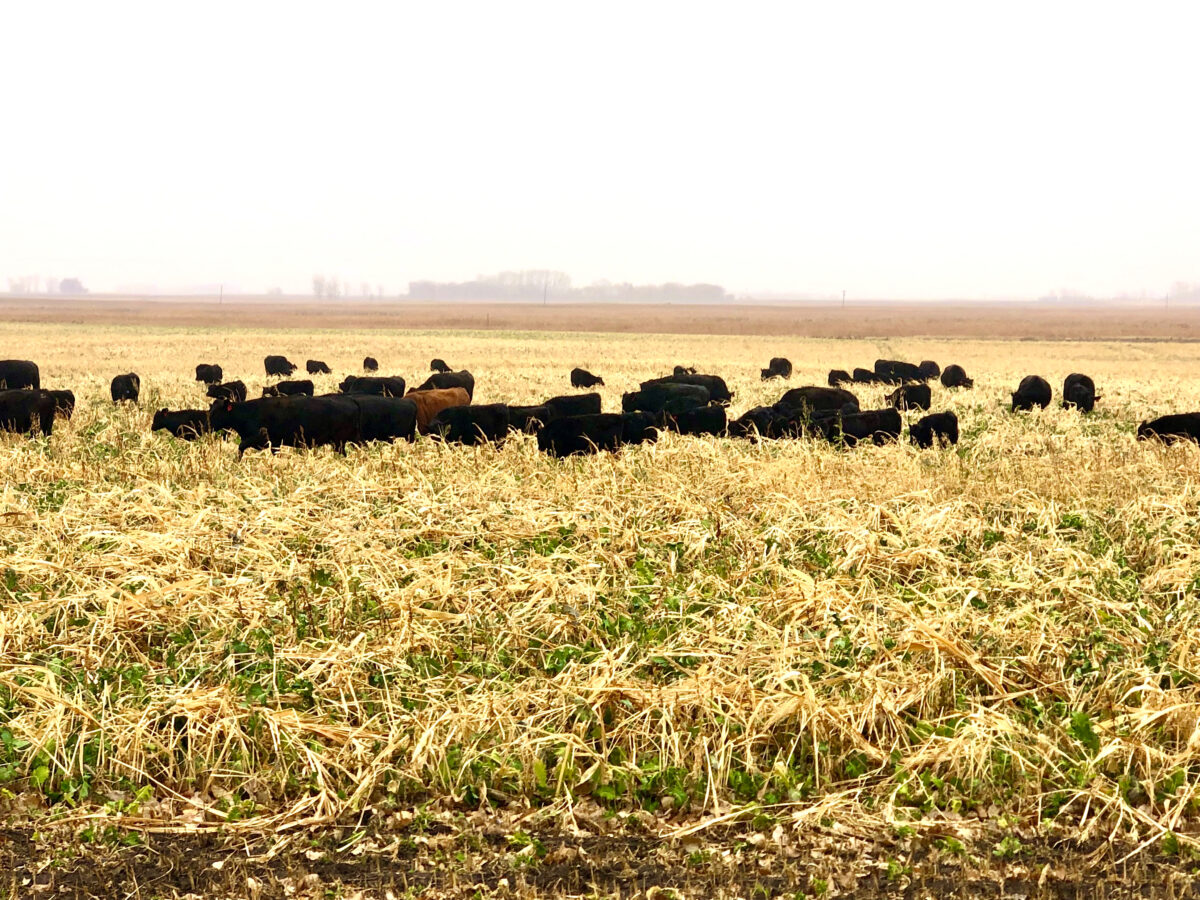
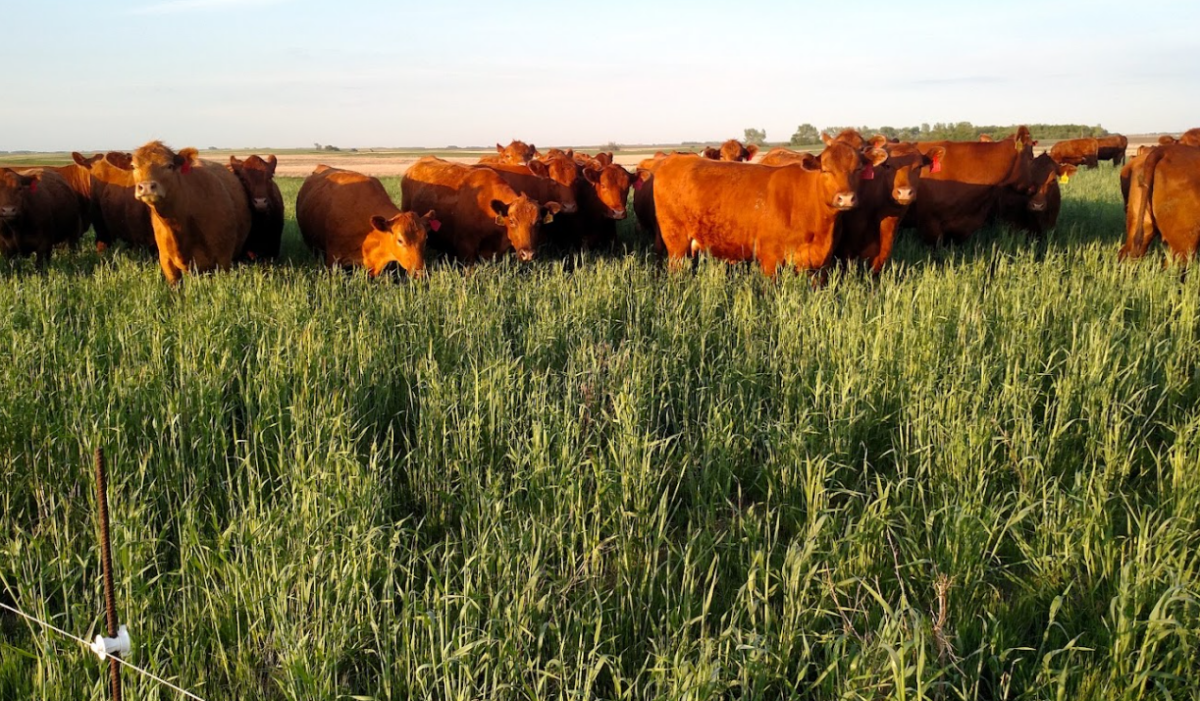
After August harvest of small grains, he uses radishes and turnips for fall grazing if there is adequate soil moisture. Following a soybean or pinto bean crop, he uses cereal rye and focuses on grazing the rye in spring instead of fall. The winter-hardiness of cereal rye is a big plus in his experience. After spring-grazing rye, he has those fields planted to either a hay crop or possibly back to soybeans. He plants soybeans or hay after grazing. Overall, about a third of his row crop acres are planted into a cover crop each year, and most of the cover crops are grazed.
Details on grazing of cover crops
Justin normally grazes fall-planted radishes and turnips at 2-4 inches tall. With cereal rye, he normally waits to spring-graze. He feels that, in his area, there is a good two-week window for spring grazing, which he tries to do before the rye heads out; once the rye seed heads have formed, the cattle don t like eating the rye as well. Typically, he mob-grazes the rye when it s about 8-12 inches tall, depending on the weather. If anything, he errs on the side of earlier grazing since the rye can grow fast in spring.
He keeps grazing costs down and simplifies creating grazing paddocks by using portable electric poly wire with step-in posts. Some of the water for grazing comes from the prairie potholes (natural ponds) that occur on most of his fields. If he has an area without water, he hauls in water in a 2,200 gallon trailer, letting the trailer drain into portable tanks that the cattle drink from.
He normally moves his cattle and sheep regularly between paddocks, sometimes on a two-day interval and sometimes up to every two weeks. If the heifers are calving, he ll let them stay longer in a paddock so they aren t stressed by handling. He has gone to calving in early May in his current system.
Besides some significant economic benefits from grazing, Justin has also noticed health benefits for his cattle. Compared to cattle kept in a dry lot, those being grazed on cover crops show a shinier coat of hair. He also hasn t had to spend money on vaccinations for his cattle for the last four years since herd health is so good.
By using cover crops as part of his crop rotation and consequently improving his farm s soil health, he s been able to cut back his fertilizer inputs by about 30%, and sometimes more. The overall system also saves on feed costs for his livestock. In 2021, a dry year, the cover-cropped areas had better yields due to their better soil moisture retention. He feels the benefits of his system are definitely paying for the cost of cover crop seed and that this system is the right long-term approach to take.
Cover crop seeding and termination method
Ideally, Justin uses a drill to seed his cover crops. However, he has had success broadcasting radishes and turnips; the smallness of their seeds helps them make good enough soil contact to germinate and grow.
After grazing rye, he lets it regrow just a little to improve herbicide translocation, then sprays to terminate it, often when the regrowing rye is just a few inches tall.
He occasionally ends up with a rye field that has not been grazed. In this situation, he plants green, adjusting the soybean planting date and termination timing based on available soil moisture.
Changes in soil from cover crops and grazing
He has noticed a definite improvement in soil structure, which happened fairly quickly in his loamy soils. Working with recently retired NRCS Soil Health Specialist Jay Fuhrer, he has documented significantly better rainfall infiltration rates on the fields with cover crops compared to adjacent areas with no cover crops.
In 2021, he seeded his cash crops into no-till cover crop residue and found that this system led to better soil moisture retention. When he did finally get an inch of rain in June, it soaked in very well on his cover-cropped fields.
His thoughts for farmers just getting started with cover crops are:
- Start small and take it seriously; put some time and thought into it.
- Cover crops help stop erosion.
- There are good benefits from grazing cover crops.
- Finding a mentor or someone to work with who has used cover crops can really help.
Justin says he s motivated to keep using cover crops in part because he sees a lot of dirt blowing in his county and it s frustrating to him to see that soil loss happening. He also feels he s better off economically using his system of combining cover crops with grazing as opposed to not, since the cover crops pay for themselves and provide so many benefits.