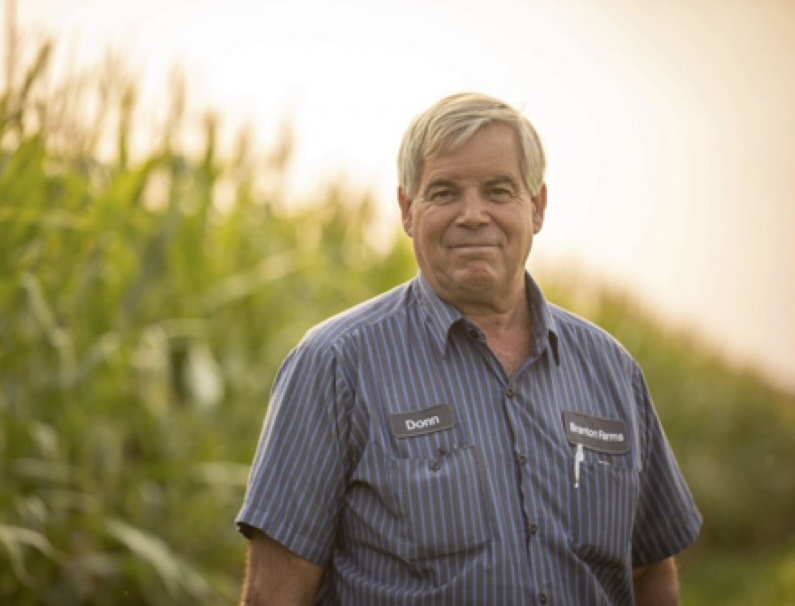
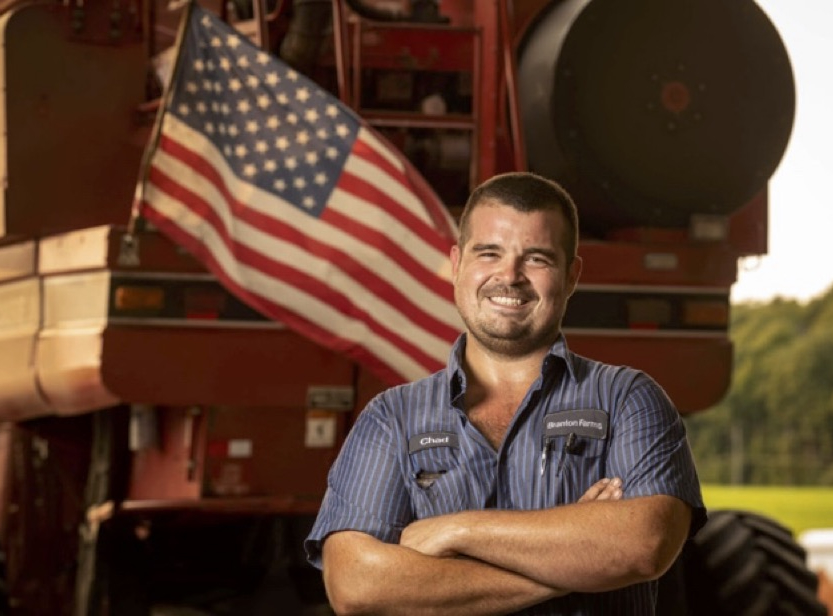
Donn Branton farms with his son Chad in western New York, about 20 miles west of Rochester near I-90. They farm about 1,700 acres, half of which is corn and soybeans. They also grow cereal rye and oats for cover crop seed production and do vegetable processing. The vegetables vary by year depending on what contracts are available, but often include sweet corn, peas, snap beans, and most recently adzuki beans. They do not have livestock.
In 2016, Donn helped establish the Northeastern Cover Crop Council, which is a diverse group of farmers, researchers, educators, and agency and industry staff that share information on cover crops and provide conferences and other support to people looking for cover crop information. Donn has continued to serve on the executive committee for his regional cover crop council and recommends that other farmers check on information available through their own regional council. As mentioned earlier in the book, there are four of these councils in the U.S., for the Northeast, South, Midwest, and West.
The Branton farm has a long history with cover crops, dating back to the late 1970s when they were overseeding medium red clover into winter wheat and using it as a green manure crop. About 25 years ago, they began experimenting with cereal rye as a cover crop and liked how it worked after dry beans or other early-harvested crops. Donn admits that it took them a while to start to understand all the benefits they were getting from cover crops, but they could quickly tell the rye was helping to stop water erosion; later, the benefit of stopping wind erosion became apparent as well.
Starting in 1986, they began testing no-till corn on a small acreage, gradually adding more and more area. A decade later, in 1996, they bought a new 12-row planter set up for zone-tilling (a type of strip-tilling). At first, they focused on using the zone-till approach to plant corn. Then they started testing how conventionally tilled soybeans fared versus zone-tilled, and found the zone-tilled soybeans outperformed conventional ones. That led them to add sweet corn to the zone-till system, despite some initial lack of enthusiasm from their sweet corn processing partner. However, they were able to demonstrate significant yield benefits of the zone-till system with sweet corn compared to conventional tillage. In recent years, the local vegetable processor has come to embrace cover crops and other soil health practices.
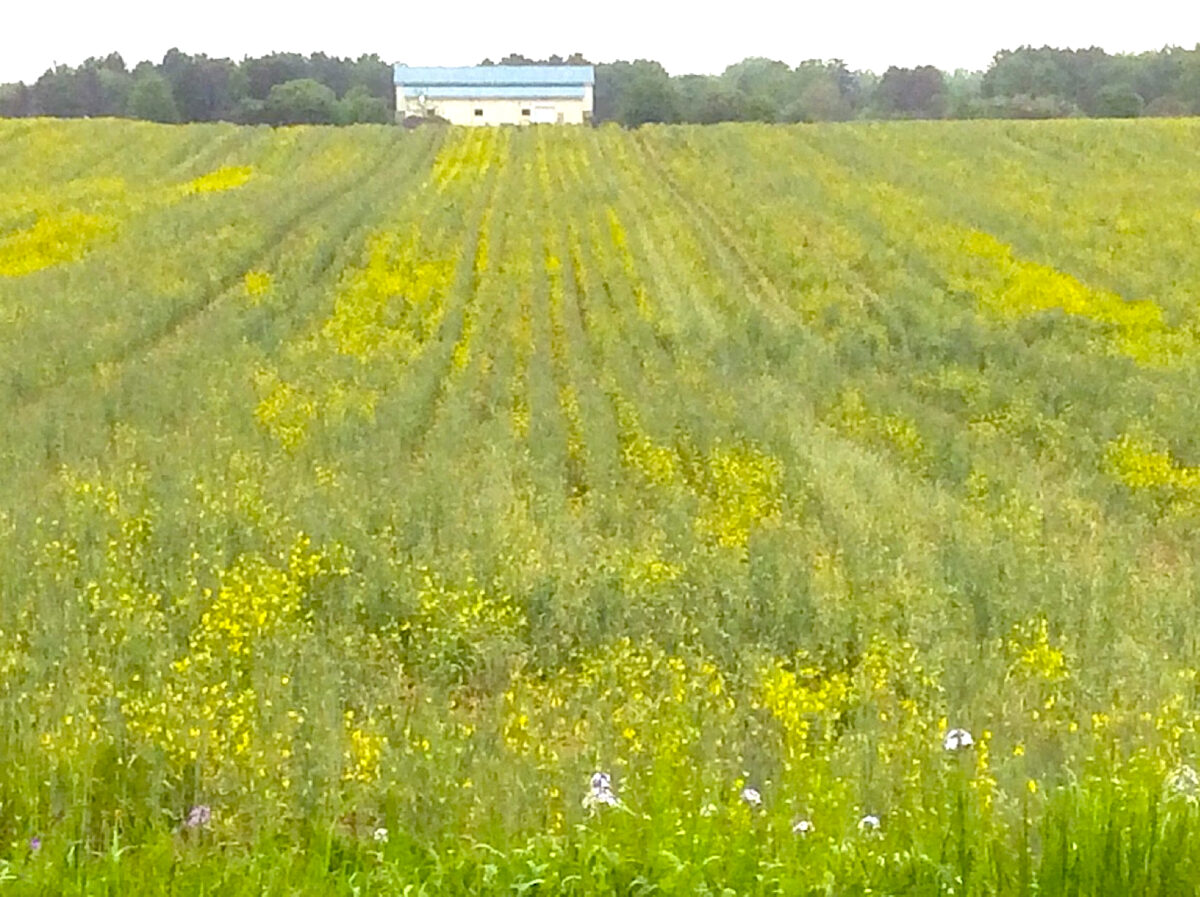
In 2001 they bought a true strip-till machine and started experimenting with nitrogen placement. Donn felt they could benefit from placing their nitrogen deeper, and they settled on an 8-inch depth an approach they have continued for nearly 20 years due to the positive results. Early on, they compared the 8-inch deep nitrogen fertilizer placement with surface and shallow applications, observing much better root growth with the deeper nitrogen. For three years they tested the 8-inch deep nitrogen in combination with strip-till and found yields were consistently better on a variety of farms and different soils. Donn became convinced they were increasing the efficiency of nitrogen application, so they have stuck with the 8-inch deep placement for the last two decades.
They still do a lot of strip-till planting, primarily with grain corn, sweet corn, and snap beans. They have planted soybeans no-till the last several years, and they also no-till drill peas and small grains (oats and rye). Another use of no-till is that they drill several hundred acres of no-till alfalfa annually for a neighboring farmer.
They use a wide variety of cover crops on the farm, although cereal rye is the one used most. This includes growing about 250 acres of cereal rye for seed production primarily the Danko variety. They have also experimented with some hybrid rye for seed production. Hybrid rye yields have been about the same as for the Danko rye (90-100 bushels per acre), but the hybrid rye can be seeded at a significantly lower rate and still produce a comparable yield. Donn does fertilize the cereal rye that is grown for seed production, putting some granular phosphorus in the row with the seed. They apply some nitrogen to the rye to aid seed production, typically about 20 pounds N per acre at early spring green-up, then 50-100 pounds N per acre later in spring, with the final amount based on the vigor of the rye and estimated yield potential. They also scout the rye for insects and diseases and manage accordingly.
Current rotations with cover crops
Donn reports using cover crops in a variety of ways on the farm, and they continue to tweak their cover crop mixes. Currently, some of their common approaches are as follows:
After cereal rye for seed production is harvested, they plant a multiway cover crop blend that is seeded into two alternating strips. On 30-inch centers where corn will be planted the next spring, they plant a mix of cover crops that winter-kill such as radish, oats, and sunflowers. For the row middles, offset by 15 inches, they use a mix of cover crops that are more likely to overwinter, such as rye and hairy vetch. Donn calls this a bio strip-till approach and feels it does a good job of improving the soil ahead of corn planting. The mix of cover crops, including legumes like hairy vetch, also provides some nitrogen and pollinator habitat.
Rather than using a row crop planter, they use the grain drill for this bio strip-till cover crop planting. They direct two drill drop tubes into a Y-connector to get the 15-inch spacings, and have compartments in the drill box that allow the two different seed mixes to be kept separate. That way the cover crop mix that winter-kills can be planted on a spacing of 30 inches apart, with the overwintering type in the row middles offset by 15 inches.
After corn harvest, the Brantons normally drill in cereal rye, then plant soybeans the following spring. The soybeans are no-till seeded into living cereal rye with a planting green approach, and then spray-terminated within 2-3 days after planting the soybeans. They use GMO-free corn and soybeans, so they need to be sure to terminate the rye before the corn and soybeans emerge, but they have their own spray equipment so the spraying can be done in a timely fashion. The soybeans are normally planted before the rye gets too big; typically, it s less than three feet tall when they plant the soybeans.
Depending on the field, after soybean harvest, they either go back to a crop of rye planted for seed harvest or do a cover crop mix before going to vegetables the next year.
After early-harvested small grains they plant a diverse mix of cover crops; they've used up to 16 species at a time. Donn said they constantly adjust seeding mixes, with an eye towards keeping costs in line, in part by being able to cut back on rates of some seeds. Some of the common species they use in a late summer mix are purple top turnip, vetch, fixation clover, Kentucky Pride crimson clover, Frosty berseem clover, medium red clover, Survivor peas, Impact forage collards, Dankon rye, and sugar beets. If it's early enough, he may use some warm season cover crops in the mix, like cowpeas, sorghum-sudangrass, foxtail millet, sunn hemp, oats, soybeans, and/or buckwheat. One example of how they have fine-tuned their seeding rates is cutting radish seeding down to a half-pound per acre as part of a mix.
With early-harvested vegetable crops, they'll use a summer cover crop like sunflowers and/or buckwheat, maybe with radishes, and then plant an overwintering cover crop like cereal rye or winter wheat that fall.
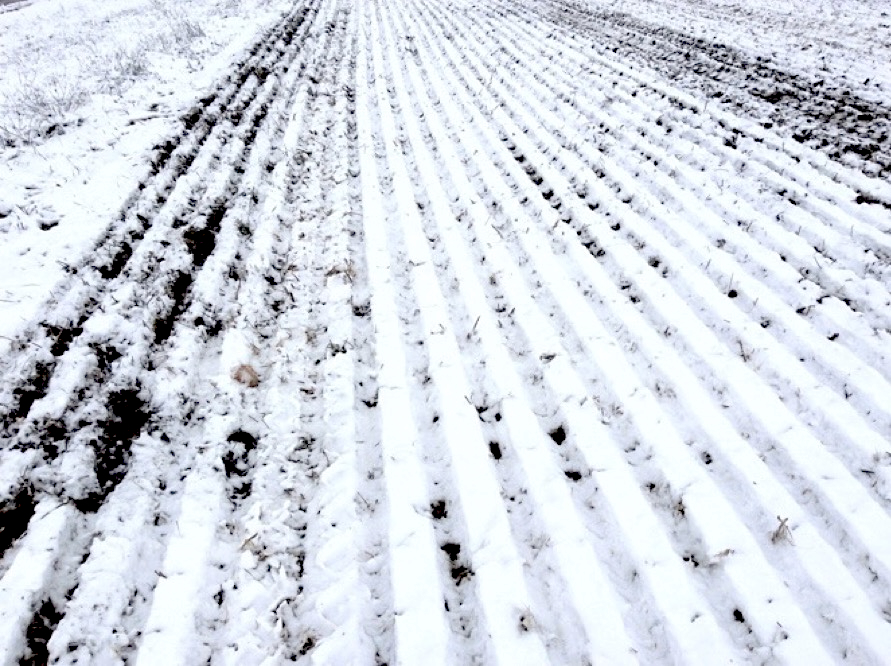
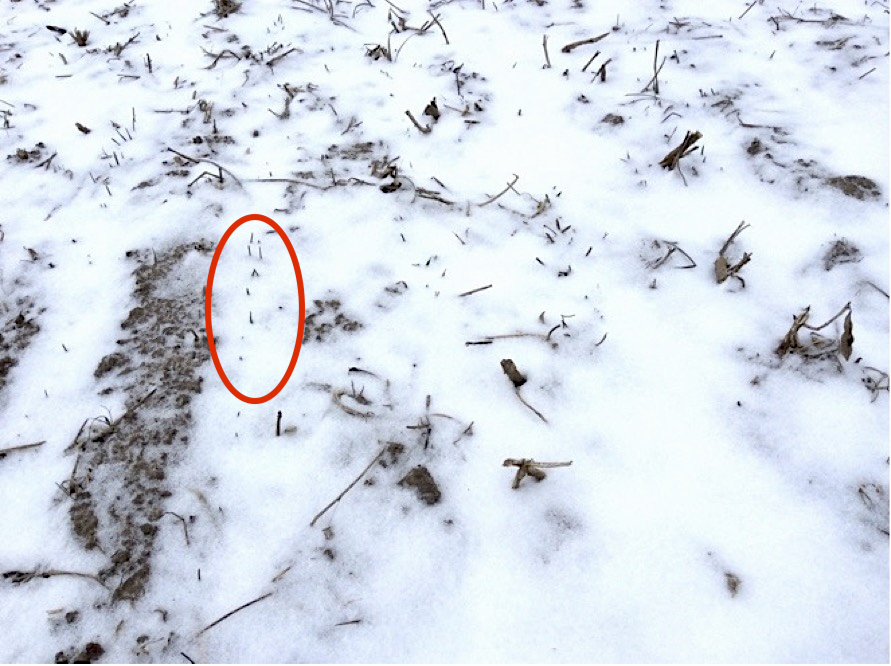
Donn commented that when he uses just cereal rye, such as before soybeans, he plants it pretty late in the fall if he has to, as long as he can still get the drill into the ground. The photos above show rye drilled into a little snow on November 11, and amazingly, that rye started to come up through another snowfall on January 18, as pictured. The Branton farm is in an area where average first frost has historically been in mid-October. Donn likes to use a relatively high seeding rate for rye around 75 pounds per acre in order to produce a substantial amount of biomass.
They ve also used cover crops in other ways in their rotations. For example, if growing winter wheat for grain, they may frost-seed red clover into the wheat in early spring, letting the clover grow all summer and fall after wheat harvest. The red clover will put on some more growth the following spring prior to corn planting, providing nitrogen fixation that allows cutting back on the nitrogen fertilizer for the corn.
With spring termination of any over-wintering cover crop, they watch the soil moisture and weather forecast. If conditions are dry, they terminate earlier; if conditions are wet, they let the cover crop grow longer. Generally, they terminate the cover crop with glyphosate combined with a residual herbicide applied at the same time. Later, they do one post-emerge application for weed control.
Cover crop seeding method
In earlier years, the Brantons tried flying on some cover crops, in part to interseed them before harvest. Because they experienced inconsistent establishment with aerial interseeding, at this point they try to use a grain drill to plant all their cover crops. A few years ago they invested in a 40-foot-wide Great Plains no-till drill, which they use for their soybeans, peas, small grains, and cover crops. This enables them to pass over all their acres with cover crops. This past year, they seeded a total of about 3,000 acres with the grain drill, not only doing all their own acres but over 1,000 acres for a neighbor. Besides Donn and his son, there is one additional helper on the farm in fall, which usually enables one of them to run the drill as soon as each field is harvested. They ve also used the drill to plant alfalfa for neighbors, so it s been a good investment.
Challenges
They've occasionally had issues with slugs mainly spotty impacts in low wet areas of some fields. If slugs show up, they generally use slug bait, which seems to help. Slugs are not a problem every year, just occasionally. Voles have not really been an issue; they had maybe one field one year in which some corn seedlings were eaten, but they never saw the voles, so they weren't absolutely sure who the culprit was.
When asked about armyworms, Donn said they have occasionally had some armyworms affect oats or wheat planted for grain, but didn't feel the armyworm occurrence was related to cover crop use, since conventional neighbors not using cover crops also had the armyworms.
Benefits
I asked Donn, with his many years of cover crop experience, what he feels are the primary benefits of cover crops on their farm at this point. He rattled off several pluses, such as reduced erosion, better weed suppression (especially winter annuals), and improved soil health. He said when they rent new ground, they see improved water infiltration within just a couple of years of starting to use a cover crop. He told a story about how his neighbors have commented that there isn't water running off the field into their yard the way it used to. On the flip side, they used to see some snow geese in shallow temporary ponds in the fields, and now that the water is soaking in better, they don t get the temporary ponds the snow geese liked!
They have adjusted fertilizer rates. Part of their savings on phosphorus and potassium have come from switching to a precision fertility system with grid testing, although he felt cover crops might be helping a little bit with both. Donn felt the biggest fertilizer benefit had been with nitrogen on corn. Before cover crops, they were applying about 1.25 pounds of nitrogen per bushel of corn yield. Now, due to improved soil health from cover crops, they typically only need about 0.75-0.8 pounds of nitrogen per bushel of corn yield.
Another way Donn reports saving on nitrogen costs is by putting just some of the nitrogen down in spring and waiting to do nitrogen testing to see how much they need at side-dress time; that way, they put on only what nitrogen they need when side-dressing. On some fields, they have found they don't need any side-dress nitrogen, because they are getting enough from the cover crop combined with the spring nitrogen application.
Besides lower nitrogen costs, Donn reported that cover crops have helped with profitability, particularly in terms of yield stability that the fields with cover crops just seem to more consistently have good yields.
When asked why they keep using cover crops on the farm, Donn said it s a mix of several benefits. If they rent a new piece of ground, they want to treat it like their own, so they use cover crops, and they've seen enough benefits to keep doing it. Another benefit after using cover crops over time has been improved soil tilth: it s easier to plant into the soil, and seems looser even though they don t do any full-width tillage.
For farmers not yet using cover crops, Donn said to consider the wide range of agronomic benefits and biological benefits, including better rainfall infiltration, recycling nutrients, stopping wind and water erosion, and keeping something green on the soil. He finished by saying, "It's important to feed the soil, feed the microbes, and use cover crops to harvest sunlight, building soil nutrition."