Showing 41-50 of 123 results

SARE Awards $8M to Food Loss and Waste Projects

The USDA recognizes the impacts of food loss and food waste on food security and the environment. USDA, in concert with agency partners, is working toward the goal of reducing food loss and food waste by 50 percent by 2030.

In the latest effort in reduction activities, the Sustainable Agriculture Research and Education (SARE) program is leading a national Community Foods Project (CFP) Food Loss and Waste Training and Technical Assistance Grants Program, funded through USDA’s National Institute of Food and Agriculture (NIFA). A total of $8 million is being provided to 14 organizations across the nation.

The program supports projects that align with the National Strategy for Reducing Food Loss and Waste and Recycling Organics, released in June 2024. The program prioritizes preventing food from becoming waste, diverting edible food to people through donation or upcycling, and feeding animals. The goals of the Food Loss and Waste Training and Technical Assistance Grants Program are to:

  • Increase the self-reliance of communities in providing for their own food needs;
  • Promote comprehensive responses to local food access, farm, and nutrition issues;
  • Identify strategies for reducing food loss and waste by identifying value-added production opportunities;
  • Meet specific state, local, or neighborhood food and agriculture needs for planning for long-term solutions;
  • Create innovative marketing activities that mutually benefit agricultural stakeholders and consumers.
  • Describe how the research or training and technical assistance will lead to improved quality of life for producers, communities and consumers.

Fourteen organizations have been awarded funding to both reduce food loss and waste, and educate a variety of audiences about their reduction techniques. These organizations are diverse in size, geographic location, and in their focus on one or more parts of the food supply chain.

The awardees are:

  • Gotham Food Pantry, New York, NY
  • Last Mile Food Rescue, Cincinnati, OH
  • Virginia Commonwealth University, Richmond, VA
  • University of Delaware, Newark, DE
  • FoodCycle, Los Angeles, CA
  • Association of Gleaning Organizations, Kamas, UT
  • University of Illinois Urbana-Champaign, Urbana, IL
  • El Departamento de la Comida, Caguas, PR
  • University of New Mexico, Albuquerque, NM
  • University of Kentucky, Lexington, KY
  • Pete’s Garden, Kansas City, MO
  • Stone Barns Center for Food & Agriculture, Pocantico Hills, NY
  • Concrete Jungle, Atlanta, GA
  • The Good Acre, Falcon Heights, MN

Explore these funded projects at: www.sare.org/resources/food-loss-and-waste/. For more information about this grant program, contact Lisa Johnson, National SARE Food Loss and Waste Grant Manager at FLW@sare.org.

View Related SARE Grants:

Posted in 1

Producer Partnerships Demonstrate the Benefits of Integrated Systems: Increased Profits and Soil Health

In the semiarid climate of the Great Plains, persistent drought is increasingly contributing to crop failure and soil erosion. A recent North Central SARE Research and Education grant in Kansas demonstrated how integrating crops, livestock and cover crops could help some producers offset revenue loss and failing crops. 

Kansas State University’s Dr. Augustine Obour partnered with producers to conduct a long-term research project examining the potential of integrating cover crops in dryland wheat production systems. The team found that grazing or harvesting covers for forage can diversify revenue streams while protecting soil from erosion. Now, policymakers are increasingly encouraging cover crop grazing, and farmers are changing practices to boost income, improve soil quality and suppress herbicide-resistant weeds.

As a result, the project is improving environmental sustainability and revenue streams while increasing the production efficiency of farmers who adopt the new practice.

A recent post-project evaluation of SARE projects awarded between 2016–2019 found that partnering with farmers to conduct on-farm research helped validate the project’s findings.

“Most grants don’t have a farmer requirement, but SARE does,” says Obour. “It is very helpful because farmers have different perspectives on what works and what doesn’t. You have to work with a farmer to determine what will work in their environment.”

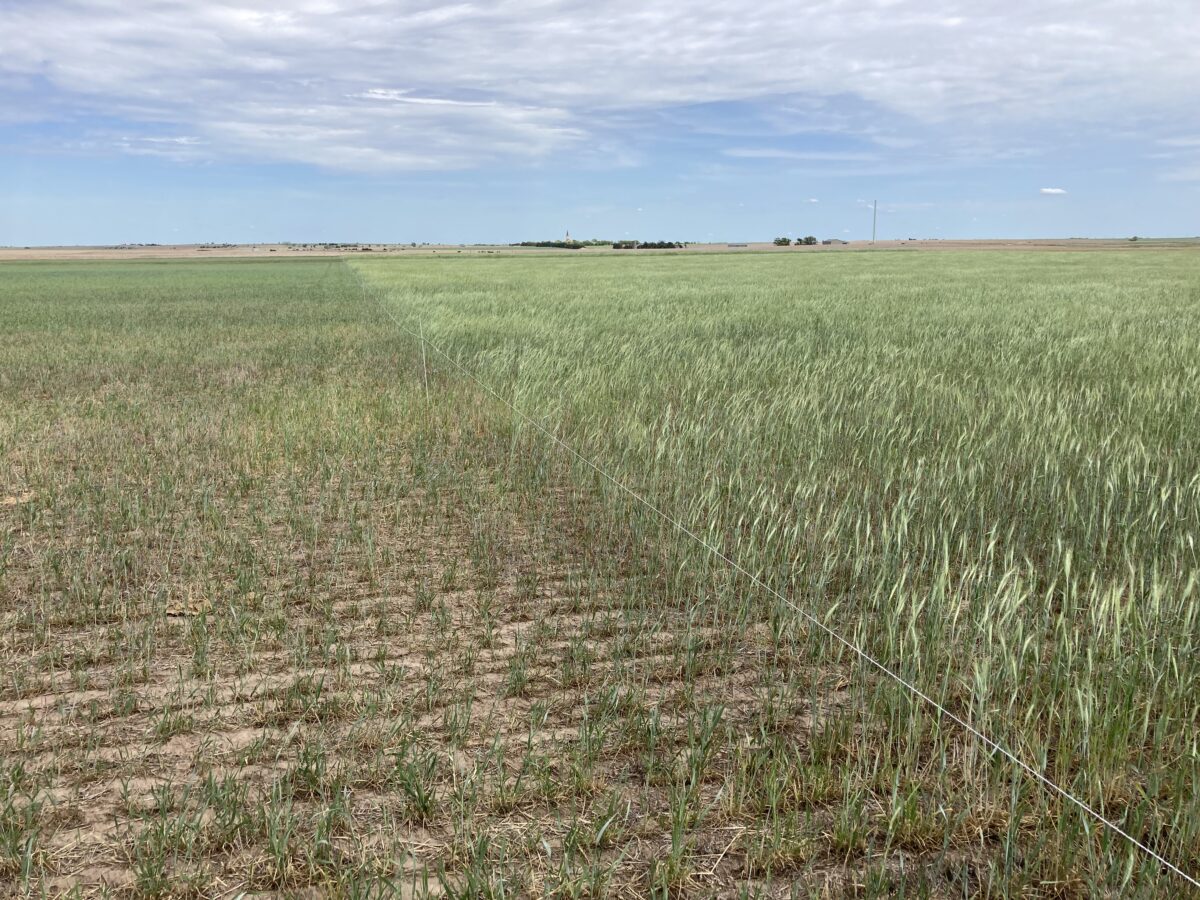
Polywire fence separating grazed and non-grazed cover crops at Dubuque Kansas. Credit: Logan Simon

For more information on this project, visit https://www.sare.org/sare-impacts-LNC18-411.

Cover Crop Management Options to Improve Weed Control, Crop Yield and Soil Health is part of a series of 23 case studies produced by Insight for Action as part of a post-project evaluation of SARE's regional grant programs. For more information visit https://www.sare.org/sare-impacts.

For information on grants and resources available from SARE, visit www.sare.org.

Posted in 1

Investment in Farmer to Farmer Training Cuts Costs, Improves Safety

Proper management of postharvest handling practices is key to efficiency and safe working conditions on many farms. But small- to moderate-sized producers often struggle to keep pace with increasingly stringent rules that may vary by state or by county. One successful SARE-funded project rose to the challenge and provided hundreds of thousands of farmers with technical support that enhanced the sustainability of their operations.

To help Vermont’s farmers safely and profitably meet the growing demand for local produce, Christoper Callahan and his team at University of Vermont Extension used SARE funds to equip farmers with resources and on-farm training on how to better manage postharvest handling practices and equipment. As a result, farm businesses are increasing production, ensuring safety and achieving greater financial sustainability. 

The project was able to impact the social sustainability, production efficiency and economic sustainability of participating operations through the grantees’ and stakeholders’ engagement with project activities. Ultimately, Callahan documented $680,000 in cost savings through improved labor efficiency and reduced waste during the project.

A recent post-project evaluation of SARE projects awarded between 2016-2019 found that investing in farmer knowledge and capacity as peer trainers was key to the project’s impressive impacts. Positioning farmers as trainers builds their ability and motivation to provide other producers with practical guidance from experienced peers they trust.

“There’s something that comes from that peer learning that I’m never going to be able to provide,” says Callahan. All the growers we've worked with were not only partners but also true collaborators in knowledge creation and sharing.”

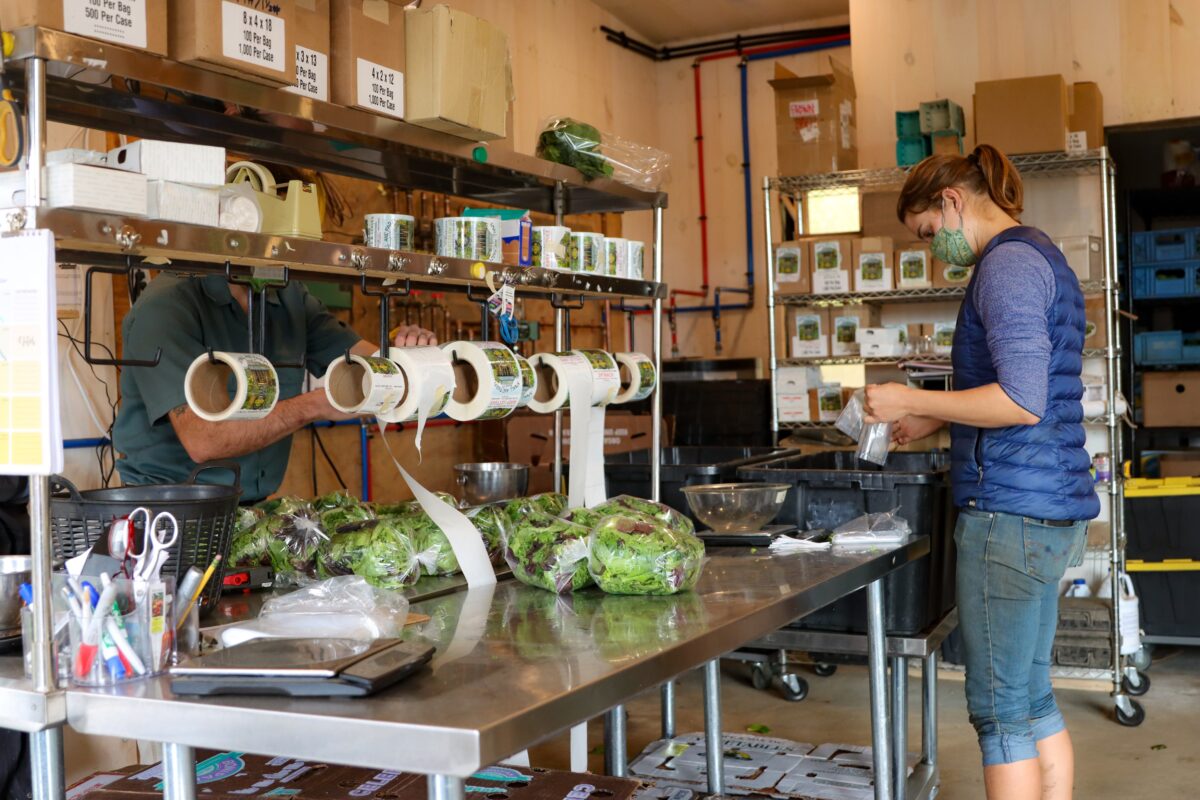
Woman standing at metal table packaging salad greens.

Farm workers at Small Axe Farm (Barnet, Vermont) are packing salad greens inside the newly built wash/pack building. These two stainless steel tables make packing greens efficient with access to scales, labels and packaging supplies all within easy reach. Credit: Andy Chamberlin

Visit www.sare.org/sare-impacts-LNE19-375 for additional details about this project.

Staying Ahead in the Packshed: Improving Postharvest Equipment and Building Guidance for Fruit and Vegetable Farms is part of a series of 23 case studies produced by Insight for Action as part of a post-project evaluation of SARE's regional grant programs.

Visit https://www.sare.org/sare-impacts to learn more. For information on grants and resources available from SARE, visit www.sare.org.

Posted in 1

SARE Seeks Web Services Developer

Sustainable Agriculture Research and Education (SARE) invites applications for this 12-month, renewable, Web Services Developer to work in the SARE National Reporting, Coordinating and Communications Office (NRCCO) located in College Park, Md. 

The NRCCO is SARE’s main outlet for providing support to national sustainable agriculture grant and outreach programs. SARE’s main Information Technology (IT) platforms include the Grant Management System [(GMS) (projects.sare.org)] and the SARE Websites (sare.org). The SARE Websites are built on WordPress using custom plugins and themes. The NRCCO maintains approximately 30 separate annual SARE grant programs across four national regions on the GMS, which supports project application processes, grant review scoring platforms, and grant reporting while providing project data metrics. Additionally, the NRCCO maintains web communications, print/broadcast media programs, contact platforms and other online resources in partnership with all of SARE’s national partners, including addressing IT system security and accessibility requirements.

Through the activities described below, the Web Services Developer will help develop, manage and maintain the IT systems for national SARE programs.

The Web Services Developer will assist the national SARE program to maintain web-based IT systems that support online content management and the creation of modern educational resources for SARE grantees, grant managers, communication specialists and outside stakeholders by enhancing the functionality and usability of online content and maintaining system security. The position will be employed through UMD’s College of Agriculture and Natural Resources, at College Park, Md. They will report to the SARE Associate Director and work under the guidance of SARE’s IT Director to collaboratively support all NRCCO colleagues and SARE’s national partners. The Web Services Developer will also be responsible for providing IT support to SARE’s Food Loss and Waste National Grant and Training and Technical Assistance (FLW) program. This is a new, temporary program that requires similar IT support and focus to all SARE grant and outreach programs, but with specific needs required by the USDA NIFA to uphold its FLW program priorities.

Overall, the Web Services Developer will improve SARE’s ability to advance our digital outreach capacity, efficiency and effectiveness to SARE regional partners, national stakeholders and the public.

Minimum Qualifications:

Education:

  • A Bachelor’s degree.

Experience:

  •  5-7 years experience.

Knowledge, Skills, and Abilities:

  • Excellent written and oral communication skills.
  • Experience developing complex WordPress plugins, themes and blocks.
  • Advanced programming knowledge of OOP PHP8+, JavaScript, React, SCSS, CSS.
  • Experience managing and restoring MySQL /MariaDB databases and file storage systems.
  • Firm understanding of WordPress REST API.
  • Comfortable using NPM to install, configure and upgrade dependencies used in the development and deployment process.
  • Experience using and maintaining GIT code version control repositories.
  • Excellent understanding of security.
  • Ability to work in a remote, collaborative, team-based environment.
  • Strong desire to learn new skills.

Preferences:

  • Linux Systems Administration experience.
  • Docker/Container management experience.
  • Basic knowledge of configuring a NGINX web server.
  • Working with WordPress multisite environments.

Apply by 09/26/2024 at https://ejobs.umd.edu/postings/121618 for best consideration.

Diversity Statement: The University of Maryland, College Park, an equal opportunity/affirmative action employer, complies with all applicable federal and state laws and regulations regarding nondiscrimination and affirmative action; all qualified applicants will receive consideration for employment. The University is committed to a policy of equal opportunity for all persons and does not discriminate on the basis of race, color, religion, sex, national origin, physical or mental disability, protected veteran status, age, gender identity or expression, sexual orientation, creed, marital status, political affiliation, personal appearance, or on the basis of rights secured by the First Amendment, in all aspects of employment, educational programs and activities, and admissions.

About SARE: The Sustainable Agriculture Research and Education (SARE) program is a decentralized competitive grants and education program operating in every state and island protectorate. SARE is a program of the United States Department of Agriculture (USDA) National Institute of Food and Agriculture (NIFA) and SARE's NRCCO operates under a cooperative agreement with the University of Maryland (UMD) in its College of Agriculture and Natural Resources. For more information, visit www.sare.org.

Posted in 1

SARE's What is Sustainable Agriculture? Now Available in Spanish

SARE’s What is Sustainable Agriculture? bulletin and companion animated series are now available in Spanish! ¿Qué es la Agricultura Sostenible? features short, translated primers of proven sustainable practices that can be used to complement more detailed training materials.

The companion animation series highlights some common practices farmers and ranchers use to improve profitability, quality of life and environmental stewardship, including:

¿Qué es la Agricultura Sostenible? is now available for viewing and sharing at www.sare.org and on YouTube

Download or order your free print copy of ¿Qué es la Agricultura Sostenible? at https://www.sare.org/resources/que-es-la-agricultura-sostenible/ or by calling (301) 779–1007. ¿Qué es la Agricultura Sostenible? is available in quantity for free to educators for use in educational workshops, classes or tours.  

Posted in 1

National SARE Food Loss and Waste Program Webinar

The Southern region SARE program is soliciting a national Call for Proposals for the Food Loss and Waste Training and Technical Assistance Grants. The purpose of this one-time grant opportunity is to implement outreach, training, and technical assistance efforts to build capacity for food loss and waste initiatives.

SARE Food Loss and Waste Program Manager Lisa Johnson will walk participants through the details of the Call for Proposal and answer participant questions related to the grant in a webinar taking place on Zoom on May 7, 2024 from 12 p.m. (NOON)- 1 p.m. EST. Interested parties can register for the webinar at https://bit.ly/3UIaLZp. For more information or questions, reach out to Lisa Johnson at flw@sare.org.

The Call for Proposals is open to qualified applicants in the contiguous U.S., Alaska, Hawaii, and the U.S. territories of Puerto Rico, U.S. Virgin Islands, Guam, American Samoa, Micronesia, and Northern Mariana Islands. Application deadline is June 28, 2024 at 5 p.m. EST. Projects will span three (3) years, beginning on Sept. 1, 2024. Roughly two (2) to four (4) projects, capped at $1 million per proposal with an expected grant size of $500,000, are anticipated to be funded per SARE region: Southern SARE, North Central SARE, Northeast SARE, and Western SARE, so that regional priorities to addressing food loss and waste can be augmented, while allowing for national coordination and impacts. A total of $8 million is being funded nationally for the CFP Food Loss and Waste Training and Technical Assistance Grants effort.

Visit SARE Supporting Strategies to Curb Food Loss and Reduce Food Waste with Grant Opportunity for more information.

Posted in 1

Farmers and Ranchers Report Research Impacts

“This project provided a 'first look' at how legume cover crops might function in our crop rotations," says Texas A&M AgriLife Extension agronomist Reagan Nolan, discussing his search for cover crop mixes that can help meet the challenges of farming in western Texas.

Nolan wanted to explore whether legume cover crops could be incorporated into crop rotations to improve soil health or produce supplemental forage. Using two Southern SARE On-Farm research grants, Nolan paired with four local farms to compare the performance of cowpea and sunn hemp mixes for the warm season. Mixes of Austrian winter peas and sweet clover were compared for the cool seasons.

While the research didn’t produce a one-size-fits-all recommendation, Noland is encouraged by the results. "The cover crop practices tested … demonstrate the potential to provide high-quality forages to supplement livestock production during critical periods."

SARE’s 2023/2024 Report from the Field, a biennial report, illustrates how Nolan and many other SARE grantees are conducting producer-driven research to find new innovations that sustain agriculture. Stories in Report from the Field that demonstrate how SARE grantees are improving the sustainability of U.S agriculture include: 

Download or order your free print copy of 2023/2024 Report from the Field at https://sare.org/report or by calling (301) 779–1007. 2023/2024 Report from the Field is available in quantity for free to educators for use in educational workshops, classes or tours.

Posted in 1

New Podcast Episode: "Chestnuts in Southeastern Ohio: A Cooperative Small Farm Effort"

Dive into the world of chestnut production in this episode of ATTRA’s Voices from the Field podcast. NCAT Sustainable Agriculture Specialist Tyler Jenkins talks with Michelle Ajamian, a network developer for the Appalachian Stable Foods Collaborative. Ajamian, based in southeastern Ohio, advocates for small-scale farming and discusses the challenges and triumphs of cultivating a chestnut market in the region.

In 2022, Rural Action received a SARE Partnership grant (Value Adding Culinary Chestnut Seconds Through the Development of a Marketable Fine Flour) to explore value-added opportunities for grade B chestnuts. Working with the Route 9 Chestnut Cooperative, Ajamian examined milling processes and equipment to develop a profitable model for producing fine flour from chestnuts with a high moisture content. Through her outreach efforts with the Ohio Ecological Food and Farm Association, Ajamian also brought local farmers together in support of expanding long-term regional chestnut markets.

This episode of Voices from the Field is one in a series co-produced by ATTRA and SARE that explores the different ways farmers are working to create new local markets for specialty and niche crops. Each partner episode will address a different production system or crop—from endives to small-grain value chains—and will feature farmers sharing their production and marketing strategies, challenges and successes along the way. 

Subscribe to Voices from the Field wherever you get your podcasts. 

Related Resources:

Posted in 1

SARE Fellows Program Now Accepting Applications

SARE Fellows

Applications are now being accepted for the SARE Fellows program. SARE Fellows is a unique professional development opportunity for agricultural professionals to:

  1. Build new relationships with colleagues across the nation.
  2. Deepen their understanding of the concepts and intentions of sustainable agriculture.
  3. Visit with innovative producers and partners nationwide who are striving to sustain agriculture for future generations.
  4. Increase their awareness about educational opportunities and approaches in sustainable agriculture.

Applications must be submitted by May 31, 2024; 5pm Pacific Time. Apply online now.

The SARE Fellows program provides an immersive educational experience for participants to enhance their understanding of sustainable agriculture through broad-based training and interpersonal interactions at unique agriculture operations nationwide. Participating Fellows build professional relationships, improve their teaching and technology transfer skills, and are better prepared to develop programs that meet the needs of their local agricultural communities. Learn more about the SARE Fellows program and about previous participants’ experiences.

Eligibility

  • Agricultural professionals working in outreach programs focused on farmer and rancher education. 
  • Must have an interest in learning about sustainable agriculture systems across the US and applying what you learn with your agricultural community.
  • Applicants must live and work in the United States or its protectorates. We cannot accept applications from international partners. 
  • Because the purpose of this program is to provide professional development to agricultural professionals, it is not open to undergraduate, graduate students, or postdocs unless they also meet the first criterion above.

Application Process

Review the full application requirements online

Applications must be submitted by May 31, 2024; 5pm Pacific Time. Apply online now.


Support provided by the Sustainable Agriculture Research and Education (SARE) program with funding from the National Institute of Food and Agriculture, U.S. Department of Agriculture. The availability of this program will be dependent upon the consent of USDA SARE and the availability of funds.

Posted in 1

New Podcast Episode: "Edible Landscaping"

In this episode of ATTRA’s Voices from the Field podcast, NCAT Horticulture Specialist Guy Ames talks with Matthew Lebon about edible landscaping, or the practice of integrating edible plants into ornamental landscaping. Lebon is the visionary behind Custom Foodscaping in St. Louis, Mo. The two delve into the intricacies of shaping the land with food in mind, emphasizing the value of growing foods locally and sustainably. 

Lebon got started with edible landscaping 15 years ago, and his main focus is on promoting less common native and exotic plants that are well-adapted to local growing conditions. In 2020, he received a SARE Farmer/Rancher grant to raise awareness among home growers and small orchards of pawpaws, persimmons, Asian pears, disease-resistant apples, and a plethora of other trees and bushes. Through his company, he works to inspire people everywhere to grow their own food, and he has high hopes that people will return to locally adapted perennials to promote a more sustainable future.

This episode of Voices from the Field is part of a series co-produced by ATTRA and SARE, reflecting their commitment to promoting innovative approaches to agricultural sustainability and food security. This series amplifies voices like Matt Lebon’s to inspire positive change in local food systems across the nation.

Subscribe to Voices from the Field wherever you get your podcasts. 

Related SARE Resources:

Related ATTRA Resources:

Posted in 1