Using your cropland efficiently is as valuable to profitability as it is to soil health. When a growing area sits empty, you’re not just losing out on possible revenue, you’re also depleting your soil. This is as true on a half-acre, biointensive market garden as it is on a 12-acre specialty crop farm.
For farmers who use diverse crop rotations and no synthetic herbicides, one of the main periods when fields sit unused is during the transition from one crop to another. During this transition, often referred to as a “bed flip,” it is common to simply mow a crop after it has finished producing and then till the residue into the soil. In this approach, it can take a few weeks before the crop residue decomposes and the soil is ready for planting again.
At the same time, the damage that tillage does to soil health is well known (see the sidebar, “What Is Wrong With Tillage?”). Using no-till practices during crop transitions or bed flips helps you to solve both of these problems at once. The transition can happen more quickly, allowing you to grow more crops each year, and it can be done in a way that supports soil health. That said, the practices can be complex. They also might require new equipment or methods that don’t always feel intuitive. Despite the challenges, many farmers have adopted these practices, built upon them, and made them fit the unique context of their farms.
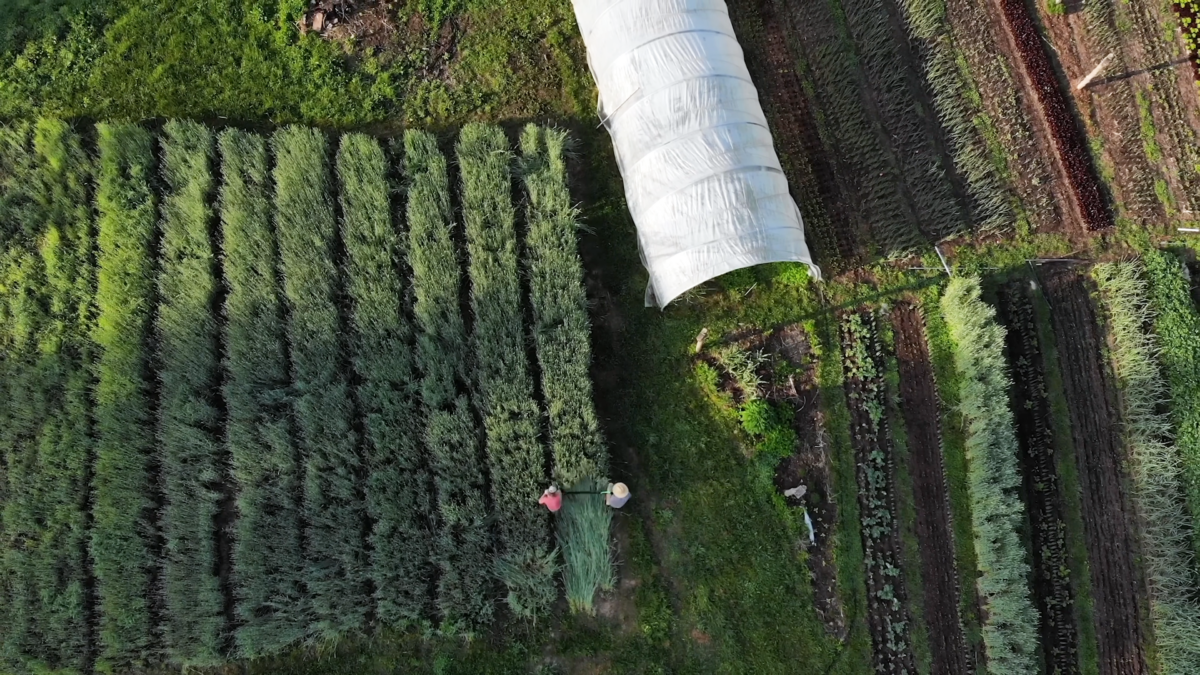
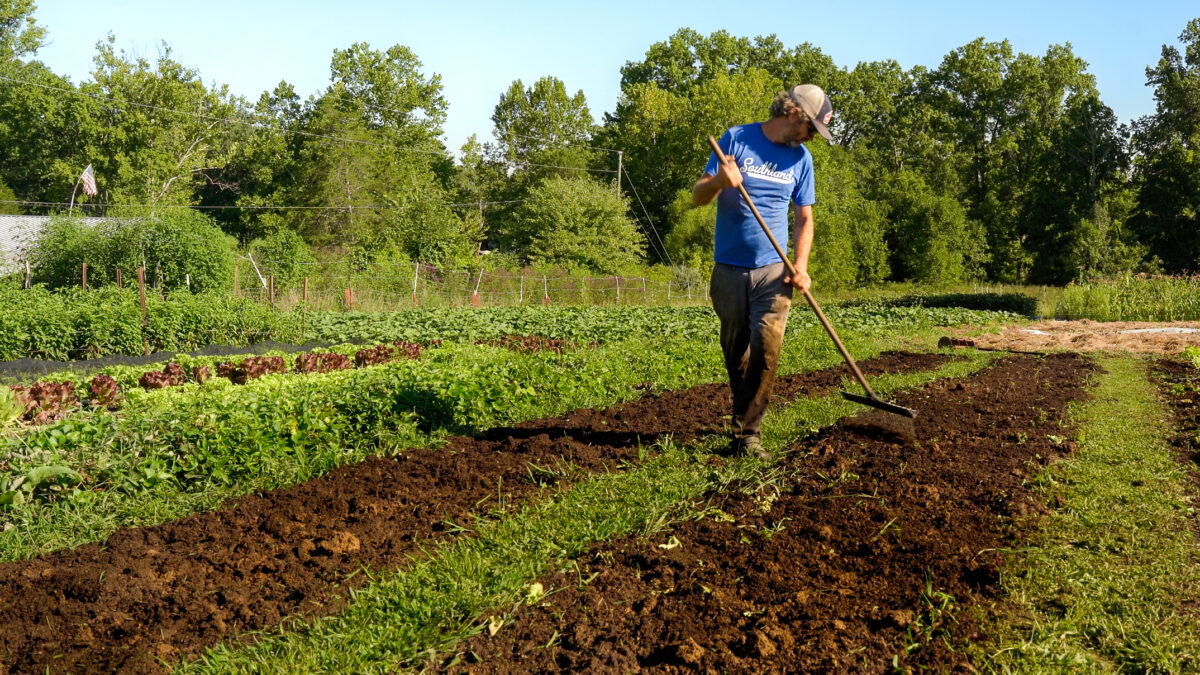
On our one-acre, intensive vegetable farm in central Kentucky, we’ve been farming with no-till practices for 8 years. Before that, we relied heavily on tillage for many years. Now that we aren’t using tillage on every bed anymore, the change in both our lifestyle and enjoyment of the work has been significant. We’re no longer cultivating until dark, fighting mud in the rainy seasons, or stressing about weeds, soil moisture, and crop health.
Instead of mowing a crop, tilling it in, and waiting a couple of weeks to replant as the residue breaks down, in the no-till method, a new crop is slotted in right away, without tillage and without waiting. This fast transition or flip from one crop to another can have these additional benefits:
- less risk of soil erosion, or loss, because you’re removing these short fallow periods
- more profit potential because you’re growing more crops from the same space
- fewer weeds in the bed or row because you’re managing the space more closely
What is Wrong With Tillage
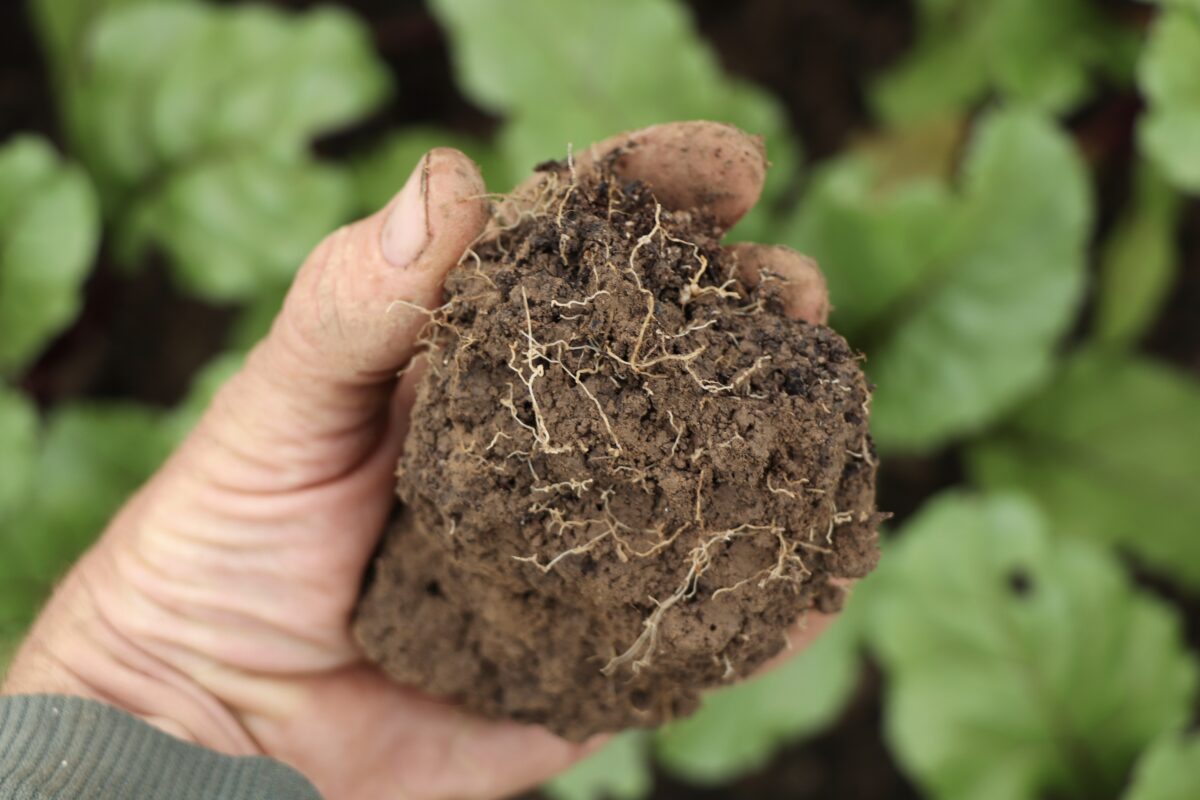
When you till crop residue into the soil, you can harm the soil in a few ways. First, tillage equipment can destroy the soil structure and increase erosion. Tillage also kills worms, fungi, and other important forms of soil life. It can also cause weed problems in two ways. One is by bringing fresh weed seeds to the surface, where they will start growing. The other is by chopping and spreading the rhizomes, or underground stems, of perennial weeds.
Tillage destroys soil organic matter over time. Soil aggregates are tiny bundles of organic matter that are wrapped in inorganic soil particles and held together by plant roots and fungi. Aggregates are important because they hold water and nutrients in the spaces between them. Tillage breaks up soil aggregates and exposes organic matter to soil microbes, which break down the organic matter immediately. Because tillage brings oxygen into the soil, bacteria multiply quickly and decompose fresh crop residue as well as older organic matter.
This breakdown of soil aggregates can lead to compaction, or soils that are too dense for healthy crop growth. The space between soil aggregates is called soil pore space. It lets water soak into the soil and air to move through it. This is also the space where crop roots grow. In fact, 50% of the soil is not solid but pore space, filled with air and water! Tilling breaks the soil aggregates into smaller and smaller pieces, and the pore space shrinks. This creates compacted soils, and water, air or roots may have trouble entering.
Building soil health takes time and effort. But you can easily undo a lot of your hard work when you till a bed and keep it out of production for a few weeks. Also, there are no crops to feed the soil microbes through their living roots and photosynthesis during that time. This means no new organic matter is formed, and no crops are growing to help the farm business.
What Is the Goal of No-Till?
Words like “low-till” or “reduced tillage” describe systems that may use tillage only sometimes, or ones that only use surface tillage. Some growers even think of some reduced tillage methods as “no-till” when they’re only working the top 2 inches or so of soil, or aren’t inverting or flipping the soil. The exact wording is less important than the overall goal. In no-till, reduced tillage, and low-till production, the goal is the same. It is to always keep the soil:
- covered as much as possible
- planted as much as possible (with a diversity of plants), and
- undisturbed as much as possible
These are the three main principles of conservation agriculture, and they’re also the driving philosophy of no-till systems. The bed flip practices described here aim to meet these principles, while also honoring the “as much as possible” idea within each one. This is because no two farms are the same and every grower has to make the best decisions they can based on their context—including their weather, crops, soils, markets, capacity, tools, tolerance for risk, and so on.
Also, note that throughout this publication we use the terms “bed” and “row” interchangeably. No- and low-till growers generally prefer to use permanent or semi-permanent bed systems because the compaction from traffic (both footsteps and tires) will stay in the same pathway areas season after season. However, the ideas covered here can apply equally to row crop farmers, as well as farmers who grow in semi-permanent bed systems.
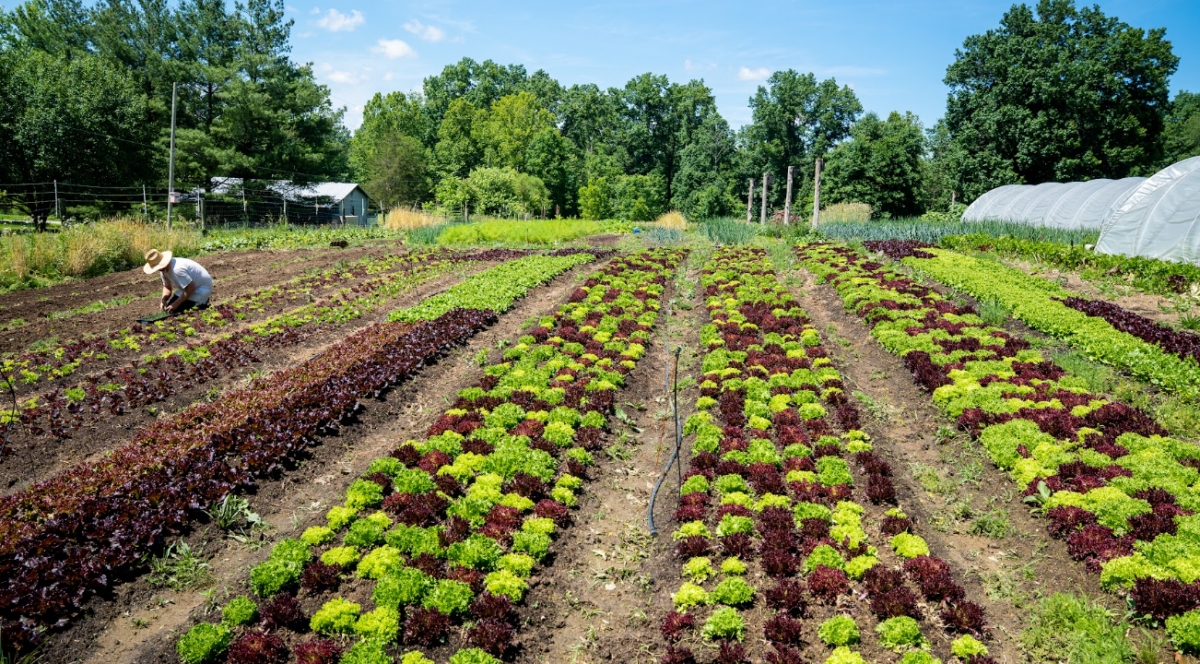
This publication will cover some of the tools and methods for no-till and low-till bed flips in organic and non-herbicide systems. First, we will discuss some of the most common challenges when starting out with no-till. Next, we will share tips for the key stages of a bed flip in these sections:
- Removing Crop Residue Without Tillage
- Preparing the Soil for the Next Crop (i.e., weeds, compaction, irrigation, and tilth)
- Amending the Soil Without Tillage
- Seeding and Transplanting Tricks
- Relay Cropping and Intercropping
- Transitioning After Cover Crops (termination strategies)
- Planning a No-Till Crop Rotation
This bulletin offers an overview of key ideas and practices for no-till systems. In order to start using no-till on your farm, you will probably need to consult with Extension specialists, experienced farmers, and more targeted publications. Cover crop management, soil fertility, irrigation systems, and the use of composts are all examples of important topics that we will outline here, but will likely require more research from you before you put no-till into action. See the Resources section for a short list of helpful publications, including The Living Soil Handbook, an in-depth look at no-till farming by the author of this bulletin.