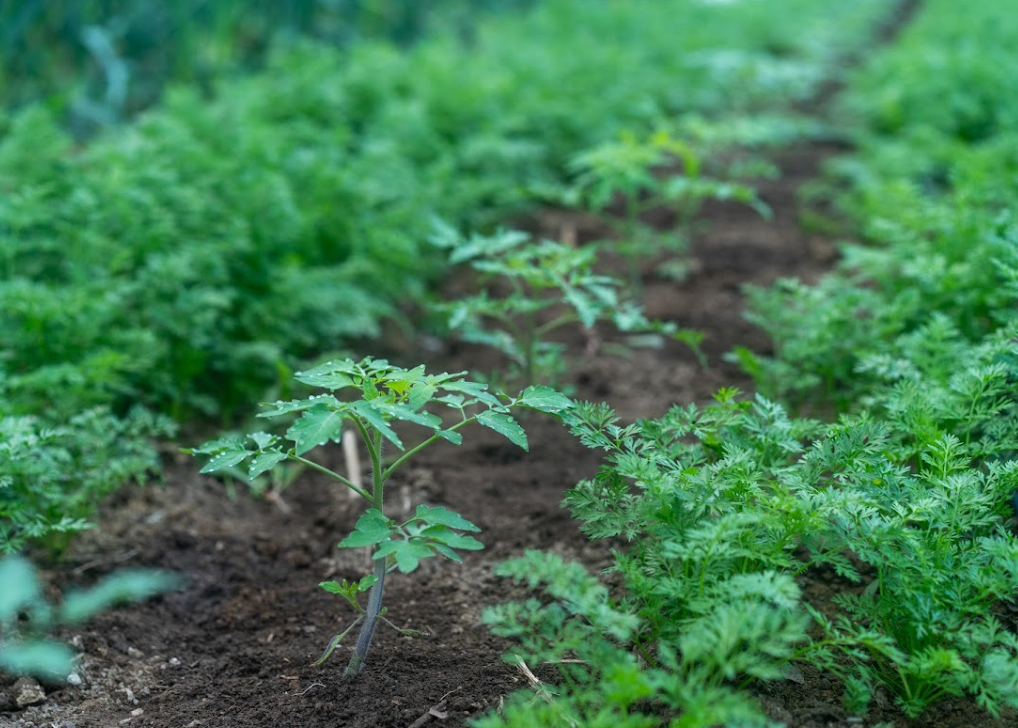
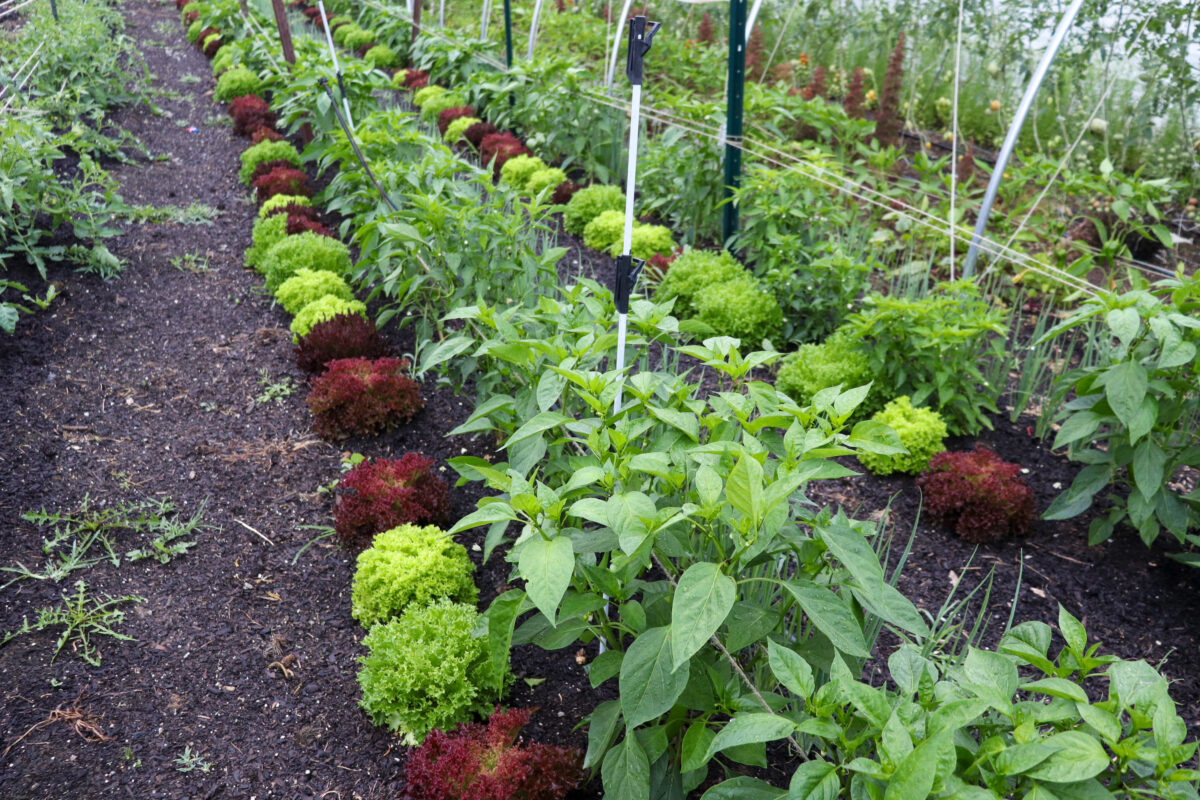
Relay cropping is one practice that combines bed flipping with efficiency. Relay cropping is when you plant the second crop while the first crop is still growing, similar to passing the baton in a relay race. An example of this is planting an early spring radish and leaving enough room in the center of the bed for a summer planting of peppers just before the radishes come out. The peppers establish as you’re harvesting the radishes. Then you can even sneak in a round of lettuce where the radishes were before the peppers really start producing.
Relay cropping, and intercropping in general, requires significant knowledge of crop growth habits, but it can help to maximize your space, especially with longer season crops that are slower to mature. Also, these practices require good weed control to be successful.
Using these practices can easily add complexity to a crop rotation. See the section “Planning a Crop Rotation” for tips on how to make relay cropping and intercropping a little easier to plan for.
Planting Cover Crops
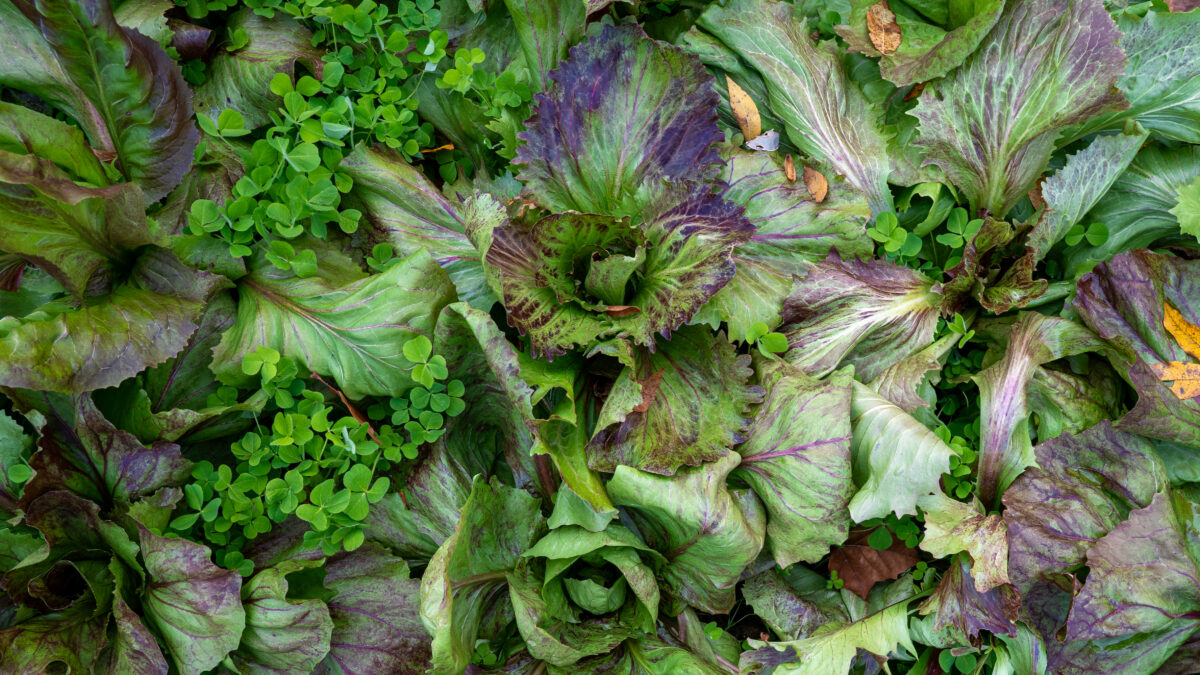
You can use relay cropping to include a cover crop in your rotation as well. This is particularly helpful for growers who otherwise might not be able to plant a cover crop, for example if you’re trying to maximize production because you operate on a very small scale, or you’re in a region with a short growing season. Also, for late, long-season crops like peppers, tomatoes, okra and the like, you can relay a cover crop into the soil beneath the crop before the first frosts of the season come.
For example, you can sow crimson clover underneath a fall brassica or chicory crop a few weeks before a frost, and then water it well to ensure germination. The fall crop can continue to grow into the colder months, while the winter cover crop establishes and gets ready to take over the bed for the winter.
In terms of winter cover crops, annual clovers are well suited for this job because their small seed means they germinate more reliably when you sow them onto the soil surface. Other species of cover crops work well as long as irrigation is adequate, including rye, vetch, oats, and winter wheat. I would recommend lightly cultivating or raking the seeds in before irrigation to improve germination and avoid seed predation from birds. In cases where undersowing doesn’t make sense it may be better to simply take the previous crop out like any bed flip and then sow the cover crop.
However, if you want a winter-killed cover crop but the previous crop hasn’t finished producing, it’s generally best to sow them four weeks before the first frost, or even earlier in colder climates. Frost-hardy cover crops, like peas and oats, will need several hard freezes before they winter-kill (28ºF and below). In climates where freezes are infrequent, use warm-season cover crop species in the late fall. In this case, you want to get good seed-to-soil contact to ensure the cover crop germinates and grows significant biomass. One way to do this is with a seeder that you run carefully beneath the existing crop. But to avoid damaging foliage, it’s best to do this before the plants have taken over the bed, or at the end of the season for crops like peppers that should be tall enough to allow room for a seeder.