Planting the next crop during a bed flip can be pretty straightforward, but there are a few tactics to ease this transition even more.
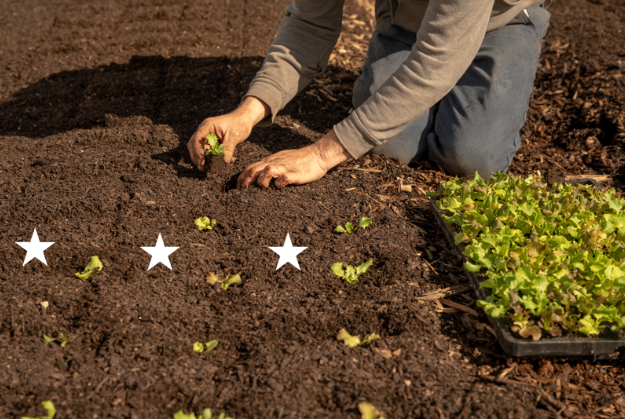
Planting in straight, consistent rows is important. Especially if using a bed system, plant crops in an even grid. This makes it easier to avoid planting a new crop directly into any roots that are left in the ground, as you’ll know where they are and can simply plant between them.
Rotating to a crop that’s grown in a different row spacing than the previous crop can help avoid root residue. For example, if you have a bed of lettuce growing in four rows, that leaves three empty rows in between where you can plant the next crop and avoid residual lettuce roots. So in this case, you might follow with something like chard or kale, which is generally planted in two or three rows.
Though not a necessity, when rotations are thoughtfully designed like this, you can harvest or mow the lettuce, dig a furrow between the rows of lettuce, and insert the transplants of the next crop between the rows, with almost no time between crops. The furrow isn’t always necessary, but if you don’t have an easy way to create the tilth (like a power harrow or tilther) then quickly cultivating with a stirrup hoe or digging a furrow with a hoe can be an effective means of creating a plantable bed surface between rows of the previous crop.
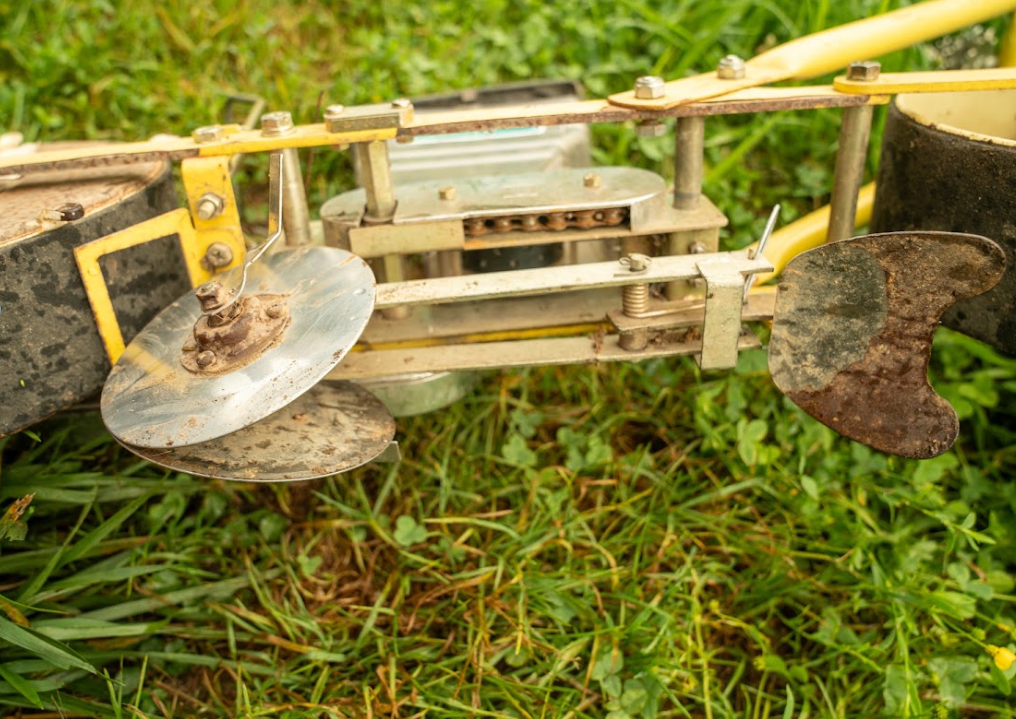
Residual roots can be more challenging when directly seeding a crop. One workaround is to use a seeder with a double disc opener versus one with a shoe. The tip of the shoe is likely to catch on the remaining roots and create issues, whereas the double disc opener on the Jang or Hoss seeder, for instance, can slice right through small roots. Small gaps may exist where the seeds land on the roots, but depending on the crop, this won’t have a significant effect on yield.
Another way to ease the challenges of seeding in a no-till bed flip is to simply cut the previous crop out lower than you normally would to terminate it. This way there’s less root interference near the surface. However, some crops, for instance celery, develop significant root systems near the surface, and in cases like this it simply may not be ideal to follow up with a directly seeded cash crop.
These are some examples of what to consider during crop planning. Though you can come up with standard operating procedures, many crops will have their own guidelines based on how it is easiest to terminate them.