During or after harvest, there are two main types of residue to manage in a no-till bed flip: the aboveground residue (leaves, stems, etc.) and the belowground residue (roots, tubers, etc.).
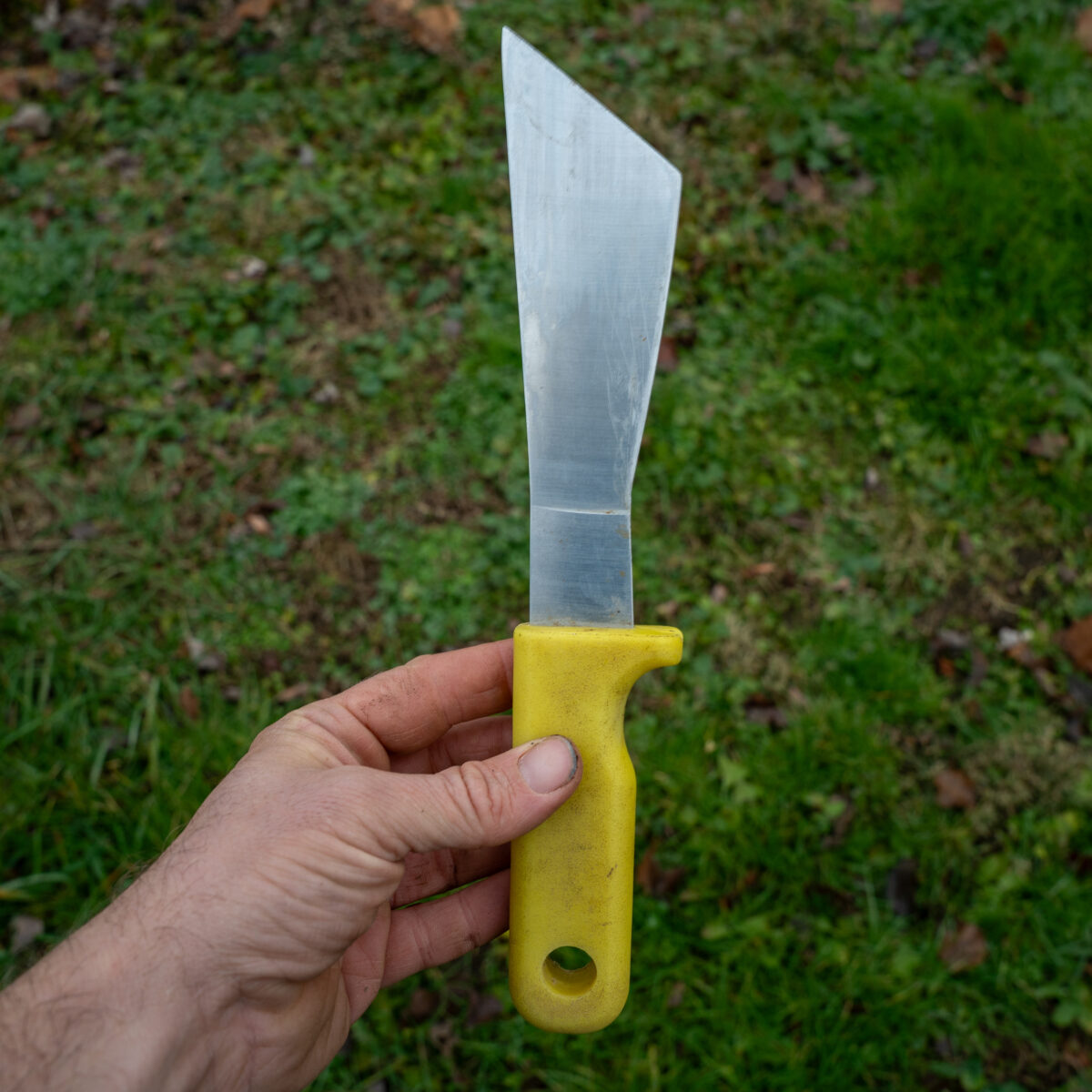
With several options for its removal, the aboveground residue is generally less complicated to manage. For instance, you can use a knife or loppers, or even simply twist certain crops by hand to break them from the majority of their root system before removing them. Mowers are also an option, such as a push mower with a bag or a higher powered flail mower, sometimes referred to as a mulching mower.
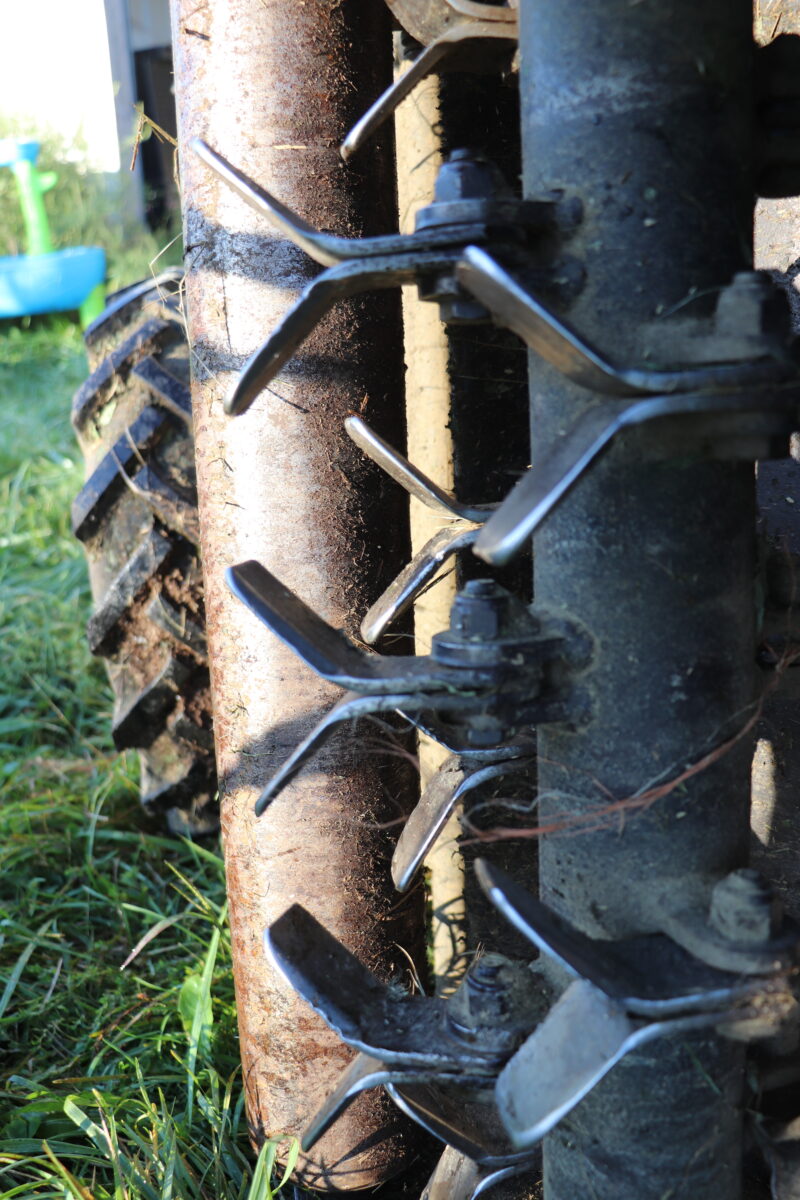
Setting a flail mower low so the blades are just skimming the surface can terminate crops that are readily killed when cut at the soil surface and lightly prep the bed at the same time. This can make the bed flip incredibly efficient. Take lettuce for example: A flail mower that is set low cuts the lettuce crop right at the soil surface, thus terminating many lettuce varieties, but also stirring up the surrounding soil (note that some lettuce varieties may survive being cut this way). You’ll need to rake the surface to remove the residue and check for any plants that survived, but you can sow a new crop almost immediately into the bed. Ideally, you’d keep a separate flail mower for this process, as the light amount of contact the blades make with soil will dull the mower faster than simply using it to cut crop material.
As for managing the cut residue, some no-till producers leave it in the pathways or bed tops, in cases where it’s tender and decomposes easily, such as leafy greens; other farmers will take all of the plant matter to the compost pile to increase their compost quantities. Composting the plant matter can help retain more of the organic matter that’s lost when the material is mowed, left on the soil surface, or tilled in. That said, for some growers, leaving the material on the surface or in the paths will be the more efficient option, and the remaining matter still acts as food for soil microbes to slowly break down over time. Also, some growers use tarps or landscape fabric to speed up the decomposition. For instance, once a bed of arugula has been exhausted, they may mow the arugula, add a thin layer of compost, soak the bed, and then cover it with a tarp or landscape fabric. After a hot, sunny week, you can remove the tarp and the bed will be ready to replant.
With all approaches to residue management, check if signs of any plant diseases are present. Whenever possible, avoid leaving diseased plant residue in place. Depending on the disease, plants should be removed for active composting or discarded away from crop ground.
In a no-till bed flip, the roots stay in the ground. That’s the goal—we do our best to leave the roots intact and in the soil as much as possible to serve as long-term soil food. By not chopping them up and whipping oxygen into the soil with a tiller, the root residue doesn’t lock up nitrogen as it would if you tilled it into the bed. When roots are left intact, both decomposition and nutrient release are much slower, and this makes nutrients available for the next crop. Slowly decomposing roots also contribute to the soil’s organic matter content and microbial health.
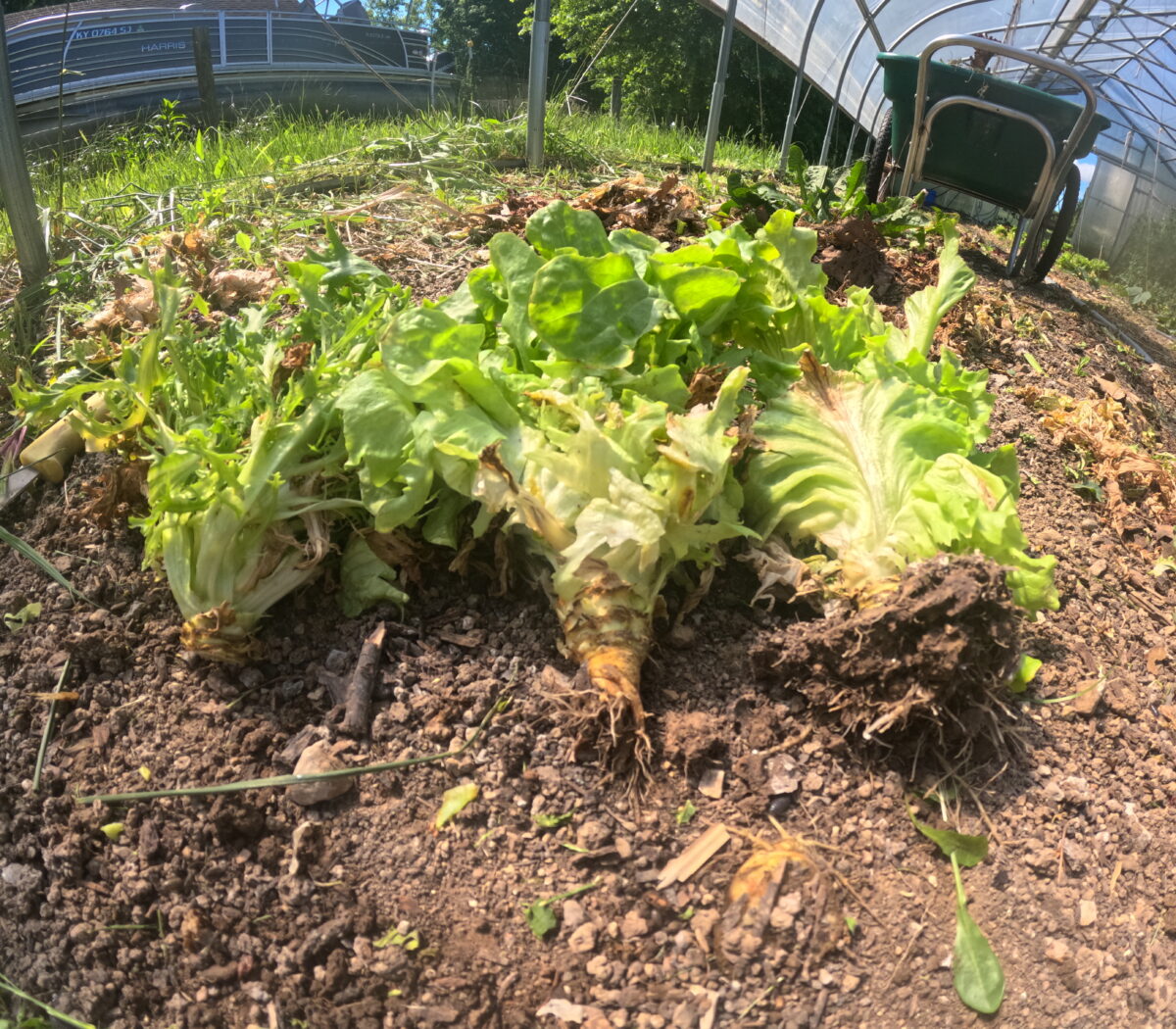
Any sort of soil disturbance should be done thoughtfully, with an eye on the weather to avoid erosion. It’s preferable to avoid disturbing even a few inches, but sometimes that will be required for improving soil tilth (as discussed below) and/or to terminate the previous crop. Although not preferred, with more stubborn plants that regrow readily from their roots, you may be better off removing the entire plant, roots and all, or simply accepting a small amount of regrowth from the previous crop that’s relatively easy to kill in the next crop.
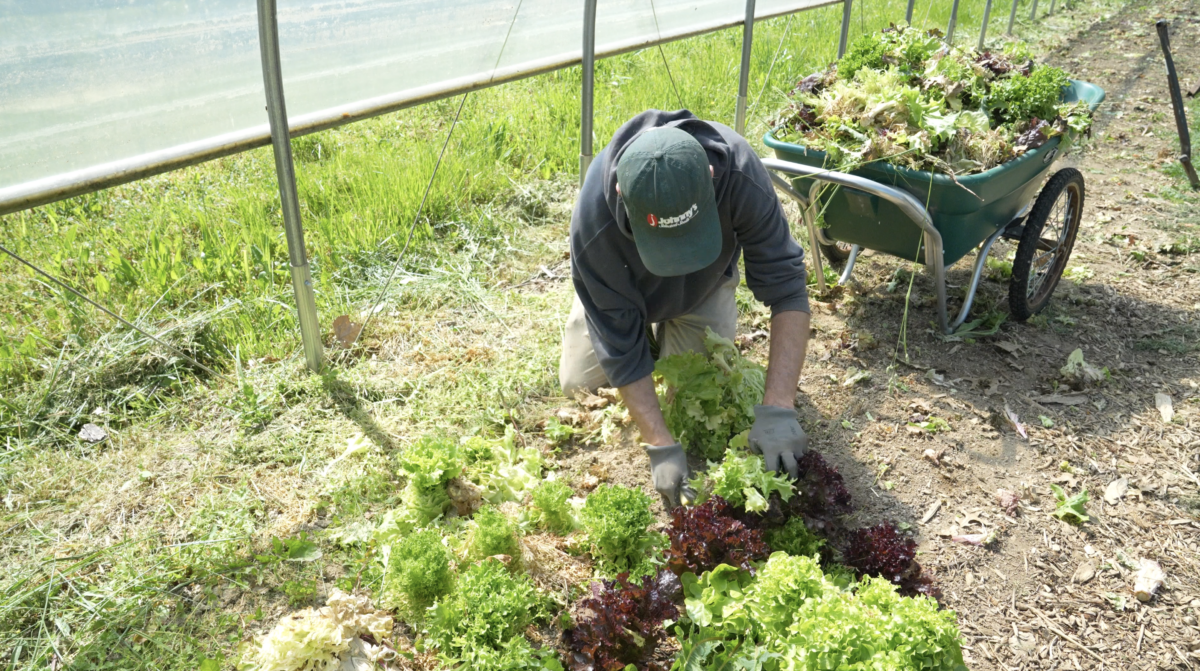
Crop removal can be quite labor intensive, so it’s ideal to combine this task with another job such as harvesting, when possible. Again, this isn’t a concern for root crops, because harvest and removal are the same. But for other crops, how to do this is less obvious. When harvesting heads of broccoli, for example, you can first remove the entire plant by cutting it at the soil surface, leaving the root in the soil. You would then remove the head for harvest and place the stem in a cart or wheelbarrow, or leave it in the path for later retrieval or mowing. Similarly, during the final picking of bush beans, one person or crew can remove the whole plant at the soil surface and harvest in the shade while others flip the bed for the next crop.
It won’t always make sense to do crop harvest and residue removal at the same time. Also, it can increase the amount of labor needed for a bed flip compared to a tillage system. However, when it’s possible to harvest and remove the crop residue simultaneously, you’re shortening the time between crops—potentially by weeks—which can extend the season and increase overall revenue.