Using the no-till strategies outlined in this publication to make bed flips faster and increase production can get confusing when it comes time to plan your crop rotations. To make bed flips efficient, no-till crop planning needs to consider three variables:
- the rotation of crop families
- the row spacing of different vegetables
- the compatibility of crops used for intercropping
Of course, when you make a no-till rotation plan, you will always want to remember how crop rotation is necessary for disease control in certain crops, as well.
Rotating by Plant Family
Growers often divide beds into plant families, with heavier feeding crops like nightshades or cole crops followed by something that isn’t as heavy feeding, like lettuce, carrots, green onions, etc. To keep it simple, oftentimes you’ll grow one crop in the plot before flipping it all at once to the next crop. But, this sort of simple rotation can be thrown off when you’re attempting to do a bed flip using no-till practices, where keeping every bed planted is a core principle.
To illustrate, let’s say a grower’s typical crop rotation includes a plot dedicated to spring brassicas, followed by another vegetable crop family such as lettuce. Since this grower wants to maximize growing space, they perform a no-till bed flip as the individual brassica beds finish. This means some of the beds will go earlier into the second crop, lettuce, and possibly finish earlier.
When you stagger bed plantings this way, it creates more complications but also more opportunities, because you aren’t waiting for the first crop to finish entirely before planting the second one. It can also create production gaps of its own, because the first wave of lettuce beds you planted (the second crop) might finish when there’s still time left in the fall to grow something. You can account for this in the crop rotation by adding either a third crop to those beds that finish early, or a quick, easily terminated cover crop, like buckwheat or cowpeas. Figure 1 provides an example of an 8-year rotation that I might use for a bed on my farm in central Kentucky.
| Figure 1. Sample 8-year rotation with cover crops | |||||||||||||||||||||||||
| Jan | Feb | Mar | April | May | June | July | Aug | Sept | Oct | Nov | Dec | ||||||||||||||
| Year 1 | Peas (cover crops) | Broccoli | Lettuce | Beets | Rye + Vetch (cover crop) | ||||||||||||||||||||
| Year 2 | Rye + Vetch (cover crop) | Summer Squash | Green Beans | Rye + Vetch (cover crop) | |||||||||||||||||||||
| Year 3 | Rye + Vetch (cover crop) | Tomatoes + Beets (intercrop) | Tomatoes | Peas (cover crop) | |||||||||||||||||||||
| Year 4 | Peas (cover crop) | Onions | Lettuce | Rye + Vetch (cover crop) | |||||||||||||||||||||
| Year 5 | Rye + Vetch (cover crop) | Winter Squash | Peas (cover crop) | ||||||||||||||||||||||
| Year 6 | Peas (cover crop) | Potatoes | Winter Squash | Peas (cover crop) | |||||||||||||||||||||
| Year 7 | Garlic | Buckwheat (cover crop) | Kale | ||||||||||||||||||||||
| Year 8 | Crimson Clover (cover crop | Peppers + Romaine (cover crop) | Peppers | Peas (cover crop) | |||||||||||||||||||||
Row Spacing Patterns
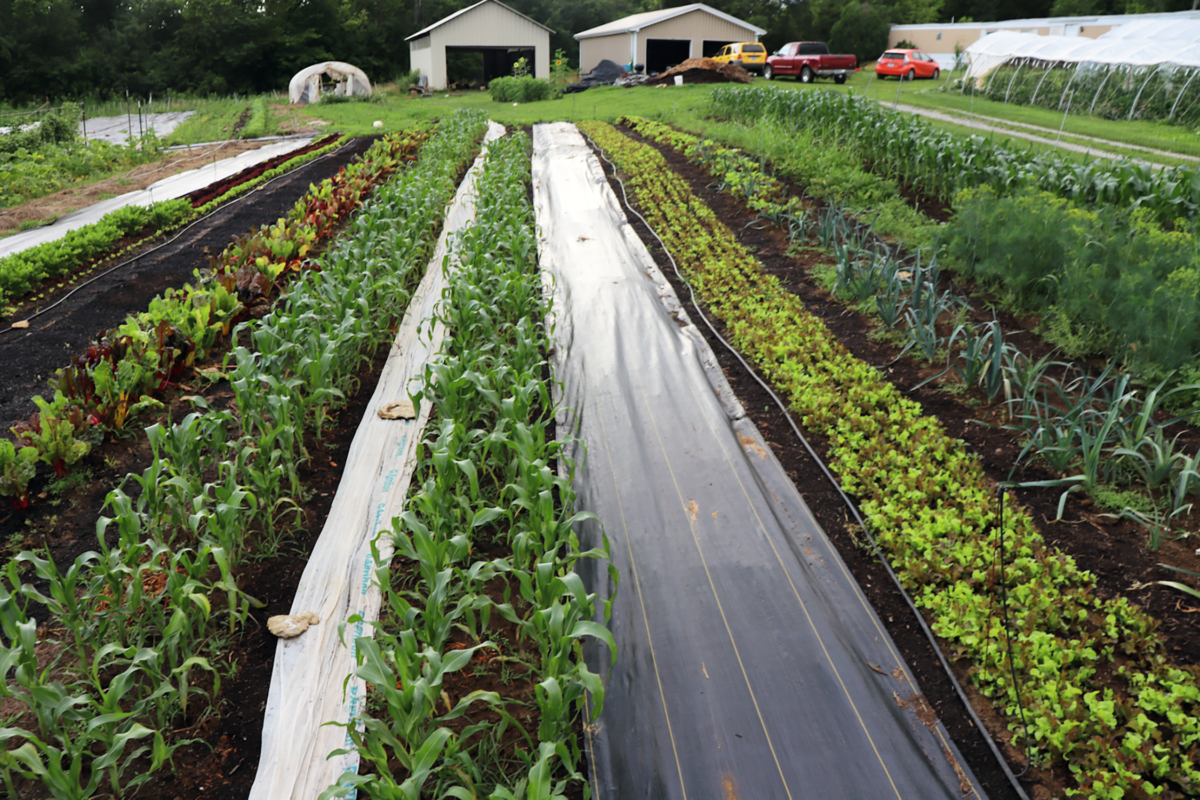
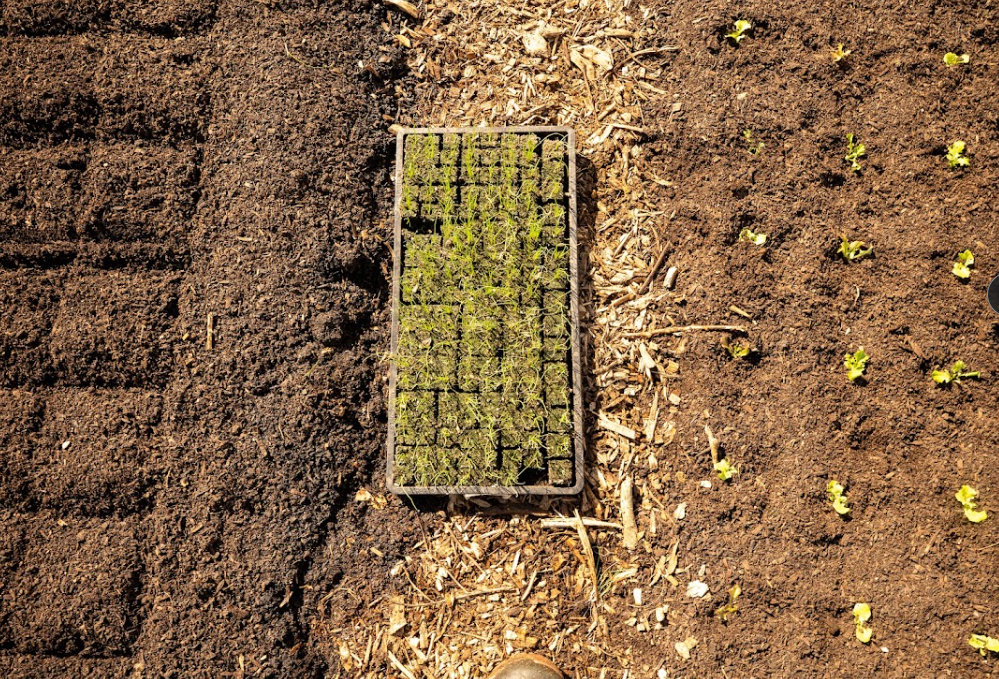
It’s helpful to consider the planting pattern of different crops when planning them in a sequence. In the “Seeding and Transplanting Tricks” section we gave the example of following a crop that’s planted in four rows with one that’s planted in 2–3 rows, to avoid the issue of planting into old roots. When using a bed system, you can also use row counts to plan for faster transitions through the use of relay cropping. For example, if you started with a crop planted in four rows, later in the season you could relay plant a three-row crop in between the four rows. We’ll discuss these strategies in more detail in the next section.
Tips for Relay Cropping and Intercropping
Planning can become very complicated when you use intercropping and relay cropping in a rotation. This comes down to the fact that a bed will often have two crops in it at the same time instead of just one, sometimes from different families. There are a few ways to handle this complexity.
As with any crop rotation, you shouldn’t follow one crop with another from the same crop family to avoid disease issues. But, you can use relay cropping or intercropping to add more of the same crop family in the same bed at the same time. This makes crop planning easier by eliminating the need to plan for other crop families. It can work so long as all the other parameters for good production are met, including moisture, fertility, bed preparation, and timing. So if a plot is for brassicas, then you can sow turnips together with a longer season brassica like cauliflower. Other examples include planting lettuce beneath sunflowers, or beets next to chard. The biggest challenge with this strategy is figuring out the timing so that one crop does not overtake another. However, competition is a challenge with intercropping whether or not the crops are in the same family, and a good understanding of each crop’s growth habits is essential.
Combining different crop families in a bed is also an option, such as planting cilantro in the bed space next to tomatoes. But a grower will still need to follow the important principle of planting a different crop family in the next phase of the rotation. So in this case, make sure the next crops that go into these beds aren’t in the tomato (solanaceous) or cilantro (apiaceae) families. If it’s a heavy feeder like broccoli, good options for relay crops include lettuces, spinach, and carrots, as long as space allows. Relay planting requires you to spend more time in the crop planning phase.
Intercropping and relay cropping are concepts that could easily get someone’s head spinning. Something vitally important to keep in mind is to ease into these ideas over the course of several seasons. Start with small trials with the easiest crops, such as planting lettuce on the sides of tomatoes or peppers. This way, building out a crop plan for more intensive production that includes intercropping and relay cropping can happen slowly and naturally over time. In short, there’s no rush, but hopefully the idea of bringing more crops out of the same space per season is attractive enough to give it a shot. In time, farmers find consistent rhythms and systems that work for their context.
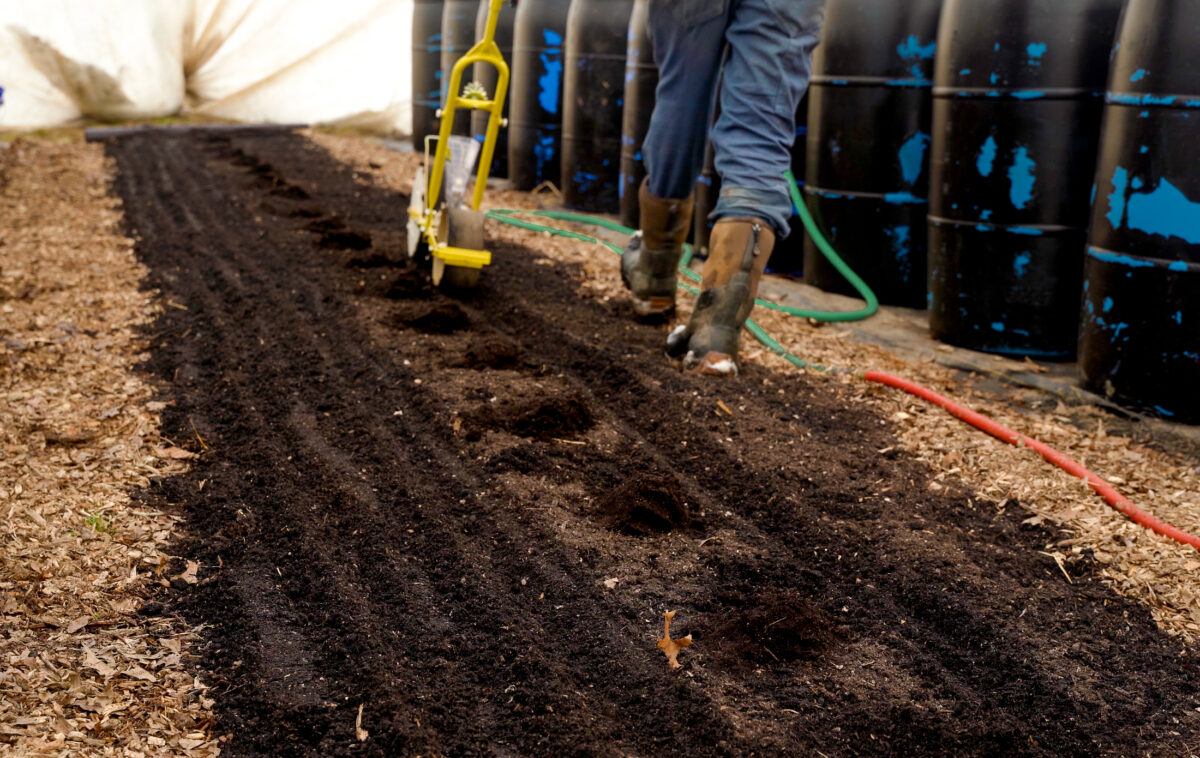
Likewise, it’s okay to look for alternative ways to keep beds covered in between crops, for example through the use of mulches, cover crops, and even tarps, especially as growers figure out ways to incorporate more cash crops. When you look at the three main principles of no-till (keep the soil covered, planted, and undisturbed) they always end in one key phrase: as much as possible. We want to maximize the space we have as growers, but sometimes what makes the most sense for our gardens, our markets, or even our sanity, is to simply mulch an area until the next crop is ready to be planted. That is also perfectly acceptable, especially if you’re doing what you can to preserve soil health as much as possible.