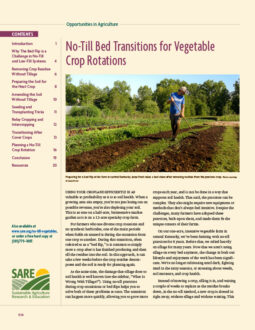
When preparing a bed for the next crop, you must contend with the belowground biomass, as well as both the firmness of the soil surface and weeds. Fortunately, there are techniques and tools to help mitigate any challenges. Here we’ll discuss weed management, compaction, irrigation, and soil tilth.
Weed Management
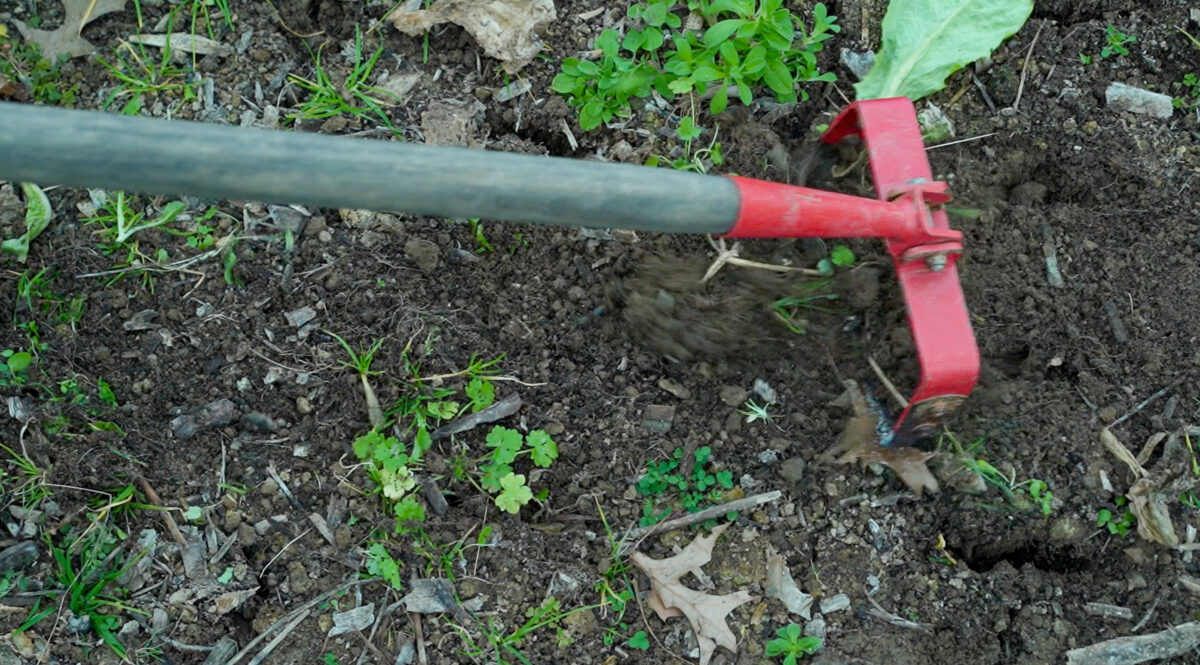
Once you’ve removed the previous crop from the bed or row, you need to evaluate a few things. The first is weed pressure. You must manage weeds before you plant anything else. Perhaps that will require a stirrup hoe, or another sharp cultivation tool capable of severing the plant from its roots. Then, rake off the weeds or carry them to the compost pile. Vigilance in this process will ensure a better transition to the next crop.
Unlike crop roots—which you can often keep in the soil—the roots of most weeds must be removed to reduce their potential for regrowth. Weeds that grow from rhizomes (or underground stems), such as johnsongrass and bermudagrass, are difficult to deal with in a no-till system, just as they are in a tillage system. Without tillage or chemicals, you’ll need to remove these weeds by hand, which can be labor intensive. On the plus side, you aren’t making the problem worse by chopping and spreading the rhizomes of your problem weeds, which tillage does. So these weeds become easier to manage over the long term in no-till systems.
Compaction
The second factor you need to evaluate is compaction. Compacted soil is one of the most significant limiting factors in production. Deep layers of compaction prevent water and air (oxygen, carbon dioxide) from moving in or out of the soil, and this creates anaerobic layers that are unfavorable for healthy plant roots and microbial populations. Living plants, along with the remaining roots of previous crops, will help to address compaction over time. But some direct action may be needed in certain soils, at least in the beginning years.
Tools like the penetrometer will give you exact compaction readings, but for the average grower, the simplest way to evaluate compaction is with a 0.5 inch (or larger) medal rod or piece of rebar. Although not precise, if you gently force this tool into soil it will give you some indication of your compaction levels. Try this method when the soil isn’t too wet or dry. If the rebar sinks into soil to a depth of around 14 inches with no more than your own body weight, there is likely little compaction in the rootzone, and you can move on to your next step.
If you can’t press the rebar into the soil easily, then you may need to address the compaction. But first, note that rockier soils can complicate simple compaction tests like these. Visual cues may be more helpful in rockier situations. In this case, take a 1-foot deep cross section of the soil with a shovel and examine it. You’re looking for a loose crumby structure versus a dense structure without holes, which might signify compaction.
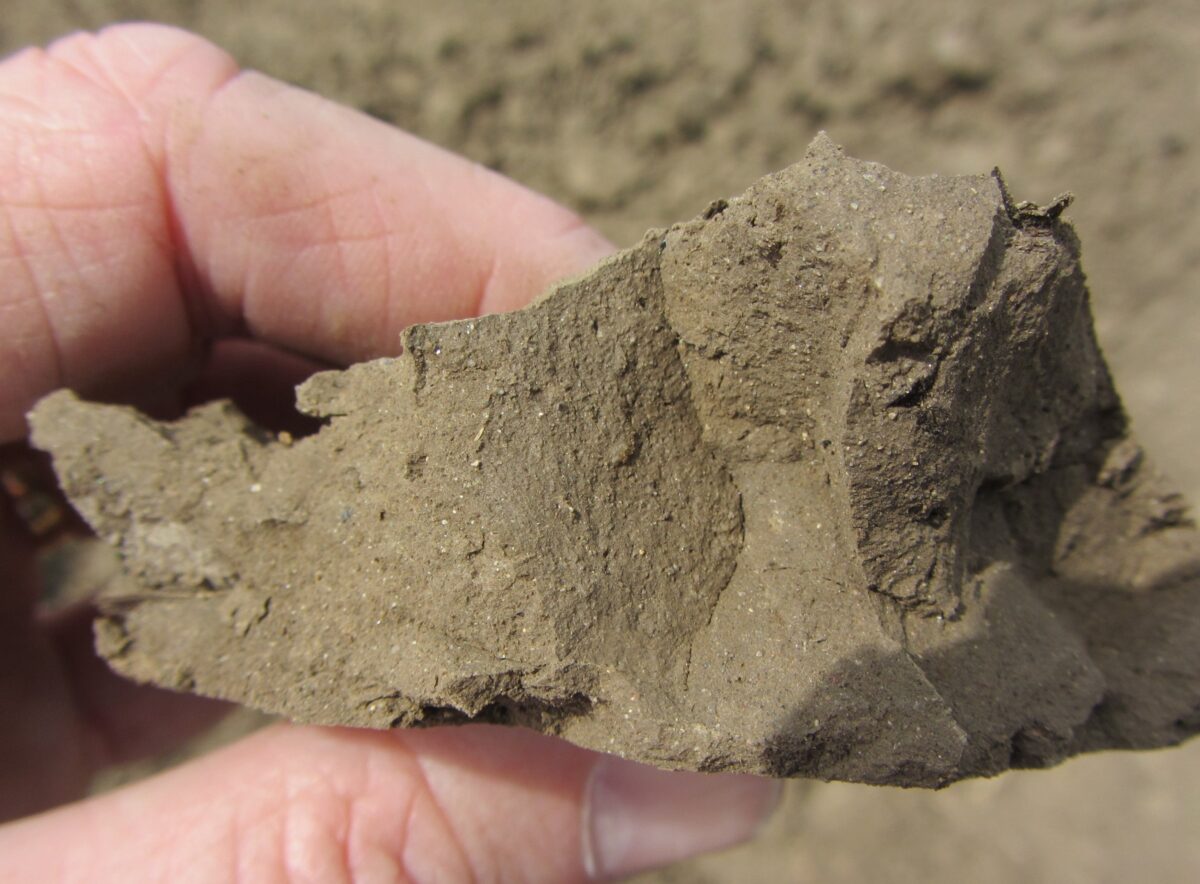
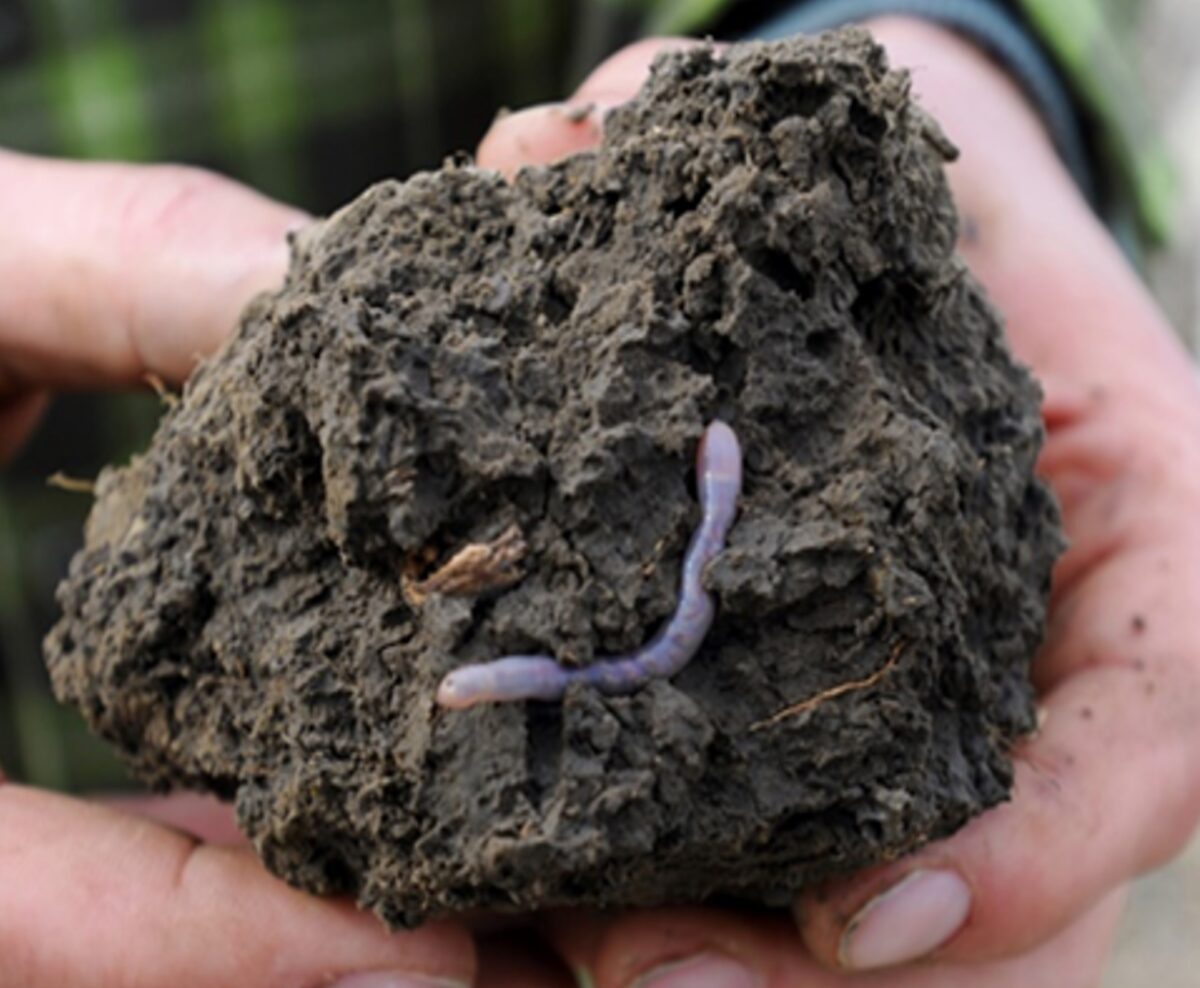
To address compaction, consider adding compost to the top of the bed, then lightly broadforking or subsoiling the area. Allow the compost to fall into the crevices that you create as you fork the bed. This will slowly decompact the soil. You shouldn’t need to do this every year, although some soils are simply going to be denser than others and will require a longer period of intervention.
Irrigation
In any production system, both seeds and new transplants require moisture to germinate, grow, and thrive. Irrigation is one area that might be a little more difficult with certain no-till systems. For example, in a deep compost mulch system, the compost can be hydrophobic, which means it resists absorbing water after it dries out. This is typical of chunkier composts that haven’t been heavily sifted. Beds in this condition will therefore require more irrigation to meet the crop’s needs. Alternatively, mix compost with water-retaining soil particles by lightly working it into the 1–2 top inches of soil. This light tillage of the surface will increase the water holding capacity of the compost. Drip irrigation is less effective in deep compost mulch systems when plants are newly transplanted or are directly seeded. This is because the water tends to drop straight through the compost, whereas on a bare soil surface it spreads out more. Overhead irrigation is often preferred for establishing crops. Avoiding chunkier composts, or screening them out, can likewise reduce the risk of hydrophobic surfaces.
In growing conditions where water is limited, a light “tilthing” of the top 2–3 inches of the soil to mix in some soil particles will aid in moisture distribution and retention (as described in the next section). However, it’s important to remember that even small amounts of disturbance lead to a greater potential for weed seed germination—if the soil surface is better for germinating crop seeds, it’s better for weed seeds too!
Soil Tilth
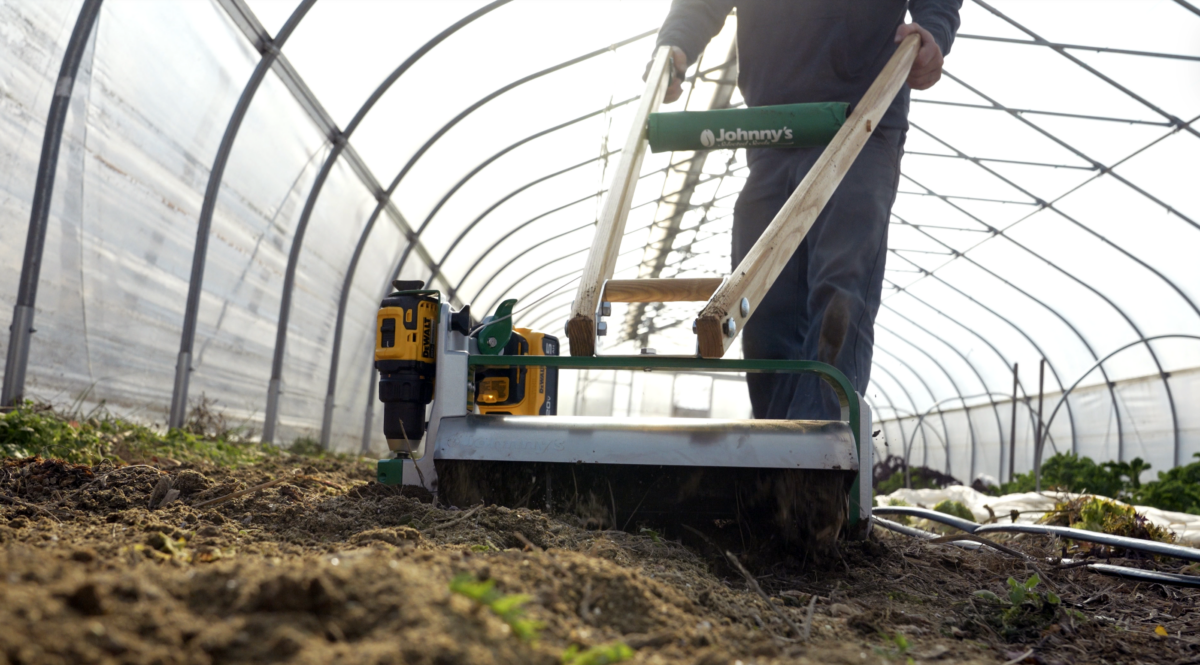
The third factor to consider is the soil’s tilth, or the plantability of the soil surface. The soil surface can become compacted or simply firm, and this makes sowing or transplanting quite difficult. In this case, you may need some amount of light surface disturbance. In order to achieve good tilth, you can use a simple hoe or other light cultivation tool. To break the surface, you can use something like a tilther as well, which is a very shallow tillage tool run off of a power drill. On larger scales, perhaps use a harrow, a power harrow, or a tiller set extremely shallow (around 2 inches deep), preferably with a precision depth roller attachment that manages the depth. The idea is to simply break up the surface compaction to make transplanting or seeding easier and more effective. Before the tilth is fully addressed, it’s important to examine options for amending the soil without deep tillage.