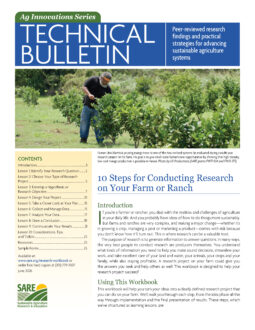
Innovative farmers and ranchers often try new production practices and management strategies. But change can involve significant risk, requiring producers to carefully test and research their ideas before making big decisions.
SARE’s newest bulletin, 10 Steps for Conducting Research on Your Farm or Ranch, provides a practical framework that can help producers design and carry out on-farm research projects.
10 Steps for Conducting Research on Your Farm or Ranch can help producers turn ideas into well-designed research projects, create detailed plans for implementation, and generate meaningful results that can improve decision-making and be shared with others. The bulletin serves as a companion to SARE’s How to Conduct Research on Your Farm or Ranch, which provides more in-depth guidance on technical topics such as experimental design, statistical analysis and on-farm research methods.
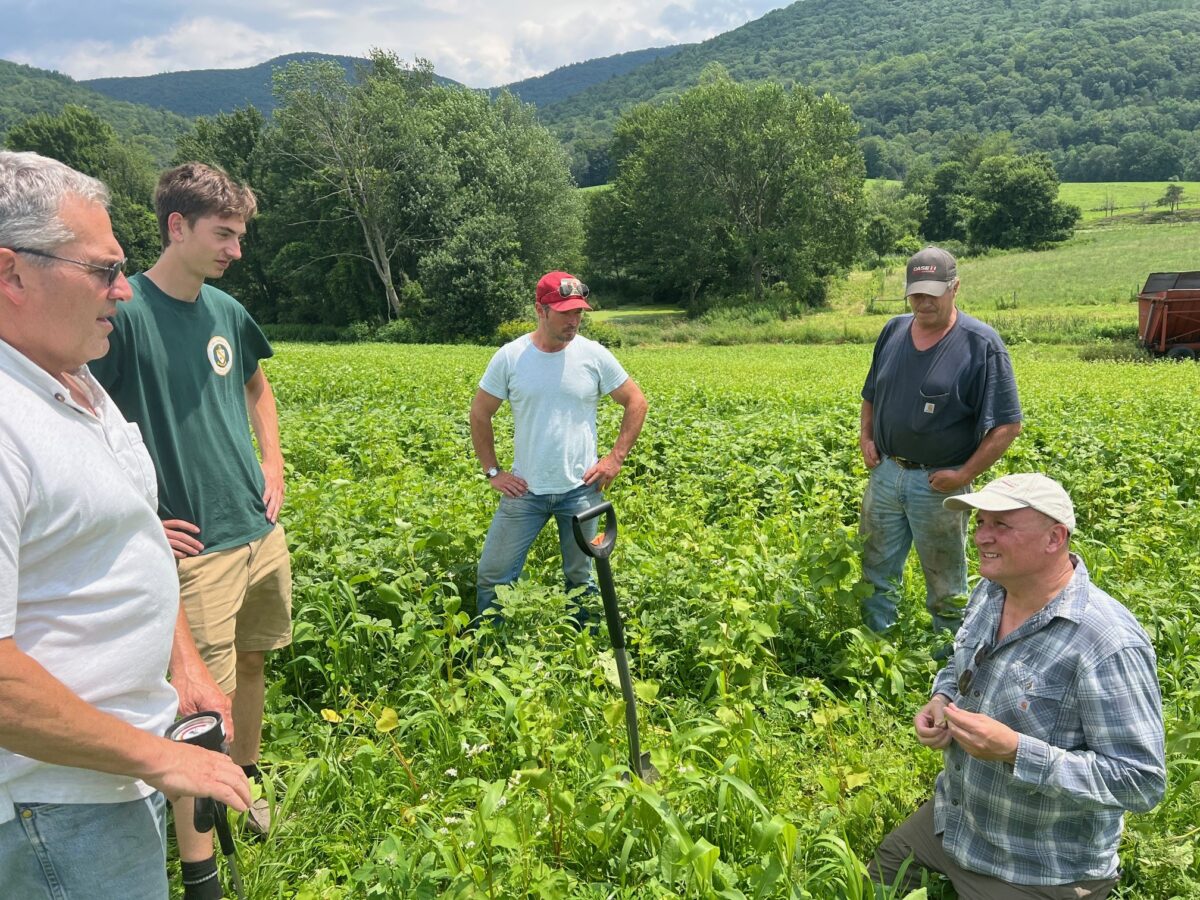
Sandra Dietz, of Whitewater Gardens Farm in Altura, Minn., used a North Central SARE Farmer/Rancher grant (FNC23-1370) to compare the impacts of no-till and traditional tilling on soil health and weed pressure in mixed vegetable production. “The results helped us plan for and modify no-till methods on our farm and provided valuable, practical results to share with other vegetable growers,” says Dietz.
Developed for farmers, ranchers and agricultural educators, the workbook walks users through 10 essential steps in conducting on-farm research:
- Identify Your Research Question
- Choose your Type of Research Project
- Develop a Hypothesis or Research Objective
- Design Your Project
- Take a Closer Look at Your Plan
- Collect and Manage Data
- Analyze Your Data
- Draw a Conclusion
- Communicate Your Results
- Considerations, Tips and Tidbits
Download or order your free print copy of 10 Steps for Conducting Research on Your Farm or Ranch at www.sare.org/10-steps or by calling (301) 779-1007. 10 Steps for Conducting Research on Your Farm or Ranch is available in quantity for free to educators for use in educational workshops, classes or tours.
For information on grants and resources available from SARE, visit www.sare.org.