Despite years of experience, fifth-generation flower farmer Leroy Hardy was facing foreclosure on his farm near Sedley, Virginia. To navigate the financial crisis, Hardy reached out to Rural Advancement Foundation International (RAFI) for mediation assistance, and he emerged with his assets intact.
Project organizers surveyed farmers who had recently experienced a financial crisis and differentiated experiences based on race to help produce culturally relevant resources. They found that “resources available to farmers didn’t address the varied experiences of farmers in financial and emotional crises,” says Andrew Smolski, a sociologist from North Carolina State University (NCSU). The project yielded a number of strategies communities can use to help farmers navigate financial stresses. And ATTRA's Farmer Well Being website provides additional resources farmers can use to find the support they need.
Farming and ranching is stressful business. And farmers’ physical and mental health is a crucial component of agricultural sustainability. Fortunately, farmers like Hardy are willing to support one another. “Participating in this project was my way of being there to help someone else going through what I went through so that it’s not so much of a painful ordeal for them.”
Want more information? See the related SARE grant and related resources:
Adapted from the Conservation Technology Information Center: A new national survey report has found that the vast majority of farmers who use cover crops don't need incentive payments to continue with the practice because of how much they appreciate its value to their land and business.
According to the National Cover Crop Survey, incentives play a key role in getting some farmers started on cover crops—49% of the cover crop users participating in the survey reported receiving some sort of payment for cover crops in 2022, and 77.8% of cover crop non-users said incentive payments would be helpful. However, 90.3% of the farmers who were receiving cover crop incentives reported that they would definitely or probably continue planting cover crops after the payments ended, while only 3.3% said they definitely or probably would drop cover crops at the end of the incentive program.
In all, just 15.6% of cover crop users said receiving incentive payments was one of their goals for cover cropping.
These findings were among many conclusions drawn in a report, issued jointly by SARE, the Conservation Technology Information Center (CTIC) and the American Seed Trade Association (ASTA), based on insights from nearly 800 farmers in 49 states.
"Cover crop incentive payments are an important factor in encouraging and helping farmers to transition into cover cropping, but once they see the soil health improvements and other cover crop benefits, most stick with cover crop planting long after the incentives end," says Dr. Rob Myers of SARE, lead researcher on the 2022-2023 National Cover Crop Survey Report. "Insights like these make the National Cover Crop Survey such a valuable tool in understanding the impacts of cover crops, the motivations of users and non-users, and needs for additional information and incentives."
The sustainability of farms and food-related businesses can be affected by many agricultural, social, ecological, financial, and cultural factors and issues that can vary from state to state and from region to region. These issues range from market access and development needs to production challenges, lack of food system infrastructure such as aggregation and processing, limited capital, and encroachment of urban and suburban development. These issues and factors, at the same time, can also provide opportunities that build on the strengths and resources at the local and regional level.
There were four primary goals of the National SARE Fellows tour in Virginia: 1) enhance the ability and capacity of agricultural professionals to contribute to the social, ecological and financial sustainability of individual farms and farming systems in their own states; 2) understand the diversity of agriculture in Virginia and the Mid-Atlantic region and pertinent issues and challenges to sustainable farms and food businesses; 3) understand the opportunities and challenges for Extension programming of sustainable agriculture education, research and service in the Virginia landscape of small, diversified family farms and regional food systems; and 4) strengthen peer-to-peer and regional networking among SARE Fellows, SARE staff, and other participating agricultural professionals.
I really loved the variety of farms that were featured and how they all had a different concept and direction in sustainable agriculture, but were united by common themes. The differences are real and significant, but listening to the farmers talk about their role of stewarding the land and soil brought the concept of sustainable agriculture together for me, as they were united by a common passion of producing food for people today and doing the best to managed the resources to provide for future generations. I really appreciated the opportunity to see first hand this range of operations and talk with the farmers who manage them.
Tom Buller, Kansas Rural Center
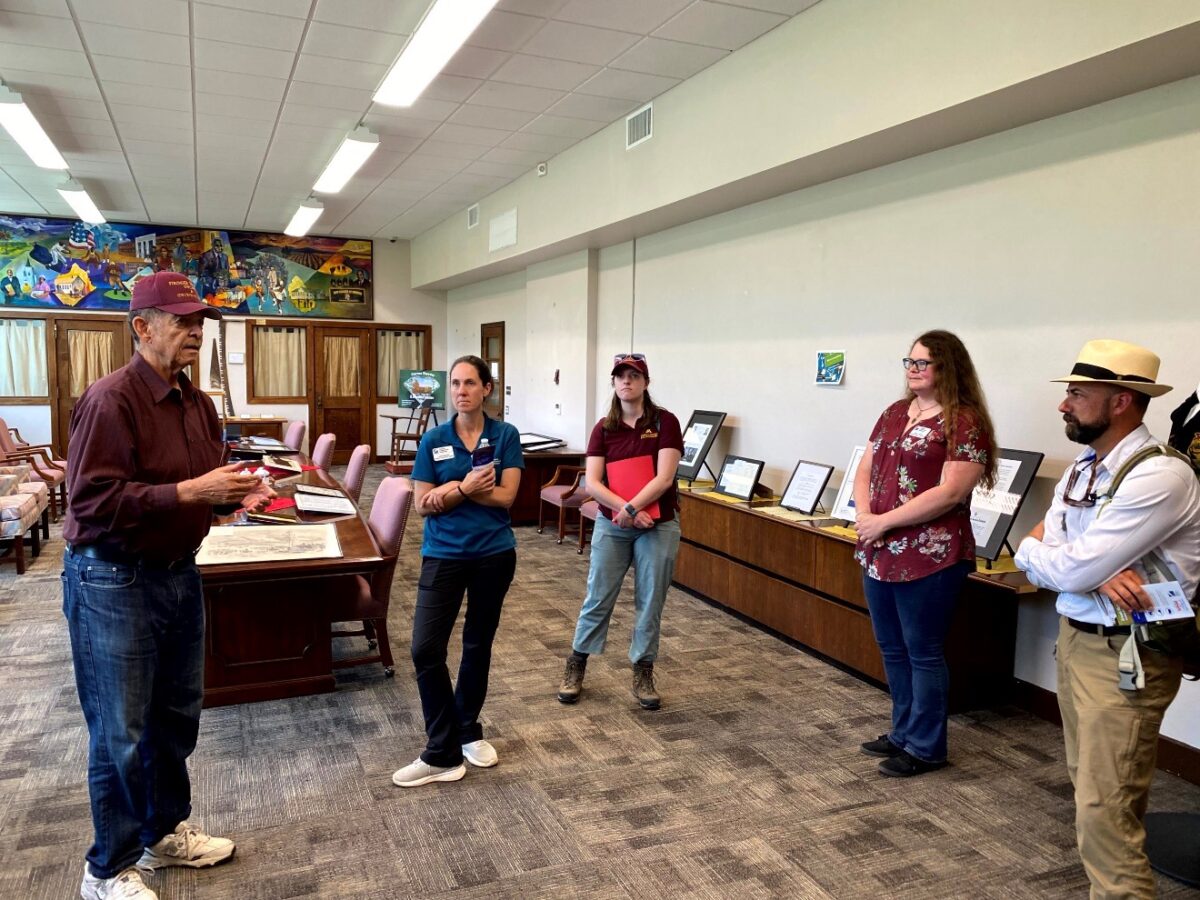
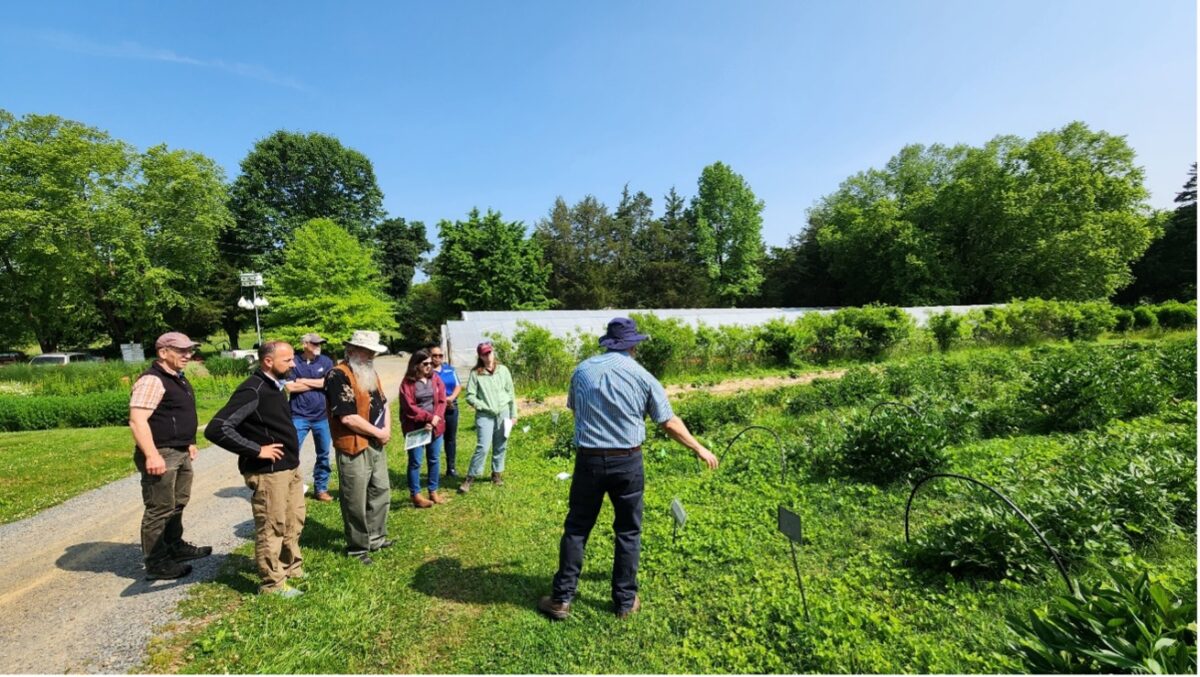
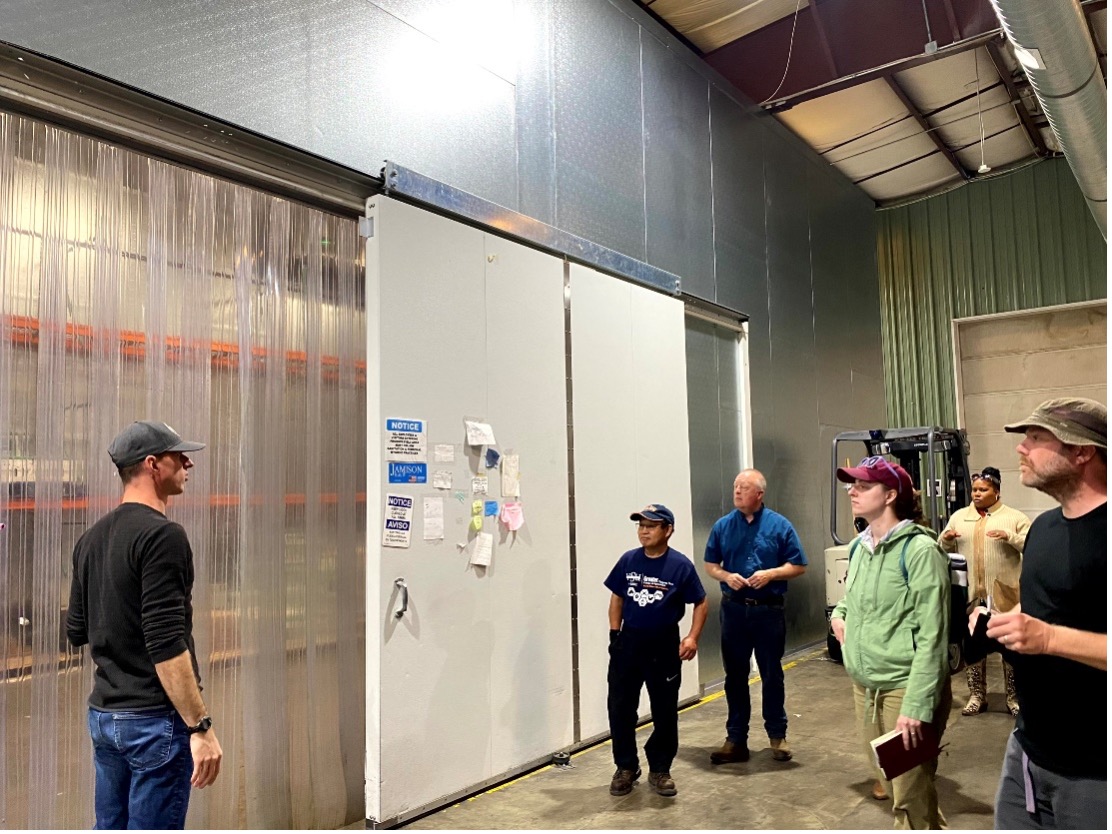
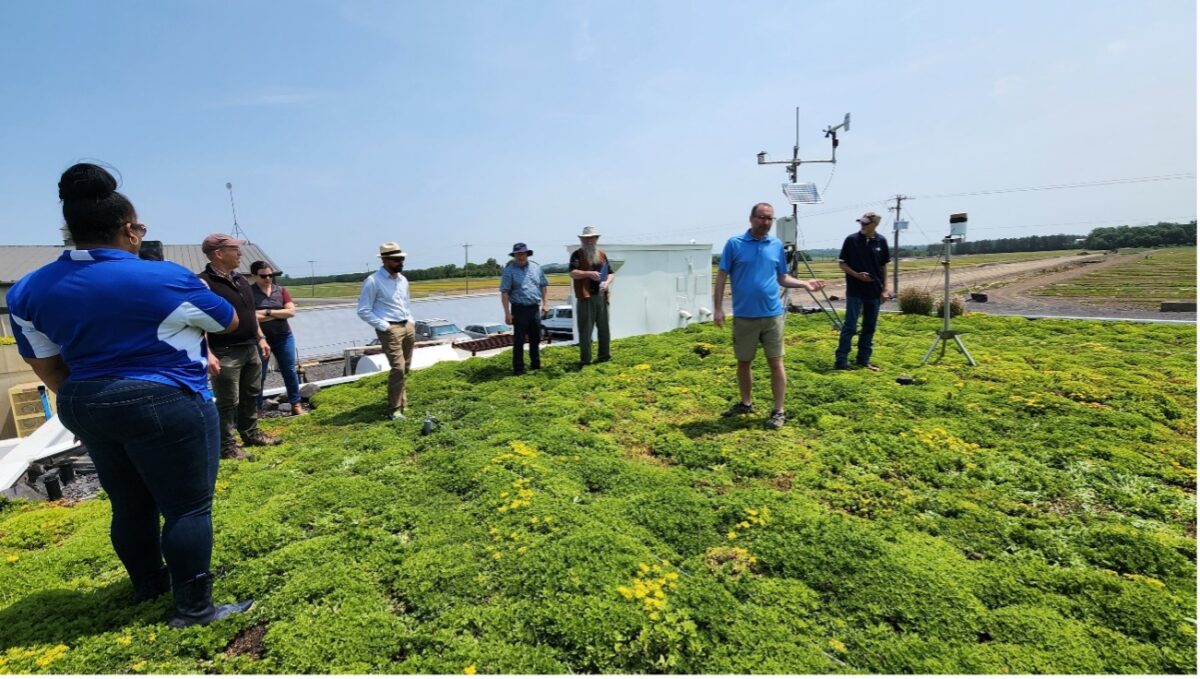
The Fellows’ training included tours and conversations at the following sites in the Northern Piedmont region of Virginia: Wollam Gardens, a cut-flower business and destination in Jeffersonton; SemperGreen USA, the largest and fastest growing green roof vegetation and living wall grower of Sedum products in North America, based in Culpeper; the George Washington Carver Center, which hosts an onsite agriculture research center through Virginia Cooperative Extension, a Food Enterprise Center, Virginia State University’s Small Farm Outreach Program, the Minority and Veteran Farmers of the Piedmont (MVFP), and the Friends of the Rappahannock Conservation Nursery; the Fauquier Education Farm that serves the Virginia Beginning Farmer and Rancher Program’s Northern Piedmont Farmer Incubator program and grows fresh produce for local food banks and pantries; 4P Foods, a food port and regional hub that aggregates, processes and delivers in-season produce sourced from independent farmers we know and trust in Washington, DC, Virginia, Maryland and throughout the Eastern Seaboard and Mid-Atlantic; the Mid-Atlantic Food Resilience and Access Coalition (MAFRAC) that emerged to address the food crisis triggered by the pandemic in March 2020 and continues to resource, connect and empower farmers, producers and food organizations throughout the region; Cool Lawn Farm LLC, a multi-generational dairy farm in Remington that has expanded to include Moo Thru as a retail business that now serves ice cream, sundaes and shakes at three locations in the region.
All of the collaboration evident at the George Washington Carver Center allowed the Fellows to conduct a modified “Reading the Farm” exercise that involved a SWOT (Strengths, Weaknesses, Opportunities and Threats) Analysis of the Carver Center’s integrated educational programming after touring the different programs. The participants enjoyed a walk through VSU’s Mobile Meat Processing Unit for Small Ruminants, the Food Enterprise Center’s Incubator kitchen, and the George Washington Carver Regional High School Museum, where they learned about the overall vision for the Carver Center as a regional food system resource center. Some strengths and opportunities that were identified included location, administrative support, legacy of George Washington Carver’s name and foresight, and the passion and cooperation of multiple collaborators. The Fellows were cognizant of the challenges of aligning missions, balancing capacity in the early stages of development, and maintaining momentum and energy around the Center’s mission and vision.
The National SARE Fellows Tour was organized and coordinated on behalf of Virginia SARE by Eric Bendfeldt of Virginia Tech and Sanjun Gu and Chris Mullins of Virginia State University. SARE Fellows, who came from Washington, Mississippi, Montana, Kansas, Minnesota and Wisconsin this year, showed great interest in all of the strategically arranged tour stops and learned a great deal about sustainable agriculture in Virginia, especially in counties in close proximity to Metropolitan DC.
Figure 1. National SARE Fellows visiting the George Washington Carver Center's museum Photo credit: Eric Bendfeldt.Figure 2. Chris Mullins of Virginia State University and Virginia SARE giving an overview and tour of Wollam Gardens Photo credit: Sanjun Gu.Figure 3. Tom McDougall of 4P Foods giving a tour of their food hub and port. Photo credit: Eric Bendfeldt.Figure 4. National SARE Fellows are given a tour of a green-Sedum-based rooftop at SemperGreen USA in Culpeper, VA. Photo credit: Sanjun Gu.
At its heart, sustainable agriculture is simple. In practice, it’s much more complicated. Farmers and ranchers who value sustainability embrace three common goals for a successful production system:
Profit over the long term
Stewardship of our nation’s land, air and water
Quality of life for farmers, ranchers, farm employees and communities
SARE’s newly revised What is Sustainable Agriculture?publication provides a primer to practices that can help farmers and ranchers improve the sustainability of any complex, integrated production and marketing system.
Soil Health: Healthy soil provides a strong foundation for the vitality of any crop or forage. Cover crops, conservation tillage and effective compost and pasture management can help producers improve soil quality.
Biological Diversity: Crop rotation and integrated crop and livestock systems are proven approaches for managing water quality, cycling nutrients and interrupting the life cycles of pests.
Health and Wellbeing of People: Safe and humane working conditions and fair compensation for producers and farmworkers are essential components of a sustainable production system.
Ecological Pest Management: Understanding insect, weed and disease pests can help producers improve control through scouting, reduced applications, biodiversity and other tools.
Understanding the biology of weeds is key to managing these troublesome pests using ecological principles. Cultural practices such as crop rotations and cover crops paired with smart cultivation have helped many farmers successfully manage weeds while reducing or eliminating herbicide use.
InEcological Weed Management at Terra Preta Farm, the Raygozas explain how cover crops and basket weeding are used to control stinging nettle, guinea grass and other weeds organically. “We aren’t using the chemicals, so that aligns with our values of protecting the environment, the soil and the land,” says Shakera. Crop rotation, mulch, hand hoes and flame weeding are used to control weeds in the smaller-scale market garden side of the operation.
Basket Weeders at Terra Preta Farmfocuses on the Raygoza’s investment in a soil-safe basket weeder to control weeds in their wholesale radish operation.“ The first time we tried it, it really changed our game here. It has saved us a lot of time and money and we have a better crop,” says Juan.
Hand Tools in the Market Garden at Terra Preta Farm shows how a smaller scale market garden operation can utilize wheel, stirrup and other hand hoes to manage weeds in closely spaced rows. Flame weeding is used to dehydrate and suppress weeds quickly and efficiently. “The type of tool you use really makes a difference,” says Juan. “We don’t want 100% control here in the garden, just decent enough so that the weeds don’t steal a lot of nutrients.”
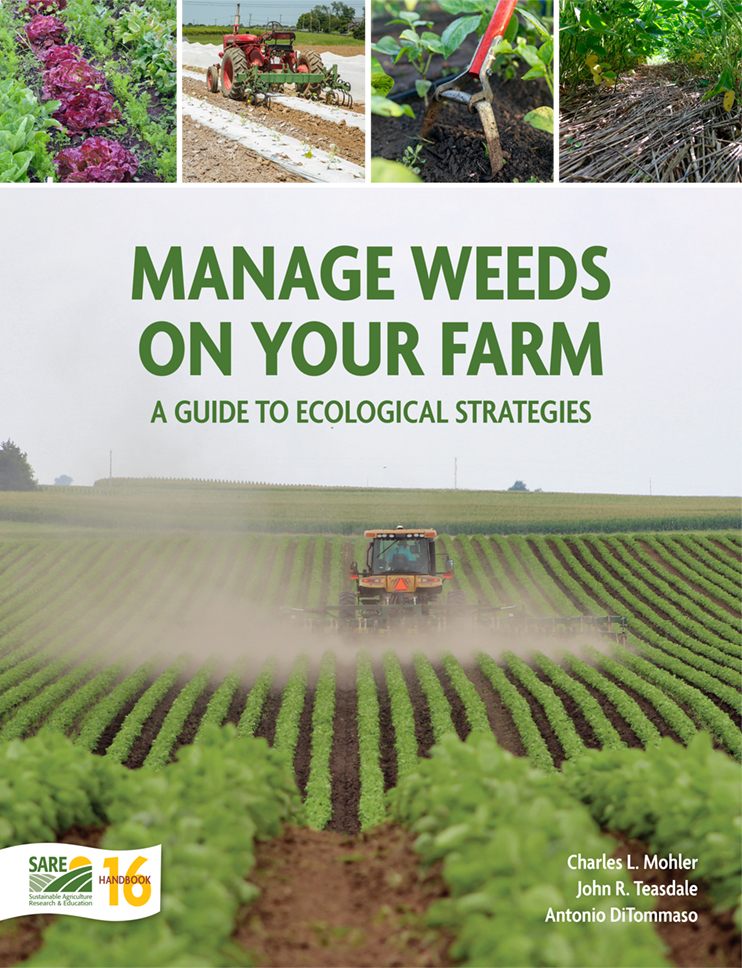
The Manage Weeds on Your Farm Video Series is a companion to SARE’s Manage Weeds on Your Farm, a definitive guide to understanding agricultural weeds and how to manage them efficiently, effectively and ecologically. Manage Weeds on Your Farm shows you how to outsmart your weeds by identifying the right tactic for the right weed at the right time, which will reduce as much as possible the labor required, while ensuring your weeds don’t impact crop yields. Download your free copy or order it in print today at www.sare.org/weeds.
Smart farmers know that healthy soil hosts a flourishing and diverse ecosystem of bacteria, fungi and invertebrates. But the complex relationships between soil life, productivity and resilience are not well understood. Now available from the Xerces Society and SARE, Farming with Soil Life: A Handbook for Supporting Soil Invertebrates and Soil Health on Farms is a user-friendly guide to identifying, understanding and better managing soil life to improve the sustainability of your farming system.
Written by the Xerces Society and published by SARE Outreach, Farming with Soil Life features photograph-filled profiles that outline how to observe and identify 73 soil organisms. Each profile includes the identification, description, ecological role, habitat, diet and life cycle of the highlighted species.
Farming with Soil Life alsoexamines how producers can boost life in the soil using buffers, no-till cropping, cover cropping, crop rotations and other practices that encourage soil flora and fauna communities to thrive. Minimizing tillage, synthetic fertilizer use, and some pesticides and insecticides may also benefit soil biology.
Understanding the relationships between soil, soil life and crop production is key to defining and achieving goals within a sustainable production system. “Soil is a living, dynamic habitat for a great diversity of animals and plants. It supports the global carbon and nitrogen cycles. Healthy soils sequester carbon, helping to mitigate climate change. The more we learn, the more we understand that soil is an irreplaceable part of life."
The University of Maryland has been selected to serve as the National Reporting, Coordinating, and Communications Office (NRCCO) for the Sustainable Agriculture Research and Education (SARE) program. This 10-year investment is being made as part of the USDA's National Institute of Food and Agriculture (NIFA) selection of four regional host institutions to manage SARE's regional granting programs.
“This investment in sustainable agriculture underscores USDA’s ongoing commitment to transforming our food and agricultural systems,” said Chavonda Jacobs-Young, USDA Chief Scientist and Under Secretary for Research, Education and Economics (REE). “Through this investment, SARE will continue to provide competitive grants and education programs that foster farmer-driven innovation to promote climate-smart practices, make sustainable producers more profitable, and improve local economies and the quality of life in rural communities.”
"Since its authorization in the 1990 Farm Bill, SARE has supported farmers in four regions (North Central, Northeast, South, and West), with each regional program hosted by a Land-grant Institution and guided by volunteer Administrative Councils that make grants and set regional priorities. These councils include farmers and ranchers along with representatives from universities, government, agribusiness and nonprofit organizations. Technical reviewers, also volunteers, lend professional and practical experience to help councils evaluate project proposals."
SARE recently partnered with PBS KVIE to produce an episode of RFD-TV's America's Heartland featuring four farmers describing their commitment to sustainability, how they plan to overcome modern farming challenges, and how SARE has impacted their farming and ranching practices.
Bryce Wrigley of Delta Junction, Alaska, discuss how soil health, cover crops and barley flour play an important role in improving food security in Alaska.
Pennsylvania's Hannah Smith-Brubaker and Debra Brubaker share how diversification and new marketing opportunities have benefited their farm.
Dr. Reagan Noland and rancher Chad Raines explore whether running sheep in organic cotton can help manage weeds and reduce tillage in west Texas.
Erin and Drew Gaugler explain how bale grazing, multi-species grazing and keyline cultivation improve soil health and range quality on their 4,000 acre ranch in South Dakota.
Videos featuring each farm's individual segment are also available for sharing.
Visit https://www.rfdtv.com for more information about America's Heartland and other RFD-TV programming.
Tune in to RFD-TV on March 29 at 5:30pm EDT for the premiere of a new “America’s Heartland” episode showcasing farmers and ranchers from across the country who are leaders in sustainability.
SARE partnered with PBS KVIE to produce this episode, which features farmers describing their commitment to sustainability, how they plan to meet farming challenges of today and tomorrow, and how SARE has impacted their farming practices.
Watch as Bryce Wrigley of Delta Junction, Alaska, discusses the importance of soil health and how cover crops have improved his overall operation. He addresses the need for building food security in Alaska as well as how his farm is working to address this issue at the local level. Lastly, see how Wrigley works to share his newfound knowledge with other farmers.
In North Dakota, brother and sister Drew and Erin Gaugler run a 4,000-acre ranch. The Gauglers have received several SARE grants over the years to test out new farming methods on their land. They’ll talk about their grant projects that focused on bale grazing as a way to improve soil health. By prioritizing the health of the land, they know they’ll be able to pass it down to future generations.
Pennsylvania farmer Hannah Smith-Brubaker’s story is unique because she not only received a SARE grant but also served as a leader on the SARE committee that decides how the grant programs will address agricultural needs throughout the Northeast. She and her wife Debra have been farming in Cuba Mills, Penn., on land that has been in the family for 40 years. They’ll share how diversification and new marketing opportunities have benefited their farm.
Lastly, the episode features a collaboration between farmers and researchers: an important component of many SARE grants that allows innovative ideas to be tested in real-world farming conditions. In west Texas, Dr. Reagan Noland is working with rancher Chad Raines to see if running sheep in organic cotton can be an effective method of weed management that allows a farmer to reduce their use of tillage.
Watch the episode on RFD-TV, March 29, at 5:30pm EDT. RFD-TV is carried nationwide on DISH and DIRECTV (satellite), and many cable systems: https://www.rfdtv.com/find-us-on-tv.
If you miss the broadcast, stay tuned! SARE Outreach will share a link to the episode online in the near future.
Many organic and conventional farmers are seeking ways to eliminate or reduce their use of synthetic herbicides. Understanding weeds is the first step towards managing them efficiently and ecologically. Now, two new videos in SARE’s Manage Weeds on Your Farm series explore organic almond grove weed control on Burroughs Family Farm’s 1,200-acre orchard in Denair, Calif.
In Ecological Weed Management at Burroughs Family Orchards, Benina Montes, who manages the property with her parents, shares how consistent vegetative cover paired with seasonal sheep grazing is used to provide effective almond orchard weed control. From late fall to mid spring, sheep are rotated through the orchards to reduce vegetative cover. Flame weeding suppresses ungrazed grasses and cleans the strips underneath the trees prior to harvest. Grazing both improves soil and provides a salable product: lambs. It also means they mow fewer times in a season.
At this point, Montes views the system more as pasture management than as weed control. “I think we’ve done a good job of thinking outside the box, coming up with tools that are doable on a large scale and make economic sense,” she says.
The second new video, Soil Health at Burroughs Family Orchards, explores the orchard’s regenerative soil improvement practices. “Ground cover has helped us dramatically,” says farm manager Nick Hibma. “When we do get rain, the grass and root system helps hold the water.” A diversified cover crop mix of mustard, clover, peas and vetch provides spring blooms that support the pollinators that are essential to California almonds. Triticale or forages are seeded at a heavier rate in areas requiring additional cover to improve soil and increase water retention.
The Manage Weeds on Your Farm Video Series is a companion to SARE’s Manage Weeds on Your Farm, a definitive guide to understanding agricultural weeds and how to manage them efficiently, effectively and ecologically. Manage Weeds on Your Farm shows you how to outsmart your weeds by identifying the right tactic for the right weed at the right time, which will reduce as much as possible the labor required, while ensuring your weeds don’t impact crop yields. Download your free copy or order it in print today at www.sare.org/weeds.