Showing 41-50 of 117 results

Farmer Leadership Key to Adoption of Sustainable Grazing Practices in Wisconsin

Farmers are often reluctant to risk investments of time or money to adopt research-based conservation practices on their farms. In southern Wisconsin, a creative approach to fostering informal, farmer-led learning opportunities has been key to encouraging farmers to adopt cost-cutting grazing and cover cropping practices that successfully decrease soil erosion and waterway contamination.

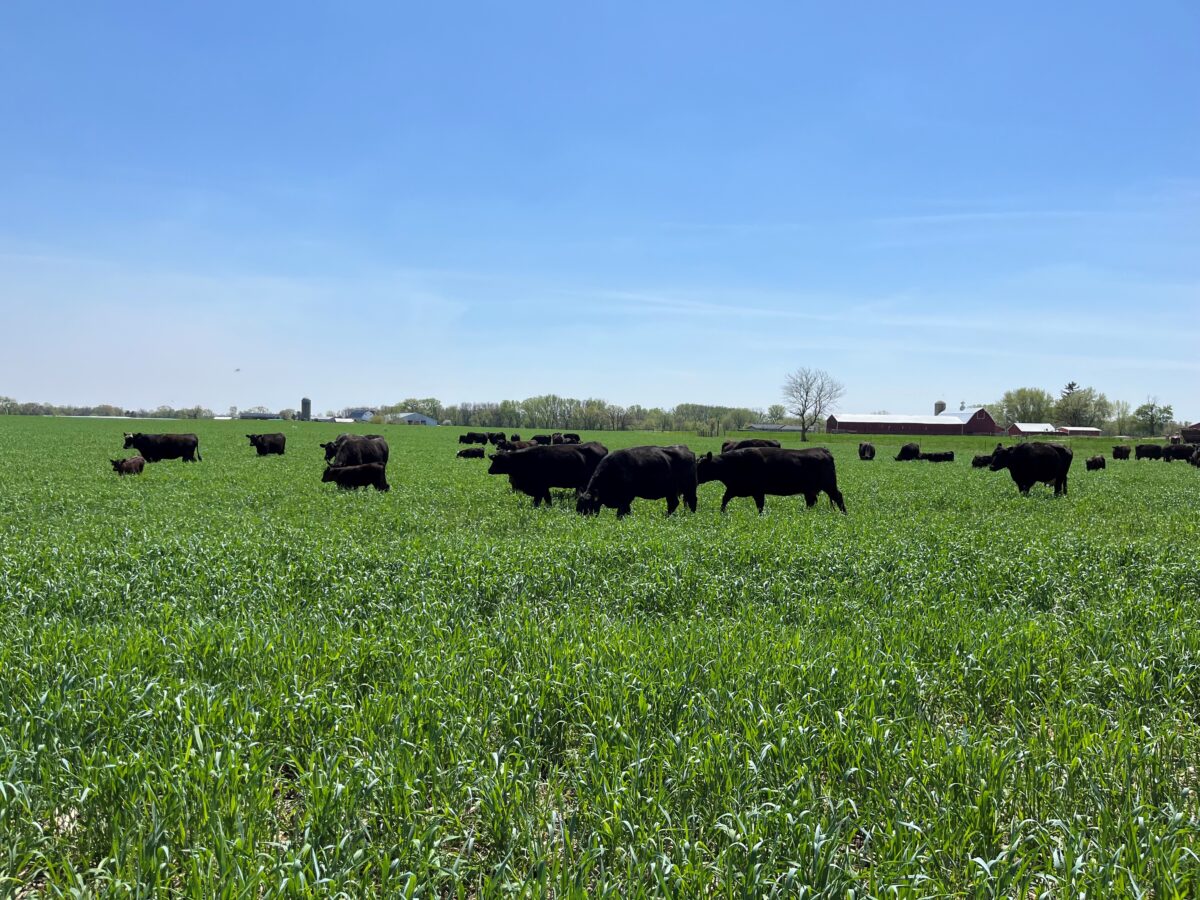
Black cattle grazing a cover crop.
Cattle grazing a cover crop. Credit: Marie Raboin

Dane County Conservation Specialist Marie Raboin recognized that farmers who feel inspired and informed by other farmers are more likely to adopt new practices. With support from a North Central SARE Partnership grant, Raboin organized and compensated conservation-minded farmers to share their experiences with other producers. Mentor farmers led field days and one-on-one consultations to help their peers explore grazing cover crops to reduce livestock feed costs.

This farmer-led method significantly enhanced local livestock production sustainability—environmentally, economically and socially—by fostering a culture of innovation. As a result, farmers increased the use of cover cropping practices which reduced feed costs, soil erosion and waterway pollution.

A recent post-project evaluation of SARE projects awarded between 2016 and 2019 found that fostering innovation through farmer-to-farmer learning boosted the project’s outcomes.

“Science matters in promoting sustainable agriculture, but it is just one small piece of the process,” said Raboin. “Community [support] affects more change on the landscape than research out of the best land grant university.”

Visit https://www.sare.org/sare-impacts-ONC19-063 for more information on this project’s impact.

Building Sustainable Relationships Around the Use of Grazing Cover Crops is part of a series produced by Insight for Action as part of a post-project evaluation of SARE's regional grant programs. For more information visit https://www.sare.org/sare-impacts.

For details on grants and resources available from SARE, visit www.sare.org.

Posted in 1

Farmer-Led Innovation Improves Aquaculture Production and Ecosystems in New England

Southern New England’s climate offers ideal conditions for producing bay scallops—a sustainable seafood option that also diversifies aquaculture enterprises. However, an important challenge in bay scallop farming is access to nursery systems that can efficiently raise scallops to maturity before transferring them to grow-out environments.

A box with doors open on its top, floating next to a dock with boats in the background.
Floating downweller in the water with doors open. Credit: Dan Ward

With support from a Northeast SARE Farmer grant, Dr. Daniel Ward, owner of Ward Aquafarms, helped to bridge this gap by developing a floating downweller nursery system designed to optimize growth and survival rates for juvenile bay scallops.

Dr. Ward’s innovative system uses stacked trays that increase water flow and surface area, thereby supporting higher production densities without compromising scallop growth or survival. The system allows scallops to grow from fertilized eggs to market-ready sizes more efficiently, improving Ward Aquafarms’ production of high-quality scallops for both market and propagation in overfished or degraded ecosystems.

The project has improved the economic sustainability and environmental quality of New England aquaculture production by enabling producers to sell scallops while simultaneously reviving their production ecosystems.

A recent post-project evaluation of SARE projects awarded between 2016 and 2019 found that fostering innovation through affordable, farmer-driven research grants was key to the project’s success.

“The entire SARE program has been great, and I really believe in their mission to enable farmers to drive the process and partner with academics, instead of the other way around,” Dr. Ward said. ”The amount of money for each project is relatively small, and risk-reward wise, it has led to an amazing return for our industry.”

Visit https://www.sare.org/sare-impacts-fne16-861 for more information on this project’s impact.

Expanding Sustainable Shellfish Aquaculture: Optimizing Growth and Survival in a Bay Scallop Nursery System is part of a series of 23 case studies produced by Insight for Action as part of a post-project evaluation of SARE's regional grant programs. For more information visit https://www.sare.org/sare-impacts.

For information on grants and resources available from SARE, visit www.sare.org.

Posted in 1

Partnership Helps Ohio Farmers Increase Revenue and Production Efficiency

Without access to processing facilities, Midwestern specialty crop farmers often miss out on the opportunity to transform their surplus harvests into shelf-stable, value-added products that bring in revenue year round.

Jeanine Seabrook, founder and owner of Glass Rooster Cannery in central Ohio, received two North Central SARE Farmer Rancher grants to partner with local farmers to generate income by processing excess produce that was otherwise going to waste. The grants allowed her to purchase the equipment needed to process over 40,000 pounds of excess produce into sauces, relishes and other canned goods, creating a revenue stream for farmers during the off season.

Three jars from the Glass Rooster Cannery lined up in a row.
Farmers are provided with Glass Rooster Cannery labels and can provide their own farm label as well. Credit: Jeanine Seabrook

Seabrook’s second grant expanded the cannery’s capacity to partner with local farmers. Working with Glass Rooster Cannery improved the economic sustainability and production efficiency of those farms: they have since reduced on-farm waste and begun to sell shelf-stable goods year round.

A recent evaluation of SARE projects awarded between 2016 and 2019 found that building the leadership skills, marketing knowledge and processing capacity of participating farmers was key to the project’s success.

“Each year this farmer brings me their apples. We make apple butter, and they sell it for a 50% profit. That has allowed a single-parent family to have additional income through the winter,” says Seabrook. “It's not going to make or break (either of) our businesses, but it pads us enough to feel free to extend ourselves. That's important in order to grow.”

Visit https://www.sare.org/sare-impacts-FNC16-1056 for more information on this project’s impact.

Formalizing Partnerships to Scale-Up Value-Added Local Food in Rural Ohio is part of a series of 23 case studies produced by Insight for Action as part of a post-project evaluation of SARE's regional grant programs. For more information visit https://www.sare.org/sare-impacts.

For information on grants and resources available from SARE, visit www.sare.org.

Posted in 1

Utah Develops a Cost-Effective Treatment for Mineral Deficiency in Cattle

In Utah’s arid landscape, cattle producers face a critical challenge: deficiencies in essential trace minerals like copper, zinc, manganese and selenium, which are vital for cattle health. These mineral deficiencies, worsened by drought and environmental conditions, lead to severe health problems, including increased mortality and illness among affected livestock.

Woman with short blond hair standing behind a steer closely looking at it.
Dr. Kara Thornton collects samples and data from the steers that were on trial. Credit: Bronson Teichert, College of Agriculture and Applied Sciences at Utah State University

Dr. Kara Thornton-Kurth of Utah State University, supported by a Western SARE Research and Education grant, led a project to compare how various mineral supplementation practices impact deficiencies, feedlot performance and response to vaccinations. Their findings revealed that targeted, feed-based mineral supplementation improved cattle health and carcass quality while being more cost effective than injectable supplements.

As a result, the project is enabling producers to make more informed and cost-effective decisions regarding mineral supplementation practices to enhance the economic sustainability and production efficiency of their production systems.

A recent post-project evaluation of SARE projects awarded between 2016 and 2019 found that listening to producers was key to the project’s success.

“A couple of producers had gotten calves from areas that were mineral deficient. Some of them had up to 50% death loss … and wanted to know what they could have done differently to change this in the future,” says Thorton-Kurth. “The big takeaway from our research is that even in really mineral-deficient cattle, the injectable (method) is way too much mineral for the animals.”

Visit https://www.sare.org/sare-impacts-sw18-058 for more information on this project.

Establishing a Protocol for Receiving Cattle that are At-risk of Having a Mineral Deficiency is part of a series of 23 case studies produced by Insight for Action as part of a post-project evaluation of SARE's regional grant programs. For more information visit https://www.sare.org/sare-impacts.

For information on grants and resources available from SARE, visit www.sare.org.

Posted in 1

Systems Perspective Improves Productivity and Environmental Quality of Grazed Forests

Throughout the South, urbanization and development have diminished viable farmland. Now, some innovative researchers and farmers are exploring silvopasture—the integration of grazing livestock on forested land—to improve the economic performance and ecological benefits of grazed forests. 

Dr. John Quinn and a team of pork farmers and researchers at Furman University received a Southern SARE Research and Education grant to restore second-growth forests in South Carolina, North Carolina and Georgia by replacing invasive species with fast-growing forage mixtures. Their research found that implementing sustainable grazing practices on restored forest land can help producers lower production costs, improve soil quality and reduce pasture recovery periods.

Woman in a purple shirt using a tape measuring tool in the woods.
Emma Cook, Furman University Biology student, measures the forest understory as part of the research on how understory grazing can improve agroforestry systems. Credit: Jeremy Flemming

The research partnership is enhancing the environmental and economic sustainability of Southern farming systems by advancing research-based silvopasture systems. These systems can transform second-growth forests with low ecological value into productive forage sources that improve environmental quality.

A recent evaluation of SARE projects awarded between 2016 and 2019 found that addressing farmers' needs within the context of a complex ecosystem was key to the project's success.

“It’s a forest, it’s pasture, maybe there’s a five-acre row crop or vegetable,” says Quinn. “It’s a complex system. This grant really helped me understand that system, ask questions and understand the challenges farmers were facing.”

Visit https://www.sare.org/sare-impacts-LS16-273 for more information on this project.

Improving Silvopasture Systems in the South is part of a series of 23 case studies produced by Insight for Action as part of a post-project evaluation of SARE's regional grant programs. For more information visit https://www.sare.org/sare-impacts.

For information on grants and resources available from SARE, visit www.sare.org.

View Related SARE Grant: Improving Silvopasture Systems in the South: Identification of Suitable Forage Crops and Enhancement of Environmental Quality in Upland Forests (LS16-273)

Posted in 1

SARE Fellows Program Temporarily On Hold

SARE Outreach and our national partners have made a difficult decision to temporarily suspend the SARE Fellows program. We will not be accepting Fellows applications, beginning in 2025. 

SARE Fellows, which began in 2007, has been favored by agricultural professionals for providing professional development opportunities through national study tours focused on sustainable agriculture. However, Fellows has not changed since it began and program updates are necessary for us to best meet the current needs of the nation’s sustainable agricultural communities and partners. Pausing the program will allow us to focus on improvements. 

We plan to relaunch a new SARE Outreach program in the future that is similar in its intention to the SARE Fellows program. While we don’t have any further details at this time, the new program will still provide professional development opportunities to agricultural professionals and will continue to keep sustainable agriculture and farmers at the center of its mission. 

We appreciate the support and patience of all of SARE’s partners as we work to make SARE programs the best they can be. We look forward to sharing more details about the new program soon!

Please subscribe to the SARE Outreach mailing list to receive information about program updates.

Posted in 1

Research and Education Reveals Sustainable Cost-Cutting Option for Forage Production

Bermudagrass has long served as a cornerstone forage for hay production and livestock grazing in the Southeastern United States, but nitrogen fertilizer used in its production is a costly input that can pose risks to soil, water and air quality. 

In response, Auburn University’s Dr. Leanne Dillard spearheaded a Southern SARE Research and Education grant to work with a team of researchers and Alabama farmers to examine the effectiveness of using plant-growth-promoting rhizobacteria (PGPR) as a replacement for nitrogen fertilizer. A two-year research trial revealed that rhizobacteria treatments reduced nitrogen inputs by 50% without reducing forage quality or yield, thus enabling producers to better manage nitrogen application.

As a result, the project is improving the environmental sustainability and production efficiency of farmers, who can now make research-based nutrient management decisions.

A recent post-project evaluation of SARE projects awarded between 2016–2019 found that SARE’s holistic approach to research and education was crucial to the project’s success.

“SARE is an amazing program because it really is an integrated research and education grant,” says Dillard. “With many other USDA grants, it’s more difficult to integrate (research and education), but SARE brings it together.”

Two students work to harvest forage from a test plot.
Auburn University graduate student Kayla Sullins works with other students to harvest PGPR research plots in Lawrence County, AL. Credit: Leanne Dillard

Visit https://www.sare.org/sare-impacts-LS19-307 for more information on this project.

Biofertilization of Bermudagrass: A Step Toward Sustainable Forage Production – Alabama is part of a series of 23 case studies produced by Insight for Action as part of a post-project evaluation of SARE's regional grant programs. Visit https://www.sare.org/sare-impacts for further details.

For information on grants and resources available from SARE, visit www.sare.org.

Posted in 1

SARE Awards $8M to Food Loss and Waste Projects

The USDA recognizes the impacts of food loss and food waste on food security and the environment. USDA, in concert with agency partners, is working toward the goal of reducing food loss and food waste by 50 percent by 2030.

In the latest effort in reduction activities, the Sustainable Agriculture Research and Education (SARE) program is leading a national Community Foods Project (CFP) Food Loss and Waste Training and Technical Assistance Grants Program, funded through USDA’s National Institute of Food and Agriculture (NIFA). A total of $8 million is being provided to 14 organizations across the nation.

The program supports projects that align with the National Strategy for Reducing Food Loss and Waste and Recycling Organics, released in June 2024. The program prioritizes preventing food from becoming waste, diverting edible food to people through donation or upcycling, and feeding animals. The goals of the Food Loss and Waste Training and Technical Assistance Grants Program are to:

  • Increase the self-reliance of communities in providing for their own food needs;
  • Promote comprehensive responses to local food access, farm, and nutrition issues;
  • Identify strategies for reducing food loss and waste by identifying value-added production opportunities;
  • Meet specific state, local, or neighborhood food and agriculture needs for planning for long-term solutions;
  • Create innovative marketing activities that mutually benefit agricultural stakeholders and consumers.
  • Describe how the research or training and technical assistance will lead to improved quality of life for producers, communities and consumers.

Fourteen organizations have been awarded funding to both reduce food loss and waste, and educate a variety of audiences about their reduction techniques. These organizations are diverse in size, geographic location, and in their focus on one or more parts of the food supply chain.

The awardees are:

  • Gotham Food Pantry, New York, NY
  • Last Mile Food Rescue, Cincinnati, OH
  • Virginia Commonwealth University, Richmond, VA
  • University of Delaware, Newark, DE
  • FoodCycle, Los Angeles, CA
  • Association of Gleaning Organizations, Kamas, UT
  • University of Illinois Urbana-Champaign, Urbana, IL
  • El Departamento de la Comida, Caguas, PR
  • University of New Mexico, Albuquerque, NM
  • University of Kentucky, Lexington, KY
  • Pete’s Garden, Kansas City, MO
  • Stone Barns Center for Food & Agriculture, Pocantico Hills, NY
  • Concrete Jungle, Atlanta, GA
  • The Good Acre, Falcon Heights, MN

Explore these funded projects at: www.sare.org/resources/food-loss-and-waste/. For more information about this grant program, contact Lisa Johnson, National SARE Food Loss and Waste Grant Manager at FLW@sare.org.

View Related SARE Grants:

Posted in 1

Producer Partnerships Demonstrate the Benefits of Integrated Systems: Increased Profits and Soil Health

In the semiarid climate of the Great Plains, persistent drought is increasingly contributing to crop failure and soil erosion. A recent North Central SARE Research and Education grant in Kansas demonstrated how integrating crops, livestock and cover crops could help some producers offset revenue loss and failing crops. 

Kansas State University’s Dr. Augustine Obour partnered with producers to conduct a long-term research project examining the potential of integrating cover crops in dryland wheat production systems. The team found that grazing or harvesting covers for forage can diversify revenue streams while protecting soil from erosion. Now, policymakers are increasingly encouraging cover crop grazing, and farmers are changing practices to boost income, improve soil quality and suppress herbicide-resistant weeds.

As a result, the project is improving environmental sustainability and revenue streams while increasing the production efficiency of farmers who adopt the new practice.

A recent post-project evaluation of SARE projects awarded between 2016–2019 found that partnering with farmers to conduct on-farm research helped validate the project’s findings.

“Most grants don’t have a farmer requirement, but SARE does,” says Obour. “It is very helpful because farmers have different perspectives on what works and what doesn’t. You have to work with a farmer to determine what will work in their environment.”

Polywire fence separating grazed and non-grazed cover crops at Dubuque Kansas. Credit: Logan Simon

For more information on this project, visit https://www.sare.org/sare-impacts-LNC18-411.

Cover Crop Management Options to Improve Weed Control, Crop Yield and Soil Health is part of a series of 23 case studies produced by Insight for Action as part of a post-project evaluation of SARE's regional grant programs. For more information visit https://www.sare.org/sare-impacts.

For information on grants and resources available from SARE, visit www.sare.org.

Posted in 1

Investment in Farmer to Farmer Training Cuts Costs, Improves Safety

Proper management of postharvest handling practices is key to efficiency and safe working conditions on many farms. But small- to moderate-sized producers often struggle to keep pace with increasingly stringent rules that may vary by state or by county. One successful SARE-funded project rose to the challenge and provided hundreds of thousands of farmers with technical support that enhanced the sustainability of their operations.

To help Vermont’s farmers safely and profitably meet the growing demand for local produce, Christoper Callahan and his team at University of Vermont Extension used SARE funds to equip farmers with resources and on-farm training on how to better manage postharvest handling practices and equipment. As a result, farm businesses are increasing production, ensuring safety and achieving greater financial sustainability. 

The project was able to impact the social sustainability, production efficiency and economic sustainability of participating operations through the grantees’ and stakeholders’ engagement with project activities. Ultimately, Callahan documented $680,000 in cost savings through improved labor efficiency and reduced waste during the project.

A recent post-project evaluation of SARE projects awarded between 2016-2019 found that investing in farmer knowledge and capacity as peer trainers was key to the project’s impressive impacts. Positioning farmers as trainers builds their ability and motivation to provide other producers with practical guidance from experienced peers they trust.

“There’s something that comes from that peer learning that I’m never going to be able to provide,” says Callahan. All the growers we've worked with were not only partners but also true collaborators in knowledge creation and sharing.”

Woman standing at metal table packaging salad greens.

Farm workers at Small Axe Farm (Barnet, Vermont) are packing salad greens inside the newly built wash/pack building. These two stainless steel tables make packing greens efficient with access to scales, labels and packaging supplies all within easy reach. Credit: Andy Chamberlin

Visit www.sare.org/sare-impacts-LNE19-375 for additional details about this project.

Staying Ahead in the Packshed: Improving Postharvest Equipment and Building Guidance for Fruit and Vegetable Farms is part of a series of 23 case studies produced by Insight for Action as part of a post-project evaluation of SARE's regional grant programs.

Visit https://www.sare.org/sare-impacts to learn more. For information on grants and resources available from SARE, visit www.sare.org.

Posted in 1