• WebStore |
  • Advanced Search |
  • MySARE Login |
  • SARE Social Media |
  • Contact Us |
  • SANET Listserv |
  • Low Bandwidth |
Search MySARE Reports
  • Grants
    • Apply for a Grant
    • Funded Grants in Your State
  • Project Reports
    • Submit a Report
    • Search the Database
    • Project Search Tips
    • About Project Reports
    • About Search Results
    • Project Products
  • Learning Center
    • Books
    • Bulletins
    • Fact Sheets
    • Topic Rooms
    • From the Field
    • Newsletters
    • Multimedia
    • Courses and Curricula
    • Project Products
    • SARE Biennial Reports
    • SANET Listserv
    • SARE Program Materials
    • Conference Materials
    • WebStore
  • Professional Development
    • PDP Overview
    • Fellows & Search for Excellence Programs
    • Sample PDP Grant Projects
    • Educator Curriculum Guides
    • National Continuing Education Program
    • State Coordinator Contact Information
  • State Programs
    • State Coordinator Program Overview
    • State Coordinator Contact Information
    • Funded Grants in Your State
  • Events
    • Event Calendar
    • Past Conferences
  • Newsroom
    • Press Releases
    • SARE in the News
    • Media Contacts
    • Newsletters
    • Media Toolkit
    • A Guide To This Site
    • SARE and Social Media
  • About SARE
    • SARE's Four Regions
    • SARE Grants
    • Learning Center
    • Professional Development
    • SARE Outreach
    • Historical Timeline
    • Staff
    • Vision & Mission
    • Join Our Mailing List
    • What is Sustainable Agriculture?
  • Home»
  • Learning Center»
  • Books»
  • Steel in the Field»
  • Text Version»
  • Acknowledgments
facebook
Twitter
YouTube
- + Font Size
Print
Share

Text Version

  • Acknowledgments
  • Publisher's Foreword
  • Cultivation In Context
  • How to Use This Book
  • Introduction to Tools for Agronomic Row Crops
  • Row Crop Tools
  • Row Crop Farmer Profiles
  • Introduction to Tools for Horticultural Crops
  • Horticultural Crop Tools
  • Horticultural Crop Farmer Profiles
  • Introduction to Tools for Dryland Crops
  • Dryland Crop Tools
  • Dryland Crop Farmer Profiles
  • The Toolshed
  • Printable Version

Can't find something? Ask or send feedback.

SARE's mission is to advance—to the whole of American agriculture—innovations that improve profitability, stewardship and quality of life by investing in groundbreaking research and education. SARE's vision is...

Acknowledgments

Acknowledgements

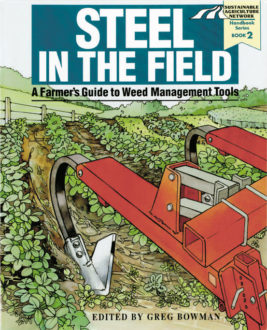
Dairy farmer John Merrill's frustration with trying to find a rotary hoe - and someone anywhere close to New England who knew how to operate one - was the origin of this book. He shared this information hole with his colleagues on a committee of the Sustainable Agriculture Research and Education (SARE) program. Like many other SARE groups, this committee was a cross-section of farmers, educators, researchers and farm specialists. They agreed that farmers needed a nuts and bolts book on how to find and use weed management tools profitably and sustainably.

Beth Holtzman, communications specialist for the Northeast Region SARE program, and Fred Magdoff, coordinator of SARE's Northeast Region, developed the question into a concept. Both individuals were patient and supportive in seeing this project through.

I repeatedly interviewed the farmers who are featured in this book. Each gave generously of his time, experience and on-farm research findings, formal or informal. These innovators are the real authors of this book. Many frequently open their farms to other members of regional sustainable farming networks where real farmer-to-farmer exchange takes place.

Providing unfailing good sense was Dale Kumpf of Henke Machine/Buffalo Farm Equipment. He knows farmers throughout the U.S. and Mexico who are familiar enough with their farms to know when steel is ideal. Richard R. Johnson and Al Higley at Deere and Company - and the dozens of Deere specialists they linked me to at the right moments - provided images, specifications, insight, statistics and technical explanations that could only come from a world-class corporation. Ralph Moore of Market Farm Implement, Somerset, Pa., shared repeatedly of his deep working knowledge of horticultural tools, as he does daily with farmers across the U.S.

Vern Grubinger at the University of Vermont recommended farmer contacts and tools. Richard Parish, Dan Ball and Thomas Lanini at the state universities of Louisiana, Oregon and California at Davis, respectively, provided important perspective on crops, tools and farmers in their regions. I frequently consulted Rick Exner of the Practical Farmers of Iowa.

Helping to distill and express all this shared wisdom was Craig Cramer, who has yet to see a sustainable farming sentence he couldn't improve. He and the reviewers listed at the back of the book immensely enhanced this effort. Errors that remain are mine. These individuals lent their expertise without compensation simply to make this book as valuable as possible to the people who choose to make sustainable farming work in these United States.

To all these and many others, many thanks.

Greg Bowman
Kutztown, Pa.
January, 1997

You are reading the SARE book Steel in the Field.

Order this publication.

25th SARE logo USDA Logo

1122 Patapsco Building | University of Maryland | College Park, MD 20742-6715

This Web site is maintained by the national outreach office of the SARE program, supported by the National Institute of Food and Agriculture, U.S. Department of Agriculture.

North Central SARE | Northeast SARE | Southern SARE | Western SARE

Sustainable Agriculture Research & Education ©2012

  • Help |
  • RSS Feeds |
  • A Guide To This Site