Showing 51-60 of 96 results
Fitting Cover Crops in Vegetable Rotations
Ron Morse (Virginia Tech, emeritus) shares how to successfully fit cover crops into a vegetable rotation, including establishment methods, matching the right species to the right methods, recommended rotations and cash crop establishment.
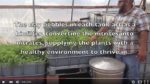
Integrating Traditional Foods with Aquaponics in the Desert Southwest
The Challenge Cochise County, Arizona, where Aaron Cardona’s Arevalos Farm is located, is classified by the USDA as a food desert with high poverty rates, as well as high rates of diabetes and obesity. To help confront these problems, Cardona decided to look into aquaponics, which had not been experimented with in the desert regions […]
Farm to Table: Building Local and Regional Food Systems
More and more, farmers, ranchers, ag professionals, community organizers and others are striving to reconfigure the nation's food system so more value stays in food-producing communities.
Cover Crops for Sustainable Crop Rotations
Cover crops are one of the best ways to improve soil health, reduce off-farm inputs and protect natural resources. Find a wealth of educational materials developed out of decades of SARE-funded cover crop research.
High Tunnels and Other Season Extension Techniques
From low covers to high tunnels, from hoop houses to greenhouses—producers are finding ever more innovative ways to extend the growing season, and their income stream.
Is Fish Waste Compost Worth the Mess and Effort?
A South Carolina farmer discusses the results of using fish waste compost in vegetable production.
For Vegetable Farmers, a New No-Till Tool in Forage Radish
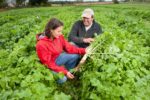
Vegetable farmers who want the myriad benefits of winter cover crops may be setting themselves up for a hectic spring schedule, when the challenge of planting during a narrow window of good weather becomes more complicated by the need to first terminate that winter crop. To make their lives a little easier, University of Maryland […]
Cover Crops Seed Selection and Planting
Whether you are new to cover crops or an advanced user, hear from two experts on how they chose and seed their cover crops.

FARMDATA
FARMDATA is an online system for tracking and reporting crop production data, particularly for organic vegetable growers. The system can be used for keeping records on seeding, transplanting, harvest, cover crops, compost, fertilization, irrigation, pest scouting and spraying activities, packing, distribution and customer invoicing. FARMDATA uses smart forms that help with calculations and remember key data.
Sustainable Pest Management in Greenhouses and High Tunnels
From 2007 to 2009, Cornell researchers in New York used a SARE grant to study the efficacy of biological insect control in minimally heated greenhouses and high tunnels or hoop houses. This fact sheet reports the results and provides detailed advice on how growers can use natural enemies to manage insect pests in minimally heated greenhouses and unheated high tunnels.