Showing 51-60 of 123 results

New Podcast Episode: "Building Local Food Systems in Montana"

In this episode of ATTRA's Voices from the Field podcast, NCAT Local Food Systems Specialist Maura Henn speaks with Michal DeChellis of the Alternative Energy Resources Organization (AERO) in Montana. Their conversation focuses on building resilient community food webs and connecting communities to local food solutions. DeChellis is AERO’s program manager for the Montana Food Economy Initiative (MFEI), a project that has been funded through a Western SARE grant. 

Listen in as DeChellis and Henn delve into the process of conducting Community Food Assessments around Montana and explore the importance of connecting stakeholders when building a food systems coalition to strengthen regional food economies. 

This episode of Voices from the Field is one in a series co-produced by ATTRA and SARE that explores the different ways farmers are working to create new local markets for specialty and niche crops. Each partner episode will address a different production system or crop–from endives to small-grain value chains–and will feature farmers sharing their production and marketing strategies, challenges and successes along the way.

Subscribe to Voices from the Field wherever you get your podcasts. 

Related ATTRA Resources:

Posted in 1

SARE Seeking National Program Manager in Support of Food Loss and Food Waste Initiative in 2024

Distributed by SARE Outreach on behalf of Southern SARE. To apply, log in to or create an account in the SARE Grant Management System using the link below. For more information, contact Southern SARE Program Director Jeff Jordan at jjordan@uga.edu.

GRIFFIN, Georgia -- In 2024, the Sustainable Agriculture Research and Education (SARE) program will initiate a $10 million national food loss and food waste grants program to support projects that align with USDA activities aimed at reducing food loss and reducing food waste, getting surplus wholesome food to individuals, and developing linkages between food producers, providers, and food recovery organizations.

The goal is to create pathways to strengthen food rescue and get surplus food to feed those experiencing food and nutrition insecurity; reduce food loss waste, such as by gleaning surplus produce on the farm; and find new outlets for uneaten food to bolster supply chain resiliency.

To accomplish the goals of the grant program, SARE is seeking a Program Manager/Coordinator to assist in the organization, coordination, and implementation of selected grant projects. The Program Manager/Coordinator is a national seat, open to qualified applicants in the contiguous U.S.; Alaska; Hawaii; the U.S. territories of Puerto Rico, U.S. Virgin Islands, Guam, American Samoa, Micronesia, and Northern Mariana Islands; and sovereign nations Republic of Palau and Marshall Islands. Institutions, such as colleges and universities; and organizations such as non-governmental organizations meeting qualifications are invited to apply.

The Southern region SARE program, based at the University of Georgia, will serve as host institution for the food loss and food waste grants program, as well as serve as grant facilitator for the Program Manager/Coordinator position. The successful candidate will be funded through a one-time, cost reimbursement subaward agreement between the University of Georgia and their employing organization to fulfill the position responsibilities, and will report to Southern SARE.

The anticipated budget over the period will be $500,000, broken down into the following categories: Salary of the Program Manager/Coordinator; fringe benefits; travel; indirect costs; and other direct costs, such as job-specific materials and supplies, computer, conferences/meetings, and communications.

The deadline to apply is January 31, 2024 at 5 p.m. EST. Applications are being accepted through the SARE Grant Management System. The anticipated hire date is April 1, 2024, with an anticipated end date of April 1, 2028.


Scope of Work

Responsibilities of the Program Manager/Coordinator:

  • 1) Work to
    • a) Implement training and technical assistance efforts across funded grant projects nationally through collaboration with Third Sector New England. These efforts may include:
      • Assistance in project development;
      • Grantsmanship training;
      • Leadership development
      • And/or assistance on a particular type of project. For example, youth farm enterprises, urban farms, direct marketing, farm-to-institution, or other services.
    • b) Build capacity for Food Loss Food Waste initiatives for current and future grantees. Activities may include, but are not limited to, workshop trainings, peer to peer interaction, one on one trainings, curricula development, webinars, and/or video-conferencing.
  • 2) Engage interested organizations/institutions to apply for FLW grants - especially current and prior SARE grant recipients.
  • 3) Collaborate with Southern SARE in assisting applicants of FLW grants to apply/complete proposals per the application requirements.
  • 4) Collaboration with Southern SARE in assist project awardees in completing annual/progress and final reports per the reporting requirements.
  • 5) Coordinate the efforts of FLW projects and regional SARE offices as they relate to their respective SARE regions.
  • 6) Engage the National IT Coordinator for this program to develop an application/grant reporting system designed to examine common metrics and collect information for national program evaluation and program impacts.
    • a) Collaborate with a National Program evaluation specialist (contracted)
  • 7) Establish and engage the FLW Outreach Steering Committee specific to this project (includes representation from each SARE region).
    • a) Engage SARE FLW grantees to develop a steering committee and develop outreach/educational materials focused on food loss and food waste. This includes representation from each SARE region.
    • b) Coordinate all educational resources with the SARE Outreach Steering Committee and National Reporting, Coordination and Communications Office (NRCCO) staff
  • 8) Provide guidance/advice and linkages to sustain FLW efforts beyond FLW project funding.

Who Can Apply

Community Foods Project (CFP) Food Loss and Waste (FLW) Training and Technical Assistance (T&TA) Program Manager/Coordinator is a national seat open to qualified applicants in the contiguous U.S., Alaska, Hawaii, and the U.S. territories of Puerto Rico, U.S. Virgin Islands, Guam, American Samoa, Micronesia, and Northern Mariana Islands. Institutions, such as colleges and universities; and organizations such as non-governmental organizations meeting qualifications are invited to apply.

The Program Manager/Coordinator position will be funded through a one-time, cost reimbursement subaward agreement between University of Georgia and their employing organization to fulfill the listed responsibilities. The successful candidate will report to Southern SARE as needed throughout each year of the contract. In addition, an annual report of accomplished duties is required each year.

Other collaborators include Northeast SARE, North Central SARE, Western SARE, SARE National Reporting, Coordination and Communications Office (NRCCO), and Community Food Program Training and Technical Assistance Center (Third Sector New England).

Applicants should:

  • Be familiar with the USDA and SARE programs;
  • Demonstrate an understanding of sustainable agriculture production and marketing practices, environmental stewardship, and community quality of life;
  • Exhibit a commitment to food security and food sovereignty;
  • Have an understanding of food waste and loss programs and policies across the spectrum of food systems (agriculture, businesses, consumers, schools);
  • Be skilled in project management, including, but not limited to, planning, leadership development, grantmaking, business management, evaluation and communications.
  • Have knowledge in training and technical assistance, specifically in areas of food systems.
  • Have a proven track record of ability to work with diverse stakeholders.
  • Demonstrate strong governance and exhibit good research and critical thinking skills.
  • Provide organizational support from the applicant’s institution.

Southern SARE has a strong commitment to diversity, encouraging proposals submitted from or in collaboration with historically underserved communities. Southern SARE also encourages collaboration with NGOs, community groups, Black colleges and universities, Hispanic-serving institutions, and tribal colleges and universities, as well as with other organizations that serve historically underserved communities.

SSARE defines underserved communities as those populations sharing a particular characteristic, as well as geographic communities, that have been systematically denied full opportunity to participate in aspects of economic, social, and civil life.

Applications received by the deadline will be reviewed by a National SARE Review Committee, comprised of the Regional Coordinators of the four regions of the SARE program: Southern SARE, Western SARE, Northeast SARE and North Central SARE; as well as the National SARE Program Leaders and National SARE Assistant Director.

Applicants will be contacted by e-mail regarding the status of their application once the review process is complete.

For more information, contact Southern SARE Program Director Jeff Jordan at jjordan@uga.edu.

Published by the Southern Region of the Sustainable Agriculture Research and Education (SARE) program. Funded by the USDA National Institute of Food and Agriculture (NIFA), Southern SARE operates under cooperative agreements with the University of Georgia, Fort Valley State University, and the Kerr Center for Sustainable Agriculture to offer competitive grants to advance sustainable agriculture in America’s Southern region. USDA is an equal-opportunity employer and service provider.
Posted in 1

New SARE Bulletin: Best Practices for the Sustainable Urban Farm

For decades, urban farms and community gardens have helped meet demand for fresh and local produce. Urban farming creatively utilizes limited space, conserves land and transforms vacant lots or buildings into productive greenspaces. Farming in cities can be a rewarding way for communities to grow healthy food while receiving a wide range of other interrelated environmental, economic and social benefits.

SARE Outreach’s newest bulletin, Best Practices for the Sustainable Urban Farm, outlines strategies that urban farmers use to tackle the unique opportunities and challenges associated with urban production, including:

Profiles of SARE grant recipients illustrate how urban farmers, researchers, educators and consumers can work together to foster entrepreneurship, improve food security and contribute to local economies while increasing biodiversity and reducing the distance food travels from field to table. 

Download or order your free print copy of Best Practices for the Sustainable Urban Farm at www.sare.org/urban-agriculture or by calling (301) 779–1007. Best Practices for the Sustainable Urban Farm is available in quantity for free to educators for use in educational workshops, classes or tours.

Posted in 1

New Podcast Episode: "Breeding Squash for Disease Resistance and Eating Quality"

If you’re interested in local seed cultivation, listen to this episode of ATTRA’s Voices from the Field podcast, featuring NCAT Sustainable Agriculture Specialist Justin Duncan’s conversation with Edmund Frost, the managing director of Common Wealth Seed Growers. Frost, a plant breeder of 15 years, has received multiple SARE grants for research and breeding work with butternut squash. He talks about his efforts to create disease-resistant butternut squash varieties with high quality taste, and the rewards and hardships in his research.

In 2016, Frost started his butternut breeding project through a SARE grant. This project involved cross-breeding and variety trials, culminating in the development of a well-received new variety, the South Anna. This good-tasting, disease-resistant and long-lasting squash has been commercially available for 5 years, and Frost is continuing to explore improvements through further cross-breeding. 

The episode, co-produced by ATTRA and SARE, highlights the importance of local seed development and encourages passionate farmers to begin their own seed growing journey. Despite the hardship and trials, Frost encourages farmers to continue innovating to create the best quality crops for our local growing conditions and markets. 

Subscribe to ATTRA-Voices from the Field wherever you get your podcasts. 

Related ATTRA Resources:

Posted in 1

A Path to Farm Community 

Farmers, like all of us, need time and strength to focus on relationships, health, healing and a sense of belonging, yet many agriculture service providers are unable to give wellness the attention it needs. A recent Cornell Small Farms project, Reconnecting with Purpose, aimed to provide farmers with additional support to cope with the hard work, unpredictability and economic stresses of modern day agriculture.

With support from Northeast SARE, a mixed group of 25 educators, farmers and activists gathered in retreat to name barriers and burdens, reclaim their strengths, and listen to and support one another. Drawing from the principles of the Center for Courage and Renewal, facilitators listened attentively and asked honest questions to create a safe space for participants to speak their truths.

Participant and Deep Roots Project founder Mara Marie said, "I'm passionate about the work I do and the folks I get to work with, but this program has supported my journey in taking a look at myself outside of productivity and external expectations."

Although the Reconnecting with Purpose project has drawn to a close, it will flow into a new three-year program called "Growing Benevolent Agricultural Communities.” The Cornell Small Farms Program expects to offer many additional programs through the new project. Want more information? Learn more about Reconnecting with Purpose at https://smallfarms.cornell.edu/projects/reconnecting-with-purpose/.

Posted in 1

Water and Wonderment Abounds on WI State Tour for SARE Fellows

They gathered from their respective home waters—the Yahara, Shenendoah, Black Root, Vermillion, Marias, from Kansas, and all the way to the Delta and Everglades Basin—in fellowship to learn from the foodsheds of the dairy state and each other.

State-based study tours are the current that charts the course for participants of the SARE Fellows program. The tours feature a mix of farm visits and deep dives into reading the farm landscapes and are held every spring and fall throughout the United States. I had the good fortune to journey from my backyard up Bear Creek and join the cohort of SARE Fellows in NE Wisconsin for the day. Water, the ever-present current in Wisconsin but largely absent and erratic from the sky this season, guided our inquiry.

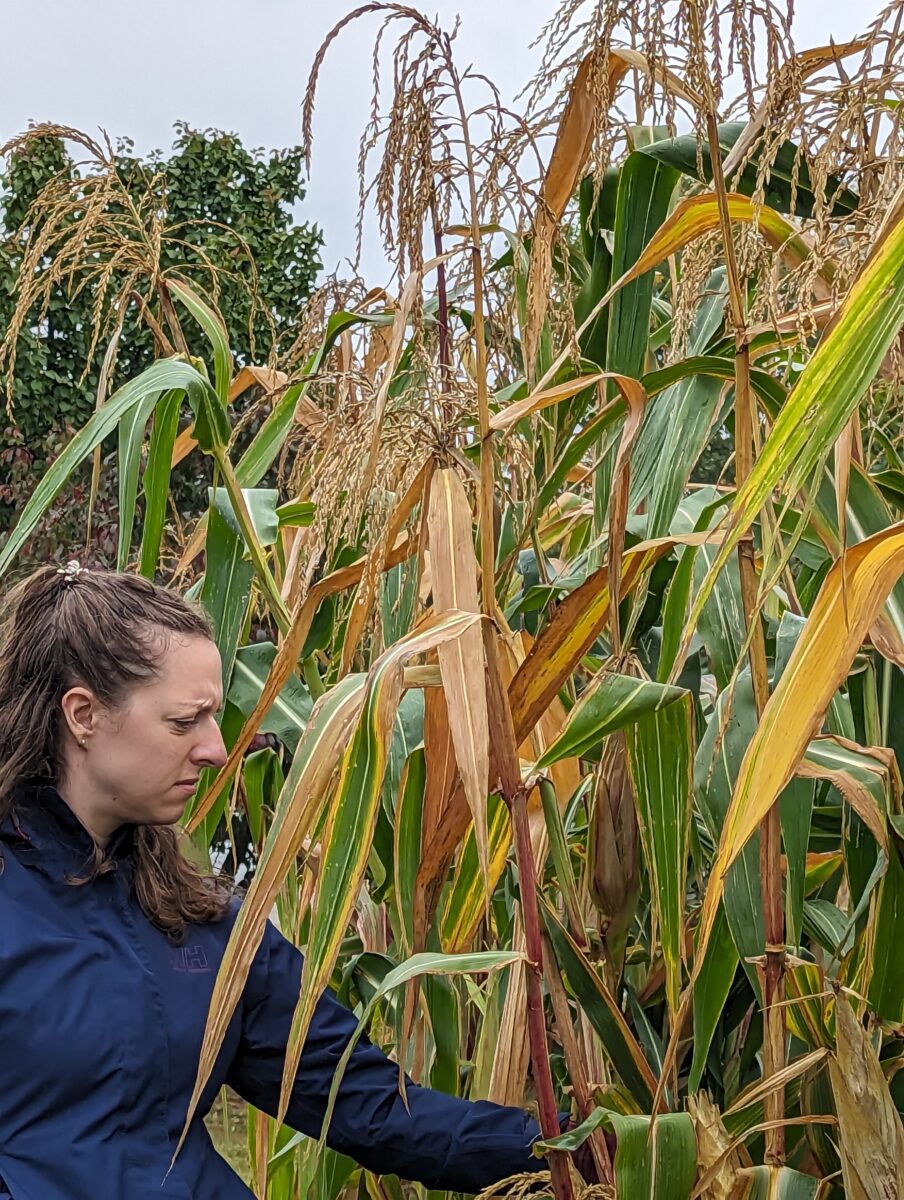
A woman in a blue coat examining corn plants.
SARE Fellow Marissa Schuh, University of Minnesota. Photo: Erin Schneider

"I’m here, in part, to learn perspectives from other educators and different ways they interact with farmers," shared Mary Love Tagert, with Mississippi State University Extension. Our site visits featured water and climate change adaptations that farmers were puzzling through and adapting to. Our first stop at the heart of the Duck Creek watershed, we navigated different histories of land management that sprouted from the (re)establishment of White Corn at Tsyunhehkwa (Joon-hey-qwa) Farm. There, alongside the heady breath of tobacco plants releasing the soil’s secrets—a mix of sweet ferment, remnant heat and rot—we learned how different food sovereignty efforts can coexist within a Tribe and broader community. The Oneida Nation in Wisconsin has several farm and food security initiatives, from 4-H programs, Farm-to-School, Elder Food Boxes to a Commercial Beef and Bison Farm, canneries and co-ops. Discussion centered on the cultural aspect of food and the importance food plays in many of the traditional Oneida ceremonies. We also learned about the various product lines and education programs in development and the future aspirations of the Oneida Nation.

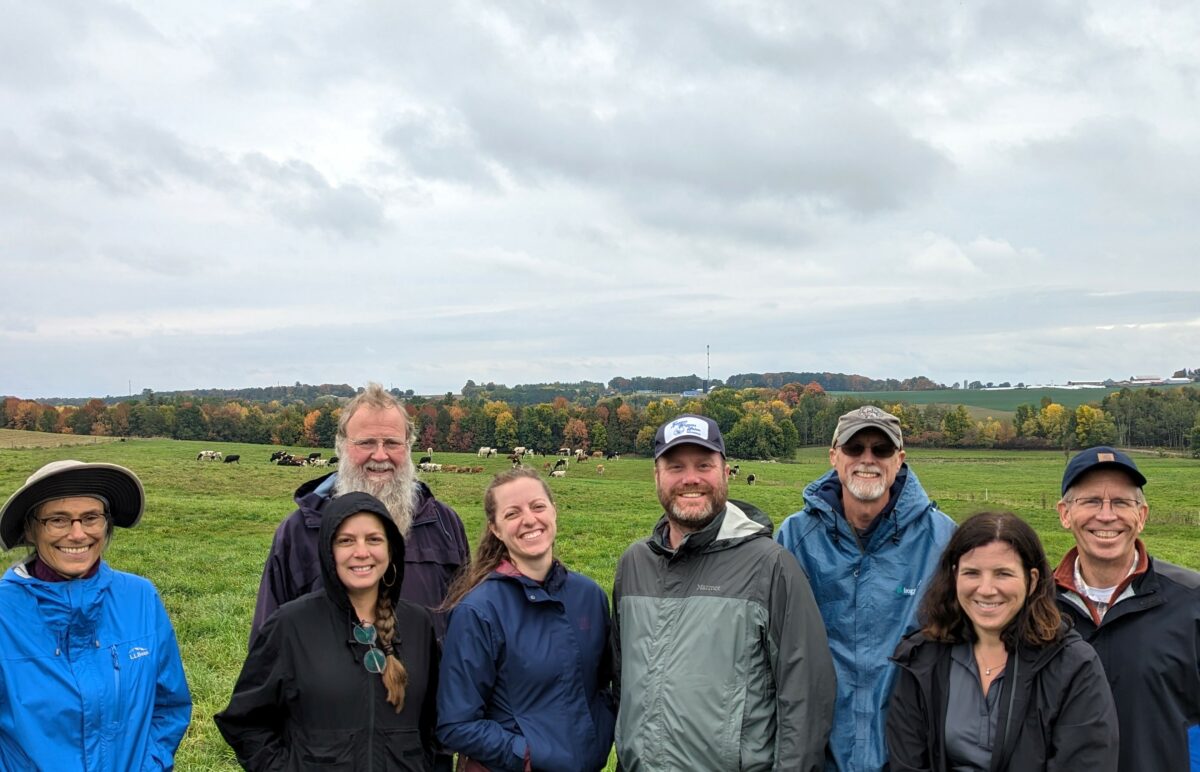
Eight people dressed for fall weather standing in a pasture looking directly at the camera.
SARE Fellows touring Tauchen Pastures. Photo: Erin Schneider

Sated, our fleet drove upriver to witness water management and waste’s potential at different scales at Tauchen Harmony Valley Dairy. The farm is a multigenerational dairy operation, started in 1975 by Herb and Marlys Tauchen, that is a typical mid-size Wisconsin confinement operation. Right now, the Tauchens are working on integrating grazing, seeding cover crops and filtering leachate through sand/swales before water is discharged to nearby wetlands. We waded further afield from the main milking barns to tour the grazing-based heifer-raising farm developed by Al Tauchen. After his passing, the other family members have continued that operation. We listened to the riff and rip of cows on grass. 

We ruminated at the pasture's edge. "I never thought about manure management or had much exposure to cattle," reflected Romina Gazis, a horticulture Extension educator and plant pathologist with Florida State, as she pauses from admiring a spattering of spores settling in the fall fescues. Romina spends much of her work among tropical fruits and horticulturists in South Florida.

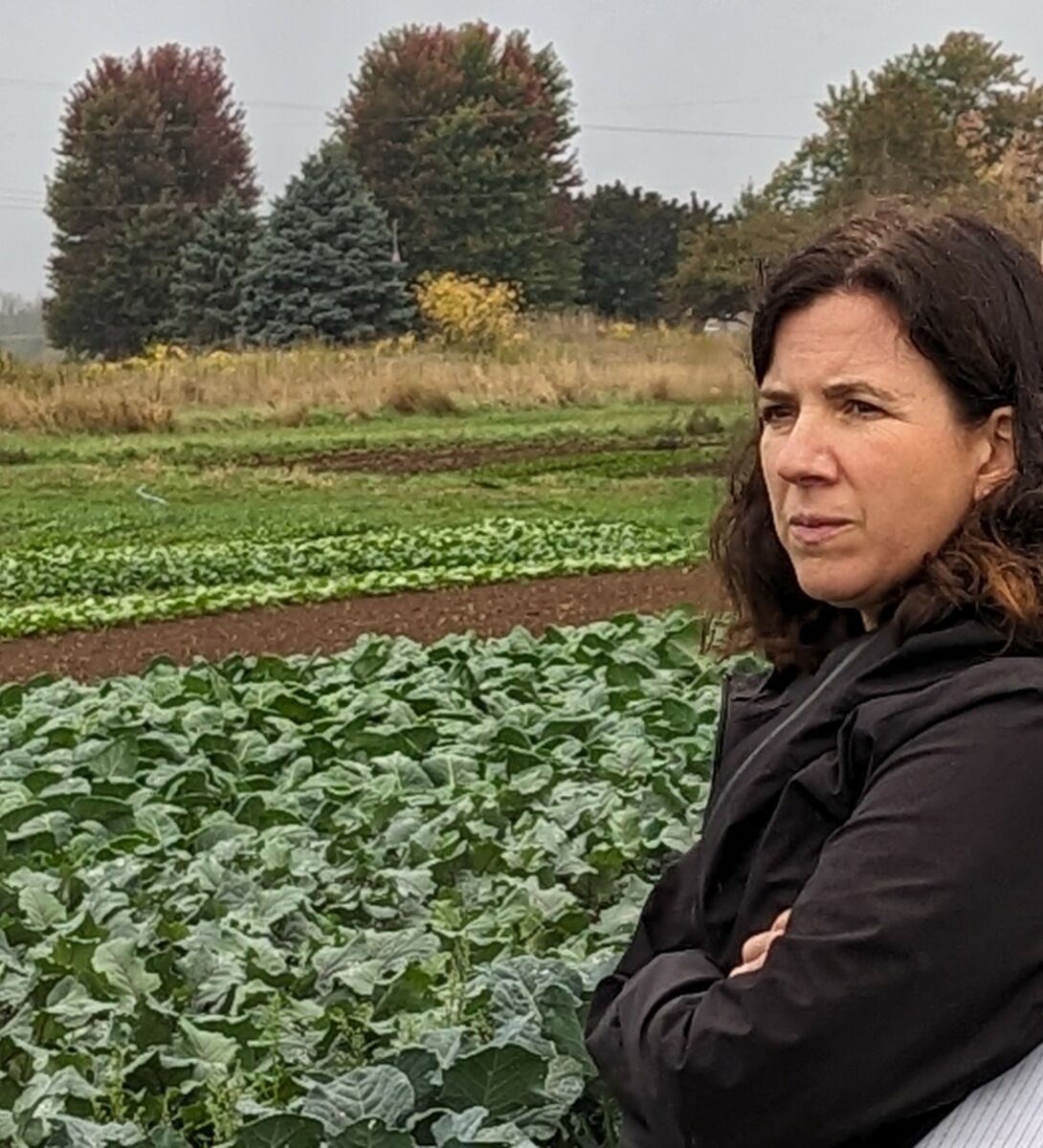
A woman in a black coat standing in a row of mixed vegetable crops.
SARE Fellow Mary Love on tour at Full Circle Community Farm. Photo by Erin Schneider.

Like the ebb and flood of waterways, a dairy farm and a farmer's needs remain fluid. This was evident at Full Circle Community Farm, a fifth-generation family farm in the process of transforming into a community-based organic vegetable and meat farm with shared ownership and a cooperative mindset to support the next flock of livestock, crops and farmers on the land. In Wisconsin, it's hard not to think about water and cows. The next day, the SARE Fellows would gather near Lake Michigan’s shorelines and work with the Saxon Homestead Farm, a fifth-generation family partnership operated by the Klessig family. This would be the Fellows’ "Reading the Farm" stop.

Our bellies full, our minds flooded and new knowledge moored in our hearts, a lone killdeer cried, and it was time to part. I drove home thinking of water (too much or too little), cows, cropping systems, conservation and culture. I thought about how they can coexist at varying scales and intensities, support different clientele and remain threaded together by a culture of care as the climate for farmers everywhere continues to change.

As an agriculture educator, you can continue to adapt and learn concurrently with the farms and land in your care through SARE. To learn more about the SARE Fellows program, how to apply, and ways to grow in your sustainable agriculture career, visit https://www.sare.org/Professional-Development/Fellows-Program.

To learn more about SARE resources and programs in Wisconsin, visit https://northcentral.sare.org/state-programs/wisconsin/.

Erin Schneider works with the NCR-SARE Program as an administrative associate and also co-owns/stewards Hilltop Community Farm in La Valle, WI.

Posted in 1

New Podcast Episode: "The Commercial Potential of Mulberries in the Midwest"

If you’re curious about new opportunities in tree fruit production for your farm, listen in on this episode of ATTRA’s Voices from the Field podcast, where Ohio farmer Weston Lombard talks about his experience with mulberries. In it, Lombard and NCAT Sustainable Horticulture Specialist Guy Ames discuss the commercial possibilities and challenges mulberries present, along with different cultivars and growing strategies.

Lombard was a SARE Farmer/Rancher Grant recipient in 2016 for the project Field Testing the Mulberry for Commercial Production in the Midwest. He has successfully incorporated mulberries into the agroforestry system on his farm, where harvested leaves and dropped fruit provide excellent forage for chickens and hogs. His main income streams are through u-pick events and by propagating and selling nursery stock.

This episode of Voices from the Field is one in a series co-produced by ATTRA and SARE that explores the different ways farmers are working to create new local markets for specialty and niche crops. Each partner episode will address a different production system or crop–from endives to small-grain value chains–and will feature farmers sharing their production and marketing strategies, challenges and successes along the way.

Subscribe to ATTRA- Voices from the Field wherever you get your podcasts.

Posted in 1

Changing Lives Through Better Communication

After a particularly stressful first year of farming on his own, organic vegetable farmer Marc Cavatorta was seeking support from other farmers. He found it when he attended a reflective retreat held not far from his farm in Palermo, Maine. “The retreat offered a chance to be with other farmers who were willing to talk about their feelings and share their experiences.”

The retreat was sponsored by the Be Well Farming Project, a collaboration between University of Maine Cooperative Extension, Cornell University’s Small Farm Program and Tufts University’s New Entry Sustainable Farming Project. Funded by Northeast SARE and coordinated by Daniel MacPhee from Blackbird Rise Farm, the team’s goal was to provide farmers with tools to manage farming challenges related to emotional and social wellbeing.

Guided by farmer input, the team designed and hosted a series of retreats and webinars that offered a “reflective, safe space where farmers could find rest and renewal, a place where they could regain a sense of direction and purpose,” says Violet Stone of Cornell University’s Small Farm Program. 

“Most farm sustainability efforts center on economic or environmental concerns where personal values and goals are interwoven; few agricultural sustainability projects focus solely on social sustainability,” says project leader Leslie Forstadt, University of Maine Cooperative Extension. 

Impacting more than 100 participants, the project’s potential ripple effects in farm communities are significant. “A farm can be a stressful environment,” says Cavatorta. “What I learned at the retreat is always a good reminder to keep on trying to listen.”

This story is part of a series highlighting SARE projects using innovative strategies to help farmers and ranchers manage stress. Visit https://www.sare.org/resources/managing-stress/ for more information.

Want more information? See the related SARE grants:

Posted in 1

New SARE Video: Ecological Weed Management at the Martens Farm

Farmers nationwide are tackling the challenge of using ecological principles to manage weeds using fewer herbicides. Understanding the biology of weeds is key to helping producers adopt innovative strategies that achieve strong yields while adapting to changing consumer preferences. Three new videos from SARE illustrate how Klaas and Mary-Howell Martens manage weeds without chemicals on their 2,000-acre organic grain farm near Penn Yan, New York.

In Ecological Weed Management at the Martens Farm, Klaas Martens explains how careful and flexible crop rotation disrupts the growth and reproduction cycles of pigweed, Palmer amaranth, lambsquarters and velvetleaf, helping his crops outcompete. “This farm has the same weeds everyone else does; it is a matter of degree and distribution,” Martens says.

Blind Cultivation at the Martens Farm addresses how carefully timed and calibrated “blind cultivation” with a tine weeder can control newly germinated, shallow-rooted weeds when the crop is less vulnerable to tillage disturbance.

In Finger Weeders at the Martens Farm, Martens discusses how blind cultivation can create a size differential between weeds and the crop that improves the effectiveness of managing weeds in the row. Martens also demonstrates how skillful driving and a finger weeder can pull weeds from the row while controlling weeds between the rows. “If you want perfectly clean fields, you have to have the cultural practices right. You have to do some blind cultivation, and you have to do a good job with your tool. It’s fatal to take one high tech tool and use it as a substitute for the whole package,” says Martens. 

All videos in this series may be used with attribution for fair use purposes. Other producers featured in the series include:

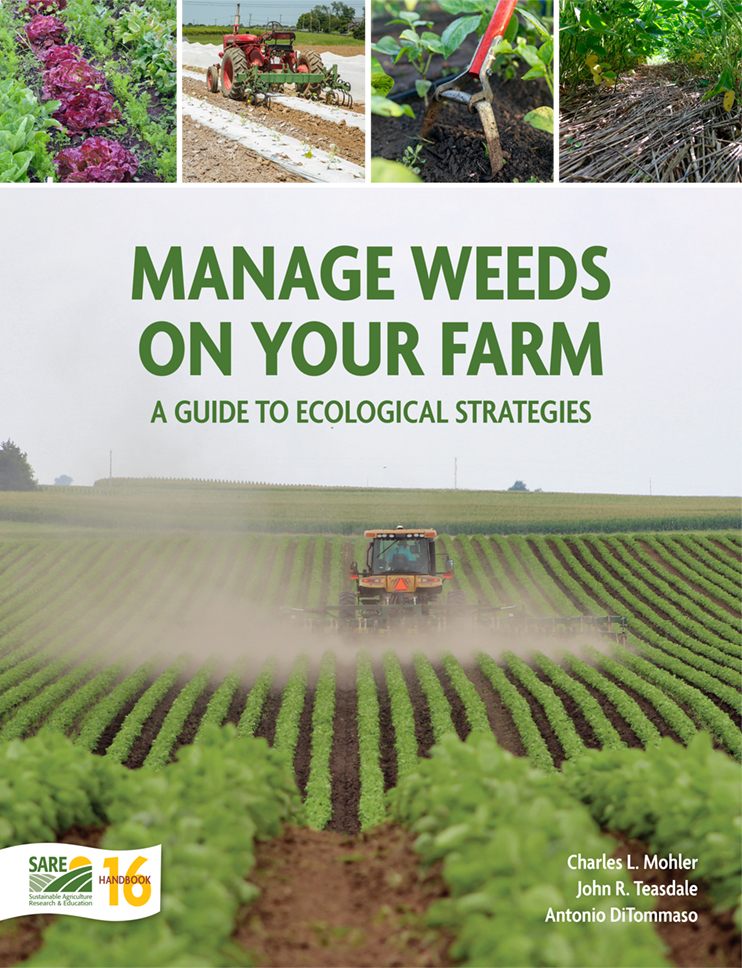
Cover of Manage Weeds on Your Farm featuring a tractor in a field.

The Manage Weeds on Your Farm Video Series is a companion to SARE’s Manage Weeds on Your Farm, a definitive guide to understanding agricultural weeds and how to manage them efficiently, effectively and ecologically. Manage Weeds on Your Farm shows you how to outsmart your weeds by identifying the right tactic for the right weed at the right time, which will reduce as much as possible the labor required, while ensuring your weeds don’t impact crop yields. Download your free copy or order it in print today at www.sare.org/weeds.

Posted in 1

SARE Welcomes New Fellows

The Sustainable Agriculture Research and Education (SARE) program announces the addition of four new members to the SARE Fellows program. Each member represents a different region of the United States. SARE Fellows is a two year professional development experience that helps agricultural educators enhance their understanding of sustainable agriculture and build relationships with farmers and their communities. Participants learn through a series of training and networking opportunities that feature diverse sustainable farming and ranching operations nationwide.

Selected through a competitive national process, the new Fellows represent a variety of backgrounds and disciplines and include both nonprofit and university educators: 

  • Northeast: Ñawi K. Flores, Soil Health Institute: Ñawi is a soil health educator at the Soil Health Institute and is a passionate advocate of agricultural. 
  • North Central: Molly Sowash, Rural Action: As the sustainable agriculture manager for Rural Action and as a beginning farmer, Molly works 9–5 supporting farmers in Appalachian Ohio to launch and sustain their farm businesses and 5–9 raising grass-fed beef on her own operation, MoSo Farm. 
  • Southern: Dr. Trey Malone, University of Arkansas: Dr. Malone is an assistant professor in the department of agricultural economics and agribusiness at the University of Arkansas Division of Agriculture. His research focuses on the intersection of agricultural economics and sustainable food systems, leading to more than 50 publications in peer-reviewed journals. 
  • Western: Daniel Elisara Helsham, American Samoa Community College: Daniel is a media specialist at the American Samoa Community College. For the past ten years, he has served the people of American Samoa by developing media and communications strategies to raise awareness of, promote and educate the community on the importance of agriculture and natural resources.

“We are excited to welcome these talented and dedicated individuals to the SARE Fellows program,” said SARE Associate Director Kristy Borrelli. “They understand the current demands facing sustainable agriculture, and we are confident that they will make a significant impact on the field.”

For more information about the SARE Fellows program, including eligibility, application and past and current SARE Fellow experiences, please visit https://www.sare.org/fellows.

Posted in 1