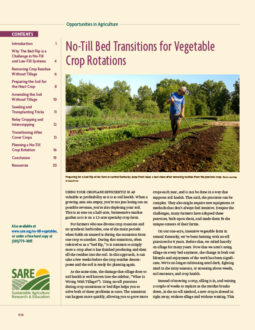
Vegetable farmers often rely on tillage and time to transition beds from one crop to another. But idle, exposed fields can mean lost revenue and depleted soil. So, some producers are turning to no- and low-till strategies to keep the ground covered, productive, and undisturbed throughout the bed flipping process.
SARE’s newest bulletin, No-Till Bed Transitions for Vegetable Crop Rotations, offers tips for managing these transitions for farmers who use crop rotations and no synthetic herbicides. This 20-page publication explores strategies for managing crop residue, preparing and amending soil, and transplanting or seeding new crops into the previous crop’s residues.
The publication lays out the following key stages of effective and efficient bed transitions:
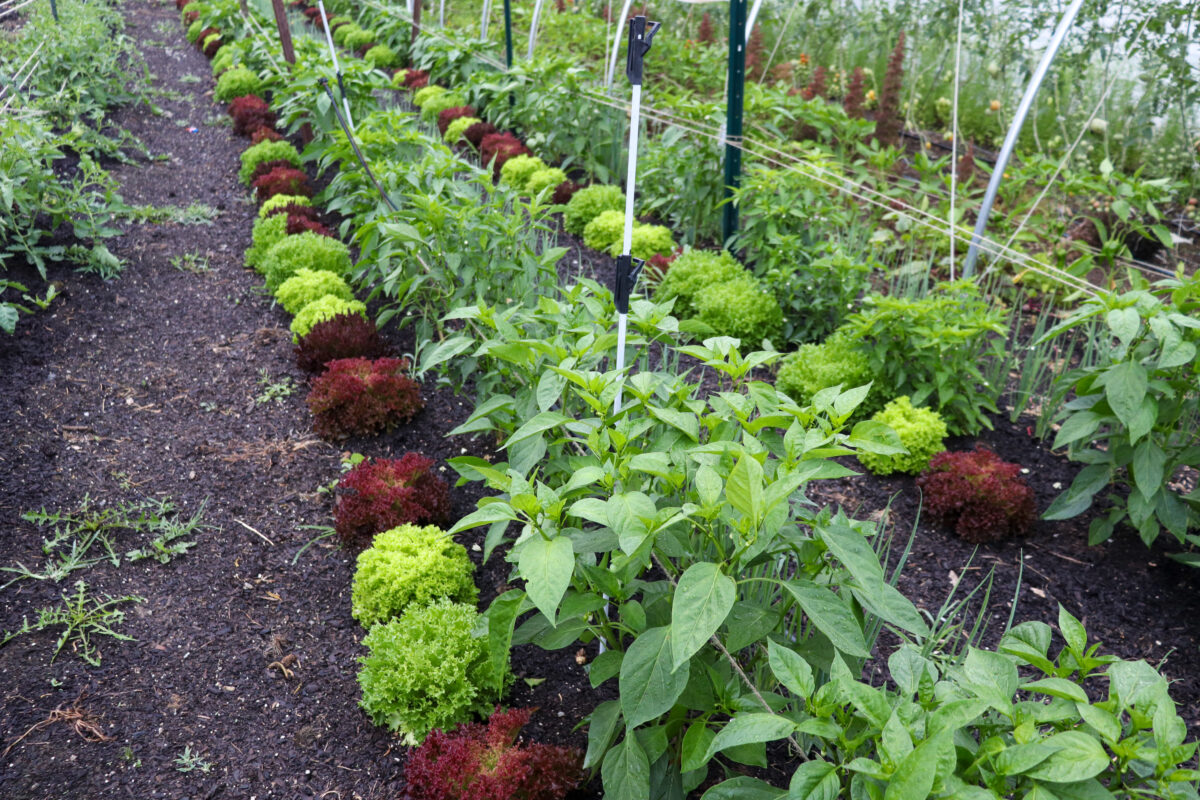
“We’ve been farming with no-till practices for 8 years. Before that, we relied heavily on tillage for many years,” says Kentucky farmer Jesse Frost, the publication’s author. “Now that we aren’t using tillage on every bed anymore, the change in both our lifestyle and enjoyment of the work has been significant. We’re no longer cultivating until dark, fighting mud in the rainy seasons, or stressing about weeds, soil moisture, and crop health.”
Download or order your free print copy of No-Till Bed Transitions for Vegetable Crop Rotations at https://www.sare.org/no-till-bed-transition or by calling (301) 779-1007. No-Till Bed Transitions for Vegetable Crop Rotations is available in quantity for free to educators for use in educational workshops, classes or tours.
For information on grants and resources available from SARE, visit www.sare.org.