Showing 21-30 of 123 results

Farmer-Friendly SARE Grant Finds Poultry Production Efficiencies and Processing Barriers In Hawaii

Dependent on imports for more than 80% of their food, Hawaii’s people are perpetually at risk of supply chain interruptions due to natural disasters or other disruptions. Improving the capacity of local food production is one way farmers can generate income opportunities while reducing the remote islands’ risky reliance on imports.

Nicole Correa of O‘ahu’s Double D Farm and Ranch secured a Western SARE Farmer/Rancher grant to find cost-effective methods to raise broiler chickens and increase food security for Hawaii. Correa examined the influence that different forms of poultry housing had on broilers and determined that birds raised in larger cages had increased weight gain and predator protection, as well as reduced animal stress and commercial feed costs.

These results revealed an opportunity to improve the efficiency and economic sustainability of local poultry production by providing a more efficient production model. 

Unfortunately, Correa also found that the lack of local poultry processing capacity in Hawaii was problematic. Though increased efficiencies were achieved while raising birds, producing the maximum number of birds allowed to be processed on-farm would have merely enabled producers to financially break even. Despite that disappointment, the innovative Hubbell Bubble Chicken Coop tested during the project has been adopted by some non-commercial producers to improve predator control in South Carolina, where Correa now works as a livestock and forages agent with Clemson University Extension.
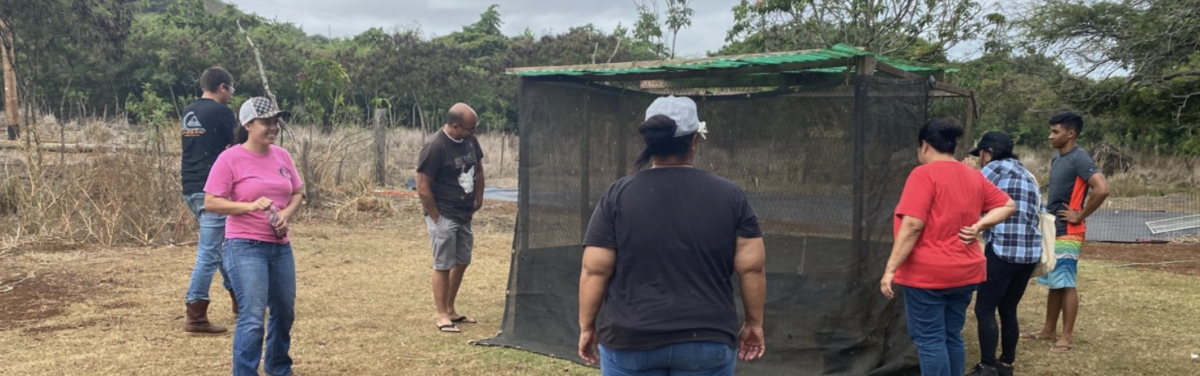
A group of people standing around a netted structure looking inside of it
Participants examine the “Hubbell Bubble” caging option designed by Micheal DuPonte. Credit: Nicole Correa

A recent post-project evaluation of SARE projects awarded between 2016–2019 found that the farmer-friendly approach of SARE grants was essential to getting the project off the ground.“SARE is very helpful. Trying to manage a federal grant is so daunting,” says Correa. “... It gets to the point where you don’t have time to be a farmer because you’re too busy doing the paperwork. Having smaller grants available helps.”

Visit https://www.sare.org/sare-impacts-FW19-344 for more information on this project's impact.

Different Poultry Housing Options for Chickens to Determine Fastest Growing Rate is part of a series of 23 case studies produced by Insight for Action as part of a post-project evaluation of SARE's regional grant programs. Visit https://www.sare.org/sare-impacts for further details.

For information on grants and resources available from SARE, visit www.sare.org.
Posted in 1

SARE Seeks Outreach Products to Advance Sustainable Agriculture

Do you have an idea for an outreach product or project that could help farmers or ranchers improve their profitability, environmental stewardship and/or quality of life? Maybe a suggestion for filling an information gap that is hindering the adoption of sustainable agriculture practices? If so, we want to hear from you!

SARE Outreach is seeking recommendations for information products or outreach initiatives that extend research-based innovations to improve the sustainability of American agriculture. Please submit your ideas using the link below by June 30th.

Previous SARE Outreach projects have included:

  • Books, bulletins and factsheets exploring the principles of sustainable agriculture
  • Videos or multimedia projects demonstrating sustainable practices at work 
  • Outreach initiatives that extend SARE funded research results to a broader audience

Submissions should address the following criteria:

  • Serves the information needs of farmers, ranchers and/or agricultural educators
  • Advances sustainable innovations that improve profitability, stewardship and/or quality of life in agriculture
  • Extends SARE-funded research that addresses a critical information gap
  • Illustrates principles of sustainable management that can be adapted for widespread practice

Non-English Language Publishing Projects: We welcome submissions for projects that seek to develop educational materials in a language other than English. The target audience must be U.S. farmers. Due to our limited linguistic and cultural capacities, we recommend that any submission includes a bilingual partner (individual or organization) who is prepared to collaborate on developing and distributing the proposed materials. Submissions must be in English to be considered.

This survey is intended to assess information needs and opportunities only. Submission does not constitute a request for or guarantee of funding. Competitive grant opportunities are offered regularly by the four SARE regional programs. Information regarding regional SARE grants can be found at www.sare.org/grants. Please contact SARE Outreach at sare@sare.org if you have questions or comments.

Posted in 1

Producer-Driven Research Finds Wood Chip Mulch Conserves Moisture and Improves Production Efficiency

For many small fruit and vegetable farmers, finding cost-effective strategies to control weeds is a never-ending struggle. In Virginia, one producer found that using locally available chipped wood for mulch helps manage weeds while increasing yield, improving soil health and cutting irrigation costs.

To help farmers better manage weed pests, Patrick Johnson of Neighborly Affiliations for Naturally Idealized Health (NANIH) Farm received a Southern SARE Producer grant to study the efficacy of using wood chip mulch as a weed suppressant in a market-vegetable production system. Johnson’s research demonstrated that covering soil with wood chip mulch effectively controlled weeds. As an added benefit, the mulch also reduced moisture evaporation and contributed to steady soil hydration, which ultimately improved Johnson’s yields. Bolstered by the support of the SARE grant, Johnson presented his results at conferences and farmers markets to hundreds of other farmers and agricultural professionals.

“Water doesn’t evaporate as fast when the ground is covered,” says Johnson. “Moisture was steady throughout the entire experiment, and we did see an increase in overall production resulting from the use of wood chips.”

By documenting that a variety of additional benefits can be realized by using wood chip mulch to reduce weed pressure, the project improved the operation's environmental, economic and production sustainability, while boosting production. 

A recent post-project evaluation of SARE projects awarded between 2016–2019 found that SARE’s integrated approach to research and education was crucial to the project’s success.

Visit https://www.sare.org/sare-impacts-FS18-308 for more information on this project.

Evaluating the Effectiveness of Locally Available Woodchips for Weed Control is part of a series of 23 case studies produced by Insight for Action as part of a post-project evaluation of SARE's regional grant programs. Visit https://www.sare.org/sare-impacts for further details.

For information on grants and resources available from SARE, visit www.sare.org.
Posted in 1

Adapting to Overgrazed Land and Drought on Joe Kipp’s Ranch in the Blackfeet Indian Reservation of Montana

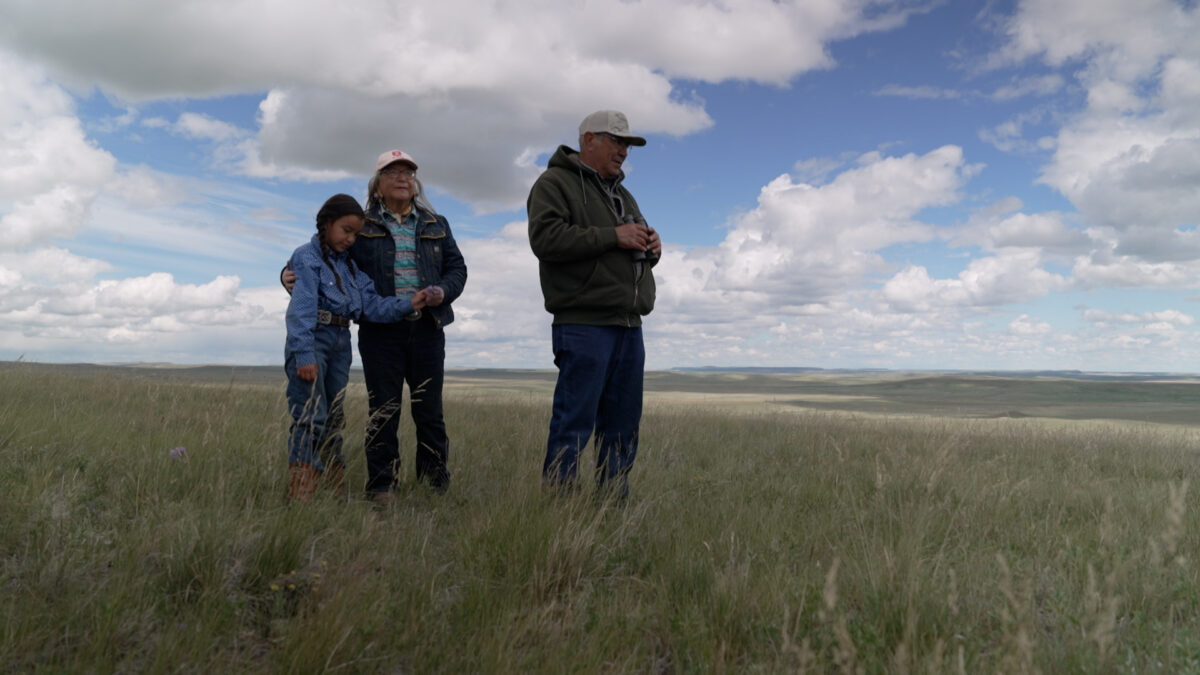
On ancestral Blackfeet land in northern Montana, Joe and Kathy Kipp are breathing new life into overgrazed prairies. Their ranch—passed down through generations—is now a model for how thoughtful land stewardship and strategic conservation can restore ecosystems, support livestock, and prepare the land for water shortages that are the new normal.

Their journey is featured in a new episode of America’s Heartland, produced in partnership with SARE. The segment shares how the Kipps transformed a once-depleted ranch into a thriving pasture for both cattle and native bison.

“This is where my people have been since the beginning of creation… . This is who I am,” says Joe Kipp, a member of the Blackfeet Nation. He works as a steward of the land to protect its natural promise for generations to come. 

When Kipp inherited the land from his late father-in-law, it was overgrazed, lacked fencing, and had no reliable water resources. With help from the USDA Natural Resources Conservation Service, the Kipps installed cross-fencing to allow for rotational grazing, along with water systems that have helped protect and manage their pastures during dry years. Springs that once flowed on top of the grassland now filter into the ground more quickly. With improved water management and native grass restoration, their ranch is better prepared to weather dry seasons.

Years of patient restoration have brought back native prairie grasses and wildlife. These healthy ecosystems now feed their livestock and bison, creating increased revenue and contributing to the ranch’s renewed success.

This video is part of an episode of RFD-TV's America's Heartland produced by PBS KVIE highlighting farmers and ranchers who are using sustainable strategies to adapt to challenging weather conditions. View the entire episode at Farming Strategies for Adapting to Extreme Weather.

Posted in 1

New SARE Bulletin: The Basics of Farm Business Planning

New and beginning farmers face a wide range of barriers when launching or growing their operations, from uncertain markets and extreme weather to land access and financing challenges. A clear, practical business plan can make all the difference.

SARE Outreach’s newest bulletin, The Basics of Farm Business Planning, offers a framework to help farmers clarify their goals, evaluate their resources, and build financially and ecologically sound enterprises. Developed with input from experienced farmers and educators, the guide introduces users to five essential planning steps:

The Basics of Farm Business Planning summarizes concepts from SARE’s Building a Sustainable Business workbook, which provides real-life examples of how farmers have used business planning to launch new enterprises, expand sustainably and achieve personal and financial goals.

Download or order your free print copy of The Basics of Farm Business Planning at https://www.sare.org/business-planning-basics or by calling (301) 779-1007. The Basics of Farm Business Planning is available in quantity for free to educators for use in educational workshops, classes or tours.

Posted in 1

Adapting to Extreme Rains and Drought at A-Frame Farm in Madison, Minnesota

At A-Frame Farm, resilience begins below the surface. In a new episode of America’s Heartland, produced in partnership with SARE, farmer Luke Peterson shares how his family is adapting to increasingly erratic weather through regenerative practices that focus on restoring the soil.

Located on 500 acres in Madison, Minn., A-Frame Farm produces organic grains and grass-fed beef using techniques that prioritize long-term soil health. “I’m growing food for humans that is healthy,” says Peterson. “It brings me a lot of joy.”

Peterson’s journey into sustainable farming was inspired by his wife’s work as a nurse practitioner, where he saw the direct connection between soil, food, and human health. That connection now guides every decision on the farm: minimizing tillage, rotating diverse crops, and using compost from their cows to revitalize the land.

The farm’s use of deep-rooted perennials like Kernza plays a critical role in soil health. Kernza roots help retain moisture during drought and stabilize the soil during heavy rains, while also drawing carbon dioxide from the atmosphere. “We work on Mother Nature’s terms,” Peterson explains. 

By building a more diverse and regenerative system, the Peterson family is reducing their reliance on off-farm inputs and preparing their land for long-term success. Their efforts also extend beyond the farm, through partnerships with companies like Simple Mills, which source ingredients directly from A-Frame for their organic food products.

This video is part of an episode of RFD-TV's America's Heartland produced by PBS KVIE highlighting farmers and ranchers who are using sustainable strategies to adapt to challenging weather conditions. View the entire episode at Farming Strategies for Adapting to Extreme Weather.

Posted in 1

Adapting to Flooding and Drought on Hurricane Flats Farm in South Royalton, Vermont

On the banks of the White River, Hurricane Flats Farm is finding new ways to thrive in the face of increasingly unpredictable weather. In a new episode of America’s Heartland, produced in partnership with SARE, farmers Ashley Loehr and Antoine Guerlain share how they’re navigating both severe drought and catastrophic flooding on their 37-acre certified organic farm in Vermont.

After taking over the farm, Loehr and Guerlain faced intense droughts during their first three seasons and devastating floods in 2023 that destroyed 75% of their projected gross income. “Droughts, floods, extremely heavy rain, extreme wind, all those things are happening all the time, and could happen any minute,” says Loehr.

To manage these challenges, they’ve adopted a range of innovative farming techniques. By planting strip crops and buffer zones, grouping high-value crops away from high-risk flood zones, and choosing a diverse mix of short-cycle and long-season crops, they’ve built flexibility into their growing season. These strategies allow them to reduce losses and recover faster when weather disrupts production.

Hurricane Flats also partners with the White River Partnership to grow 1,000 young trees that will be transplanted onto farms across the region—strengthening riparian areas and supporting long-term soil health and water quality. The farm’s produce is sold directly to the community at farmers’ markets, where the support for their efforts has been strong.

This video is part of an episode of RFD-TV's America's Heartland produced by PBS KVIE highlighting farmers and ranchers who are using sustainable strategies to adapt to challenging weather conditions. View the entire episode at Farming Strategies for Adapting to Extreme Weather.

Posted in 1

Pennsylvania Producers Drive Research to Expand Switchgrass Markets

In Pennsylvania, switchgrass has emerged as a promising new crop for family farms. This perennial grass thrives on rocky, untillable land, requires minimal maintenance and reduces soil erosion. But a key challenge to expanding production has been the lack of stable markets and cost-effective methods of processing switchgrass for high-value applications like poultry bedding.

In response, Will Brandau built a robust network of farmers in the state to help producers develop and adapt to evolving switchgrass markets. With support from Northeast SARE, members of the Association of Warm Season Grass Producers developed portable processing equipment to produce high-quality poultry bedding from switchgrass that is less than 1.5 inches in length and virtually dust-free.

This work builds on a series of SARE-funded initiatives to promote warm-season grasses, highlighting their potential as low-input, sustainable crops. The association’s efforts, supported by additional grants, have expanded knowledge of switchgrass’s diverse uses, including erosion-control materials, cattle bedding, and more.

The project has improved the economic and social sustainability of agriculture in Pennsylvania through producer-driven networking, research, and market development. A recent post-project evaluation of SARE projects awarded between 2016–2019 emphasized the importance of investing in producer leadership to engage farmers to build new markets and processing options for a low maintenance, soil conserving crop.

“We had these guys experimenting with different processes on how to produce poultry bedding. We took all the things that worked and put them together on one device that was portable so it could go from farm to farm,” said Brandau.

Visit https://www.sare.org/sare-impacts-FNE17-865 for more information on this project’s impact.

Single-Producer-Scale Preparation of Warm-Season Grass for Poultry Bedding – Pennsylvania is part of a series produced by Insight for Action as part of a post-project evaluation of SARE's regional grant programs. For more information visit https://www.sare.org/sare-impacts.

For information on grants and resources available from SARE, visit www.sare.org.

Posted in 1

Adapting to Generational Challenges on Western Family Farms in Waterloo, Iowa

For the Western family, farming is more than a livelihood—it’s a legacy of perseverance, stewardship, and deep-rooted pride. As one of Iowa’s pioneering Black farm families, the Westerns are featured in a new episode of America’s Heartland, produced in partnership with SARE, for their commitment to sustainable agriculture and generational resilience.

Brothers Todd, Christopher, and Adam Western honor their father after his unexpected passing in 2008 through the upkeep of Western Family Farms. Alongside their mother and farm CEO, Barbara Western, the Western family is committed to the longevity of their farm. “That’s my job and my family’s job—to make sure we are good stewards of the land,” says Todd Western III, “to make sure we are setting this up for the next 160 years.”

Their commitment to regenerative farming includes no-till practices, cover cropping, and transforming less productive land into grasslands to both support pollinators and enrich the soil. These strategies reduce the need for chemical inputs, improve water retention, and make the farm more resilient during increasingly common periods of heavy rain and drought.

The Westerns have also enrolled in a carbon capture credit plan that incentivizes activities that reduce carbon dioxide in the atmosphere and improve soil health—generating a new revenue stream while they invest in long-term sustainability.

Their roots in Iowa trace back to the late 1800s, when their ancestors—formerly enslaved people—purchased the land and began farming. Through decades of adversity, including the challenges of being Black farmers in a state that is over 98% white, the Western family has found a place for social sustainability. Todd Western III co-founded the Iowa Farmers of Color to create a support network for farmers of color. 

This video is part of an episode of RFD-TV's America's Heartland produced by PBS KVIE highlighting farmers and ranchers who are using sustainable strategies to adapt to challenging weather conditions. View the entire episode at Farming Strategies for Adapting to Extreme Weather.

Posted in 1

Adapting to Heatwaves and Hurricanes at Southern Valley Fruit and Vegetable Farm in Norman Park, Georgia

At Southern Valley Fruit and Vegetable Farm, Kent Hamilton and his daughter Courtney Hamilton Griffin are doing more than growing produce—they’re creating a legacy of sustainability and innovation. In a new episode of America’s Heartland, produced in partnership with SARE, the Hamilton family shares how their Georgia farm is evolving to meet the growing challenges of heatwaves and intensifying storms.

Located in Norman Park, Ga., Southern Valley operates year-round, cultivating a variety of fruits and vegetables across three strategic locations to ensure stability in an increasingly unpredictable growing season. The family’s approach includes meticulous crop planning, rapid postharvest cooling, and flexibility in the face of extreme weather events.

“We’re doing the basics of human life,” says Courtney Hamilton Griffin, whose family has long been a cornerstone of American agriculture in the Southeast. “We’re doing something that’s been done for generations.” She acknowledges that it has become increasingly challenging for agriculture producers in recent years, due to the variability of weather events across the nation.

As extreme heat becomes more frequent, the farm has adjusted harvesting schedules to prioritize worker safety. “Mother Nature drives everything we do,” says Kent Hamilton. “During extreme heat, we start harvesting early in the morning or shift to later in the evening. The biggest concern is keeping our people safe.”

The Hamiltons also brace for hurricanes, whose growing intensity and frequency pose a major threat to crops in the region. By operating across multiple sites and staying nimble in their crop timelines, Southern Valley is building resilience while maintaining high-quality standards. 

“Treat people with kindness and love and respect,” Courtney Hamilton Griffin says. “They’re going to give that in return.” For the Hamiltons, agriculture isn’t just about food—it’s about community, responsibility, and legacy.

This video is part of an episode of RFD-TV's America's Heartland produced by PBS KVIE highlighting farmers and ranchers who are using sustainable strategies to adapt to challenging weather conditions. View the entire episode at Farming Strategies for Adapting to Extreme Weather.

Posted in 1