Showing 21-30 of 87 results

Farmer-Friendly SARE Grant Finds Poultry Production Efficiencies and Processing Barriers In Hawaii

Dependent on imports for more than 80% of their food, Hawaii’s people are perpetually at risk of supply chain interruptions due to natural disasters or other disruptions. Improving the capacity of local food production is one way farmers can generate income opportunities while reducing the remote islands’ risky reliance on imports.

Nicole Correa of O‘ahu’s Double D Farm and Ranch secured a Western SARE Farmer/Rancher grant to find cost-effective methods to raise broiler chickens and increase food security for Hawaii. Correa examined the influence that different forms of poultry housing had on broilers and determined that birds raised in larger cages had increased weight gain and predator protection, as well as reduced animal stress and commercial feed costs.

These results revealed an opportunity to improve the efficiency and economic sustainability of local poultry production by providing a more efficient production model. 

Unfortunately, Correa also found that the lack of local poultry processing capacity in Hawaii was problematic. Though increased efficiencies were achieved while raising birds, producing the maximum number of birds allowed to be processed on-farm would have merely enabled producers to financially break even. Despite that disappointment, the innovative Hubbell Bubble Chicken Coop tested during the project has been adopted by some non-commercial producers to improve predator control in South Carolina, where Correa now works as a livestock and forages agent with Clemson University Extension.
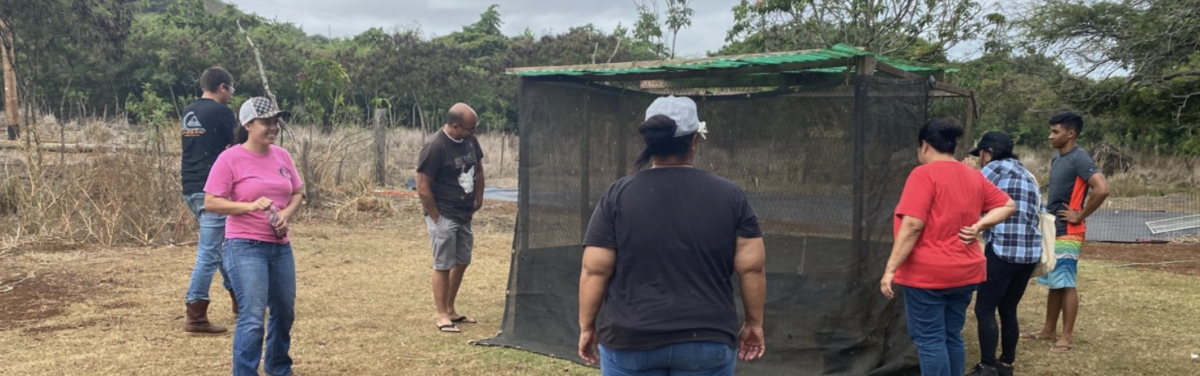
A group of people standing around a netted structure looking inside of it
Participants examine the “Hubbell Bubble” caging option designed by Micheal DuPonte. Credit: Nicole Correa

A recent post-project evaluation of SARE projects awarded between 2016–2019 found that the farmer-friendly approach of SARE grants was essential to getting the project off the ground.“SARE is very helpful. Trying to manage a federal grant is so daunting,” says Correa. “... It gets to the point where you don’t have time to be a farmer because you’re too busy doing the paperwork. Having smaller grants available helps.”

Visit https://www.sare.org/sare-impacts-FW19-344 for more information on this project's impact.

Different Poultry Housing Options for Chickens to Determine Fastest Growing Rate is part of a series of 23 case studies produced by Insight for Action as part of a post-project evaluation of SARE's regional grant programs. Visit https://www.sare.org/sare-impacts for further details.

For information on grants and resources available from SARE, visit www.sare.org.
Posted in 1

SARE Seeks Outreach Products to Advance Sustainable Agriculture

Do you have an idea for an outreach product or project that could help farmers or ranchers improve their profitability, environmental stewardship and/or quality of life? Maybe a suggestion for filling an information gap that is hindering the adoption of sustainable agriculture practices? If so, we want to hear from you!

SARE Outreach is seeking recommendations for information products or outreach initiatives that extend research-based innovations to improve the sustainability of American agriculture. Please submit your ideas using the link below by June 30th.

Previous SARE Outreach projects have included:

  • Books, bulletins and factsheets exploring the principles of sustainable agriculture
  • Videos or multimedia projects demonstrating sustainable practices at work 
  • Outreach initiatives that extend SARE funded research results to a broader audience

Submissions should address the following criteria:

  • Serves the information needs of farmers, ranchers and/or agricultural educators
  • Advances sustainable innovations that improve profitability, stewardship and/or quality of life in agriculture
  • Extends SARE-funded research that addresses a critical information gap
  • Illustrates principles of sustainable management that can be adapted for widespread practice

Non-English Language Publishing Projects: We welcome submissions for projects that seek to develop educational materials in a language other than English. The target audience must be U.S. farmers. Due to our limited linguistic and cultural capacities, we recommend that any submission includes a bilingual partner (individual or organization) who is prepared to collaborate on developing and distributing the proposed materials. Submissions must be in English to be considered.

This survey is intended to assess information needs and opportunities only. Submission does not constitute a request for or guarantee of funding. Competitive grant opportunities are offered regularly by the four SARE regional programs. Information regarding regional SARE grants can be found at www.sare.org/grants. Please contact SARE Outreach at sare@sare.org if you have questions or comments.

Posted in 1

Producer-Driven Research Finds Wood Chip Mulch Conserves Moisture and Improves Production Efficiency

For many small fruit and vegetable farmers, finding cost-effective strategies to control weeds is a never-ending struggle. In Virginia, one producer found that using locally available chipped wood for mulch helps manage weeds while increasing yield, improving soil health and cutting irrigation costs.

To help farmers better manage weed pests, Patrick Johnson of Neighborly Affiliations for Naturally Idealized Health (NANIH) Farm received a Southern SARE Producer grant to study the efficacy of using wood chip mulch as a weed suppressant in a market-vegetable production system. Johnson’s research demonstrated that covering soil with wood chip mulch effectively controlled weeds. As an added benefit, the mulch also reduced moisture evaporation and contributed to steady soil hydration, which ultimately improved Johnson’s yields. Bolstered by the support of the SARE grant, Johnson presented his results at conferences and farmers markets to hundreds of other farmers and agricultural professionals.

“Water doesn’t evaporate as fast when the ground is covered,” says Johnson. “Moisture was steady throughout the entire experiment, and we did see an increase in overall production resulting from the use of wood chips.”

By documenting that a variety of additional benefits can be realized by using wood chip mulch to reduce weed pressure, the project improved the operation's environmental, economic and production sustainability, while boosting production. 

A recent post-project evaluation of SARE projects awarded between 2016–2019 found that SARE’s integrated approach to research and education was crucial to the project’s success.

Visit https://www.sare.org/sare-impacts-FS18-308 for more information on this project.

Evaluating the Effectiveness of Locally Available Woodchips for Weed Control is part of a series of 23 case studies produced by Insight for Action as part of a post-project evaluation of SARE's regional grant programs. Visit https://www.sare.org/sare-impacts for further details.

For information on grants and resources available from SARE, visit www.sare.org.
Posted in 1

New SARE Bulletin: The Basics of Farm Business Planning

New and beginning farmers face a wide range of barriers when launching or growing their operations, from uncertain markets and extreme weather to land access and financing challenges. A clear, practical business plan can make all the difference.

SARE Outreach’s newest bulletin, The Basics of Farm Business Planning, offers a framework to help farmers clarify their goals, evaluate their resources, and build financially and ecologically sound enterprises. Developed with input from experienced farmers and educators, the guide introduces users to five essential planning steps:

The Basics of Farm Business Planning summarizes concepts from SARE’s Building a Sustainable Business workbook, which provides real-life examples of how farmers have used business planning to launch new enterprises, expand sustainably and achieve personal and financial goals.

Download or order your free print copy of The Basics of Farm Business Planning at https://www.sare.org/business-planning-basics or by calling (301) 779-1007. The Basics of Farm Business Planning is available in quantity for free to educators for use in educational workshops, classes or tours.

Posted in 1

Pennsylvania Producers Drive Research to Expand Switchgrass Markets

In Pennsylvania, switchgrass has emerged as a promising new crop for family farms. This perennial grass thrives on rocky, untillable land, requires minimal maintenance and reduces soil erosion. But a key challenge to expanding production has been the lack of stable markets and cost-effective methods of processing switchgrass for high-value applications like poultry bedding.

In response, Will Brandau built a robust network of farmers in the state to help producers develop and adapt to evolving switchgrass markets. With support from Northeast SARE, members of the Association of Warm Season Grass Producers developed portable processing equipment to produce high-quality poultry bedding from switchgrass that is less than 1.5 inches in length and virtually dust-free.

This work builds on a series of SARE-funded initiatives to promote warm-season grasses, highlighting their potential as low-input, sustainable crops. The association’s efforts, supported by additional grants, have expanded knowledge of switchgrass’s diverse uses, including erosion-control materials, cattle bedding, and more.

The project has improved the economic and social sustainability of agriculture in Pennsylvania through producer-driven networking, research, and market development. A recent post-project evaluation of SARE projects awarded between 2016–2019 emphasized the importance of investing in producer leadership to engage farmers to build new markets and processing options for a low maintenance, soil conserving crop.

“We had these guys experimenting with different processes on how to produce poultry bedding. We took all the things that worked and put them together on one device that was portable so it could go from farm to farm,” said Brandau.

Visit https://www.sare.org/sare-impacts-FNE17-865 for more information on this project’s impact.

Single-Producer-Scale Preparation of Warm-Season Grass for Poultry Bedding – Pennsylvania is part of a series produced by Insight for Action as part of a post-project evaluation of SARE's regional grant programs. For more information visit https://www.sare.org/sare-impacts.

For information on grants and resources available from SARE, visit www.sare.org.
Posted in 1

New Survey of Farm Advisors Shows Growing Interest in Cover Crops

CTIC, SARE and ASTA release the 2025 National Cover Crop Survey, which focuses on consultants and other trusted advisors.

More than 650 farm advisors from across the United States participated in a survey on cover crops, shining light on how—and how frequently—they advise growers on cover crops. A report on the survey was released today by the Conservation Technology Information Center (CTIC), SARE, and the American Seed Trade Association (ASTA). This is the eighth national cover crop survey conducted by those groups since 2012 and the first to focus on advisors. The American Soybean Association also contributed to this report.

"Advisors play a key role in informing farmers about cover crops and providing technical assistance to help them succeed with covers," pointed out Rob Myers, director of the University of Missouri Center for Regenerative and regional director of extension programs for North Central Region SARE. "Understanding their attitudes toward cover crops, how they get their information, and how they perceive cover crop benefits will help guide efforts to support those advisors."

Ryan Heiniger, executive director of the Conservation Technology Information Center (CTIC), added, "This survey opened a window into how cover crops fit into crop consulting businesses and other advisory services. We also observed that seeing is believing, which is borne out by the fact that approximately 70% of the respondents who farm themselves use cover crops on their own operations, and those cover crop users are more inclined to advise their clients on the practice."

ASTA President and CEO Andy LaVigne emphasized the importance of the perspectives gained from these surveys in empowering the seed industry to respond to the needs of U.S. farmers. “As part of the agriculture and food sector based on innovation, better understanding trends and motivations for planting cover crops enables the seed industry to improve cover crop varieties and use new technologies in the areas most impactful to American agriculture," he said. "Recognizing and adapting to the needs and desires of farmers allows the seed industry to adequately prepare, and ultimately provide, the right seed for the right farm at the right time."

The survey was conducted online in October 2024. The combination of private and public sector advisors represented 46 states. Of the 654 advisors who participated in the survey, 77% were certified crop advisors (CCAs), a certification conferred by the American Society of Agronomy.

Among the highlights of the survey findings:

  • The advisors who used cover crops on their own farms were five times more likely to recommend cover crops to farmers not yet using them, compared to advisors who did not farm with cover crops themselves.
  • Advisors using cover crops on their own farms tended to have a much higher percentage of clients using cover crops—22.3% of the advisors who use cover crops themselves reported 25-50% of their clients are using covers, compared to 9.1% at the same level of adoption among clients of advisors who did not personally use cover crops.
  • The farm advisors surveyed used a wide range of information sources to learn about cover crops. Advisors who reported that they learned about cover crops on the job rather than through formal academic or training channels preferred training sessions (63.9%) and webinars (57.4%) for learning new cover crop insights, but also liked learning from farmers one-on-one (58.3%) and by visiting field trials (30.6%).
  • Looking ahead, a majority of the farm advisors (56.9%) expected to see cover crop acreage continue to increase. They also expected farmers to continue increasing use of cover crop mixes (46.7%) and trying ways of combining other soil health practices with cover crops (52.9%). The advisors expected a moderate amount of interest in newer cover crop topics like planting green (29.2%), grazing cover crops (32.2%), and others.

For more information on the CTIC/SARE/ASTA National Cover Crop Survey Report 2024-2025, visit CTIC’s website.

About the Conservation Technology Information Center
Founded in 1982, CTIC champions, promotes and provides information on technologies and sustainable agricultural systems that conserve and enhance soil, water, air and wildlife resources, and are productive and profitable. It is one of the oldest nonprofit membership organizations solely dedicated to the advancement of conservation agriculture research, policies and program delivery for producers.

Posted in 1

On-Farm Research Advances Cost-Effective Weed Management Practice on Guam

Guam’s farmers often rely on hand weeding or gas trimmers to control fast-growing weeds in citrus, papaya and pepper crops. These methods can be expensive and time consuming, so one innovative farmer is instead trying sheet mulching as a cost-effective method to control weeds. Sheet mulching involves layering various sources of organic waste materials on top of the ground to smother weeds. This practice also has the potential to divert paper waste from the landfill and to build soil.

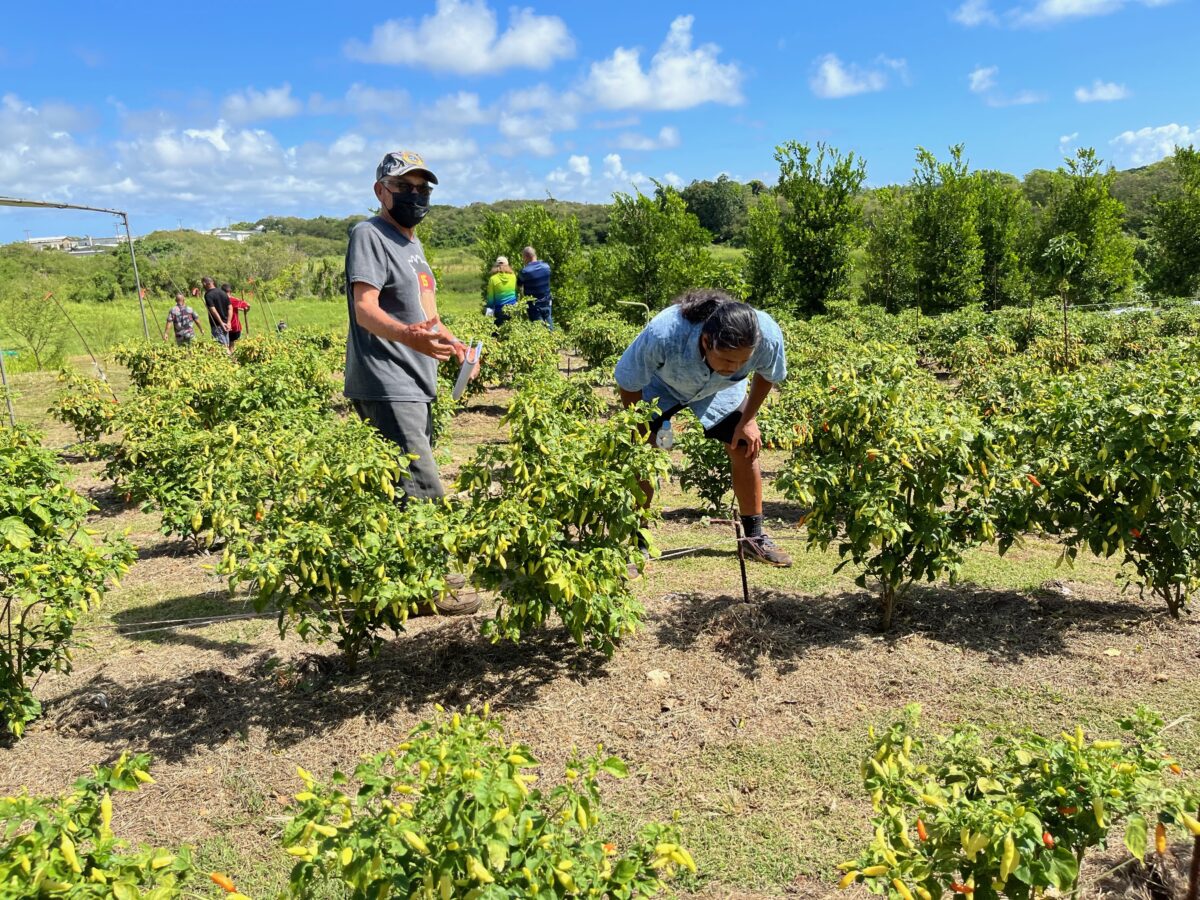
Two people, one in a mask, examine mulched pepper plants in Guam.
Extension agent Joe Tuquero showing mulched guafi peppers to an elder farmer Luis Flores. Credit: Marcela A. Takai

Glenn Takai of Takai Farm used a Western SARE Farmer/Rancher grant to research the efficacy of using waste cardboard and chipped branches as sheet mulch and found the practice significantly reduced weed propagation and growth. The approach also nearly doubled pepper yields on their test plots, prevented weeds from competing with crops for nutrients, and improved soil organic matter and quality.

Takai’s research improved the environmental and economic sustainability of his and others’ farms by demonstrating a more cost-effective model for weed control and soil improvement. After seeing Takai’s success, neighboring farmers on Guam began adopting the mulching method. A recent post-project evaluation of SARE projects awarded between 2016–2019 found that on-farm research demonstrations encourage other producers to adapt innovative new production practices.

“Mulching, hands down, is going to be the way to go compared to not mulching. I wouldn’t do without it,” said Takai, who credits the SARE grant for enabling his research.

Visit https://www.sare.org/sare-impacts-FW19-348 for more information on this project’s impact.

Sheet Mulch Using Cardboard and Nitrogen Fixing Trees is part of a series produced by Insight for Action as part of a post-project evaluation of SARE's regional grant programs. For more information visit https://www.sare.org/sare-impacts.

For information on grants and resources available from SARE, visit www.sare.org.

Posted in 1

RFD-TV to Feature Sustainable Innovations on "America’s Heartland"

Tune in to RFD-TV on Wednesday, April 16, at 5:30 EDT for a new episode of "America’s Heartland" highlighting farmers and ranchers who are using sustainable strategies to adapt to increasingly challenging and unpredictable weather conditions. 

Produced in collaboration with SARE and PBS KVIE, the episode showcases a range of innovative farming techniques, rural community resilience and creative approaches to preserving land for future generations.

  • See how Ashley Loehr and Antoine Guerlain responded to both drought and catastrophic flooding on their diversified vegetable farm in South Royalton, Vermont. They run a certified-organic farm cultivating popcorn, wheat and hay on 37 acres. Strip cropping, buffer strips and a diverse mix of short-cycle and long-season crops provide more flexibility to help reduce income gaps caused by crop loss.
  • The Hamilton family manages Southern Valley Fruit and Vegetable Farm in Norman Park, Georgia, where extreme heat and intensifying hurricane seasons have forced them and other producers to adapt. Adjusting harvesting times protects workers from extreme heat, while growing crops year round across three strategic locations maintains a more reliable income stream.
  • Luke Peterson shares his family’s regenerative approach to cultivating organic grains and grass-fed beef at A-Frame Farm in Madison, Minnesota. By minimizing tillage, rotating crops and incorporating deep-rooted plants like Kernza, they’re restoring the soil’s health and boosting resilience to droughts and heavy storms. 
  • In Waterloo, Iowa, the Westerns carry on their family’s legacy as one of Iowa’s pioneering Black farming families. Facing generations of challenges, the Westerns adopted no-till farming, cover crops and carbon-capture practices to reduce off-farm inputs, regenerate the soil and better manage extreme weather.
  • After inheriting overgrazed land, Joe and Kathy Kipp installed fencing and irrigation to better manage scarce water resources on their ranch on the Blackfeet Indian Reservation in Montana. Through their work with the Natural Resource Conservation Service (NRCS), the Kipps have restored native prairie grasslands and improved drought resilience to sustain their cattle and bison, all while preserving their land for future generations.

Watch the episode on RFD-TV on Wednesday, April 16, at 5:30 EDT. RFD-TV is carried nationwide on DISH, DIRECTV (satellite) and many cable systems: https://www.rfdtv.com/find-us-on-tv.

If you miss the broadcast, stay tuned! SARE Outreach will share a link to the episode online in the near future.

Posted in 1

Farmer Leadership Key to Adoption of Sustainable Grazing Practices in Wisconsin

Farmers are often reluctant to risk investments of time or money to adopt research-based conservation practices on their farms. In southern Wisconsin, a creative approach to fostering informal, farmer-led learning opportunities has been key to encouraging farmers to adopt cost-cutting grazing and cover cropping practices that successfully decrease soil erosion and waterway contamination.

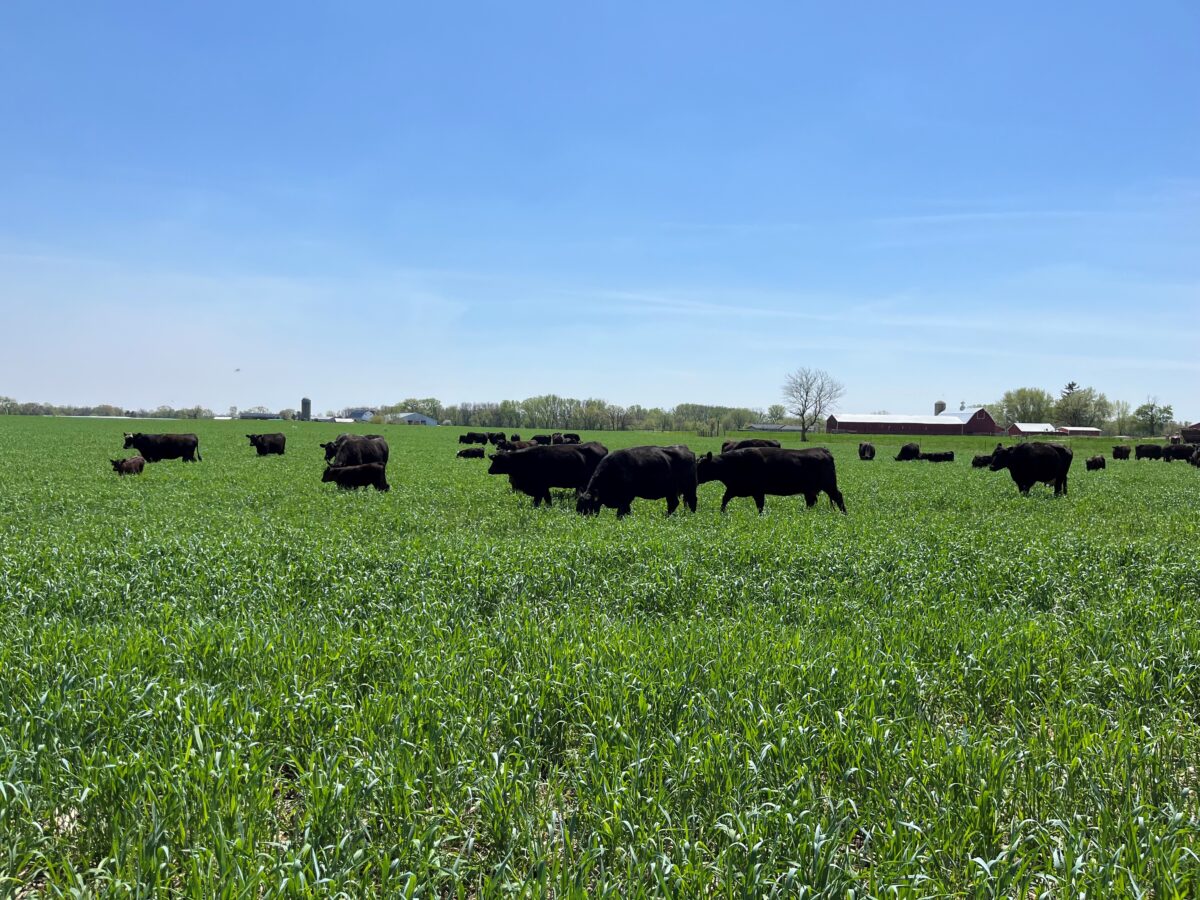
Black cattle grazing a cover crop.
Cattle grazing a cover crop. Credit: Marie Raboin

Dane County Conservation Specialist Marie Raboin recognized that farmers who feel inspired and informed by other farmers are more likely to adopt new practices. With support from a North Central SARE Partnership grant, Raboin organized and compensated conservation-minded farmers to share their experiences with other producers. Mentor farmers led field days and one-on-one consultations to help their peers explore grazing cover crops to reduce livestock feed costs.

This farmer-led method significantly enhanced local livestock production sustainability—environmentally, economically and socially—by fostering a culture of innovation. As a result, farmers increased the use of cover cropping practices which reduced feed costs, soil erosion and waterway pollution.

A recent post-project evaluation of SARE projects awarded between 2016 and 2019 found that fostering innovation through farmer-to-farmer learning boosted the project’s outcomes.

“Science matters in promoting sustainable agriculture, but it is just one small piece of the process,” said Raboin. “Community [support] affects more change on the landscape than research out of the best land grant university.”

Visit https://www.sare.org/sare-impacts-ONC19-063 for more information on this project’s impact.

Building Sustainable Relationships Around the Use of Grazing Cover Crops is part of a series produced by Insight for Action as part of a post-project evaluation of SARE's regional grant programs. For more information visit https://www.sare.org/sare-impacts.

For details on grants and resources available from SARE, visit www.sare.org.

Posted in 1

Farmer-Led Innovation Improves Aquaculture Production and Ecosystems in New England

Southern New England’s climate offers ideal conditions for producing bay scallops—a sustainable seafood option that also diversifies aquaculture enterprises. However, an important challenge in bay scallop farming is access to nursery systems that can efficiently raise scallops to maturity before transferring them to grow-out environments.

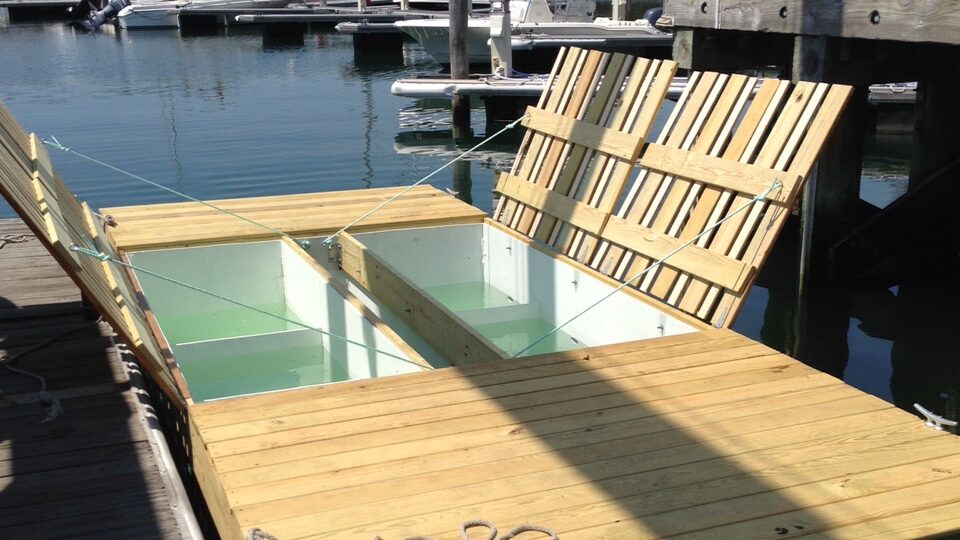
A box with doors open on its top, floating next to a dock with boats in the background.
Floating downweller in the water with doors open. Credit: Dan Ward

With support from a Northeast SARE Farmer grant, Dr. Daniel Ward, owner of Ward Aquafarms, helped to bridge this gap by developing a floating downweller nursery system designed to optimize growth and survival rates for juvenile bay scallops.

Dr. Ward’s innovative system uses stacked trays that increase water flow and surface area, thereby supporting higher production densities without compromising scallop growth or survival. The system allows scallops to grow from fertilized eggs to market-ready sizes more efficiently, improving Ward Aquafarms’ production of high-quality scallops for both market and propagation in overfished or degraded ecosystems.

The project has improved the economic sustainability and environmental quality of New England aquaculture production by enabling producers to sell scallops while simultaneously reviving their production ecosystems.

A recent post-project evaluation of SARE projects awarded between 2016 and 2019 found that fostering innovation through affordable, farmer-driven research grants was key to the project’s success.

“The entire SARE program has been great, and I really believe in their mission to enable farmers to drive the process and partner with academics, instead of the other way around,” Dr. Ward said. ”The amount of money for each project is relatively small, and risk-reward wise, it has led to an amazing return for our industry.”

Visit https://www.sare.org/sare-impacts-fne16-861 for more information on this project’s impact.

Expanding Sustainable Shellfish Aquaculture: Optimizing Growth and Survival in a Bay Scallop Nursery System is part of a series of 23 case studies produced by Insight for Action as part of a post-project evaluation of SARE's regional grant programs. For more information visit https://www.sare.org/sare-impacts.

For information on grants and resources available from SARE, visit www.sare.org.

Posted in 1