• WebStore |
  • Advanced Search |
  • MySARE Login |
  • SARE Social Media |
  • Contact Us |
  • SANET Listserv |
  • Low Bandwidth |
Search MySARE Reports
  • Grants
    • Apply for a Grant
    • Funded Grants in Your State
  • Project Reports
    • Submit a Report
    • Search the Database
    • Project Search Tips
    • About Project Reports
    • About Search Results
    • Project Products
  • Learning Center
    • Books
    • Bulletins
    • Fact Sheets
    • Topic Rooms
    • From the Field
    • Newsletters
    • Multimedia
    • Courses and Curricula
    • Project Products
    • SARE Biennial Reports
    • SANET Listserv
    • SARE Program Materials
    • Conference Materials
    • WebStore
  • Professional Development
    • PDP Overview
    • Fellows & Search for Excellence Programs
    • Sample PDP Grant Projects
    • Educator Curriculum Guides
    • National Continuing Education Program
    • State Coordinator Contact Information
  • State Programs
    • State Coordinator Program Overview
    • State Coordinator Contact Information
    • Funded Grants in Your State
  • Events
    • Event Calendar
    • Past Conferences
  • Newsroom
    • Press Releases
    • SARE in the News
    • Media Contacts
    • Newsletters
    • Media Toolkit
    • A Guide To This Site
    • SARE and Social Media
  • About SARE
    • SARE's Four Regions
    • SARE Grants
    • Learning Center
    • Professional Development
    • SARE Outreach
    • Historical Timeline
    • Staff
    • Vision & Mission
    • Join Our Mailing List
    • What is Sustainable Agriculture?
  • Home»
  • Learning Center»
  • Books»
  • How to Direct Market Your Beef»
  • Text Version»
  • Starting Out»
  • Organic vs. Natural
facebook
Twitter
YouTube
- + Font Size
Print
Share

Text Version

  • Introduction
  • Starting Out
    • Finding a Niche
    • Selling the Whole Carcass
    • How to Cut Up a Carcass
    • Make $10, Not $10,000 Mistakes
    • Stand By Your Price
    • Expect to Reinvent the Wheel
    • Frozen vs. Fresh
    • Organic vs. Natural
    • Scheduling
    • Learn How to Cook Your Beef
    • Processing
    • Getting a Label
    • Packaging Your Product
    • Genetics
    • Forage
  • Entrepreneurs
  • Selling Product
  • Growing Profit
  • Resources
  • Printable Version

Can't find something? Ask or send feedback.

SARE's mission is to advance—to the whole of American agriculture—innovations that improve profitability, stewardship and quality of life by investing in groundbreaking research and education. SARE's vision is...

Organic vs. Natural

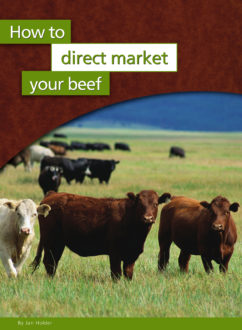
USDA legal definitions include “natural beef” as well as “organic.”
USDA legal definitions include “natural beef” as well as “organic.” USDA photo.

Organic vs. Natural

Until the summer of 1999, the USDA would not recognize, nor issue labels, that made any kind of claim to being organic (at least as far as beef was concerned). That’s how natural beef got started. Legally, the USDA use of natural only meant that your beef had no artificial additives and was minimally processed. So unless you injected your sir-loin with Red Dye No. 5 or ground it and reformed it into steak nuggets, you could qualify as natural.

However, some folks felt they could offer more and strove for an “organic” label. The USDA has since finalized its organic label, including one for beef. As part of that, USDA recognizes third-party private certifiers. To learn more about organic livestock production, see the online Organic Livestock Workbook produced by NCAT. (Resources, p. 88.)

USDA Legal Definitions

• Natural beef: No artificial additives, minimally processed
• Organic beef: No hormones, antibiotics, pesticides, and fed only organically raised feed. For beef to be certified organic, the processor who renders it needs to be certified as well.

What makes this issue confusing is that customers have differing perceptions on what these terms mean. For instance, natural beef is considered by most people to be beef with no antibiotics and no steroids. Using the USDA definition, that isn’t necessarily true.

Although most people can tell you what the term free range means, there is a great deal of confusion among consumers between organic and natural. You should be aware of how educated your customers are before going through all the trouble and cost of being organic.

Personally, I feel this will be the final chapter for the vague natural label. I predict that the term natural will start to fade away, as beef companies develop their specific certification programs.

Previous Section | Top | Next Section

You are reading the SARE book How to Direct Market Your Beef.

Order this publication.

25th SARE logo USDA Logo

1122 Patapsco Building | University of Maryland | College Park, MD 20742-6715

This Web site is maintained by the national outreach office of the SARE program, supported by the National Institute of Food and Agriculture, U.S. Department of Agriculture.

North Central SARE | Northeast SARE | Southern SARE | Western SARE

Sustainable Agriculture Research & Education ©2012

  • Help |
  • RSS Feeds |
  • A Guide To This Site