• WebStore |
  • Advanced Search |
  • MySARE Login |
  • SARE Social Media |
  • Contact Us |
  • SANET Listserv |
  • Low Bandwidth |
Search MySARE Reports
  • Grants
    • Apply for a Grant
    • Funded Grants in Your State
  • Project Reports
    • Submit a Report
    • Search the Database
    • Project Search Tips
    • About Project Reports
    • About Search Results
    • Project Products
  • Learning Center
    • Books
    • Bulletins
    • Fact Sheets
    • Topic Rooms
    • From the Field
    • Newsletters
    • Multimedia
    • Courses and Curricula
    • Project Products
    • SARE Biennial Reports
    • SANET Listserv
    • SARE Program Materials
    • Conference Materials
    • WebStore
  • Professional Development
    • PDP Overview
    • Fellows & Search for Excellence Programs
    • Sample PDP Grant Projects
    • Educator Curriculum Guides
    • National Continuing Education Program
    • State Coordinator Contact Information
  • State Programs
    • State Coordinator Program Overview
    • State Coordinator Contact Information
    • Funded Grants in Your State
  • Events
    • Event Calendar
    • Past Conferences
  • Newsroom
    • Press Releases
    • SARE in the News
    • Media Contacts
    • Newsletters
    • Media Toolkit
    • A Guide To This Site
    • SARE and Social Media
  • About SARE
    • SARE's Four Regions
    • SARE Grants
    • Learning Center
    • Professional Development
    • SARE Outreach
    • Historical Timeline
    • Staff
    • Vision & Mission
    • Join Our Mailing List
    • What is Sustainable Agriculture?
  • Home»
  • Learning Center»
  • Books»
  • How to Direct Market Your Beef»
  • Text Version»
  • Entrepreneurs»
  • Carver Family
facebook
Twitter
YouTube
- + Font Size
Print
Share

Text Version

  • Introduction
  • Starting Out
  • Entrepreneurs
    • Carver Family
    • Hodge Family
    • Brownlee Family
    • Elliott/Rude Family
    • Hatfield Family
    • James Family
    • Holder Family
  • Selling Product
  • Growing Profit
  • Resources
  • Printable Version

Can't find something? Ask or send feedback.

SARE's mission is to advance—to the whole of American agriculture—innovations that improve profitability, stewardship and quality of life by investing in groundbreaking research and education. SARE's vision is...

Carver Family

Dan and Jeanne Carver
Sheep rancher Jeanne Carver developed a line of woolen garments featuring their Oregon raised wool, adding value to a typically low-priced commodity. Courtesy of Dan and Jean Carver.

CARVER FAMILY

With more than a century of sheep ranching tradition on their 30,000-acre central Oregon ranch, Dan and Jeanne Carver wanted to continue raising sheep despite declining lamb and wool markets. With a grant from the Sustainable Agriculture Research and Education (SARE) program, they researched markets and launched a product line featuring uniqueness and quality.

Today, their sales include lamb for high-end restaurants, wool in yarn-and-pattern kits for hand knitters, and ready-to-wear woolen and lambskin fashions. These side line enterprises augment the main ranch commodities, which include 800 head of cattle, hay, and 3,000 acres of no-till grain.

With a lack of processors, the Carvers were forced to find custom outfits willing to develop out-of-the-ordinary retail products. They found a small meat processor 80 miles away and attracted restaurants using many messages – fresh, locally grown, “natural” spring lamb from a ranch awarded for its conservation practices. “That’s a lot of sizzle,” said Jeanne.

Once washed and dyed, the wool becomes yarn for kits featuring the Carvers’ knitwear designs and is sold through a dealer who publishes a catalog circulated to 100,000 crafters. Repeated requests for finished garments from their wool encouraged Jeanne to work with area designers and knitters to create handmade woolen clothing sold in resorts and specialty shops. To use the whole animal, they began tanning hides and added lambskin fashion items to their clothing line.

"The marketing project has in-creased awareness and visibility of what we grow, how we grow it and, most importantly, how we manage the land,” said Dan, referring to a bevy of practices to safeguard the environment, such as installing miles of fencing to control grazing impact and building dams to create watering holes for domestic stock and wildlife.

Lamb sales have spurred interest in their beef, which the Carvers primarily sell as 700-pound calves to the generic market. With the new interest from lamb buyers, however, they now direct-market their finished beef to some of their established lamb customers and high-end restaurants dotting the Columbia River Gorge.

Dan said they only direct-market about 50 head of beef a year, but not for lack of interest. “Once the chefs tour the ranch and see the roots of their product, they ask ‘How do we get your beef?’” he said. “The demand is there for increased direct-market sales but it will grow only as fast as our processing and distribution will allow.”

The Carvers estimate they clear 30 percent over the price of lamb sold on the generic market, and wool profits are growing even while they keep prices affordable.

“Our customers love the quality of our product, the flavor profile of the meat, the feel of the wool and the message of the land and sense of place,” Jeanne said.

Previous Section | Top | Next Section

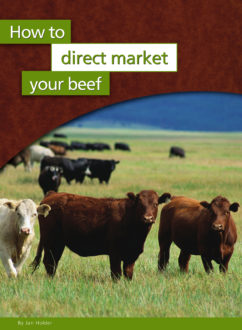
You are reading the SARE book How to Direct Market Your Beef.

Order this publication.

25th SARE logo USDA Logo

1122 Patapsco Building | University of Maryland | College Park, MD 20742-6715

This Web site is maintained by the national outreach office of the SARE program, supported by the National Institute of Food and Agriculture, U.S. Department of Agriculture.

North Central SARE | Northeast SARE | Southern SARE | Western SARE

Sustainable Agriculture Research & Education ©2012

  • Help |
  • RSS Feeds |
  • A Guide To This Site