Showing 21-30 of 59 results
New SARE Video: Managing Weeds in an Organic Almond Orchard
Many organic and conventional farmers are seeking ways to eliminate or reduce their use of synthetic herbicides. Understanding weeds is the first step towards managing them efficiently and ecologically. Now, two new videos in SARE’s Manage Weeds on Your Farm series explore organic almond grove weed control on Burroughs Family Farm’s 1,200-acre orchard in Denair, […]
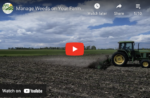
Manage Weeds on Your Farm Video Series
In this series, experienced farmers from around the country talk about how they have found success controlling weeds by following ecological principles, and without resorting to the use of herbicides. To do so, they rely on a range of cultural and mechanical practices, including diverse crop rotations, well-timed cultivation and targeting weeds when they're at […]
Transitioning to Organic Production
Transitioning to Organic Production lays out many promising conversion strategies, covering typical organic farming production practices, innovative marketing ideas and federal standards for certified organic crop production.

SARE Fellows Examine Sustainable Range Management
After a two-year hiatus due to the COVID-19 pandemic, SARE Fellows recently reconvened to examine sustainable practices used in five crop and livestock production systems in Wyoming’s Bighorn Mountains.
Selecting Cattle to Improve Grazing Distribution Patterns, Rangeland Health and Water Quality
This project is the first and only study that we are aware of that has evaluated whether grazing distribution has the potential to be improved through intensive breed selection. Most of the management approaches currently used to increase grazing uniformity, such as water developments and fencing, can resolve livestock grazing distribution problems on both private and public lands. However, these practices usually require large capital expenditures.
Smart Water Use on Your Farm or Ranch
As producers throughout the nation grow increasingly concerned about water scarcity, farmers, ranchers and agricultural educators are beginning to explore new, conservation-oriented approaches to water use.
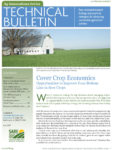
Cover Crop Economics
Cover crops can build soil health, control weeds, conserve moisture, provide grazing opportunities and more. But when do they start to pay for themselves? This analysis looks at the economics behind different management scenarios to determine if cover crops are likely to improve profitability in one, three or five years of use in corn and soybean rotations.
The Power of Data: Improving the Management of Rangeland Ecosystems
California's rangelands face a wide range of challenges, from invasive species and pests to flooding and drought. Much of the knowledge of how to manage rangelands effectively resides in the personal experience of land managers. To capitalize on this collective wisdom, University of California Davis researchers partnered with ranchers around the region to compile a database of site-specific management information that can help everybody take better care of the land.
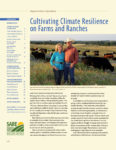
Cultivating Climate Resilience on Farms and Ranches
This bulletin outlines the new challenges that changing weather patterns pose in agriculture throughout the United States, and what you can do to make your farm more resilient.

Special Topics with Cover Crops and Soil Health
Organic and Specialty Crops Grazing Cover Crops Soil Health Policy Issues