The educational materials listed on this page are about Corn.
Field corn is a commodity crop that is grown for many different purposes, especially livestock feed, fuel and further processing for human consumption. Sometimes called maize cultivation, cultivating corn is predominant in the Midwestern region. Field corn cannot be readily eaten and must undergo some form of processing first. Sweet corn, on the other hand, is grown for human consumption and can be eaten fresh. Conventional corn, organic corn and no-till corn are all important players in the corn market. Understanding your inputs, acreage and fertility can aid in using a corn yield calculator to determine corn crop. Corn production will vary depending on region, but not necessarily corn production by state. Corn growing is an important part of our agricultural food system. Key practices in corn production include organic agriculture, commodities, agronomic, corn, no-till, conservation tillage, cover crops, crop rotation, nutrient management, drought tolerance, crop improvement and selection.
A key resource to discovering the balance between soil and crop is SARE’s book Building Soils for Better Crops. This resource lays the foundation for understanding soil structure, soil fertility and overall soil management in order to improve corn production. SARE’s Crop Rotation on Organic Farms: A Planning Manual is a resource for farmers looking to integrate crop rotation into their operation to practice more sustainable methods, and to enhance organic matter and boost production. The Cover Crop Topic Room is a good starting point to learn more about the benefits that cover crops can have on overall soil management to improve corn yield.
Showing 1-10 of 32 results
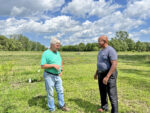
Using Cover Crops in Wide Row Corn
Iowa farmer Bob Recker challenged conventional thinking by asking whether wider corn rows could allow cover crops to thrive without sacrificing farm profitability.

Farmers and Ranchers Are at the Core of SARE’s Research Investments
SARE provides grants directly to producers, which removes the financial risk of testing new ideas for making their operations more profitable, productive and sustainable. And all of SARE’s grant programs require producer engagement throughout their project activities.

Ancestral Mexica Farming: A Comparative Yield Analysis
In north central Kansas, farmers lack a selection of high-quality, nutrient-dense varieties of flour seed corn that meet the needs of local markets. When more nutritious ancestral seed varieties are available, it’s important to understand how to use modern production practices to improve their yield and production efficiency.

Adapting to Extreme Rains and Drought at A-Frame Farm in Madison, Minnesota
At A-Frame Farm, resilience begins below the surface. In a new episode of America’s Heartland, produced in partnership with SARE, farmer Luke Peterson shares how his family is adapting to increasingly erratic weather through regenerative practices that focus on restoring the soil. Located on 500 acres in Madison, Minn., A-Frame Farm produces organic grains and […]
Adapting to Generational Challenges on Western Family Farms in Waterloo, Iowa
For the Western family, farming is more than a livelihood—it’s a legacy of perseverance, stewardship, and deep-rooted pride. As one of Iowa’s pioneering Black farm families, the Westerns are featured in a new episode of America’s Heartland, produced in partnership with SARE, for their commitment to sustainable agriculture and generational resilience. Brothers Todd, Christopher, and […]

RFD-TV to Feature Sustainable Innovations on "America’s Heartland"
Tune in to RFD-TV on Wednesday, April 16, at 5:30 EDT for a new episode of "America’s Heartland" highlighting farmers and ranchers who are using sustainable strategies to adapt to increasingly challenging and unpredictable weather conditions. Produced in collaboration with SARE and PBS KVIE, the episode showcases a range of innovative farming techniques, rural community […]
Manage Weeds on Your Farm Video Series
n this series, experienced farmers from around the country talk about their weed control methods.
Smart Water Use on Your Farm or Ranch
As producers throughout the nation grow increasingly concerned about water scarcity, farmers, ranchers and agricultural educators are beginning to explore new, conservation-oriented approaches to water use.
A Whole Farm Approach to Managing Pests
This 16-page bulletin helps producers—and the educators who work with them—use ecological principles across the entire farm to control pests.
Cover Crop Economics Report Now Available in Print
Cover Crops Offer Options in Wet Soil As more farmers across the nation begin to incorporate covers into their rotations, they find that this valuable conservation practice pays in more ways than one. Many farmers in states suffering from oversaturated fields that prevented or delayed planting are considering cover crops. To help farmers evaluate the […]