The educational materials listed on this page are about Organic Agriculture.
Organic agriculture integrates “cultural, biological and mechanical practices that foster cycling of resources, promote ecological balance, and conserve biodiversity.” Organic and sustainable agriculture often include the use of cover crops, crop rotation, use of tools and machinery for weed and pest management, and conservation tillage. Synthetic fertilizers, sewage sludge, irradiation and genetic engineering may not be used for food to be certified and labelled USDA organic. Organic livestock must have access to the outdoors and be “fed 100 percent certified organic feed, managed without antibiotics, added growth hormones, mammalian or avian byproducts, or other prohibited feed ingredients.” SARE has many helpful reads including Transitioning to Organic Production, which addresses conversion strategies, organic farming production practices, marketing approaches and federal organic standards for certified organic crop and livestock. SARE’s Crop Rotation on Organic Farms reviews how rotating crops improve soil quality and health and help manage pests, diseases, and weeds.
Showing 1-10 of 45 results
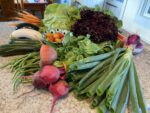
The Northeast Crop Production and Harvest Manual
These two guides—the Northeast Crop Production Manual and the Northeast Harvest Manual—provide in-depth information on the production, harvest and post-harvest handling of dozens of common specialty crops. The production manual includes tips on planning rotations, preparing the soil, planting and transplanting, and managing pests. The harvest manual addresses the timing and methods for harvesting crops, […]

Adapting to Extreme Rains and Drought at A-Frame Farm in Madison, Minnesota
At A-Frame Farm, resilience begins below the surface. In a new episode of America’s Heartland, produced in partnership with SARE, farmer Luke Peterson shares how his family is adapting to increasingly erratic weather through regenerative practices that focus on restoring the soil. Located on 500 acres in Madison, Minn., A-Frame Farm produces organic grains and […]
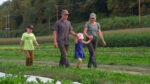
Adapting to Flooding and Drought on Hurricane Flats Farm in South Royalton, Vermont
On the banks of the White River, Hurricane Flats Farm is finding new ways to thrive in the face of increasingly unpredictable weather. In a new episode of America’s Heartland, produced in partnership with SARE, farmers Ashley Loehr and Antoine Guerlain share how they’re navigating both severe drought and catastrophic flooding on their 37-acre certified […]
New SARE Video: Ecological Weed Management at the Martens Farm
Farmers nationwide are tackling the challenge of using ecological principles to manage weeds using fewer herbicides. Understanding the biology of weeds is key to helping producers adopt innovative strategies that achieve strong yields while adapting to changing consumer preferences. Three new videos from SARE illustrate how Klaas and Mary-Howell Martens manage weeds without chemicals on […]
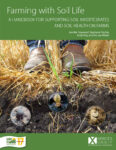
New Book: Farming With Soil Life: A Handbook for Supporting Soil Invertebrates and Soil Health on Farms
Smart farmers know that healthy soil hosts a flourishing and diverse ecosystem of bacteria, fungi and invertebrates. But the complex relationships between soil life, productivity and resilience are not well understood. Now available from the Xerces Society and SARE, Farming with Soil Life: A Handbook for Supporting Soil Invertebrates and Soil Health on Farms is […]
New SARE Video: Managing Weeds in an Organic Almond Orchard
Many organic and conventional farmers are seeking ways to eliminate or reduce their use of synthetic herbicides. Understanding weeds is the first step towards managing them efficiently and ecologically. Now, two new videos in SARE’s Manage Weeds on Your Farm series explore organic almond grove weed control on Burroughs Family Farm’s 1,200-acre orchard in Denair, […]
New SARE Video: Managing Weeds in Organic Row Crops
Farmers have long relied on herbicides to control weeds in row cropping systems. But as consumer preferences change, many farmers are seeking to eliminate or reduce their use of synthetic herbicides where possible. Managing weeds without herbicides can be daunting, and it requires producers to understand the biology and behavior of problem weeds in order […]
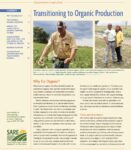
New SARE Bulletin: Transitioning to Organic Production
Since the 1990 Organic Foods Production Act passed, the market for organic products has steadily risen. In 2020, organic sales skyrocketed to an all-time high, motivating many farmers to consider transitioning their farms to organic production. While organic production can help farmers gain access to new markets, improve soil and increase profits, the transition process […]
Transitioning to Organic Production
Transitioning to Organic Production lays out many promising conversion strategies, covering typical organic farming production practices, innovative marketing ideas and federal standards for certified organic crop production.
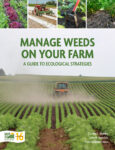
Manage Weeds on Your Farm: An Ecological Approach
SARE’s newest book, "Manage Weeds on Your Farm: A Guide to Ecological Strategies," examines the biology and behavior of common weeds and provides an integrated set of non-chemical control strategies that exploits their weaknesses.