Showing 111-120 of 224 results
Cover Crops as Part of an Overall Nutrient Management System
In this session, Steven Mirsky (USDA-ARS) and Heather Darby (University of Vermont) discuss the role of cover crops in integrated fertility management and address cover crops in the context of forages, dairies, perennials and pastures, and rotating pasture to grain.
Managing Soil Health With Cover Crops: Beyond the Basics
In this session, leading experts dive deep into the soil-related benefits of cover crops. Ray Weil (University of Maryland) discusses the physical benefits; Michel Cavigelli (USDA-ARS) explains how cover crop management affects soil health; and Stuart Grandy (University of New Hampshire) discusses emerging concepts for harnessing microbes to build organic matter.
Cover Crop Field Tour Recap and Debrief
Attendees of the Cover Crops for Soil Health workshop have a short discussion reflecting on their tour of the long-term farming systems research project at the USDA Beltsville Agricultural Research Center in Maryland.
Farmer Panel on Cover Crops
Farmers Skip Paul (Rhode Island), Jeff Frey (Pennsylvania) and Perry Lilley (Maine) share their experiences with cover crops, including their motivation for using them, successes and challenges, factors that play into decision making around cover crops, and advice for ag service providers who want to encourage farmer adoption of this vital conservation practice.
Integrating Traditional Foods with Aquaponics in the Desert Southwest
The Challenge Cochise County, Arizona, where Aaron Cardona’s Arevalos Farm is located, is classified by the USDA as a food desert with high poverty rates, as well as high rates of diabetes and obesity. To help confront these problems, Cardona decided to look into aquaponics, which had not been experimented with in the desert regions […]
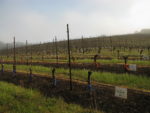
Water Management in Sonoma County Grape Production
The Challenge As in all of California, water is a scarce resource in Sonoma County, a region in Northern California with more than 400 wineries and almost 60,000 acres of vineyards. Wine grape growers face increasing competition for water from different interests, various regulations, and a need to protect threatened and endangered salmonids found in […]

Raising Locally-Adapted and Disease Resistant Queens in Illinois
It is no secret that we are losing bees at higher rates than ever before: On average, beekeepers lose 33 percent of their hives each year. This unfortunate occurrence is known as Colony Collapse Disorder, caused by many different factors such as disease, the varroa mite, pesticide poisoning and habitat loss. And while most […]

Improving Nutrient Use Efficiency in Montana Wheat
"This was a landmark study because we knew we were losing nitrogen, we just didn't know how we were losing it," says farmer Curtis Hershberger. When nitrogen fertilizers are applied to the soil surface using certain application practices, a significant amount can be lost when the nitrogen converts to ammonia gas and enters the atmosphere. […]
Is Fish Waste Compost Worth the Mess and Effort?
A South Carolina farmer discusses the results of using fish waste compost in vegetable production.
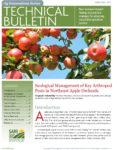
Ecological Management of Key Arthropod Pests in Northeast Apple Orchards
Apples are an important crop in the Northeast, grown for both fresh market and processing. Growers have a challenging task managing insects, mites and diseases. By some estimates, growers may spend up to 25 percent of their production costs on pest management. This technical bulletin outlines strategies developed from SARE-funded projects in Massachusetts and Pennsylvania, including biologically based pest control, orchard architecture and development of materials approved for organic production.