Showing 171-180 of 303 results
Cover Crop Innovators Video Series
Find short video profiles of farmers around the country who are using cover crops on their land.
National Continuing Education Program
This program is designed for Cooperative Extension and Natural Resource Conservation Service personnel, and is also open to farmers, ranchers, and other agricultural professionals nationwide. It emphasizes core concepts and a basic understanding of sustainable agriculture, its goals and its relevance to every farming and ranching operation—large or small. The core of the national continuing education program is a series of three online courses. Take them now.
Systems Research for Agriculture
Practical information for researchers, educators and extension professionals seeking to understand and apply systems research to agriculture.
Investing in the Next Generation of Agricultural Scientists
Sustainable solutions to today's agricultural challenges arise when scientists, educators and producers work together to test theories in real-world, on-farm situations. For this approach itself to be sustainable, there must be opportunities for the next generation of agricultural scientists to use collaborative, applied research to address the real-world needs of farmers and ranchers. The SARE Graduate Student grant program is one such opportunity—since 2000, the program has supported the work of 600 master's and Ph.D. students.
A Farmer's Guide to Crop Quality for Wholesale Outlets
A simple guide to crop quality focused on tomatoes, cucurbits and greens, with photos of good and poor crop quality as well as best practices for post-harvest handling.
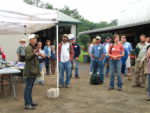
The Farmer Field Day Toolkit
New to organizing a field day? Take a look at the tips, tools and resources assembled here to help guarantee a successful event.
Integrating Traditional Foods with Aquaponics in the Desert Southwest
The Challenge Cochise County, Arizona, where Aaron Cardona’s Arevalos Farm is located, is classified by the USDA as a food desert with high poverty rates, as well as high rates of diabetes and obesity. To help confront these problems, Cardona decided to look into aquaponics, which had not been experimented with in the desert regions […]
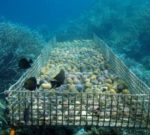
Training in Marine Ornamental Farming for Extension Professionals in Micronesia
The Challenge The Federated States of Micronesia (FSM) and the Republic of the Marshall Islands (RMI) are fledgling sovereign nations. Both nations have low per capita GDP and high unemployment. Like many developing small island nations, the FSM and RMI are economically marginalized. The people of FSM and RMI have skills and resources for aquaculture, […]
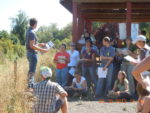
Western Pollinator Conservation Planning Short Course
The Challenge Hives of European honeybees, commonly purchased for pollination services, have become more difficult to obtain due to decline from disease and Colony Collapse Disorder (CCD). Native bees can make a significant contribution to crop pollination. Protecting, enhancing, or providing natural habitat on farms is the best way to conserve native pollinators. The USDA, […]
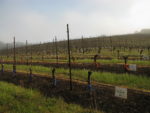
Water Management in Sonoma County Grape Production
The Challenge As in all of California, water is a scarce resource in Sonoma County, a region in Northern California with more than 400 wineries and almost 60,000 acres of vineyards. Wine grape growers face increasing competition for water from different interests, various regulations, and a need to protect threatened and endangered salmonids found in […]