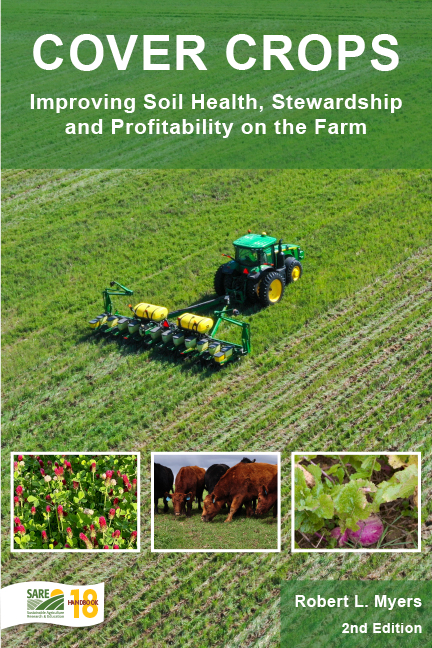
This page provides an overview of cover crops, along with links to publications on specific topics in cover crop management. Excellent in-depth resources include:
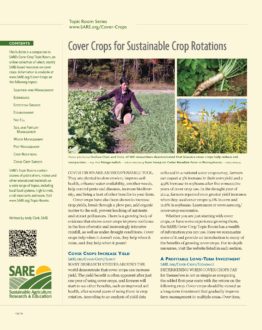
A condensed version of this page is available as a four-page PDF, Cover Crops for Sustainable Crop Rotations, or use the Order in Print button on this page to order free hard copies. Also available in Spanish and Chinese.
What is a Cover Crop?
Cover crops should be viewed as a long-term investment in improved soil health and farm management. They can begin to pay for themselves in the first year of use, or it may take a few years for them to lead to a net positive return. For a detailed analysis of when cover crops begin to pay in different management scenarios, check out the SARE bulletin Cover Crop Economics: Opportunities to Improve Your Bottom Line in Row Crops.
A cover crop is a plant that is used primarily to slow erosion, improve soil health, enhance water availability, smother weeds, help control pests and diseases, increase biodiversity and bring a host of other benefits to your farm.
Cover crops have also been shown to increase crop yields, break through a plow pan, add organic matter to the soil, improve crop diversity on farms and attract pollinators. There is an increasing body of evidence that growing cover crops increases resilience in the face of erratic and increasingly intensive rainfall, as well as under drought conditions. Cover crops help when it doesn’t rain, they help when it rains, and they help when it pours!
Cover Crops Increase Yield
Cover Crop Innovators Video Series
Farmers from across the country describing how they have successfully added cover crops to their cash crop rotations. Learn more.
Many research studies around the world demonstrate that cover crops can increase yield. The yield benefit is often apparent after just one year of using cover crops, and farmers will start to see other benefits, such as improved soil health, after several years of using them in crop rotation. According to an analysis of yield data collected in a national cover crop survey, farmers can expect a 3% increase in their corn yield and a 4.9% increase in soybeans after five consecutive years of cover crop use. In the drought year of 2012, farmers reported even greater yield increases when they used cover crops: 9.6% in corn and 11.6% in soybeans. Learn more in the SARE bulletin Cover Crop Economics: Opportunities to Improve Your Bottom Line in Row Crops.
Whether you are just starting with cover crops, or have some experience growing them, this page has a wealth of information you can use. Here we summarize some of it and provide an introduction to many of the benefits of growing cover crops. For in-depth resources, visit the website listed in each section.
A Profitable Long-Term Investment
Determining when cover crops pay for themselves is not as simple as comparing the added first-year costs with the return on the following crop. Cover crops should be viewed as a long-term investment that gradually improve farm management in multiple areas. Over time, this investment leads to lower costs and, sometimes, increased revenue. An analysis in the SARE bulletin Cover Crop Economics reveals that in some situations cover crops can pay off in year one, such as when they are used for grazing or to manage herbicide-resistant weeds. In other situations, such as when using them to alleviate compaction or to improve nutrient management, a payoff is more likely in the second or third year.
Cover Crop Adoptions1
- Cover crops were planted on 15.4 million acres in 2017, a 50% increase over five years
- Eight states more than doubled their cover crop acreage from 2012 to 2017
- The number of farms planting cover crops increased 15.2% from 2012 to 2017
1From the Census of Agriculture
Cover Crops and Soil Health

Cover crops play an essential role in improving soil health and are associated with numerous on-farm benefits, such as controlling erosion, improving water infiltration and managing nutrients. Check out our interactive infographic, What is Soil Health, to learn more about the relationships between on-farm practices, soil health benefits and the complex web of life within the soil.



Selection and Management
To select cover crops for your operation, first identify your primary objectives for adding them to your system. Do you want to add nitrogen to your soil, increase organic matter to improve soil health, reduce erosion, provide weed control, manage nutrients, and/or conserve soil moisture? While all cover crops provide many of these benefits, some species or “cocktails” (cover crop mixes) are better than others, depending on your specific objectives.X
Next, identify the best time and place to fit cover crops into your rotation (see also Crop Rotations, below). Are you looking for winter cover crops to scavenge nitrogen, summer cover crops to break soil compaction, a window in a small-grain rotation to supply much needed nutrients, or even a full-year cycle to improve soil or suppress weeds? Consider creating a new rotation or modifying an existing one to accommodate your long-term objectives for planting cover crops. Also remember that there is likely no single cover crop that is right for your farm (see Cocktails or Mixtures, below).
Finally, think through exactly how and when you will seed, terminate and plant into your cover crop. Do you know a reliable source for cover crop seeds, what will the weather be like, can you get into the field, do you want it to winterkill, and what labor and equipment will you need? Reviewing resources below, or consulting with local expertise, including other farmers can help answer these questions.
Legumes
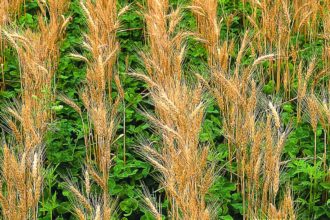
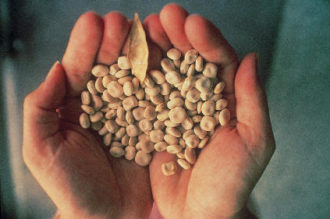
Legume cover crops (red clover, crimson clover, vetch, peas, beans) can fix a lot of nitrogen (N) for subsequent crops, generally ranging from 50-150 pounds per acre, depending on growing conditions. You can usually reduce your nitrogen fertilizer inputs following a legume, but they are not very good at scavenging nitrogen that is left over after your cash crops.
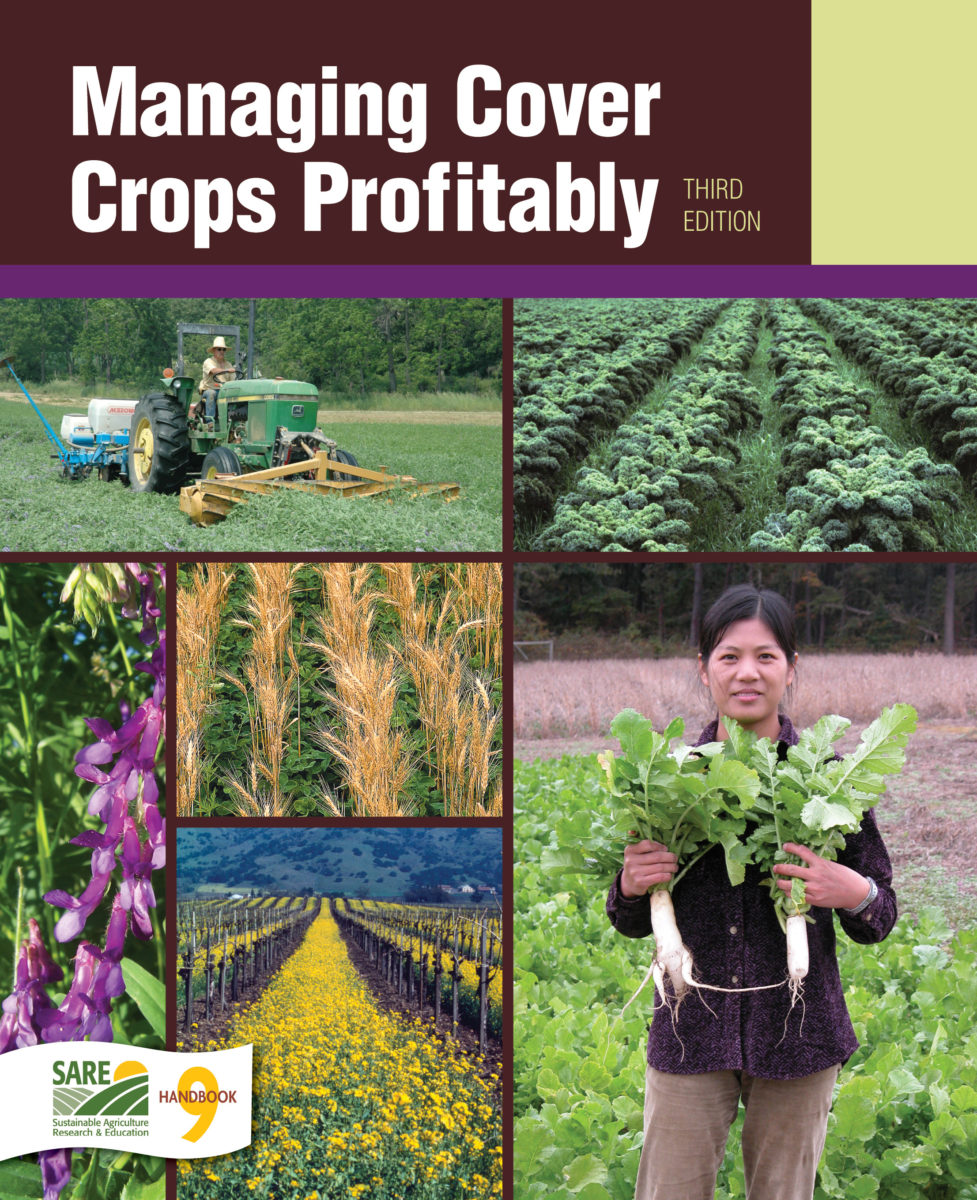
Legumes also help prevent erosion, support beneficial insects and pollinators, and they can increase the amount of organic matter in soil, although not as much as grasses. Legumes differ in their productivity and adaptability to soil and climatic conditions. If a legume fits your cover crop objectives, seek additional information in the Overview of Legume Cover Crops section of Managing Cover Crops Profitably or with local expertise to identify the best ones for your conditions.
Non-Legumes
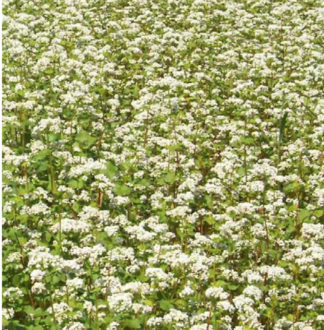
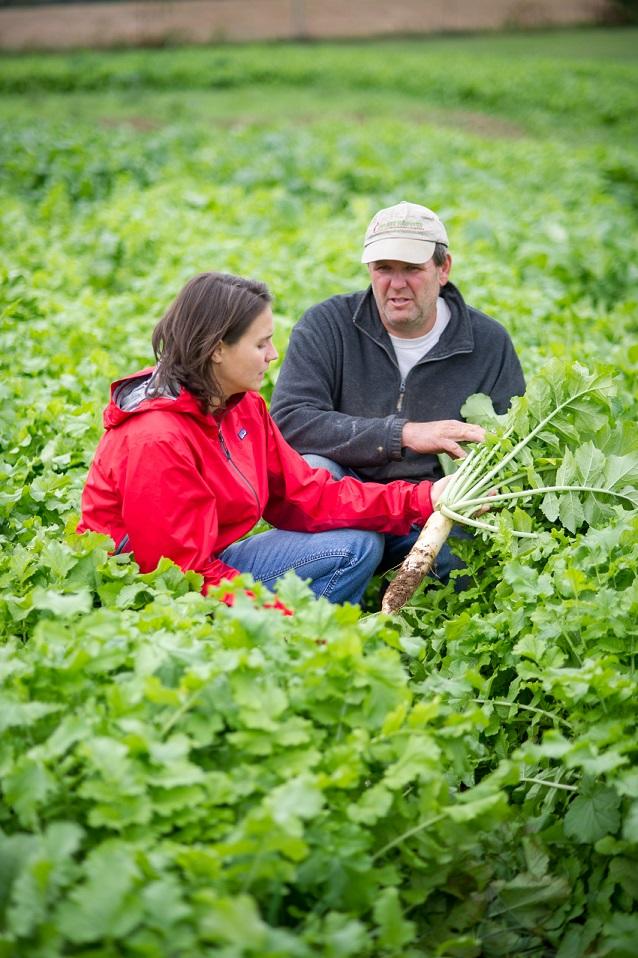
Non-legume cover crops include the cereals (rye, wheat, barley, oats, triticale), forage grasses (annual ryegrass) and broadleaf species (buckwheat, mustards and brassicas, including the forage radish). Non-legumes are most useful for scavenging nutrients, providing erosion control, suppressing weeds and producing large amounts of residue that adds soil organic matter.
Plant a non-legume whenever a field has excess nutrients, particularly nitrogen. When planted as a fall cover crop, non-legumes consistently take up 30-50 pounds of nitrogen per acre. If large amounts of nitrogen are left in the soil from the summer crop or due to a history of manure applications, non-legumes can scavenge upwards of 150 pounds per acre. Depending on your conditions—including soil residual nitrogen status—you may not be able to reduce your nitrogen fertilizer inputs for the subsequent crop, particularly in the first few years of cover cropping. To learn more about non-legume cover crops, read the Overview of Non-Legume Cover Crops section of Managing Cover Crops Profitably or consult with local expertise.
Cocktails or Mixtures
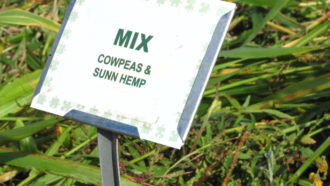
Although seeding and management of cover crop mixes or “cocktails” can become more complicated, planting them allows you to attain multiple objectives at once. Cover crop mixtures offer the best of both worlds by combining the benefits of grasses and legumes, or using the different growth characteristics of several species to fit your needs. Compared to pure stands of legumes or non-legumes, cocktails usually produce more overall biomass and nitrogen, tolerate adverse conditions, increase winter survival, provide ground cover, improve weed control, attract a wider range of beneficial insects and pollinators, and provide more options for use as forage. However, cocktails often cost more, can create too much residue, may be difficult to seed and generally require more complex management. Find out more information about cocktails and cover crop mixes in the Grass/Legume Mixes chapter of Managing Cover Crops Profitably.
Crop Rotations
One of the biggest challenges of cover cropping is to fit cover crops into your current rotations, or to develop new rotations that take full advantage of their benefits. There may be a role for cover crops in almost all rotations, but the diversity of cropping systems precludes addressing them here.
Whether you add cover crops to your existing rotations or totally revamp your farming system, you should devote as much planning and attention to your cover crops as you do to your cash crops. Failure to do so can lead to failure of the cover crop and cause problems in other parts of your system.
Cover Crops for No-Till Farming
No-till farming or other conservation agriculture systems are good opportunities to plant cover crops. The cover crop mulch can increase water infiltration and also improve moisture availability by preventing evaporation. Cover crop residue helps control weeds, which is especially important in organic no-till agriculture.
Cover Crops for Organic Farms
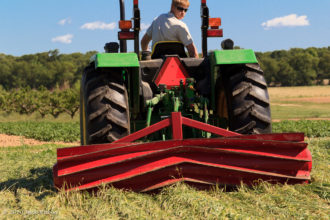
Plant cover crops in organic farming to provide nitrogen, manage weeds and improve soil health. In organic no-till farming, use a roller-crimper to kill the cover crop and leave the mulch on the soil surface to conserve water. Or, incorporate the cover crop into the soil (sometimes called a green manure) before planting your main crop.
Soil and Fertility Management
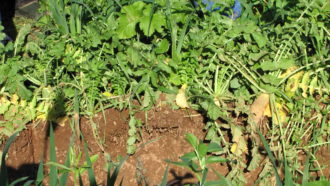
Cover crops maintain and improve soil fertility in a number of ways. Protection against soil loss from wind and water erosion is perhaps the most obvious soil benefit, but providing organic matter is a more long-term and equally important goal. Cover crops contribute indirectly to overall soil fertility and health by catching nutrients before they can leach out of the soil profile or, in the case of legumes, by adding nitrogen to the soil. Their roots can even help unlock some nutrients in the soil, converting them to more available forms. The amount and availability of nutrients from cover crops will vary widely depending on such factors as species, planting date, plant biomass and maturity at termination date, residual soil fertility, and temperature and rainfall conditions.
Climate Resilience and Water
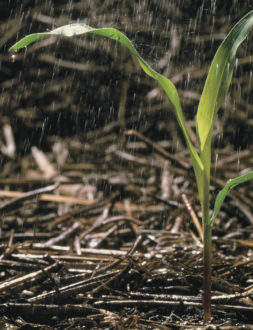
Evidence is mounting that cover crops help stabilize yields and improve moisture availability in the face of increasingly erratic weather. Is it too wet in the spring? Cover crops take up water (via evapotranspiration) and usually allow you onto the field earlier than if you did not have a cover crop growing. Alternatively, if facing drought or practicing dryland farming, cover crops still help boost yields while being very efficient with water use. If you use no-till farming, the cover crop mulch increases water infiltration and conserves moisture into the summer. Added carbon and root channels, in addition to increased soil pore space, help improve soil water-holding capacity—in any tillage system. The SARE bulletin Cultivating Climate Resilience on Farms and Ranches has more information on the role of soil health in climate risk management.


Pest Management
Cover crop effects on agricultural pests are multi-faceted. With careful attention to cultivar choice, placement and timing, cover crops can reduce infestations by insects, diseases, nematodes and weeds. Cover crops that attract and retain beneficial insects—when allowed to flower—include buckwheat, clovers (crimson, red, white, sweet) and brassicas. Cover crop mulches suppress weeds and reduce splashing of soil-borne pathogens onto leaves, while some, such as sudangrass, brassicas and mustards, reduce populations of verticillium wilt and other soil pathogens. Other mulches have been shown to suppress nematodes. In Michigan, for example, some potato growers report that two years of radish improves potato production and lowers pest control costs. Pest-fighting cover crop systems help minimize pesticide use, and as a result cut costs and reduce your chemical exposure.

Ecosystem Services
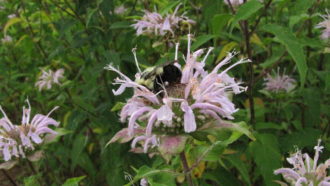
Cover crops enhance biodiversity on the farm and contribute to a healthier ecosystem in many ways. Flowering cover crops can provide food and habitat for important pollinators and beneficial insects. They can also support birds and other wildlife. Cover crops protect water quality by curbing soil erosion and reducing nitrogen losses by an average of 48%. By stimulating biological activity in the soil, cover crops planted on a large scale can sequester huge amounts of atmospheric carbon.
For more information on how to attract pollinators to your farm using cover crops, see the comprehensive SARE bulletin, Cover Cropping for Pollinators and Beneficial Insects. To learn about other methods of attracting beneficial insects, read Agroecological Strategies to Enhance On-Farm Insect Pollinators from Managing Insects on Your Farm.
Conclusions
Regardless of your objectives for growing cover crops, there are many viable and tested options available for you to try. Consult the many resources available, talk to other farmers, and start with small plots as you fine-tune your system. Be sure to see the book, Managing Cover Crops Profitably and browse around the resources on this page for more information.
More Cover Crop Resources
-
 Available in Print
Managing Cover Crops in Conservation Tillage Systems
Available in Print
Managing Cover Crops in Conservation Tillage Systems
-
Fact Sheets
Nitrogen Release from Cover Crops
-
Fact Sheets
Economics of Cover Crops I: Profitability of Cover Crops in Row Crop Production and Federal Cost Share for Cover Crops
-
Available in Print
Ch 10. Cover Crops
-
Available in Print
Ch 3. Cultural Weed Management
-
Fact Sheets
Cover Crops for Weed Management in Row Crops
-
Fact Sheets
Soil Biology: Cover Crops and Disease Suppression
-
Available in Print
Ch 11. What Are Potential Issues With Cover Crops To Be Aware Of?