Showing 1-10 of 15 results
New Video: Learn And Adapt As You Go
Heather and Alby Brandon know that raising nearly 20 acres of mixed fruit and vegetable crops requires constant experimentation and evolution.
New Video: Building Customer Relationships at Brandon Family Farm
When it comes to growing sales, building relationships matters as much as what you grow.
The Northeast Crop Production and Harvest Manual
These two guides—the Northeast Crop Production Manual and the Northeast Harvest Manual—provide in-depth information on the production, harvest and post-harvest handling of dozens of common specialty crops. The production manual includes tips on planning rotations, preparing the soil, planting and transplanting, and managing pests. The harvest manual addresses the timing and methods for harvesting crops, […]
Partnership Helps Ohio Farmers Increase Revenue and Production Efficiency
Without access to processing facilities, Midwestern specialty crop farmers often miss out on the opportunity to transform their surplus harvests into shelf-stable, value-added products that bring in revenue year round. Jeanine Seabrook, founder and owner of Glass Rooster Cannery in central Ohio, received two North Central SARE Farmer Rancher grants to partner with local farmers […]
A Farmer's Guide to Crop Quality for Wholesale Outlets
A simple guide to crop quality focused on tomatoes, cucurbits and greens, with photos of good and poor crop quality as well as best practices for post-harvest handling.
Sustainable Pest Management in Greenhouses and High Tunnels
From 2007 to 2009, Cornell researchers in New York used a SARE grant to study the efficacy of biological insect control in minimally heated greenhouses and high tunnels or hoop houses. This fact sheet reports the results and provides detailed advice on how growers can use natural enemies to manage insect pests in minimally heated greenhouses and unheated high tunnels.
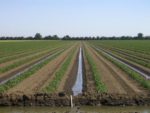
Water Use Efficiency in Tomatoes
University of California at Davis graduate student Felipe Barrios-Masias and Professor Louise Jackson saw promise in alternative irrigation methods that could use less water but still produce high yields, leading to increased agricultural sustainability and efficiency. Until successfully obtaining Western SARE funds, they were finding it difficult to receive funding for the on-farm research. However, […]
On-Farm Fertigation Trials in Kansas City-Area Organic High Tunnels
Five certified organic farms in the Kansas City area did one-year comparisons of the use of compost, fertigation and foliar feeding on high tunnel tomatoes, with respect to quantity and quality of yields.
Success Basics in High Tunnel Production: Three Maryland Case Studies
This three-year study involved five innovative farmers in building high tunnels to investigate best practices in high-tunnel construction, tomato production and factors influencing profitability.
Organic Heirloom Tomato Production in High Tunnel and Open Field Systems
A replicated, systems-level comparison study was carried out to evaluate the production of the popular heirloom tomato, Cherokee Purple, under organically managed high tunnel and open field systems.