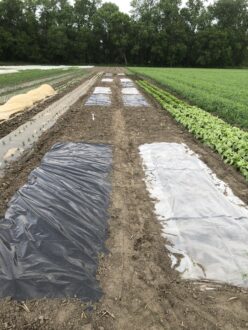
Tilling and herbicides are two of many tools that farmers can use to manage weeds, but frequent use of either one can degrade soil health and life. As a result, many farmers are exploring the use of silage tarps as a way to suppress weeds while limiting the need to use tillage. Unfortunately, little is known about the impact of tarping on crop production or on the biodiversity of below-ground soil organisms.
In response, Eva Kinnebrew explored the impacts that using silage tarps may have on weed control, soil arthropod species, physical soil properties and crop yields. Funded by a Northeast SARE Graduate Student Grant, the project offers farmers a clearer understanding of the impacts of this increasingly popular weed management technique.
Kinnebrew, then a PhD student at the University of Vermont, collaborated with farmers to ensure that her research aligned with their needs. The findings? Tarps dramatically reduced weed cover (around 30% weed cover in tarped plots versus 90% in control plots) and doubled crop yields. The tarps’ negative impacts on soil life were less than anticipated too, resulting in an immediate decline in surface-active species, which quickly recovered after the tarps were removed. Impacts on soil-dwelling species like springtails and millipedes were more subtle, but indicated some evidence of a slow decline after the tarps were removed.
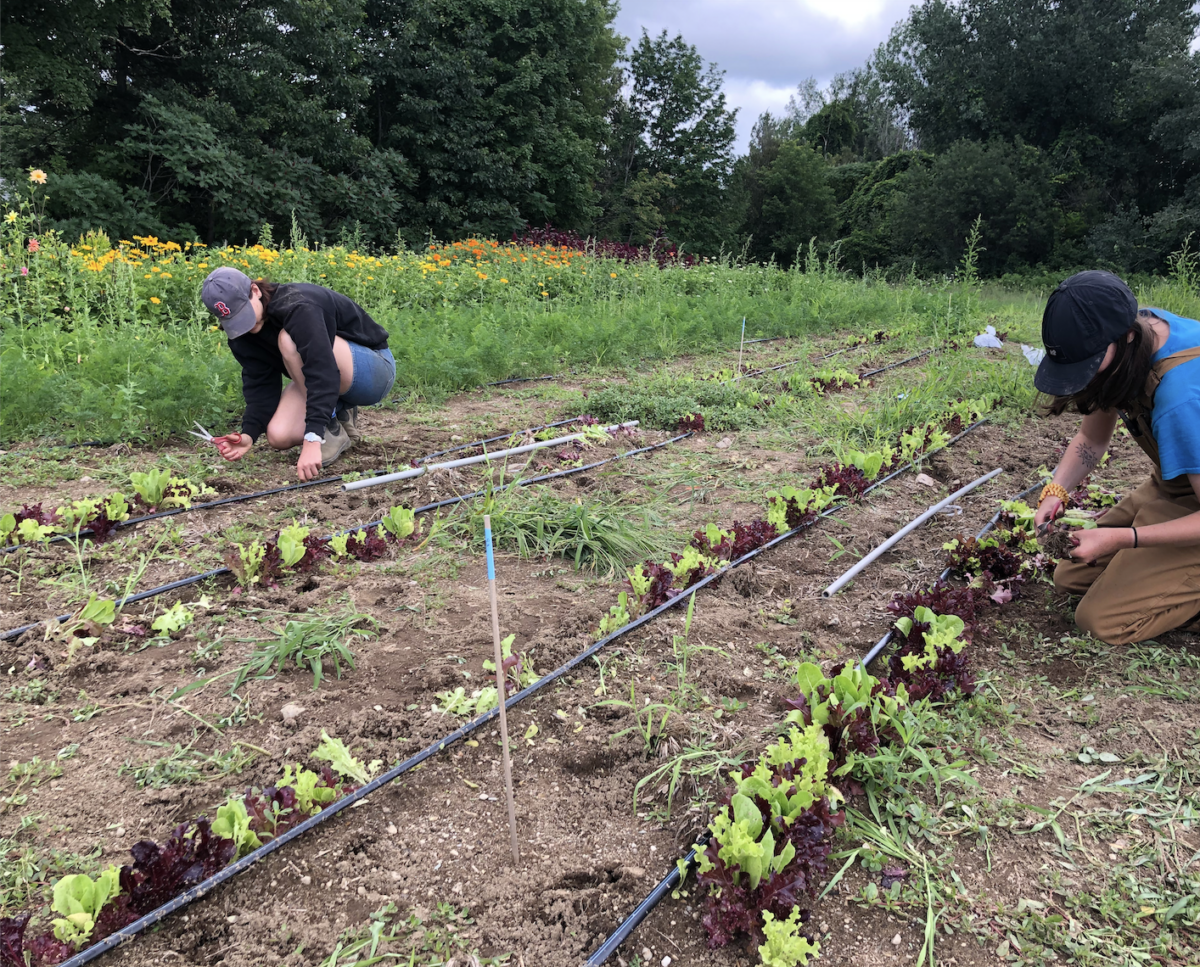
Kinnebrew's research provides farmers with an opportunity to improve the environmental, economic and production efficiency of their operations by providing new insights on a cost-effective, chemical-free method to control weeds and improve crop productivity without compromising soil quality or health.
A recent post-project evaluation of SARE projects awarded between 2016–2019 found that Kinnebrew's participatory approach was key to the project’s success.
“My project was really inspired by what the farmers were interested in,” says Kinnebrew. “A lot of knowledge points in my project were co-created with the farmers.”
Visit https://www.sare.org/sare-impacts-GNE19-205 for more information on this project's impact.
Impacts of Silage Tarps on Soil Arthropods, Soil Properties and Crop Yields is part of a series produced by Insight for Action as part of a post-project evaluation of SARE's regional grant programs. For more information visit https://www.sare.org/sare-impacts.
For information on grants and resources available from SARE, visit www.sare.org.