Showing 21-30 of 81 results
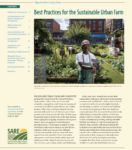
Best Practices for the Sustainable Urban Farm
For decades, urban farms and community gardens have helped meet the demand for fresh, local produce. Urban farms are diverse and adaptable, ranging from small farms on repurposed vacant lots to multilevel vertical farms and rooftop gardens. Often, they combine ecological farming practices with some form of infrastructure. Urban growers make clever use of their […]
Planting Seeds of Help
Despite years of experience, fifth-generation flower farmer Leroy Hardy was facing foreclosure on his farm near Sedley, Virginia. To navigate the financial crisis, Hardy reached out to Rural Advancement Foundation International (RAFI) for mediation assistance, and he emerged with his assets intact. So when RAFI, the Land Loss Prevention Project (LLPP) and the National Center […]

The Peri-Urban Agriculture Network: Strategies for Agricultural Viability in Urbanizing and High-Land-Use-Pressure Regions
Many peri-urban regions in the western U.S. are in a state of acute juxtaposition between formerly rural agricultural communities and growing, modern urban centers. Urbanization challenges agricultural viability through land use pressures and a slow unraveling of historically land-based economies and culture. These agricultural circumstances can be very destabilizing and highlight the need for agriculture […]
Farm Education for the Deaf Community—Introduction (American Sign Language)
In this video, Monu introduces the video series created to provide farm education to the deaf community. The series is available in both in American Sign Language and Nepali Sign Language.
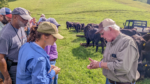
Grazing Networks for Livestock Producers
Grazing networks promote a mutual self-help approach to learning that is based on shared local experience and that provides several benefits to participants. This publication offers suggestions for finding or starting a grazing network and provides examples of the kinds of activities grazing networks might conduct. It also contains recommendations for sustaining a grazing network […]
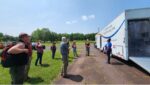
Virginia Hosts National SARE Fellows Tour and Training
The sustainability of farms and food-related businesses can be affected by many agricultural, social, ecological, financial, and cultural factors and issues that can vary from state to state and from region to region. These issues range from market access and development needs to production challenges, lack of food system infrastructure such as aggregation and processing, […]
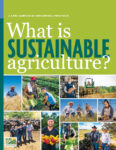
New SARE Bulletin: What is Sustainable Agriculture?
SARE’s newly revised What is Sustainable Agriculture? publication provides a primer to practices that can help farmers and ranchers improve the sustainability of any complex, integrated production and marketing system.
What is Sustainable Agriculture?
This award-winning report provides a sampler of best practices in sustainable agriculture—from marketing and community vitality to cover crops and grazing—as well as eight profiles of producers, educators and researchers who have successfully implemented them.

America's Heartland "Leaders in Sustainable Agriculture" Now Available on YouTube
SARE recently partnered with PBS KVIE to produce an episode of RFD-TV's America's Heartland featuring four farmers describing their commitment to sustainability, how they plan to overcome modern farming challenges, and how SARE has impacted their farming and ranching practices. The full 24-minute episode titled Leaders in Sustainable Agriculture is now available at https://www.sare.org/resources/leaders-in-sustainable-agriculture/. Watch: Videos featuring each […]

Leaders in Sustainable Agriculture Featured on America's Heartland
SARE partnered with PBS KVIE to produce an episode of RFD-TV's America's Heartland that features four farmers describing their commitment to sustainability, how they plan to meet farming challenges of today and tomorrow, and how SARE has impacted their farming and ranching practices. The full 24-minute video is available, as is each segment featuring the […]