Showing 41-50 of 77 results
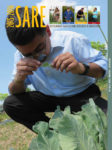
2015/2016 Report from the Field
Read about SARE-funded work in the areas of sustainable dairy cropping systems, soil health assessments, nutrient management, cover crops, beginning farmers, pollinators, technical assistance programs for women farmers, and more. This edition includes highlights of projects funded through the graduate student program, and the highly regarded Sustainable Agriculture Fellowship, a professional development program coordinated by SARE and NACAA.
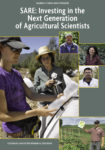
Investing in the Next Generation of Agricultural Scientists
Sustainable solutions to today's agricultural challenges arise when scientists, educators and producers work together to test theories in real-world, on-farm situations. For this approach itself to be sustainable, there must be opportunities for the next generation of agricultural scientists to use collaborative, applied research to address the real-world needs of farmers and ranchers. The SARE Graduate Student grant program is one such opportunity—since 2000, the program has supported the work of 600 master's and Ph.D. students.
Managing Cover Crops for Ecosystem Services in Vegetable Systems
Natalie Lounsbury (University of New Hampshire) discusses how to manage cover crops for such ecosystem services as: suppressing weeds, attracting pollinators, cycling nutrients, promoting biological diversity and controlling erosion.
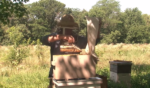
Raising Locally-Adapted and Disease Resistant Queens in Illinois
It is no secret that we are losing bees at higher rates than ever before: On average, beekeepers lose 33 percent of their hives each year. This unfortunate occurrence is known as Colony Collapse Disorder, caused by many different factors such as disease, the varroa mite, pesticide poisoning and habitat loss. And while most […]
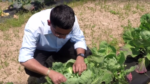
Integrated Pest Management in Alabama
Organic vegetable growers in the Deep South face a constant battle with pests. In Alabama, new information is leading to better crop protection and more profitability, thanks to the work of Ayanava Majumdar, Alabama Extension entomologist and Southern SARE state coordinator. As a SARE state coordinator, Majumdar is tasked with bringing sustainable agriculture information […]
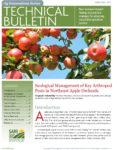
Ecological Management of Key Arthropod Pests in Northeast Apple Orchards
Apples are an important crop in the Northeast, grown for both fresh market and processing. Growers have a challenging task managing insects, mites and diseases. By some estimates, growers may spend up to 25 percent of their production costs on pest management. This technical bulletin outlines strategies developed from SARE-funded projects in Massachusetts and Pennsylvania, including biologically based pest control, orchard architecture and development of materials approved for organic production.
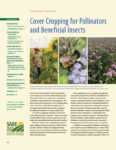
Cover Cropping for Pollinators and Beneficial Insects
This 16-page bulletin will help you use cover crops to encourage populations of pollinators and beneficial insects on your farm while you address your other resource concerns.
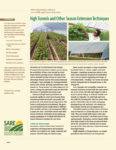
High Tunnels and Other Season Extension Techniques
From low covers to high tunnels, from hoop houses to greenhouses—producers are finding ever more innovative ways to extend the growing season, and their income stream.
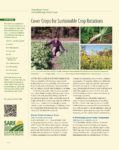
Cover Crops for Sustainable Crop Rotations
Cover crops are one of the best ways to improve soil health, reduce off-farm inputs and protect natural resources. Find a wealth of educational materials developed out of decades of SARE-funded cover crop research.
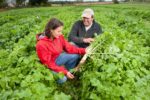
For Vegetable Farmers, a New No-Till Tool in Forage Radish
Vegetable farmers who want the myriad benefits of winter cover crops may be setting themselves up for a hectic spring schedule, when the challenge of planting during a narrow window of good weather becomes more complicated by the need to first terminate that winter crop. To make their lives a little easier, University of Maryland […]