Showing 11-20 of 23 results
Cover Crop Innovators Video Series
Find short video profiles of farmers around the country who are using cover crops on their land.
Ecological Management of Key Arthropod Pests in Northeast Apple Orchards
Apples are an important crop in the Northeast, grown for both fresh market and processing. Growers have a challenging task managing insects, mites and diseases. By some estimates, growers may spend up to 25 percent of their production costs on pest management. This technical bulletin outlines strategies developed from SARE-funded projects in Massachusetts and Pennsylvania, including biologically based pest control, orchard architecture and development of materials approved for organic production.
Cover Crops for Sustainable Crop Rotations
Cover crops are one of the best ways to improve soil health, reduce off-farm inputs and protect natural resources. Find a wealth of educational materials developed out of decades of SARE-funded cover crop research.
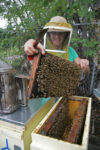
Cutting Edge Research: Helping Bees Help Themselves
Diseases, pests and the mysterious phenomenon of colony collapse disorder pose a dire threat to the U.S. beekeeping industry and, in turn, to the $20-billion-a-year crop industry that relies on insect pollination. Because of these increasing pressures, the ranks of managed bee colonies have plummeted in recent years: On average, beekeepers are losing 30 percent […]
Moving Nursery Producers Toward Sustainable Practices Fact Sheets
These fact sheets discuss alternative containers, marketing and crop selection, alternatives to synthetic herbicides and integrated pest management in commercial nursery plant production.
Tomato Grafting for Disease Resistance and Increased Productivity
Researchers around the world have demonstrated that grafting—the fusing of a scion (young shoot) onto a resistant rootstock—can protect plants against a variety of soil-borne fungal, bacterial, viral and nematode diseases invarious climates and conditions.
Cover Crops and No-Till Management for Organic Systems
This Rodale Institute fact sheet reviews the use of cover crops and no-till in organic systems, including selection, establishment and mechanical termination of cover crops; crop rotations; and energy and production budgets.
Crop Rotation on Organic Farms
Crop rotation strategies that can be applied under various field conditions for conventional or organic crops to improve soil quality and health, and manage pests, diseases, and weeds
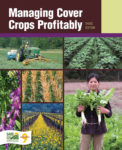
Managing Cover Crops Profitably, 3rd Edition
Managing Cover Crops Profitably explores how and why cover crops work and provides all the information needed to build cover crops into any farming operation.

Manage Insects on Your Farm
While every farming system is unique, the principles of ecological pest management apply universally. Manage Insects on Your Farm highlights ecological strategies that improve your farm’s natural defenses and encourage beneficial insects to attack your worst pests.