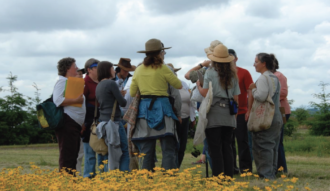
Extension professionals often spend years developing expertise in their field. But the impact of Extension programming can be limited without healthy engagement from producers. In response, Mary Halbleib of Oregon State University (OSU) piloted an educational framework that engages farmers as self-directed learners to improve the effectiveness of Extension training regarding the adoption of integrated pest management (IPM) practices.
With support from a Western SARE Professional Development Program grant, Halbleib provided Extension educators with training and an Adaptive Learner-Centered Education toolkit to help them partner with producers, better understand their needs and maximize learner engagement. Producers were enlisted as paid co-educators to identify the training's targeted outcomes, action categories and educational priorities. As a result, the training outputs included tools developed to meet the stated needs of participating producers, such as pesticide use and fact sheets specific to their locations and production systems.
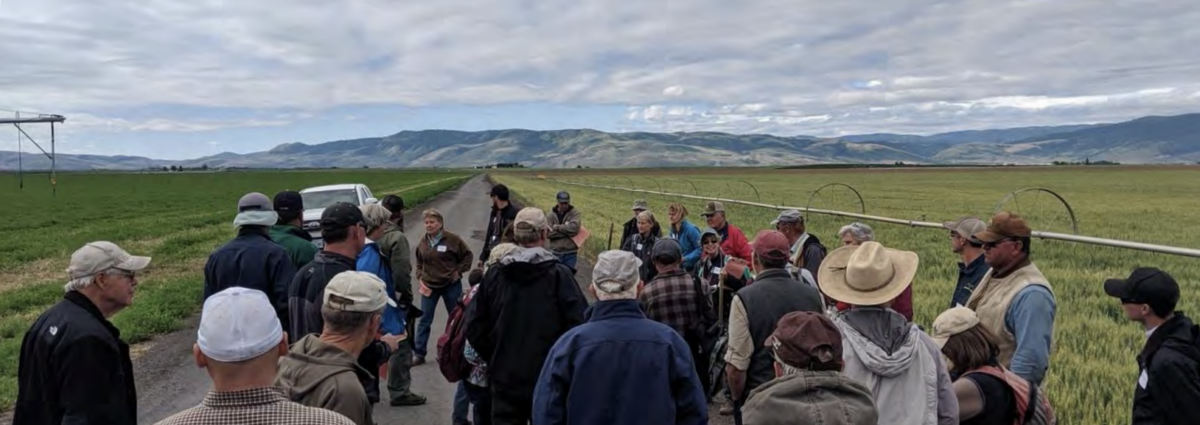
The project improved the environmental and economic sustainability on local farms by improving the capacity of engaged producers to make more informed decisions about their application practices to reduce the risks of drift and runoff.
A recent post-project evaluation of SARE projects awarded between 2016–2019 found that the engagement of farmers as co-educators was key to the project’s success.
“The high level of grower involvement was a real surprise!” said OSU Extension Agronomist Darrin Walenta. “The growers were able to come together in agreement on several future outcomes they identified as important for their industry. Equally as important, the outcomes developed by the growers will provide critical guidance for developing future outreach programs that are in sync with stakeholder priorities.”
Visit https://www.sare.org/sare-impacts-EW16-010 for more information on this project's impact.
Redefining Learner-Centered Education to Build High Impact IPM Partnerships is part of a series produced by Insight for Action as part of a post-project evaluation of SARE's regional grant programs. For more information visit https://www.sare.org/sare-impacts.
For information on grants and resources available from SARE, visit www.sare.org.