Showing 1-10 of 15 results
Redefining Learner-Centered Education to Build High Impact IPM Partnerships
Engaging farmers as self-directed learners and co-educators can improve the effectiveness of extension trainings.
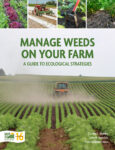
Manage Weeds on Your Farm: An Ecological Approach
SARE’s newest book, "Manage Weeds on Your Farm: A Guide to Ecological Strategies," examines the biology and behavior of common weeds and provides an integrated set of non-chemical control strategies that exploits their weaknesses.
Manage Weeds On Your Farm
Manage Weeds on Your Farm is a definitive guide to understanding agricultural weeds and how to manage them efficiently, effectively and ecologically—for organic and conventional farmers alike.
New SARE Bulletin Addresses Ecological Approach to Managing Pests
A flock of sheep is vital to the success of one particular vineyard in Winters, California. While many operations struggle to manage weeds, this vineyard used a SARE-funded grant to test grazing sheep as a pest management practice, and they are seeing many whole-farm benefits. The sheep were trained to avoid the grape crop’s leaves […]
A Whole Farm Approach to Managing Pests
This 16-page bulletin helps producers—and the educators who work with them—use ecological principles across the entire farm to control pests.
Ecological Management of Key Arthropod Pests in Northeast Apple Orchards
Apples are an important crop in the Northeast, grown for both fresh market and processing. Growers have a challenging task managing insects, mites and diseases. By some estimates, growers may spend up to 25 percent of their production costs on pest management. This technical bulletin outlines strategies developed from SARE-funded projects in Massachusetts and Pennsylvania, including biologically based pest control, orchard architecture and development of materials approved for organic production.
High Tunnels and Other Season Extension Techniques
From low covers to high tunnels, from hoop houses to greenhouses—producers are finding ever more innovative ways to extend the growing season, and their income stream.
Sustainable Pest Management in Greenhouses and High Tunnels
From 2007 to 2009, Cornell researchers in New York used a SARE grant to study the efficacy of biological insect control in minimally heated greenhouses and high tunnels or hoop houses. This fact sheet reports the results and provides detailed advice on how growers can use natural enemies to manage insect pests in minimally heated greenhouses and unheated high tunnels.
Moving Nursery Producers Toward Sustainable Practices Fact Sheets
These fact sheets discuss alternative containers, marketing and crop selection, alternatives to synthetic herbicides and integrated pest management in commercial nursery plant production.
Tomato Grafting for Disease Resistance and Increased Productivity
Researchers around the world have demonstrated that grafting—the fusing of a scion (young shoot) onto a resistant rootstock—can protect plants against a variety of soil-borne fungal, bacterial, viral and nematode diseases invarious climates and conditions.