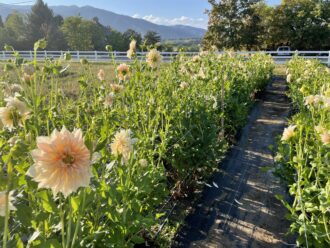
Nearly 200 farms specialize in high-value cut flower production in Utah. But the state’s mountainous terrain and semi-arid climate can limit yields, and improper nutrient management risks increasing soil salinity. With support from a Western SARE Partnership grant, Melanie Stock of Utah State University partnered with cut flower farmers to explore sustainable fertilization practices for dahlia production.
Stock’s project initially aimed to determine optimal nitrogen fertilizer rates for dahlias but quickly evolved into a multifaceted study addressing soil fertility, disease management, and economic returns for small-scale flower farmers. The project provided six local producers with biannual soil testing and individualized nutrient recommendations. As a result, farmers successfully reduced nutrient overloading while maintaining soil fertility.
The project improved environmental, economic, and social sustainability of cut flower production in Utah by helping producers reduce production costs, manage diseases and avoid overuse of amendments, which increased yields and revenue as a result.
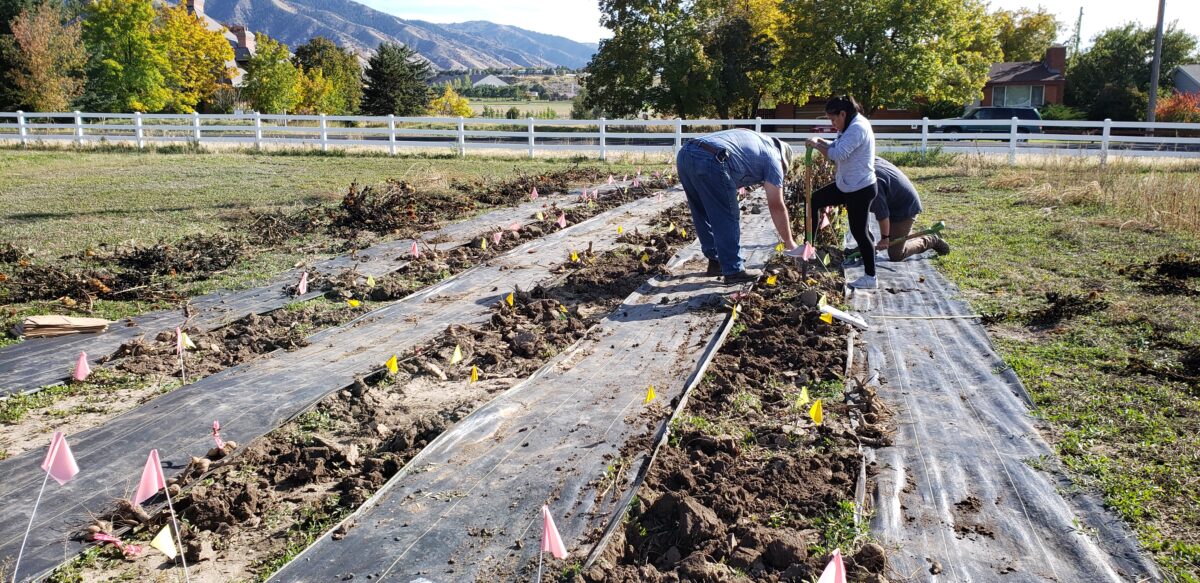
A recent post-project evaluation of SARE projects awarded between 2016–2019 found that Stock’s collaboration with farmers was key to the project’s success.
“This project was prompted by a need I saw in the community,” said Stock. “Cut flowers were taking off in the state, and dahlia is the top crop for our farmers.”
Visit https://www.sare.org/sare-impacts-OW19-346 for more information on this project's impact.
Promoting Crop Diversification and Soil Health for Cut Flower Production is part of a series produced by Insight for Action as part of a post-project evaluation of SARE's regional grant programs. For more information visit https://www.sare.org/sare-impacts.
For information on grants and resources available from SARE, visit www.sare.org.