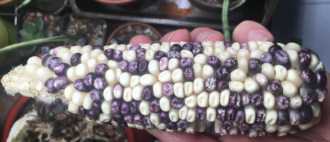
In north central Kansas, farmers lack a selection of high-quality, nutrient-dense varieties of flour seed corn that meet the needs of local markets. When more nutritious ancestral seed varieties are available, it’s important to understand how to use modern production practices to improve their yield and production efficiency.
In response, Pantaleon Florez III of Maseualkualli Farms in Lawrence, Kan., compared traditional methods with no-till production practices using three types of heritage corn varieties. With support from a North Central SARE Farmer/Rancher grant, Florez found that the traditional method of hilling stabilized the plants in turbulent weather and improved yield in two of the three varieties. As an added bonus, promotion of these project results also improved visibility and market opportunities for the farm with the local community.
As a result, the project improved the economic sustainability and production efficiency of farmers who seek to make more informed choices about seed selection and production practices to meet the needs of local markets.
A recent post-project evaluation of SARE projects awarded between 2016–2019 found that community-based partnerships were key to the project’s success.
“SARE guides you in the direction of building partnerships; you need more than just yourself,” says Florez. “The SARE grant process helps you figure out those partnerships and how everything is connected.”
Visit https://www.sare.org/sare-impacts-FNC19-1161 for more information on this project's impact.
Ancestral Mexica Farming: A Comparative Yield Analysis from the 1500s is part of a series produced by Insight for Action as part of a post-project evaluation of SARE's regional grant programs. For more information visit https://www.sare.org/sare-impacts.
For information on grants and resources available from SARE, visit www.sare.org.