Showing 131-140 of 279 results
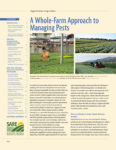
New SARE Bulletin Addresses Ecological Approach to Managing Pests
A flock of sheep is vital to the success of one particular vineyard in Winters, California. While many operations struggle to manage weeds, this vineyard used a SARE-funded grant to test grazing sheep as a pest management practice, and they are seeing many whole-farm benefits. The sheep were trained to avoid the grape crop’s leaves […]
A Whole Farm Approach to Managing Pests
This 16-page bulletin helps producers—and the educators who work with them—use ecological principles across the entire farm to control pests.

National Farmer Survey Documents a Wide Range of Cover Crop Benefits as Acreage Continues to Expand
Despite the crippling rainfall that significantly delayed planting across much of the country in 2019, more than 90% of farmers participating in a national cover crop survey reported that cover crops allowed them to plant earlier or at the same time as non-cover-cropped fields. Among those who had "planted green," seeding cash crops into growing […]
SARE Funding in Your State
Since 1988, the Sustainable Agriculture Research and Education (SARE) program has helped farmers, ranchers, researchers and educators develop cutting edge innovations that improve farm profitability, protect water and land, and revitalize communities. Funded by the United States Department of Agriculture's National Institute for Food and Agriculture, SARE has awarded nearly $300 million to more than 7,300 […]
SARE Fellows Tour Sustainability in North Carolina
SARE Fellows Tour Sustainability in North Carolina RALEIGH, North Carolina – Organic sweet potatoes are in high demand in North Carolina, but growers face two major hurdles: weeds and wireworms. North Carolina State University researchers think cover crops might be a solution, and that would make third generation farmer Kelvin Bass a happy man. “I’m tremendously […]
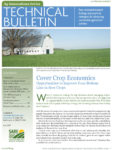
Cover Crop Economics Report Now Available in Print
Cover Crops Offer Options in Wet Soil As more farmers across the nation begin to incorporate covers into their rotations, they find that this valuable conservation practice pays in more ways than one. Many farmers in states suffering from oversaturated fields that prevented or delayed planting are considering cover crops. To help farmers evaluate the […]
When Do Cover Crops Pay? New USDA-SARE Report Addresses the Question
Farmers around the country are planting cover crops on millions of acres to protect and improve the soil, and the more that farmers use cover crops, the more they value this conservation practice. Cover Crop Economics, a new report published by USDA-SARE looks at the economics of cover crops to help farmers answer that big […]
New Video: Building a Local Food Movement
When Congress ended its tobacco support programs in 2000, thousands of tobacco growers in western North Carolina who depended on them were left without a viable way to make a living. “There wasn’t a real future for the farms in our region if we didn’t come up with something new,” says Charlie Jackson, the executive […]
New Video: Bringing Independent Farmers into the Marketplace
Access to profitable retail and wholesale markets is a challenge for small- to mid-scale family farmers. “The days of showing up with your cantaloupes in the back of the pickup are no longer a way to make a living,” says Diana Endicott of Kansas City, Mo. “So you have to be willing to make a […]

SARE Library USB Drives - Bundle of 10
All of SARE’s current publications right at your fingertips on a USB drive.