Showing 111-120 of 279 results
Transitioning to Organic Production
Transitioning to Organic Production lays out many promising conversion strategies, covering typical organic farming production practices, innovative marketing ideas and federal standards for certified organic crop production.
Managing Stress
Farming and ranching are stressful businesses. One key metric of a farm's sustainability is its capacity to provide a quality of life that meets one of our most basic human needs - good mental health. This page highlights successful SARE-funded projects that are using innovative strategies to help farmers and ranchers manage stress. If you […]

SARE Fellows Examine Sustainable Range Management
After a two-year hiatus due to the COVID-19 pandemic, SARE Fellows recently reconvened to examine sustainable practices used in five crop and livestock production systems in Wyoming’s Bighorn Mountains.
Reaching Women in Agriculture: A Guide to Virtual Engagement
"Reaching Women in Agriculture: A Guide to Virtual Engagement" outlines a range of strategies and tools to help educators who have prior experience conducting in-person educational activities adapt their programming for online and hybrid spaces.
Scaling Up Your Vegetable Farm for Wholesale Markets
For direct market farmers, expanding your operation to capture local and regional wholesale markets can represent an opportunity. But such a shift brings with it many changes to how you run your farm because the expectations that wholesale buyers have is much different than your direct market customers. Scaling Up Your Vegetable Farm for Wholesale […]
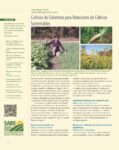
Cultivos de Cobertura para Rotaciones de Cultivos Sustentables
Cultivos de Cobertura para Rotaciones de Cultivos Sustentables is an abbreviated, Spanish language translation of SARE's Cover Crops for Sustainable Crop Rotations. It is also available in English and Chinese. Los cultivos de cobertura son herramientas indis- pensables. Se plantan para disminuir la erosión de tierras, mejorar la salud de los suelos y aumentar la […]
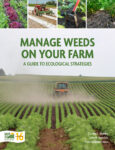
Manage Weeds on Your Farm: An Ecological Approach
SARE’s newest book, "Manage Weeds on Your Farm: A Guide to Ecological Strategies," examines the biology and behavior of common weeds and provides an integrated set of non-chemical control strategies that exploits their weaknesses.
Reaching Women in Agriculture: A Guide to Virtual Engagement
This guide brings together information, tips and tools to deliver effective and engaging online (and hybrid) education for farm and ranch women on topics related to farm viability, resilience and conservation. While COVID-19-related restrictions issued in 2020 that curbed in-person gatherings were the impetus for developing this resource, online offerings can help address barriers—travel time […]
Understanding and Measuring Social Sustainability
This SARE brief defines social sustainability and illustrates how it can be addressed more clearly in SARE projects. Sample projects and quality of life indicators are provided to help grant-seekers and reviewers think broadly about understanding, measuring and describing the social impacts of research and education projects.

Soil Health Principles and Practices Videos
Experienced farmers and Sustainable Agriculture Research and Education (SARE) provide information on managing and improving soil health. Farmers discuss practices such as cover cropping, and using mulch and compost to improve soil health.