Showing 181-190 of 311 results
Evaluating and Improving Cover Crop Performance and Adoption
In this session, Sjoerd Duiker (Penn State University) discusses the possibility of adoption without government regulation or incentives, and Dean Hively (USGS) reviews the use of remote sensing to map cover crop performance, trends toward increasing wintertime ground cover and watershed-scale performance.
Cover Crops as Part of an Overall Nutrient Management System
In this session, Steven Mirsky (USDA-ARS) and Heather Darby (University of Vermont) discuss the role of cover crops in integrated fertility management and address cover crops in the context of forages, dairies, perennials and pastures, and rotating pasture to grain.
Managing Soil Health With Cover Crops: Beyond the Basics
In this session, leading experts dive deep into the soil-related benefits of cover crops. Ray Weil (University of Maryland) discusses the physical benefits; Michel Cavigelli (USDA-ARS) explains how cover crop management affects soil health; and Stuart Grandy (University of New Hampshire) discusses emerging concepts for harnessing microbes to build organic matter.
Cover Crop Field Tour Recap and Debrief
Attendees of the Cover Crops for Soil Health workshop have a short discussion reflecting on their tour of the long-term farming systems research project at the USDA Beltsville Agricultural Research Center in Maryland.
Farmer Panel on Cover Crops
Farmers Skip Paul (Rhode Island), Jeff Frey (Pennsylvania) and Perry Lilley (Maine) share their experiences with cover crops, including their motivation for using them, successes and challenges, factors that play into decision making around cover crops, and advice for ag service providers who want to encourage farmer adoption of this vital conservation practice.
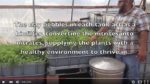
Integrating Traditional Foods with Aquaponics in the Desert Southwest
The Challenge Cochise County, Arizona, where Aaron Cardona’s Arevalos Farm is located, is classified by the USDA as a food desert with high poverty rates, as well as high rates of diabetes and obesity. To help confront these problems, Cardona decided to look into aquaponics, which had not been experimented with in the desert regions […]
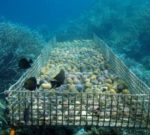
Training in Marine Ornamental Farming for Extension Professionals in Micronesia
The Challenge The Federated States of Micronesia (FSM) and the Republic of the Marshall Islands (RMI) are fledgling sovereign nations. Both nations have low per capita GDP and high unemployment. Like many developing small island nations, the FSM and RMI are economically marginalized. The people of FSM and RMI have skills and resources for aquaculture, […]
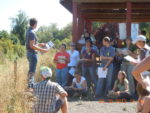
Western Pollinator Conservation Planning Short Course
The Challenge Hives of European honeybees, commonly purchased for pollination services, have become more difficult to obtain due to decline from disease and Colony Collapse Disorder (CCD). Native bees can make a significant contribution to crop pollination. Protecting, enhancing, or providing natural habitat on farms is the best way to conserve native pollinators. The USDA, […]
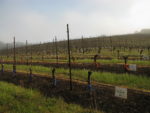
Water Management in Sonoma County Grape Production
The Challenge As in all of California, water is a scarce resource in Sonoma County, a region in Northern California with more than 400 wineries and almost 60,000 acres of vineyards. Wine grape growers face increasing competition for water from different interests, various regulations, and a need to protect threatened and endangered salmonids found in […]
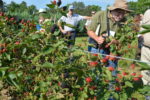
Lessons Learned During SARE/NACAA Fellows Tour
LITTLE ROCK, Arkansas – Central Arkansas was the location for the spring 2015 tour for the SARE/NACAA Sustainable Agriculture Fellows program, where Cooperative Extension agents from across the country spent several days learning more about sustainable agriculture concepts. The program, sponsored by Sustainable Agriculture Research and Education (SARE) and the National Association of County Agricultural Agents […]