Showing 11-17 of 17 results
Sustainable Pest Management in Greenhouses and High Tunnels
From 2007 to 2009, Cornell researchers in New York used a SARE grant to study the efficacy of biological insect control in minimally heated greenhouses and high tunnels or hoop houses. This fact sheet reports the results and provides detailed advice on how growers can use natural enemies to manage insect pests in minimally heated greenhouses and unheated high tunnels.
New York Farmer Uses Hanging Gutters to Utilize Overhead Space in Hoop House
This project looked at increasing the productivity and cost effectiveness of growing more crops in a hoop house by utilizing the overhead space through innovative design.
Video Series: Efficient and Safe Food Handling Processes
Low-cost techniques that help farms reduce labor needs and expenses during harvest, wash and pack.
High Tunnels
This manual on using high tunnels or hoop houses for season extension includes case studies, a supplier list and chapters on marketing, site selection, construction and types, and soil, pest and environmental management.

Farm to School Training Toolkit
Resources for ag educators and community leaders who are starting a farm to school program.
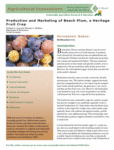
Production and Marketing of Beach Plum, a Heritage Fruit Crop
Beach plum (Prunus maritima Marsh) is one of several shrubby plums native to North America. The jams produced from this fruit command premium prices at farm stands and specialty markets, even in comparison with jam made from other locally grown fruit. However, the wild-collected supply of fruit does not meet this niche market’s demand.
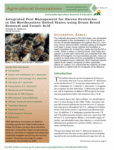
Integrated Pest Management for Varroa Destructor in the Northeastern United States using Drone Brood Removal and Formic Acid
This bulletin focuses on the management of the parasitic honey bee mite Varroa destructor (V. destructor) in the northeastern U.S. It contains information that will allow a beekeeper to: 1) identify V. destructor, 2) recognize the symptoms of mite infestation, 3) determine pest densities, and 4) implement an effective IPM program for keeping mite populations below the economic injury level.