Showing 11-20 of 22 results
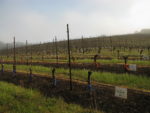
Water Management in Sonoma County Grape Production
The Challenge As in all of California, water is a scarce resource in Sonoma County, a region in Northern California with more than 400 wineries and almost 60,000 acres of vineyards. Wine grape growers face increasing competition for water from different interests, various regulations, and a need to protect threatened and endangered salmonids found in […]

Environmental Impacts of Cover Crops
Speakers in this session discussed both local and off-site environmental impacts of using cover crops.
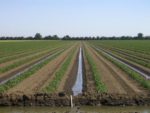
Water Use Efficiency in Tomatoes
University of California at Davis graduate student Felipe Barrios-Masias and Professor Louise Jackson saw promise in alternative irrigation methods that could use less water but still produce high yields, leading to increased agricultural sustainability and efficiency. Until successfully obtaining Western SARE funds, they were finding it difficult to receive funding for the on-farm research. However, […]
Iowa Student Studies Woodchip Bioreactors for Nitrate Reduction in Agricultural Drainage
Tile drainage reduces soil moisture levels for optimal crop growth, but there is concern about nitrate loss from these systems. Because the water quality of regional streams, rivers, and lakes can be negatively impacted by nitrate in drainage, researchers at Iowa State University are studying several practices that can be done to reduce the amount […]
Kansas State High Tunnel Video Series
This video series was developed by Kansas State Research and Extension, and includes segments on the following topics related to commercial high tunnel or hoop house production: Overview | Design | What to Plant | Basic Management Considerations | Intensive Management | Resources
Rainwater Catchment from a High Tunnel for Irrigation Use
This Iowa State University video/fact sheet describes how to build a system to catch, store and reuse the rainwater for high tunnel irrigation.

The Ogallala Aquifer of the Texas High Plains: A Race Against Time
As the drought in the Texas High Plains continues to intensify, a unique partnership of producers and researchers is working diligently to find economically viable alternatives to the region’s irrigation-dependent crop monocultures.
Applying for the Conservation Stewardship Program (CSP)
This plain language guide discusses eligibility and the application process for the USDA-NRCS Conservation Stewardship Program (CSP).
GIS Applications in Agriculture: Nutrient Management for Improved Energy Efficiency Volume II
Provides an outline of how management recommendations are developed and how a ground-based active sensor can be used. It contains 24 case studies (exercises) ranging from using historical techniques to overcome production barrier to calculating soil organic carbon maintenance requirements. A CD containing data sets is included with the book.
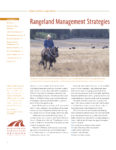
Rangeland Management Strategies
Features innovative SARE-funded research on creating and sustaining a healthy range.