Showing 71-80 of 220 results
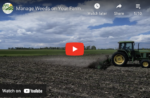
Manage Weeds on Your Farm Video Series
n this series, experienced farmers from around the country talk about their weed control methods.
Transitioning to Organic Production
Transitioning to Organic Production lays out many promising conversion strategies, covering typical organic farming production practices, innovative marketing ideas and federal standards for certified organic crop production.

SARE Fellows Examine Sustainable Range Management
After a two-year hiatus due to the COVID-19 pandemic, SARE Fellows recently reconvened to examine sustainable practices used in five crop and livestock production systems in Wyoming’s Bighorn Mountains.
Scaling Up Your Vegetable Farm for Wholesale Markets
For direct market farmers, expanding your operation to capture local and regional wholesale markets can represent an opportunity. But such a shift brings with it many changes to how you run your farm because the expectations that wholesale buyers have is much different than your direct market customers. Scaling Up Your Vegetable Farm for Wholesale […]
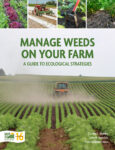
Manage Weeds on Your Farm: An Ecological Approach
SARE’s newest book, "Manage Weeds on Your Farm: A Guide to Ecological Strategies," examines the biology and behavior of common weeds and provides an integrated set of non-chemical control strategies that exploits their weaknesses.
Manage Weeds On Your Farm
Manage Weeds on Your Farm is a definitive guide to understanding agricultural weeds and how to manage them efficiently, effectively and ecologically—for organic and conventional farmers alike.
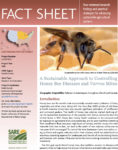
A Sustainable Approach to Controlling Honey Bee Diseases and Varroa Mites
This fact sheet describes efforts to breed honey bees, Apis mellifera, resistant to diseases and parasitic mites to reduce the amount of antibiotics and pesticides used in bee colonies and to ensure that our breeding methods and stock are accessible to beekeepers everywhere.
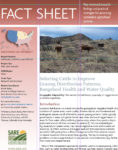
Selecting Cattle to Improve Grazing Distribution Patterns, Rangeland Health and Water Quality
This project is the first and only study that we are aware of that has evaluated whether grazing distribution has the potential to be improved through intensive breed selection. Most of the management approaches currently used to increase grazing uniformity, such as water developments and fencing, can resolve livestock grazing distribution problems on both private and public lands. However, these practices usually require large capital expenditures.
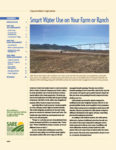
Smart Water Use on Your Farm or Ranch
As producers throughout the nation grow increasingly concerned about water scarcity, farmers, ranchers and agricultural educators are beginning to explore new, conservation-oriented approaches to water use.
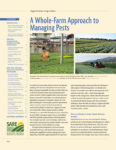
A Whole Farm Approach to Managing Pests
This 16-page bulletin helps producers—and the educators who work with them—use ecological principles across the entire farm to control pests.