The educational materials listed on this page are about Soybeans.
Agronomic crops are field crops such as corn, soybeans, wheat and other grains. Soybeans are an important crop for both livestock feed and human consumption. Growing soybeans involves understanding soybean growth stages, the soybean market and production factors such as soybean yield per acre. Soybean farming can be a very profitable enterprise when a producer has enough acreage, the ability to increase soil fertility and a strong understanding of what it takes to increase the average soybean yield per acre. Although a producer has little control over the average soybean price per bushel that the market sets, a number of marketing strategies can be used to increase profit margins, while many production practices and overall soil management can improve the soybean crop in most soybean production systems. Key practices include agronomic, soybeans, cropping systems, cover crops, crop rotation, fertilizers, crop improvement and selection, physical control, soil management.
SARE’s Crop Rotation on Organic Farms A Planning Manual is a resource for farmers looking to integrate crop rotation into their operation to enhance organic matter and boost production. The Cover Crop Topic Room is a good starting point to learn about the benefits that cover crops can have on soil fertility to improve yield. A key resource to understanding the critical relationship between soil and crop is SARE’s widely used book, Building Soils for Better Crops. This book lays the foundation for understanding soil structure, soil fertility, and overall soil management.
Showing 1-10 of 26 results

Adapting to Extreme Rains and Drought at A-Frame Farm in Madison, Minnesota
At A-Frame Farm, resilience begins below the surface. In a new episode of America’s Heartland, produced in partnership with SARE, farmer Luke Peterson shares how his family is adapting to increasingly erratic weather through regenerative practices that focus on restoring the soil. Located on 500 acres in Madison, Minn., A-Frame Farm produces organic grains and […]

RFD-TV to Feature Sustainable Innovations on "America’s Heartland"
Tune in to RFD-TV on Wednesday, April 16, at 5:30 EDT for a new episode of "America’s Heartland" highlighting farmers and ranchers who are using sustainable strategies to adapt to increasingly challenging and unpredictable weather conditions. Produced in collaboration with SARE and PBS KVIE, the episode showcases a range of innovative farming techniques, rural community […]

Manage Weeds on Your Farm Video Series
n this series, experienced farmers from around the country talk about their weed control methods.
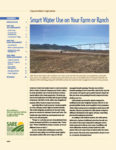
Smart Water Use on Your Farm or Ranch
As producers throughout the nation grow increasingly concerned about water scarcity, farmers, ranchers and agricultural educators are beginning to explore new, conservation-oriented approaches to water use.
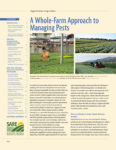
A Whole Farm Approach to Managing Pests
This 16-page bulletin helps producers—and the educators who work with them—use ecological principles across the entire farm to control pests.
SARE Fellows Tour Sustainability in North Carolina
SARE Fellows Tour Sustainability in North Carolina RALEIGH, North Carolina – Organic sweet potatoes are in high demand in North Carolina, but growers face two major hurdles: weeds and wireworms. North Carolina State University researchers think cover crops might be a solution, and that would make third generation farmer Kelvin Bass a happy man. “I’m tremendously […]
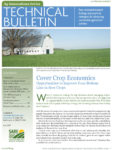
Cover Crop Economics Report Now Available in Print
Cover Crops Offer Options in Wet Soil As more farmers across the nation begin to incorporate covers into their rotations, they find that this valuable conservation practice pays in more ways than one. Many farmers in states suffering from oversaturated fields that prevented or delayed planting are considering cover crops. To help farmers evaluate the […]
When Do Cover Crops Pay? New USDA-SARE Report Addresses the Question
Farmers around the country are planting cover crops on millions of acres to protect and improve the soil, and the more that farmers use cover crops, the more they value this conservation practice. Cover Crop Economics, a new report published by USDA-SARE looks at the economics of cover crops to help farmers answer that big […]
Cover Crop Economics
Cover crops can build soil health, control weeds, conserve moisture, provide grazing opportunities and more. But when do they start to pay for themselves? This analysis looks at the economics behind different management scenarios to determine if cover crops are likely to improve profitability in one, three or five years of use in corn and soybean rotations.

Improving Soil Health Through Cover Crops
Farmers around the country are discovering the power of cover crops to curb erosion and improve soil health. This video is from Pennsylvania, where a Penn State researcher and a grain farmer are partnering to spread the word.