Showing 81-90 of 110 results

America's Heartland "Leaders in Sustainable Agriculture" Now Available on YouTube
SARE recently partnered with PBS KVIE to produce an episode of RFD-TV's America's Heartland featuring four farmers describing their commitment to sustainability, how they plan to overcome modern farming challenges, and how SARE has impacted their farming and ranching practices. The full 24-minute episode titled Leaders in Sustainable Agriculture is now available at https://www.sare.org/resources/leaders-in-sustainable-agriculture/. Watch: Videos featuring each […]
RFD-TV Episode to Highlight Sustainable Innovations
Tune in to RFD-TV on March 29 at 5:30pm EDT for the premiere of a new “America’s Heartland” episode showcasing farmers and ranchers from across the country who are leaders in sustainability. SARE partnered with PBS KVIE to produce this episode, which features farmers describing their commitment to sustainability, how they plan to meet farming […]
New SARE Video: Managing Weeds in an Organic Almond Orchard
Many organic and conventional farmers are seeking ways to eliminate or reduce their use of synthetic herbicides. Understanding weeds is the first step towards managing them efficiently and ecologically. Now, two new videos in SARE’s Manage Weeds on Your Farm series explore organic almond grove weed control on Burroughs Family Farm’s 1,200-acre orchard in Denair, […]
Farmers: Share Your Thoughts on Cover Crops in the National Cover Crop Survey!
Farmers are invited to share their thoughts on cover crops in an online survey at bit.ly/CoverCrop23. Why do you plant cover crops...or why don't you? What do you want to know? Your insight will help guide research, communications, seed development, and more. This National Cover Crop Survey is the seventh since 2012 conducted by the USDA-NIFA […]

The Biggest Asset Is You
Utah State University (USU) Extension professor Josh Dallin had just wrapped up a presentation about livestock before an audience of farmers and ranchers, and he asked if there was any other information his listeners needed. The response was surprisingly out of the ordinary. “One of our largest cattle producers raised his hand and said, ‘I’m […]

Sustaining the Human Spirit in Farm Country
A course in skills-based suicide alertness prepared Ruth Linkenmeyer-Meirick for a desperate call from a friend. “She was going through a divorce, and she was so overcome by grief and sadness it was hard to talk with her,” says Meirick. “Had I not taken the course, I wouldn’t have known what to do.” Meirick was […]
New SARE Video: Managing Weeds in Organic Row Crops
Farmers have long relied on herbicides to control weeds in row cropping systems. But as consumer preferences change, many farmers are seeking to eliminate or reduce their use of synthetic herbicides where possible. Managing weeds without herbicides can be daunting, and it requires producers to understand the biology and behavior of problem weeds in order […]
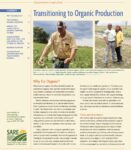
New SARE Bulletin: Transitioning to Organic Production
Since the 1990 Organic Foods Production Act passed, the market for organic products has steadily risen. In 2020, organic sales skyrocketed to an all-time high, motivating many farmers to consider transitioning their farms to organic production. While organic production can help farmers gain access to new markets, improve soil and increase profits, the transition process […]
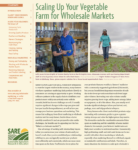
Scaling Up Your Vegetable Farm for Wholesale Markets
SARE’s newest bulletin, Scaling Up Your Vegetable Farm for Wholesale Markets, provides a variety of strategies and tools to help owners of small- to mid-scale operations branch out into wholesale markets.

SARE Fellows Examine Sustainable Range Management
After a two-year hiatus due to the COVID-19 pandemic, SARE Fellows recently reconvened to examine sustainable practices used in five crop and livestock production systems in Wyoming’s Bighorn Mountains.