Showing 111-120 of 292 results
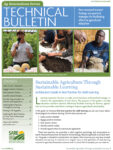
Sustainable Agriculture Through Sustainable Learning
This guide describes the science behind five best practices in adult learning and how to apply them to typical educational programs for farmers, including field days, workshops, online courses and one-on-one interactions.
SARE Seeks Applications for Associate Director Position
The University of Maryland seeks an Associate Director for the National Reporting, Coordination and Communications Office (NRCCO) of the Sustainable Agriculture Research and Education (SARE) program. This Associate Director position is appropriate for both experienced and early career professionals. See https://ejobs.umd.edu/postings/82240 for a full job description, responsibilities, qualifications and application guidelines. Submit applications by the […]
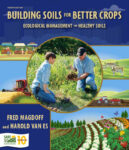
Building Soils for Better Crops
The fourth edition of Building Soils for Better Crops—enhanced and expanded—explains how to use ecological principles to build soil health and boost fertility, yields and overall sustainability.
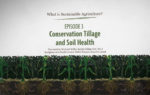
New "Conservation Tillage and Soil Health" Video from SARE
The newest episode of SARE’s “What is Sustainable Agriculture?” animation series illustrates how many producers are retiring conventional tillage equipment and turning to conservation tillage to improve soil health and productivity. “Conservation Tillage and Soil Health” provides a short, animated outline of the basic principles of conservation tillage that can be used to introduce or […]
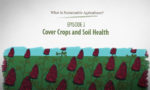
New “Cover Crops and Soil Health” Video from SARE
The newest episode of SARE’s "What is Sustainable Agriculture" animation series illustrates how producers can use cover crops to improve productivity and sustainability. In just a few short minutes, “Cover Crops and Soil Health” outlines how cover crops can build soil structure, protect water quality, suppress pests and improve a farm's bottom line. Combining cover […]
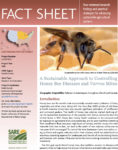
A Sustainable Approach to Controlling Honey Bee Diseases and Varroa Mites
This fact sheet describes efforts to breed honey bees, Apis mellifera, resistant to diseases and parasitic mites to reduce the amount of antibiotics and pesticides used in bee colonies and to ensure that our breeding methods and stock are accessible to beekeepers everywhere.
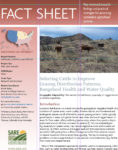
Selecting Cattle to Improve Grazing Distribution Patterns, Rangeland Health and Water Quality
This project is the first and only study that we are aware of that has evaluated whether grazing distribution has the potential to be improved through intensive breed selection. Most of the management approaches currently used to increase grazing uniformity, such as water developments and fencing, can resolve livestock grazing distribution problems on both private and public lands. However, these practices usually require large capital expenditures.
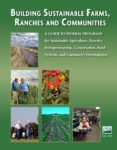
Updated Guide to USDA Programs Opens Door to Millions of Dollars of Available Funding
Building Sustainable Farms, Ranches and Communities covers 62 government programs and has been updated to include program updates from the 2018 Farm Bill. Each program listing provides a description of the program’s available resources, information on how to apply, and in some cases, examples of how the funding has been used.
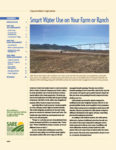
Smart Water Use on Your Farm or Ranch
As producers throughout the nation grow increasingly concerned about water scarcity, farmers, ranchers and agricultural educators are beginning to explore new, conservation-oriented approaches to water use.
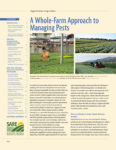
New SARE Bulletin Addresses Ecological Approach to Managing Pests
A flock of sheep is vital to the success of one particular vineyard in Winters, California. While many operations struggle to manage weeds, this vineyard used a SARE-funded grant to test grazing sheep as a pest management practice, and they are seeing many whole-farm benefits. The sheep were trained to avoid the grape crop’s leaves […]