The educational materials listed on this page are about Conservation Tillage.
Conservation tillage reduces soil disturbance by leaving more than thirty percent of the soil surface covered with the residue of a previous crop. This crop production system improves soil conservation, reduces soil erosion and limits water runoff. Producers can choose from several different conservation tillage systems no-till, strip-till, ridge-till or zone-till—based on their individual cropping system and on the amount of residue they want to leave on the soil surface. There is also a variety of tillage equipment available for farmers and ranchers, depending on which tillage system they use. No-till farming leaves all of the previous crop’s residue on the field. Farmers who use a strip-till system only disturb the section of soil that is necessary for seeding. Strip tillage is similar to zone tillage, but the latter cuts deeper into the soil to increase water infiltration. In ridge-till systems, farmers build raised seed beds to create a warmer seedbed with better drainage. Cover crops can be added to any conservation tillage system to provide additional residue and soil cover between cash crops.
Showing 1-10 of 35 results
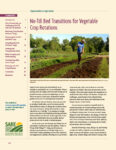
No-Till Bed Transitions for Vegetable Crop Rotations
A guide on transitioning from one vegetable crop to the next without the use of tillage.
Adapting to Generational Challenges on Western Family Farms in Waterloo, Iowa
For the Western family, farming is more than a livelihood—it’s a legacy of perseverance, stewardship, and deep-rooted pride. As one of Iowa’s pioneering Black farm families, the Westerns are featured in a new episode of America’s Heartland, produced in partnership with SARE, for their commitment to sustainable agriculture and generational resilience. Brothers Todd, Christopher, and […]
SARE's What is Sustainable Agriculture? Now Available in Spanish
SARE’s What is Sustainable Agriculture? bulletin and companion animated series are now available in Spanish! ¿Qué es la Agricultura Sostenible? features short, translated primers of proven sustainable practices that can be used to complement more detailed training materials. The companion animation series highlights some common practices farmers and ranchers use to improve profitability, quality of […]
What is Sustainable Agriculture?
This award-winning report provides a sampler of best practices in sustainable agriculture—from marketing and community vitality to cover crops and grazing—as well as eight profiles of producers, educators and researchers who have successfully implemented them.
Building Soils for Better Crops
The fourth edition of Building Soils for Better Crops—enhanced and expanded—explains how to use ecological principles to build soil health and boost fertility, yields and overall sustainability.
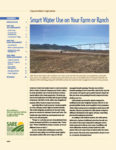
Smart Water Use on Your Farm or Ranch
As producers throughout the nation grow increasingly concerned about water scarcity, farmers, ranchers and agricultural educators are beginning to explore new, conservation-oriented approaches to water use.
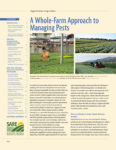
A Whole Farm Approach to Managing Pests
This 16-page bulletin helps producers—and the educators who work with them—use ecological principles across the entire farm to control pests.
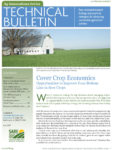
Cover Crop Economics Report Now Available in Print
Cover Crops Offer Options in Wet Soil As more farmers across the nation begin to incorporate covers into their rotations, they find that this valuable conservation practice pays in more ways than one. Many farmers in states suffering from oversaturated fields that prevented or delayed planting are considering cover crops. To help farmers evaluate the […]
When Do Cover Crops Pay? New USDA-SARE Report Addresses the Question
Farmers around the country are planting cover crops on millions of acres to protect and improve the soil, and the more that farmers use cover crops, the more they value this conservation practice. Cover Crop Economics, a new report published by USDA-SARE looks at the economics of cover crops to help farmers answer that big […]
Cover Crop Economics
Cover crops can build soil health, control weeds, conserve moisture, provide grazing opportunities and more. But when do they start to pay for themselves? This analysis looks at the economics behind different management scenarios to determine if cover crops are likely to improve profitability in one, three or five years of use in corn and soybean rotations.